

1060 Cercle Aluminium 1mm pour Autocuiseur: Le livre blanc ultime de l'industrie
je. Résumé exécutif: Le voyage mondial d'un disque métallique
Dans le courant de la mondialisation, un autocuiseur économique et léger pourrait commencer sa vie sur une ligne d'emboutissage au Vietnam, subir un revêtement PTFE en Allemagne, et finalement atterrir sur une cuisinière aux États-Unis. Le plus souvent, le point de départ de ce voyage est un 1060 Cercle en aluminiumprovenant de Chine ou d'Asie du Sud-Est.
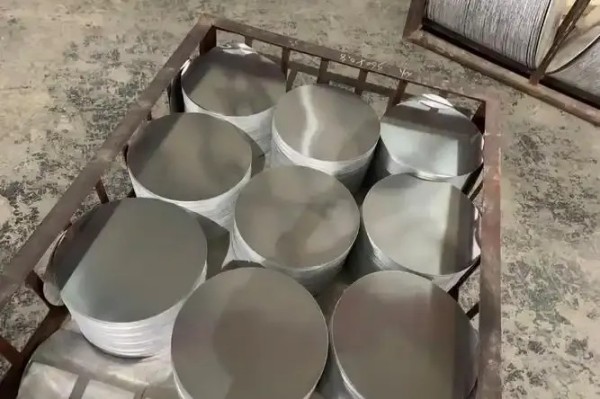
Poussé par la demande incessante du consommateur mondial pour cuisson rapide, efficacité énergétique, et une manipulation légère, le 1060 Aluminum Circle s'est fermement imposé comme l'épine dorsale absolue de la fabrication d'autocuiseurs modernes.. Les estimations de l'industrie suggèrent que des milliards de disques en aluminium sont estampés chaque année sur les ustensiles de cuisine..
Ce guide vous emmènera au-delà de la surface. Nous plongerons profondément dans le monde microscopique de la science des matériaux, naviguer dans le paysage macro des chaînes d’approvisionnement mondiales, et fournir une dissection à 360 degrés du 1060 cercle en aluminium – du four de fusion jusqu'à la table à manger moderne.

II. Plongée profonde: Le “Code génétique” de 1060 Aluminium
Pour vraiment comprendre pourquoi 1060 est le roi incontesté des matériaux pour autocuiseurs, il faut zoomer au niveau atomique.
2.1 La magie d'une pureté ≥99,6 %
1060 appartient à la série 1xxx d'aluminium pur commercial. En métallurgie, qu'est-ce qu'un niveau de pureté de 99.6% signifie en fait?
- Un carnaval d'électrons libres (Thermique & Conductivité électrique): Les métaux conduisent la chaleur grâce au mouvement des électrons libres. Plus la pureté est élevée, moins il y a d’atomes d’impuretés pour disperser ces électrons. C'est pourquoi 1060 l'aluminium possède une conductivité thermique incroyablement élevée (environ 234 W/m·K)— surpassant de loin l'acier inoxydable (autour 16 W/m·K). Cette propriété permet à un autocuiseur d’atteindre la température de cuisson presque instantanément, économiser d'importantes quantités d'énergie.
- Un bouclier anti-oxydation naturel (Résistance à la corrosion): L'aluminium est très réactif. Cependant, lors d'une exposition à l'air, sa surface réagit instantanément avec l'oxygène pour former un, tenace, et couche ultra fine de Oxyde d'aluminium (Al₂O₃). Ce film passif agit comme une barrière impénétrable contre l'humidité et l'oxygène. Parce que 1060 est si pur, cette couche d'oxyde se forme uniformément, offrant à la batterie de cuisine une résistance exceptionnelle à la rouille et à la corrosion à long terme.
2.2 Le rôle crucial des oligo-éléments (Le Fé, Et, Avec solde)
Alors que 1060 est défini par sa teneur en aluminium, le reste <0.4% d'oligoéléments (principalement du fer, Silicium, et Cuivre) agir comme soigneusement calibré “assaisonnement” par des scientifiques des matériaux:
- Fer (Fe) & Silicium (Et): Ceux-ci existent généralement sous forme de composés intermétalliques (par ex., Al₃Fe, α-AlFeSi). En quantités contrôlées, ils affinent la structure des grains et augmentent la température de recristallisation, améliorant ainsi la résistance de l'aluminium sans compromettre gravement sa plasticité.
- Cuivre (Cu): Comparé à 1050 aluminium pur, 1060 contient des traces de cuivre. Le cuivre fournit un renforcement en solution solide à la matrice en aluminium, donner 1060 de meilleures propriétés anti-rides et une brillance de surface supérieure par rapport à son 1050 homologue.
2.3 Le “Cubique centré sur la face” Secret de cristal
En cristallographie, l'aluminium possède naturellement un Cubique centré sur la face (FCC) structure cristalline. Les structures FCC comportent un grand nombre de systèmes de glissement (12 en tout). Cela signifie que lorsqu'une force externe est appliquée (comme lors de l'estampage et du dessin), les couches atomiques peuvent glisser facilement les unes sur les autres sans rompre les liaisons métalliques. Cette caractéristique atomique intrinsèque est la raison fondamentale pour laquelle 1060 l'aluminium peut résister à une déformation extrême pour se former en profondeur, pots sans couture et sans fissures.
III. Contexte du marché mondial: L'offre & Carte de la demande de 1060 Aluminium
Comprendre votre position dans le paysage mondial est crucial pour prendre des décisions commerciales intelligentes.
- La centrale manufacturière (Chine & Asie): La Chine domine le marché mondial des cercles d'aluminium, tirer parti d’une chaîne d’approvisionnement complète et intégrée en aluminium électrolytique, technologies de laminage matures, et des coûts énergétiques très compétitifs.
- Les moteurs en hausse (Sud-est & Asie du Sud): Alors que les pôles manufacturiers se développent rapidement au Vietnam, Thaïlande, et l'Inde, demande locale pour le milieu et le haut de gamme 1060 les disques en aluminium explosent.
- Les marchés premium (Europe & Amérique du Nord): Le volume de la demande est élevé, mais les barrières à l'entrée sont strictes. Les acheteurs ici exigent une conformité rigoureuse (FDA, Certifications LFGB), qualité de surface irréprochable pour une anodisation haut de gamme, et solutions personnalisées (comme les bases composites compatibles induction).
- Surmonter les barrières commerciales: Avec des mesures antidumping croissantes contre les produits chinois en aluminium dans certaines régions, les marques multinationales d’ustensiles de cuisine adoptent une “Chine + 1” stratégie d'approvisionnement pour atténuer les risques.

IV. La fabrication décryptée: Du lingot au cercle d’aluminium fini
4.1 Fusion & Fonderie: La Fondation
Tout commence par la fonte de lingots de haute pureté. La clé ici est raffinage. Des systèmes avancés de filtration et de dégazage sont utilisés pour éliminer les inclusions non métalliques et l'hydrogène gazeux de l'aluminium fondu.. Ne pas le faire entraîne des trous d'épingle et des défauts de surface plus tard dans le processus..
4.2 Homogénéisation & Laminage à chaud
Les lingots coulés sont chauffés à une température spécifique pour homogénéiser la structure interne avant d'être passés dans une série de laminoirs à chaud massifs.. Le laminage à chaud détruit la structure grossière de la fonte, affine les grains, et induit la formation d'une texture fibreuse uniforme. Ceci est absolument essentiel pour obtenir l’allongement élevé requis pour l’emboutissage profond..
4.3 Laminage à froid & Recuit de précision
Pour atteindre l'épaisseur exacte de 1,0 mm, le matériau subit un laminage à froid. Processus de recuit intermédiaire et final précis (utilisant souvent des lignes de recuit de bandes continues) sont ensuite appliqués pour obtenir le résultat souhaité O-température (entièrement recuit)état, maximiser la douceur et la ductilité.
4.4 Découpage de précision (Cisaillement de cercle)
Enfin, les bandes enroulées sont introduites dans des presses à découper à grande vitesse équipées de filières circulaires spécialisées. Pour les applications d'autocuiseur, les bords coupés doivent être parfaitement lisses, sans bavure, et exempt de fissures sur les bords pour éviter les déchirures lors du processus d'emboutissage profond ultérieur.
V. Spécifications techniques & Comparaison des alliages
5.1 Paramètres techniques clés
Le tableau suivant présente les spécifications standard pour 1060 Cercle en aluminium 1 mm utilisé dans la fabrication d'autocuiseurs.
| Paramètre | Spécification | Note technique |
|---|---|---|
| Alliage | 1060 | Aluminium commercial de haute pureté |
| Épaisseur | 1.0 mm | Le “Point sucré” pour autocuiseurs légers |
| Caractère | Ô / H12 / H14 | O-température est fortement recommandé pour l'emboutissage profond |
| Diamètre | 100 – 1000 mm | Personnalisable en fonction de la capacité du pot |
| Contenu Al | ≥ 99.6% | Garantit une conductivité thermique optimale |
| Processus | Laminé à chaud / Laminé à froid | Laminé à chaud pour emboutissage profond; Laminé à froid pour la finition de surface |
| Application | Autocuiseurs, Casseroles électriques, Bases composites | – |
5.2 Analyse des alliages compétitifs
Comment 1060 se comparer aux alternatives courantes? Le tableau ci-dessous fournit une comparaison rapide pour faciliter la sélection des matériaux.
| Alliage | Conductivité thermique | Dessin profond | Force | Demande principale |
|---|---|---|---|---|
| 1060 | Excellent | Excellent | Moyen | Autocuiseurs, Batterie de cuisine générale |
| 1050 | Excellent | Très bien | Légèrement inférieur | Batterie de cuisine générale, Panneaux décoratifs |
| 3003 | Bien | Bien | Plus haut | Batterie de cuisine haute résistance, Ustensiles de cuisson |
Avantage stratégique de 1060: Réponse thermique supérieure, performances d'emboutissage profond stables, excellente compatibilité avec les traitements de surface, et une rentabilité élevée.
VI. Manuel d'atelier: Maîtriser le processus d'estampage
Trouver du bon matériel ne représente que la moitié de la bataille; savoir comment le traiter parfaitement est l'autre moitié. Voici un guide pratique pour votre équipe d’ingénierie:
6.1 Lubrification d'estampage
- Sélection:L'aluminium est mou et sujet au grippage (s'en tenir au dé). Utilisez un produit à haute viscosité, extrême-pression (PE) lubrifiant d'estampage spécialement formulé pour les métaux légers.
- Application: Une application uniforme via des enduits à rouleaux est fortement recommandée. Trop peu d'huile provoque des déchirures; trop de choses provoque des rides.
6.2 Conception des matrices & Autorisation
- Dégagement des matrices: Réglez le jeu unilatéral entre le poinçon et la matrice à environ 1.1 à 1.2 fois l'épaisseur du matériau (1.1mm – 1.2mm pour un stock de 1,0 mm). Des dégagements serrés provoquent des rayures; des dégagements excessifs favorisent le froissement.
- Le rayon (R.): Utiliser un rayon d'entrée de matrice généreux (typiquement 3 à 5 fois l'épaisseur du matériau) pour réduire la contrainte d'étirage et éviter les fractures aux coins du corps de l'autocuiseur.
6.3 Force du support de flan (BHF) Contrôle
- Un BHF insuffisant provoque de graves rides dans la zone de la bride.
- Un BHF excessif augmente la friction, conduisant à une déchirure du fond.
- Pour un pourboire: Utilisez des ressorts à azote ou un système de coussin hydraulique pour maintenir une, pression précisément calibrée tout au long de la course.
6.4 Orientation de l'estampage
Faites toujours attention au sens de roulement du disque en aluminium (généralement indiqué par une flèche). Pour des résultats optimaux et pour minimiser les boucles d'oreilles, alignez le grand axe de votre matrice d'estampage à un 45-angle en degrés au sens de roulement du matériau.
VII. Contrôle de qualité & Conformité
7.1 Liste de contrôle du contrôle qualité
Pour garantir la sécurité et les performances de l’autocuiseur final, le 1060 les cercles en aluminium doivent subir une inspection rigoureuse.
| Article de contrôle qualité | Méthode de détection | Critères d'acceptation | Impact sur le produit final |
|---|---|---|---|
| Contrôle de jauge | Micromètre / Jauge à rayons X | ±0,02 mm | Assure un chauffage uniforme et évite les brûlures |
| Qualité des surfaces | Visuel / Scanner optique | Pas de rayures, huile, oxydation | Prévient les défauts de revêtement (yeux de poisson) |
| Propriétés de traction | Machine d'essai de traction | Allongement ≥ 25% (O-température) | Détermine le taux de réussite de l'emboutissage profond |
| Taux de boucles d'oreilles | Test d'étirement | < 3% | Maximise le rendement du matériau et garantit la planéité de la jante |
7.2 Conformité & Sécurité: Traverser les frontières internationales
Si vous envisagez de vendre des autocuiseurs en Europe ou en Amérique du Nord, vos matières premières doivent passer des audits de sécurité rigoureux.
- USA (FDA 21 CFR 175.300): Réglemente les matériaux destinés au contact alimentaire. 1060La grande pureté de s'assure qu'il réussit facilement les tests de lixiviation des métaux lourds (Plomb, Cadmium, Arsenic).
- Europe (LFGB & DGCCRF): Ces normes allemandes et françaises sont particulièrement strictes. Ils simulent des conditions de cuisson extrêmes pour mesurer la migration des ions aluminium dans les aliments acides et gras. L'approvisionnement auprès d'un fournisseur certifié comme Huawei Aluminum garantit que vous disposez des rapports de tests tiers nécessaires (par ex., GV) passer la douane et entrer dans les supermarchés.
- Chine (FR 4806.9): Le respect des normes nationales relatives aux métaux de qualité alimentaire est obligatoire pour le marché chinois.
VIII. Frontières de l'innovation: L'avenir de 1060 Aluminium
Poussé par la durabilité et l’évolution des demandes des consommateurs, les humbles 1060 le disque en aluminium évolue tranquillement:
- Technologie ultra fine: Grâce à un traitement thermomécanique optimisé, les fabricants peuvent désormais produire 1060 disques aussi fins que 0,4 mm qui conservent d'incroyables capacités d'emboutissage profond, ouvrant la voie à l'ultra-léger “ustensiles de cuisine en nuage.”
- Ingénierie des surfaces de microstructures: En modifiant la texture microscopique de la surface de l'aluminium (par ex., par grenaillage ou gravure spécialisé), les chercheurs créent des surfaces qui utilisent le Effet Leidenfrost pour obtenir un rendu naturel, propriétés physiques antiadhésives sans produits chimiques.
- Recyclage en boucle fermée & Aluminium à faible teneur en carbone: Avec la mise en œuvre imminente du mécanisme d’ajustement carbone aux frontières (CBAM) en Europe, en utilisant “Aluminium vert” (produit à partir de l'énergie hydraulique) ou l'aluminium secondaire recyclé devient une nécessité pour les exportateurs. Cela réduit non seulement l’empreinte carbone, mais constitue également un puissant outil de marketing..
IX. Masterclass sur les achats: Calculer le coût réel
Pour les professionnels des achats et les propriétaires d’entreprise, acheter des disques en aluminium n'est jamais seulement une question de “prix à la tonne.” Il s'agit de calculer le Coût total de possession (Coût total de possession).
9.1 Ce qu'il faut inspecter lors d'un audit d'usine?
Lors de la visite d'un fournisseur potentiel, ignorez la présentation commerciale et vérifiez ces trois zones:
- Le four de fusion est-il doté d'un dégazage en ligne et d'une filtration par mousse céramique? (Cela détermine la solidité interne et la qualité de la surface).
- Le laminoir à froid est-il une cage à 4 ou 6 hauteurs avec AGC (Contrôle automatique de la jauge)? (Cela garantit la tolérance d’épaisseur et la planéité).
- Quel type d'équipement de masquage utilisent-ils? (Les cisailles rotatives de précision produisent des bords plus nets que les guillotines traditionnelles).
9.2 Le “Test de lingette à l'acétone” & Autres exemples de contrôles
Lorsque vous recevez des échantillons, effectuez ce test simple: frotter vigoureusement la surface avec un chiffon en coton blanc imbibé d'acétone. Si le tissu devient noir, le disque contient un excès d'huile de roulement résiduelle. Cela rendra presque impossible un nettoyage correct, conduisant inévitablement à “cratères” (yeux de poisson) dans votre revêtement antiadhésif final.
9.3 Approvisionnement stratégique & Gestion des stocks
- Verrouillage du prix de base: La formule est
Final Price = LME/Local Exchange Aluminum Ingot Price + Processing Fee. Apprenez à lire les tendances des échanges de métaux et à fixer le prix de base avec votre fournisseur en cas de baisse du marché.. - VMI (Inventaire géré par le fournisseur): Négociez avec votre fournisseur de confiance pour établir un programme VMI où il stocke le 1060 disques dans un entrepôt proche de votre usine. Vous ne payez que le matériel au fur et à mesure de sa consommation, réduisant considérablement votre immobilisation en fonds de roulement.
X. FAQ de niveau expert
T1: Au microscope, comment fonctionnent les primes et les sous-par 1060 les disques diffèrent?
UN: Haute qualité, entièrement recuit 1060 l'aluminium présente un uniforme, structure de grains recristallisés équiaxes (généralement de qualité ASTM 5-7). Un matériau de mauvaise qualité retient souvent les particules grossières., grains colonnaires ou bras dendritiques, ce qui conduit à des boucles d'oreilles sévères et à des déformations inégales lors de l'emboutissage.
T2: Quelle est la meilleure façon de tester l'aptitude à l'emboutissage d'un nouveau lot de disques en aluminium?
UN: Mener une Test de la Coupe Swiftou Test de la coupe conique Fukui. En étirant le disque jusqu'à la fracture à l'aide d'un jeu de matrices standardisé, vous pouvez mesurer le rapport de tirage limite (LDR). Une hauteur de dôme plus élevée indique un potentiel d’emboutissage profond supérieur.
T3: Comment devrait 1060 les disques doivent être stockés pour éviter toute détérioration?
UN: Même si l'aluminium est résistant à la corrosion, 1060 l'aluminium pur est très sensible à Ions chlorure (Cl⁻). Les zones de stockage doivent être sèches, bien ventilé, et complètement isolé des produits de nettoyage ou des vapeurs acides. En plus, évitez d'empiler trop de bobines lourdes directement les unes sur les autres pour éviter “blocage” (les disques fusionnent sous pression).
T4: Pourquoi de fines fissures apparaissent-elles parfois sur les bords du pot étiré?
UN: Ceci est généralement dû à Souches de civière (ou bandes de Lüders). Cela se produit lorsque le matériau subit un léger vieillissement naturel après le laminage., créer une limite d'élasticité discontinue. La solution est de demander “pré-trempé” ou “à lumière réduite” matériel de votre fournisseur pour éliminer le plateau de rendement avant l’emboutissage.
XI. Conclusion: Le macrocosme dans le microcosme
Comme nous l'avons démontré, le 1060 Cercle Aluminium 1mm pour Autocuiseursest bien plus qu'un simple morceau de métal estampé. C'est le point culminant de la science avancée des matériaux, ingénierie mécanique de précision, chimie des surfaces, et une logistique mondiale complexe.
Sa conductivité thermique inégalée préserve la saveur et la nutrition de nos aliments, tandis que son extraordinaire ductilité lui permet d'être façonné dans le style moderne, batterie de cuisine légère qui définit la cuisine contemporaine.
Regarder vers l'avenir, le 1060 le disque en aluminium continuera d'évoluer, animé par le double moteur de l’innovation technologique et de la responsabilité environnementale. Pour les fabricants d'autocuiseurs, en partenariat avec un technicien compétent, conforme à l'échelle mondiale, et fournisseur axé sur la qualité comme Huawei Aluminium est l'investissement le plus stratégique que vous puissiez faire pour construire un fossé compétitif durable dans l'océan rouge du marché mondial des ustensiles de cuisine..