

Différences fondamentales entre 1050 et 1060 Disques en aluminium
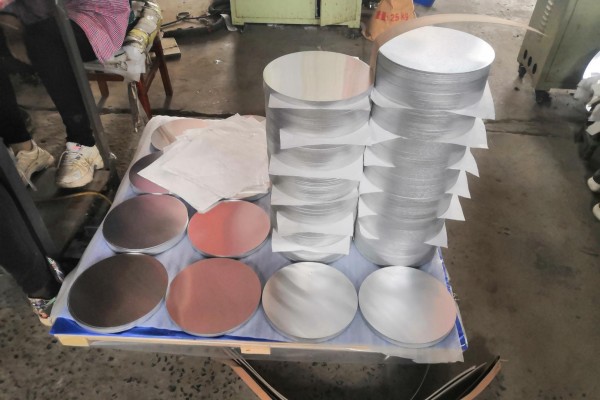
Les disques en aluminium font partie des matériaux de base en aluminium les plus utilisés..
Avec une excellente plasticité, conductivité thermique, et résistance à la corrosion, ils servent de matières premières de base dans la fabrication d'ustensiles de cuisine, composants d'éclairage, signalisation routière, pièces électriques, et applications d'emboutissage profond. Dans la série en aluminium pur (1xxx), 1050et 1060 disques en aluminium sont les deux produits les plus utilisés sur le marché.
Bien qu'ils semblent similaires et partagent des propriétés de base comparables (tous deux étant de l'aluminium pur industriel de haute pureté), de nombreux acheteurs et fabricants les confondent souvent lors de la sélection des matériaux..
En réalité, ces deux alliages présentent des différences subtiles mais critiques dans la composition chimique, propriétés mécaniques, formabilité, conductivité thermique/électrique, et qualité de surface. Chacun offre également des avantages distincts en termes de coût et d’adéquation aux applications.. Distinguer avec précision leurs caractéristiques permet aux entreprises de sélectionner la matière première la plus rentable en fonction des exigences de production, positionnement du produit, et budget.
Cet article fournit une analyse complète des différences entre 1050 et 1060 disques en aluminium pour servir de référence complète pour la sélection de matériaux industriels.
1. Définitions de base & Aperçu des paramètres clés
1.1 1050 Disques en aluminium: Aluminium pur à usage général et économique
1050 les disques en aluminium appartiennent à la série standard nationale 1xxx d'aluminium pur industriel, avec une teneur en aluminium d'au moins 99.5%.
Ils représentent un système très polyvalent, matériau de base qui conserve les principaux avantages de l’aluminium pur: excellente résistance à la corrosion, conductivité thermique et électrique stable, formabilité exceptionnelle, et soudabilité et estampage faciles.
Ces propriétés font 1050 adapté à la grande majorité des techniques de traitement conventionnelles. Grâce à ses performances équilibrées et son prix abordable, 1050 est le matériau préféré pour les applications civiles et industrielles générales.
Spécifications typiques:
- Caractères: Ô, H12, H14
- Plage d'épaisseur: 0.3mm – 6,0 mm
- Plage de diamètre: 80mm – 1200 mm
- Finition superficielle: Finition de moulin standard, répondant à la plupart des besoins de production conventionnels.
1.2 1060 Disques en aluminium: Matériau spécialisé de haute pureté pour un traitement en profondeur
1060 Les disques en aluminium appartiennent également à la série 1xxx mais présentent une pureté d'aluminium élevée de ≥99,6 %, avec des niveaux d'impuretés considérablement réduits par rapport à 1050.
Cette pureté plus élevée améliore la ductilité, performances d'emboutissage profond, esthétique des surfaces, et la conductivité tout en minimisant les problèmes courants lors du traitement en profondeur, tels que la fissuration, mauvaise formabilité, et défauts de surface. En tant que tel, 1060 est l'alliage spécial de choix pour les produits haut de gamme, produits transformés en profondeur.
En termes de dimensions et de trempes, 1060 s'aligne étroitement avec 1050. La distinction fondamentale ne réside pas dans la taille mais dans la pureté des matériaux et les avantages en termes de performances qui en découlent..
2. Composition chimique: La racine des différences de performances
Tous les écarts de performances entre ces deux alliages proviennent de variations subtiles dans la composition chimique, principalement la pureté de l'aluminium et la teneur en impuretés.. Des impuretés plus faibles et une pureté plus élevée entraînent une plus grande uniformité et stabilité microstructurales, conduisant à des propriétés globales supérieures.
| Élément | 1050 Disque en aluminium | 1060 Disque en aluminium |
|---|---|---|
| Aluminium (Al) | ≥99,5 % | ≥99,6 % |
| Silicium + Fer (Oui+Foi) | ≤0,40% | ≤0,35% |
| Cuivre (Cu) | ≤0,05% | ≤0,05% |
| Manganèse (Mn) | ≤0,05% | ≤0,03% |
| Magnésium (Mg) | ≤0,05% | ≤0,03% |
| Zinc (Zn) | ≤0,05% | ≤0,05% |
Les données montrent clairement que 1060 présente une pureté d'aluminium plus élevée et des impuretés totales plus faibles (Oui+Foi) ainsi qu'une teneur réduite en Mn et Mg. Cette réduction atténue les incohérences structurelles internes, améliorant considérablement la ténacité et l'uniformité.
Cependant, cela constitue une mise à niveau marginale; dans des scénarios de traitement standard, la différence pratique est minime. La distinction n'est prononcée que dans les applications de haute précision et de traitement en profondeur.

3. Propriétés mécaniques: Équilibrer la force et la ductilité
Les propriétés mécaniques déterminent directement les performances d’un disque en aluminium lors de l’emboutissage, dessin, et résistance à la déformation. 1050 et 1060 offrir des caractéristiques complémentaires adaptées aux différents besoins de transformation.
| Propriété | 1050 Disque en aluminium | 1060 Disque en aluminium |
|---|---|---|
| Résistance à la traction | 60–95 MPa | 55–95 MPa |
| Limite d'élasticité | ≥20 MPa | ≥18 MPa |
| Taux d'allongement | 20–35% | 25–40% |
| Dureté | Légèrement plus élevé | Légèrement inférieur |
| Formabilité | Excellent | Supérieur |
1050offre une dureté légèrement supérieure, limite d'élasticité, et résistance à la traction, offrant une meilleure résistance aux déformations mineures. Il est idéal pour les produits emboutis conventionnels nécessitant une stabilité structurelle. En revanche, 1060échange une certaine résistance contre un allongement et une flexibilité nettement plus élevés, résultant en une ténacité et une résistance aux fissures supérieures. C'est le choix optimal pour les processus de formage complexes et de grandes déformations.
4. Performances de traitement approfondies: La fracture critique dans le dessin & Filage
Pour les produits nécessitant un emboutissage profond ou un filage, tels que les ustensiles de cuisine et les boîtiers de précision, la formabilité est bien plus critique que la résistance de base.. C’est là qu’apparaissent les principaux critères de sélection entre les deux alliages..
4.1 1050 Disques en aluminium: Adapté au dessin conventionnel moyen-peu profond
1050 offre une excellente stabilité de production et une bonne formabilité par rotation, avec des taux de rendement constants et des coûts de matières premières inférieurs, offrant une forte rentabilité. Cependant, son allongement limité le rend adapté uniquement aux dessins moyennement superficiels et aux formes simples.
L'emboutissage profond ou les courbures complexes peuvent entraîner des fissures sur les bords et des textures inégales.. Les applications typiques incluent les poêles à frire, batterie de cuisine standard, couvercles de casseroles, boîtiers de lampes, et les panneaux de signalisation.
4.2 1060 Disques en aluminium: Conçu pour l'emboutissage profond de haute précision & Formage complexe
1060 excelle dans le traitement en profondeur. Son allongement plus élevé permet des profondeurs d'emboutissage plus grandes et des taux de boucles d'oreilles plus faibles, réduisant efficacement les fissures, déformation, et défauts de bord. Les produits finis présentent une épaisseur de paroi uniforme et une géométrie précise.
C'est le matériau préféré pour les intérieurs des cuiseurs à riz., corps de bouilloire électrique, autocuiseurs, batterie de cuisine personnalisée haut de gamme, et composants rotatifs de précision.

5. Thermique, Électrique & Comparaison de la résistance à la corrosion
5.1 Conductivité thermique: Un avantage clé pour les ustensiles de cuisine haut de gamme
La performance thermique est essentielle pour les ustensiles de cuisine, impactant directement l’uniformité et l’efficacité du chauffage. 1050 a une conductivité thermique d'environ 222 W/m·K, alors que 1060 atteint 234 W/m·K. La plus grande pureté de 1060 permet un transfert de chaleur plus rapide et une dissipation plus uniforme, éliminant les points chauds et améliorant les performances de cuisson - une des principales raisons pour lesquelles les ustensiles de cuisine haut de gamme privilégient cet alliage.
5.2 Conductivité électrique: Indispensable pour les composants électriques
Dans les applications électriques, 1060 détient à nouveau l'avantage. 1050 offres à propos 61% SIGCconductivité, alors que 1060 réalise 62–63% SIGC, assurant une conduction plus stable avec des pertes moindres. Par conséquent, 1060 est le choix par défaut pour les boîtiers de condensateurs, jeux de barres, raccords conducteurs, et réflecteurs électriques.
5.3 Résistance à la corrosion: Presque identique
Les deux alliages forment un dense, couche d'oxyde protectrice, offrant une excellente résistance à la corrosion contre l’humidité, acides alimentaires faibles, ambiances industrielles, et aux intempéries extérieures. En raison de leur écart de pureté minime, leurs performances en corrosion sont pratiquement identiques, ce qui rend les deux adaptés à l'extérieur, sanitaire, et environnements industriels.
6. Qualité des surfaces & Considérations relatives aux coûts
6.1 Qualité des surfaces: 1060 Offre une finition supérieure
Grâce à une pureté plus élevée et moins d'impuretés, 1060 les disques sont plus lisses, surface de base plus fine et exempte de défauts particulaires. Pendant l'anodisation, polissage, ou revêtement, cela donne une coloration plus uniforme, brillance plus élevée, et une meilleure réflectivité, ce qui se traduit par une apparence nettement plus haut de gamme. Cela fait 1060 la référence en matière de pièces décoratives haut de gamme, appareils d'éclairage réfléchissants, et ustensiles de cuisine haut de gamme. 1050 offre une planéité adéquate pour les exigences esthétiques standard.
6.2 Coût: 1050 Offre une plus grande valeur
Le coût est essentiel dans la production à grande échelle. Bien que les coûts de traitement soient comparables, 1060Les exigences plus strictes en matière de pureté des matières premières le rendent généralement 1–3% plus cherque 1050 (soumis aux fluctuations du marché). Pour les produits de base à grand volume, cet écart se traduit par des économies importantes, consolider le rôle de 1050 dans la fabrication axée sur les coûts.
7. Comparaison des domaines d'application
Basé sur leurs atouts distinctifs en matière de pureté, formabilité, conductivité, qualité de surface, et le coût, 1050 et 1060 servir des marchés clairement segmentés dans cinq secteurs majeurs.
7.1 Applications principales de 1050 Disques en aluminium
- Batterie de cuisine: Objets dessinés moyennement peu profonds comme des poêles à frire, poêles antiadhésives, couvercles, et marmites, où un formage stable et un transfert de chaleur adéquat répondent aux besoins du marché de masse.
- Éclairage: Boîtiers et bases de lampe standard sans exigences strictes en matière de réflectivité ou de texture.
- Trafic & De plein air: Panneaux de signalisation et décoration extérieure de base en aluminium, tirer parti d’une résistance fiable à la corrosion.
- Fabrication industrielle: Pièces estampées génériques, composants en tôle, et boîtiers d'équipement axés sur la transformabilité et le rendement.

7.2 Applications principales de 1060 Disques en aluminium
- Batterie de cuisine haut de gamme: Embouti, articles de forme complexe tels que les revêtements de cuiseurs à riz, corps de bouilloire, autocuiseurs, et ustensiles de cuisine gastronomiques – en donnant la priorité à un formage impeccable et à des performances thermiques.
- Précision électrique: Boîtes de condensateurs, jeux de barres, boucliers réfléchissants, et pièces conductrices nécessitant une perte électrique minimale.
- Éclairage & Décor: Coupelles réflectrices haut de gamme, finitions anodisées architecturales, et éclairage décoratif exigeant une précision optique et une perfection de surface.
- Industrie de haute précision: Composants filés complexes et pièces embouties fortement déformées pour les applications d'ingénierie avancées.
8. Guide de sélection précis: Choisir en fonction des besoins
8.1 Prioriser 1050 Quand:
- La rentabilité et la production en grandes séries sont primordiales.
- Les applications incluent: poêles antiadhésives standards, poêles à frire, couvercles, pièces embouties générales, couvre-lampes de base, panneaux routiers, et tout produit sans exigences extrêmes d’emboutissage ou de qualité de surface.
8.2 Prioriser 1060 Quand:
- Qualité du produit, traitement en profondeur, et une haute précision sont essentiels.
- Les applications incluent: cuiseurs à riz, bouilloires électriques, autocuiseurs, réflecteurs d'éclairage haut de gamme, pièces décoratives anodisées, boîtes de condensateur, jeux de barres, et composants complexes filés ou emboutis.
9. Conclusion
Les deux 1050 et 1060 Les disques en aluminium sont des matériaux en aluminium pur de haute qualité de la série 1xxx offrant une excellente résistance à la corrosion., conductivité thermique, et formabilité pour une large gamme de biens industriels et de consommation.
Leur principale divergence réside dans pureté et positionnement: 1050 est le généraliste à coût optimisé, équilibrer résistance modérée et prix abordable pour une production à grande échelle. 1060 est le spécialiste de la haute performance, offrant une ductilité améliorée, qualité de surface supérieure, et de meilleures propriétés physiques pour un traitement en profondeur et des applications haut de gamme.
Une sélection efficace des matériaux ne signifie pas toujours choisir l’option « de qualité supérieure ». Plutôt, alignez votre choix sur la complexité du traitement, objectifs de performance, et contraintes budgétaires.
Optez pour 1050 maximiser la valeur des produits conventionnels, et choisissez 1060 pour améliorer la qualité et réduire les taux de rejet dans les environnements sophistiqués, produits emboutis—atteindre l’équilibre optimal entre excellence et économie.