
La base de los utensilios de cocina pulidos como espejos de alta gama: Un análisis completo de la tecnología de control de la piel de naranja y la aplicación de Premium 1060 Círculos de aluminio
En el mercado altamente competitivo de utensilios de cocina de alta gama, La textura visual de un producto es tan crucial como su durabilidad.. Una sartén o cacerola que logra un acabado de espejo impecable no es solo una herramienta de cocina, sino una obra de arte en la cocina y un portador directo del valor de la marca.. Sin embargo, Muchos fabricantes en la búsqueda de un brillo perfecto a menudo se enfrentan a un desafío difícil.: Cáscara de naranja. Este microscópico, La ondulación similar a la piel de naranja que aparece en la superficie del metal después del embutición profunda es la “enemigo natural” de pulido espejo. Provoca una dispersión desigual de la luz., Disminuye significativamente el efecto espejo., e impacta severamente el grado y la tasa de rendimiento del producto final.
Este artículo proporciona un análisis en profundidad de por qué De primera calidad 1060 Círculos de aluminioSon reconocidos en toda la industria como el sustrato ideal para resolver este problema y lograr la producción en masa de utensilios de cocina con pulido espejo de primer nivel.. Realizaremos una disección sistemática., desde su genética material y las causas metalúrgicas de la piel de naranja, a procesos precisos de control de producción, y, finalmente, a estrictas aplicaciones de uso final y evaluación de adquisiciones..
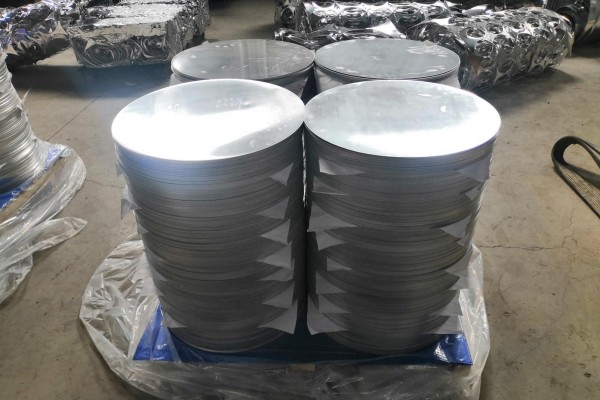
I. La base material: La genética de alta pureza y las propiedades de 1060 Aleación de aluminio
Como representante por excelencia de el 1000 serie aluminio comercialmente puro, la característica central de la 1060 La aleación radica en su pureza excepcionalmente alta. (contenido de aluminio ≥ 99.6%). Este “pureza” es la raíz de su trabajabilidad superior.
I.1 Composición química básica y valor
Su composición química típica. (fracción de masa %) es el siguiente:
| Elemento | Y | fe | Cu | Minnesota | magnesio | zinc | Alabama |
|---|---|---|---|---|---|---|---|
| Contenido | ≤0,25 | ≤0,35 | ≤0,05 | ≤0,03 | ≤0,03 | ≤0,05 | ≥99,6 |
- Ventaja de bajas impurezas: El contenido extremadamente bajo de impurezas como el hierro. (fe) y silicio (Y) significa que la formación de partículas duras de fase secundaria dentro de la aleación es mínima y fina. Esto trae directamente dos beneficios principales.: primero, La estructura interna del material es más uniforme y consistente.; segundo, durante la posterior deformación por embutición profunda, Se minimiza el efecto obstaculizador de estas partículas duras sobre el flujo continuo del material., reducir la iniciación de microdefectos.
- Diseño sin manganeso: En comparación con las aleaciones para utensilios de cocina de uso común, como 3003, 1060 no contiene manganeso. Si bien el manganeso puede proporcionar una solución sólida que fortalece, Aumenta la tendencia al endurecimiento por trabajo de la aleación y complica el control del tamaño del grano recristalizado., aumentar inadvertidamente el riesgo de piel de naranja. El “pureza” de 1060 hace que su comportamiento cristalográfico sea más simple y controlable.
I.2 Propiedades físicas clave para utensilios de cocina de alta gama
- Ductilidad excepcional y capacidad de embutición profunda: Su alargamiento normalmente puede exceder fácilmente 35%. Combinado con una tasa moderada de endurecimiento por trabajo., Esto permite que el material se estire uniforme y suavemente durante procesos severos de deformación plástica como embutición profunda e hilado., reducir la probabilidad de agrietamiento o adelgazamiento excesivo local.
- Excelente conductividad térmica: Como aluminio puro, Su eficiencia de conducción térmica se encuentra entre las más altas de las aleaciones de aluminio de uso común., asegurando un calentamiento rápido y uniforme de los utensilios de cocina y satisfaciendo las necesidades conductivas de la cocina profesional.
- Buenas características de anodizado: Su alta pureza permite la formación de una capa de óxido más transparente y uniforme durante el anodizado., Proporcionar una buena base para producir utensilios de cocina anodizados de colores o anodizados duros..
II. El asesino del acabado espejo: Un análisis en profundidad de la formación de la piel de naranja
Para derrotar a un enemigo, primero hay que entenderlo. La piel de naranja no es un simple rasguño superficial sino un “desarrollo” de la microestructura del material bajo deformación macroscópica.

II.1 Definición y Manifestación
La piel de naranja es irregular., Ondulación microscópica mate que aparece en la superficie de una lámina de metal después del procesamiento plástico, como embutición profunda o estiramiento.. Puede ser difícil de detectar antes de pulir., pero una vez pulido, Estas ondulaciones provocan una reflexión difusa de la luz., creando parches de brillo y oscuridad desiguales, impidiendo el logro de una clara, imagen especular continua.
II.2 Mecanismo de formación metalúrgica
Su esencia es la manifestación macroscópica de Falta de homogeneidad de la deformación plástica en materiales policristalinos.. Las principales razones se centran en los siguientes puntos.:
- Tamaño de grano excesivo y no homogéneo: Este es el factor más fundamental.. La deformación plástica en los metales se produce principalmente por dislocación y deslizamiento dentro de los granos.. Cuando los granos son gruesos, cada grano actúa como una unidad de deformación independiente, con diferencias significativas en su dirección de deslizamiento y cantidad de deformación. Macroscópicamente, la incompatibilidad de deformaciones entre estos “independiente” Los granos grandes se amplifican hasta formar una ondulación superficial visible.. Cuanto más desigual sea la distribución del tamaño de grano, cuanto más caótica se vuelve esta ondulación, y cuanto más severa es la piel de naranja.
- Proceso de recocido de recristalización inadecuado: Los círculos de aluminio después del laminado en frío requieren recocido para restaurar la plasticidad. Si la temperatura de recocido es demasiado alta o el tiempo de retención es demasiado largo, puede provocar un crecimiento anormal del grano (recristalización secundaria), causando directamente un fuerte aumento en la propensión a la piel de naranja.
- Textura inicial y anisotropía: La orientación cristalográfica (textura) formado durante el proceso de laminado de la hoja, si es demasiado fuerte, puede hacer que el material tenga diferentes capacidades de deformación en diferentes direcciones, exacerbar la falta de homogeneidad de la deformación.
III. El secreto premium: Tecnología sistemática de control de la piel de naranja
La diferencia entre “De primera calidad” calificación 1060 Los círculos de aluminio y los estándar radica precisamente en la intervención sistemática durante todo el proceso, desde la fundición hasta el producto terminado., con el control del grano como núcleo.
III.1 Ingeniería de Refinamiento de Granos: De la fundición al laminado en frío
- Fundición y Homogeneización: Se utilizan lingotes de aluminio de alta pureza., y se emplean técnicas avanzadas de purificación de la masa fundida y adición de refinador de granos para obtener una estructura fina y uniforme de la fundición a partir de la fuente de fundición..
- Control de temperatura de acabado y laminación en caliente: El control preciso de la temperatura de acabado durante el laminado en caliente tiene como objetivo lograr una estructura recuperada/recristalizada adecuada., Proporcionando una estructura inicial ideal para el posterior laminado en frío..
- Optimización del proceso de laminación en frío: Una alta tasa de reducción total (típicamente >70%) se utiliza con un horario de pases razonable. La deformación severa en frío almacena una alta energía de distorsión en el material., proporcionando una poderosa fuerza impulsora para formar uniforme, granos finos recristalizados en recocido posterior.
III.2 El proceso del alma: Régimen de recocido preciso
El recocido es el paso clave que imparte las propiedades de servicio finales. (O-temperamento) al material y cerraduras en el estado del grano. De primera calidad 1060 Utiliza una curva de recocido controlada dinámicamente.:
- Calentamiento paso a paso y remojo preciso: Evita diferencias excesivas de temperatura entre la superficie y el núcleo causadas por un calentamiento rápido, asegurando un calentamiento uniforme en toda la lámina.
- Ventana de recristalización óptima: Controla estrictamente la temperatura de recocido dentro del rango optimizado de 330-360°C. Esta temperatura es suficiente para impulsar la recristalización completa., formando finos granos equiaxiales, mientras se mantiene muy por debajo de la temperatura peligrosa para el crecimiento anormal del grano.
- Enfriamiento controlado: Después del período de tenencia, Se utiliza una velocidad de enfriamiento lenta programada para evitar la introducción de nuevas tensiones internas debido a un enfriamiento demasiado rápido o al engrosamiento del grano por permanecer demasiado tiempo en el rango de alta temperatura..
A través de la combinación de procesos anterior, El tamaño del grano del círculo de aluminio final se estabiliza y se controla uniformemente dentro de Grado ASTM 8-10 (gama de grano fino), Sentar una base microestructural sólida para resistir la piel de naranja..

III.3 Garantía de integridad de la superficie
Corte de precisión, Supresión CNC, o corte por láser se utilizan para garantizar que los bordes en blanco estén libres de rebabas, sin lágrimas, y libre de capas endurecidas. Estos defectos en los bordes pueden convertirse en puntos de concentración de tensiones y origen de piel de naranja en el estampado posterior..
IV. Verificación estricta: Métricas de rendimiento y sistemas de prueba para utensilios de cocina con pulido espejo
Tener un sustrato superior es sólo el primer paso; su desempeño debe ser verificado a través de métricas cuantitativas y pruebas de simulación..
IV.1 Requisitos básicos de las métricas de desempeño
| Métrica de rendimiento | Requisito típico (Prémium 1060-O) | Importancia del pulido de espejos |
|---|---|---|
| Alargamiento | ≥ 38% | Mide el límite plástico del material.. Los valores más altos indican una mejor capacidad de embutición profunda y resistencia al agrietamiento.. |
| Resistencia a la tracción | 70-95 MPa | Garantiza que el cuerpo del utensilio de cocina formado tenga una resistencia de soporte básica.. |
| Fuerza de producción | 20-35 MPa | El punto de tensión en el que comienza la deformación permanente., afectando los ajustes de fuerza de conformado. |
| Porcentaje de oreja | ≤ 2% | Un indicador clave. Refleja la anisotropía del material.. La oreja baja significa que el borde de la copa estampada tiene una altura uniforme., con menos chatarra, y un flujo de grano más uniforme en la zona del borde, reducir la probabilidad de piel de naranja local. |
| Rugosidad de la superficie (Real academia de bellas artes) | ≤ 0.8 µm | Cuanto más lisa sea la superficie de la materia prima, cuanto menor sea el costo de mano de obra y consumibles para pulirlo hasta obtener un acabado de espejo (Ra ≤ 0.2 µm). |
IV.2 Sistemas Avanzados de Inspección y Simulación de Calidad
- Pruebas de precisión sin conexión:
- Análisis metalográfico: Muestreo regular para observar y calificar directamente el tamaño del grano y la distribución de la fase secundaria bajo un microscopio.. Este es el método microscópico más directo para evaluar el riesgo de piel de naranja.
- Pruebas de propiedades mecánicas: Ensayo de tracción con máquina de ensayo universal., Prueba de ventosas de Erichsen para evaluar el rendimiento de la formación de estiramiento.
- Perfilometría de superficie: Medición sin contacto de la rugosidad y planitud de la superficie de la materia prima.
- Pruebas de simulación de procesos (Crucial):
- Limitar la relación de dibujo (LDR) Prueba: Evalúa la profundidad máxima conformable del material..
- Ventosas simuladas + Experimento de pulido: Uso de herramientas a escala de laboratorio cerca de moldes de producción para estampado de muestras pequeñas, seguido de un pulido estándar de la pared lateral de la copa (área de máxima deformación). Este es el más efectivo “ensayo de batalla” Para cáscara de naranja antes de la producción en masa..
V. Comparación horizontal y toma de decisiones sobre selección de materiales
Por qué 1060, y no otras aleaciones? La siguiente tabla revela claramente sus amplias ventajas en aplicaciones de alto brillo.:
| Grado de aleación | Características principales | Ductilidad | Sensibilidad a la piel de naranja | Idoneidad para el pulido espejo | Consideración de costos |
|---|---|---|---|---|---|
| 1060 | 99.6% Al puro, estructura uniforme | Excelente | Muy bajo | Óptimo | Medio, alto costo-rendimiento |
| 1100 | Pureza ligeramente menor (≥99,0%), rendimiento similar | Excelente | Bajo | Excelente | Medio |
| 3003 | Contiene ~1,2% manganeso, mayor fuerza | Bien | relativamente alto | Justo | relativamente alto |
| 5052 | Contiene 2.5% magnesio, alta resistencia, resistente a la corrosión | Moderado | Alto | No apto | Alto |
Para utensilios de cocina que buscan acabados de espejo de primer nivel, 1060 logra el mejor equilibrio entre “formabilidad,” “dificultad de control de calidad de la superficie,” y “costo.” Mientras 3003 o 5052 ofrecer mayor resistencia, su anisotropía más fuerte y su mayor riesgo de piel de naranja los hacen más adecuados para aplicaciones con requisitos de brillo superficial más bajos, como cuerpos de ollas a presión o sustratos para utensilios de cocina antiadherentes comunes.
VI. Aplicaciones finales y realización de valor
El valor de la prima 1060 círculos de aluminio está completamente disponible en las siguientes categorías de utensilios de cocina de alta gama:
- Utensilios de cocina revestidos de acero inoxidable pulido espejo: Como capa intermedia de núcleo de aluminio., su excelente capacidad de embutición profunda y su superficie sin piel de naranja garantizan que la lámina revestida se pueda pulir hasta obtener un acabado de espejo perfecto incluso después de un estampado intenso..
- Sartenes de aluminio puro de alta gama, Cacerolas: Utilizado directamente como capa interior en contacto con alimentos., sometidos a anodizado o revestimiento cerámico. Una estructura de sustrato uniforme y fina es fundamental para una fuerte adhesión del recubrimiento y una apariencia de color consistente..
- Utensilios de cocina para catering comercial: En escenarios que requieren producción en masa con alta consistencia, un sustrato con bajo riesgo de piel de naranja puede aumentar significativamente el rendimiento del primer paso del proceso de pulido, reducir los costos generales de producción.
- Utensilios de cocina decorativos de marca de diseñador: Proporciona el más puro y confiable “lienzo” para utensilios de cocina que requieren efectos estéticos únicos a través de diversos tratamientos superficiales como el pulido, cepillado, y arenado.

VII. Puntos clave de evaluación técnica para la adquisición de sustratos de alta gama
Seleccionando Premium 1060 Los círculos de aluminio no deben detenerse al nivel de “grado de aleación” y “Oh temperamento.” En cambio, debería establecerse un sistema de diálogo técnico y verificación.
VII.1 Especificaciones técnicas del pedido que deben ser aclaradas
- Temperamento: Especifique claramente “Oh temperamento (completamente recocido),” y opcionalmente “Adecuado para embutición profunda y pulido espejo.”
- Tolerancias dimensionales: La tolerancia del espesor debe ser más estricta que los estándares nacionales., p.ej., requiriendo ±0,02 mm, Tolerancia del diámetro ±0,1 mm..
- Calidad de la superficie: debe ser “Superficie de grado A,” libre de rayones, marcas de rollo, manchas de aceite, o manchas de oxidación. Es recomendable solicitar muestras de calidad de superficies selladas..
- Embalaje: Requiere embalaje profesional que sea resistente a la humedad. (forrado con papel/bolsas VCI) y resistente a impactos (apilamiento vertical con intercalado), para evitar daños durante el transporte.
VII.2 Documentos de Certificación de Calidad que Deben Solicitarse
- Certificado de prueba de materiales (MTC): Enumera la composición química de cada número de calor de fusión., confirmando el cumplimiento de las 1060 estándar.
- Informe de prueba de propiedad mecánica: Incluye datos clave como el límite elástico., resistencia a la tracción, y elongación.
- Informe de prueba metalográfica: Muestra microfotografías de la estructura del grano y el resultado de la clasificación del tamaño del grano. (objetivo: Grado ASTM 8-10).
- Informe de desempeño del proceso (Escenario ideal): Informes proporcionados por el proveedor sobre el valor de cata., porcentaje de ganancia simulado, o resultados de pruebas de embutición profunda.
VIII. Conclusión
En el campo de la fabricación de utensilios de cocina de alta gama., La competencia material ha superado durante mucho tiempo el ámbito de la “usable” y entró en las aguas profundas de “alto rendimiento” e incluso “imbuyendo productos con genes superiores.” Controlar la piel de naranja es, en esencia, la búsqueda definitiva de uniformidad y estabilidad en la microestructura de materiales metálicos.
De primera calidad 1060 círculos de aluminio, a través de su esencia material de alta pureza combinada con la gestión del refinamiento del grano desde la fundición, laminación para recocido, Minimizar con éxito el riesgo de piel de naranja.. No es simplemente una materia prima sino una solución de alto rendimiento que integra ciencias de los materiales, procesos metalúrgicos, y gestión de calidad.
Para marcas comprometidas con la creación de utensilios de cocina con pulido espejo de primer nivel, invertir en sustratos de tan alta calidad genera beneficios:mayor rendimiento del producto, procesos de pulido simplificados, y avances en el brillo y calidad del producto—que superan con creces el costo incremental del material en sí. Esta es la elección astuta para crear una diferenciación de productos central y fosos de marca en un mercado de océano rojo.. Elegir el sustrato adecuado es el primer y más crucial paso para lograr un acabado de espejo perfecto..