

Diferencias fundamentales entre 1050 y 1060 Discos de aluminio
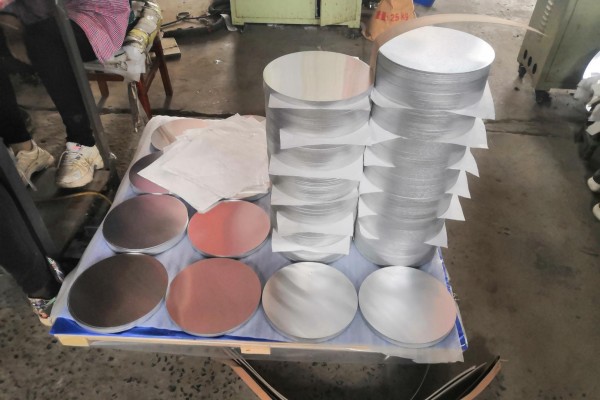
Los discos de aluminio se encuentran entre los materiales de aluminio básicos más utilizados..
Con excelente plasticidad, conductividad térmica, y resistencia a la corrosión, Sirven como materia prima fundamental en la fabricación de utensilios de cocina., componentes de iluminación, señalización de tráfico, partes electricas, y aplicaciones de embutición profunda. Dentro de la serie de aluminio puro (1xxx), 1050y 1060 discos de aluminioSon los dos productos más utilizados en el mercado..
Si bien parecen similares y comparten propiedades básicas comparables (ambos son aluminio puro industrial de alta pureza), muchos compradores y fabricantes a menudo los confunden durante la selección de materiales..
En realidad, Estas dos aleaciones exhiben diferencias sutiles pero críticas en la composición química., propiedades mecánicas, formabilidad, conductividad térmica/eléctrica, y calidad de la superficie. Cada uno también ofrece distintas ventajas en términos de costo e idoneidad de la aplicación.. Distinguir con precisión sus características permite a las empresas seleccionar la materia prima más rentable en función de los requisitos de producción., posicionamiento del producto, y presupuesto.
Este artículo proporciona un análisis exhaustivo de las diferencias entre 1050 y 1060 Discos de aluminio que sirven como referencia completa para la selección de materiales industriales..
1. Definiciones básicas & Descripción general de los parámetros clave
1.1 1050 Discos de aluminio: Aluminio puro rentable para uso general
1050 Los discos de aluminio pertenecen a la serie nacional estándar 1xxx de aluminio puro industrial., con un contenido de aluminio no inferior a 99.5%.
Representan una herramienta muy versátil., Material fundamental que conserva las principales ventajas del aluminio puro.: excelente resistencia a la corrosión, Conductividad térmica y eléctrica estable., excelente formabilidad, y fácil soldabilidad y estampado..
Estas propiedades hacen 1050 Adecuado para la gran mayoría de técnicas de procesamiento convencionales.. Gracias a su rendimiento equilibrado y precio asequible, 1050 Es el material preferido para aplicaciones civiles e industriales en general..
Especificaciones típicas:
- temperamentos: oh, H12, H14
- Rango de espesor: 0.3mm – 6,0 mm
- Rango de diámetro: 80mm – 1200 mm
- Acabado superficial: Acabado de fábrica estándar, Satisfacer la mayoría de las necesidades de producción convencionales..
1.2 1060 Discos de aluminio: Material especial de alta pureza para procesamiento profundo
1060 Los discos de aluminio también pertenecen a la serie 1xxx pero presentan una pureza de aluminio elevada de ≥99,6%, con niveles de impurezas significativamente reducidos en comparación con 1050.
Esta mayor pureza mejora la ductilidad., rendimiento de embutición profunda, estética de la superficie, y conductividad al tiempo que minimiza los problemas comunes en el procesamiento profundo, como el agrietamiento, mala formabilidad, y defectos superficiales. Tal como, 1060 es la aleación especial elegida para productos de alta gama., productos profundamente procesados.
En términos de dimensiones y temperamentos., 1060 se alinea estrechamente con 1050. La distinción fundamental no reside en el tamaño sino en la pureza del material y las ventajas de rendimiento derivadas..
2. Composición química: La raíz de las diferencias de rendimiento
Todas las diferencias de rendimiento entre estas dos aleaciones se deben a variaciones sutiles en la composición química, principalmente la pureza del aluminio y el contenido de impurezas.. Menos impurezas y mayor pureza dan como resultado una mayor uniformidad y estabilidad microestructural., lo que lleva a propiedades generales superiores.
| Elemento | 1050 Disco de aluminio | 1060 Disco de aluminio |
|---|---|---|
| Aluminio (Alabama) | ≥99,5% | ≥99,6% |
| Silicio + Hierro (Si+Fe) | ≤0,40% | ≤0,35% |
| Cobre (Cu) | ≤0,05% | ≤0,05% |
| Manganeso (Minnesota) | ≤0,05% | ≤0,03% |
| Magnesio (magnesio) | ≤0,05% | ≤0,03% |
| Zinc (zinc) | ≤0,05% | ≤0,05% |
Los datos muestran claramente que 1060 Cuenta con una mayor pureza de aluminio y menores impurezas totales. (Si+Fe) así como un contenido reducido de Mn y Mg. Esta reducción mitiga las inconsistencias estructurales internas., mejorando significativamente la dureza y la uniformidad.
Sin embargo, esto constituye una mejora marginal; en escenarios de procesamiento estándar, la diferencia práctica es mínima. La distinción se vuelve pronunciada sólo en aplicaciones de alta precisión y procesamiento profundo..

3. Propiedades mecánicas: Equilibrio de resistencia y ductilidad
Las propiedades mecánicas determinan directamente el rendimiento de un disco de aluminio en estampado., dibujo, y resistencia a la deformación. 1050 y 1060 Ofrecer características complementarias adaptadas a diferentes necesidades de procesamiento..
| Propiedad | 1050 Disco de aluminio | 1060 Disco de aluminio |
|---|---|---|
| Resistencia a la tracción | 60–95MPa | 55–95MPa |
| Fuerza de producción | ≥20MPa | ≥18MPa |
| Tasa de alargamiento | 20–35% | 25–40% |
| Dureza | Ligeramente más alto | Ligeramente más bajo |
| Formabilidad | Excelente | Superior |
1050Ofrece una dureza marginalmente mayor., límite elástico, y resistencia a la tracción, proporcionando una mejor resistencia a deformaciones menores. Es ideal para productos estampados convencionales que requieren estabilidad estructural.. En contraste, 1060 Cambia algo de fuerza por un alargamiento y una flexibilidad significativamente mayores, lo que resulta en una tenacidad superior y resistencia al agrietamiento. Es la opción óptima para procesos complejos de conformado y grandes deformaciones..
4. Rendimiento de procesamiento profundo: La división crítica en el dibujo & Hilado
Para productos que requieren embutición profunda o hilado, como utensilios de cocina y gabinetes de precisión, la conformabilidad es mucho más crítica que la resistencia básica.. Aquí es donde surgen los principales criterios de selección entre las dos aleaciones..
4.1 1050 Discos de aluminio: Adecuado para dibujo convencional de superficie media
1050 Ofrece una excelente estabilidad de producción y una buena formabilidad en el centrifugado., con tasas de rendimiento consistentes y menores costos de materia prima, ofreciendo una gran rentabilidad. Sin embargo, su alargamiento limitado lo hace adecuado sólo para dibujos medio superficiales y formas simples.
Los embutidos profundos o las curvaturas complejas pueden provocar grietas en los bordes y texturas desiguales.. Las aplicaciones típicas incluyen sartenes, utensilios de cocina estándar, tapas de ollas, carcasas de lámparas, y señales de tráfico.
4.2 1060 Discos de aluminio: Diseñado para embutición profunda de alta precisión & Formación compleja
1060 sobresale en el procesamiento profundo. Su mayor alargamiento permite mayores profundidades de dibujo y tasas de pendiente más bajas., reduciendo eficazmente el agrietamiento, deformación, y defectos en los bordes. Los productos terminados exhiben un espesor de pared uniforme y una geometría precisa.
Es el material preferido para el interior de las ollas arroceras., cuerpos de hervidor eléctrico, ollas a presión, utensilios de cocina personalizados de alta gama, y componentes giratorios de precisión.

5. Térmico, Eléctrico & Comparación de resistencia a la corrosión
5.1 Conductividad térmica: Una ventaja clave para los utensilios de cocina premium
El rendimiento térmico es fundamental para los utensilios de cocina., Impactando directamente en la uniformidad y eficiencia de la calefacción.. 1050 tiene una conductividad térmica de aproximadamente 222 W/m·K, mientras 1060 alcanza 234 W/m·K. La mayor pureza de 1060 Permite una transferencia de calor más rápida y una disipación más uniforme., eliminar los puntos calientes y mejorar el rendimiento de la cocción, una razón principal por la que los utensilios de cocina de primera calidad prefieren esta aleación.
5.2 Conductividad eléctrica: Esencial para componentes eléctricos
En aplicaciones eléctricas, 1060 nuevamente tiene la ventaja. 1050 ofertas sobre 61% SIGC conductividad, mientras 1060 logra 62–63% SIGC, asegurando una conducción más estable con menores pérdidas. Como consecuencia, 1060 es la opción predeterminada para las latas de condensadores, barras colectoras, accesorios conductores, y reflectores eléctricos.
5.3 Resistencia a la corrosión: Casi idéntico
Ambas aleaciones forman una densa, capa protectora de óxido, ofreciendo una excelente resistencia a la corrosión contra la humedad, ácidos alimentarios débiles, atmósferas industriales, y intemperie al aire libre. Debido a su mínima brecha de pureza, su comportamiento frente a la corrosión es prácticamente idéntico, haciendo que ambos sean adecuados para exteriores, sanitario, y entornos industriales.
6. Calidad de la superficie & Consideraciones de costos
6.1 Calidad de la superficie: 1060 Ofrece un acabado superior
Gracias a una mayor pureza y menos impurezas, 1060 Los discos presentan un sonido más suave., superficie de base más fina libre de defectos de partículas. Durante el anodizado, pulido, o revestimiento, produce una coloración más uniforme, mayor brillo, y mejor reflectividad, lo que resulta en una apariencia notablemente más premium. Esto hace 1060 la opción ideal para piezas decorativas de alta gama, accesorios de iluminación reflectantes, y utensilios de cocina premium. 1050 Proporciona una planitud adecuada para los requisitos estéticos estándar..
6.2 Costo: 1050 Ofrece mayor valor
El costo es fundamental en la producción a gran escala.. Si bien los costos de procesamiento son comparables, 1060Los requisitos más estrictos de pureza de la materia prima generalmente lo hacen 1–3% más caro que 1050 (sujeto a las fluctuaciones del mercado). Para productos básicos de gran volumen, esta brecha se traduce en ahorros significativos, Consolidando el papel de 1050 en la fabricación basada en costos..
7. Comparación de campos de aplicación
Basado en sus distintas fortalezas en pureza., formabilidad, conductividad, calidad de la superficie, y costo, 1050 y 1060 Servir a mercados claramente segmentados en cinco sectores principales..
7.1 Aplicaciones primarias de 1050 Discos de aluminio
- utensilios de cocina: Artículos dibujados a poca profundidad, como sartenes., sartenes antiadherentes, tapas, y ollas, donde la formación estable y la transferencia de calor adecuada satisfacen las necesidades del mercado masivo.
- Iluminación: Portalámparas y bases de lámpara estándar sin exigencias estrictas de reflectividad o textura.
- Tráfico & Exterior: Señalización vial y aluminio decorativo básico para exteriores., aprovechando una resistencia confiable a la corrosión.
- Fabricación Industrial: Piezas estampadas genéricas, componentes de chapa, y recintos de equipos centrados en la procesabilidad y el rendimiento.

7.2 Aplicaciones primarias de 1060 Discos de aluminio
- Utensilios de cocina de primera calidad: Embutido profundo, artículos de formas complejas, como revestimientos para ollas arroceras, cuerpos de caldera, ollas a presión, y utensilios de cocina gourmet, priorizando una formación impecable y un rendimiento térmico.
- Precisión eléctrica: Latas de condensadores, barras colectoras, escudos reflectantes, y piezas conductoras que requieren una pérdida eléctrica mínima.
- Iluminación & Decoración: Copas reflectoras de alta gama, acabados anodizados arquitectónicos, e iluminación decorativa que exigen precisión óptica y perfección superficial.
- Industria de alta precisión: Componentes hilados complejos y piezas estampadas muy deformadas para aplicaciones de ingeniería avanzadas.
8. Guía de selección precisa: Elegir según las necesidades
8.1 priorizar 1050 Cuando:
- La rentabilidad y la producción en grandes lotes son primordiales.
- Las aplicaciones incluyen: sartenes antiadherentes estándar, sartenes, tapas, piezas estampadas en general, fundas básicas para lámparas, señales de tráfico, y cualquier producto sin requisitos extremos de embutición profunda o calidad superficial.
8.2 priorizar 1060 Cuando:
- Calidad del producto, procesamiento profundo, y la alta precisión son fundamentales.
- Las aplicaciones incluyen: ollas arroceras, hervidores eléctricos, ollas a presión, reflectores de iluminación de alta gama, piezas decorativas anodizadas, latas de condensadores, barras colectoras, y componentes complejos hilados o embutidos.
9. Conclusión
Ambos 1050 y 1060 Los discos de aluminio son materiales de aluminio puro de la serie 1xxx de alta calidad que ofrecen una excelente resistencia a la corrosión., conductividad térmica, y conformabilidad para una amplia gama de bienes industriales y de consumo.
Su divergencia central radica en pureza y posicionamiento: 1050 es el generalista de costes optimizados, Equilibrando la resistencia moderada y la asequibilidad para una producción a escala.. 1060 es el especialista de alto rendimiento, entregando ductilidad mejorada, calidad superficial superior, y mejores propiedades físicas para procesamiento profundo y aplicaciones premium.
La selección eficaz de materiales no significa elegir siempre la opción de “calidad superior”. En cambio, alinee su elección con la complejidad del procesamiento, objetivos de desempeño, y restricciones presupuestarias.
Optar por 1050 Maximizar el valor de los productos convencionales., y elige 1060 para elevar la calidad y reducir las tasas de rechazo en sofisticados, productos embutidos—lograr el equilibrio óptimo entre excelencia y economía.