

1050 Círculo de aluminio para utensilios de cocina.: Especificaciones técnicas completas & Manual del producto
1. Descripción general del producto ejecutivo
1.1 Introducción a 1050 Círculos de aluminio específicos para utensilios de cocina
El 1050 El círculo de aluminio específico para utensilios de cocina representa el pináculo de los sustratos de discos de aluminio forjado de alta pureza disponibles en la industria mundial de fabricación de utensilios de cocina..
Diseñado para la versatilidad, Este producto cumple estrictamente con la Asociación Americana del Aluminio. (Automóvil club británico) Estándares y estándar nacional de China GB/T. 3190-2020. Con una pureza de aluminio mínima garantizada de 99.5%, Este producto se sitúa en la cúspide de la serie industrial de aluminio puro..
A diferencia de los discos de aluminio genéricos, Esta variante es el resultado de años de refinamiento metalúrgico destinado específicamente a resolver los desafíos únicos que enfrentan los OEM y ODM de utensilios de cocina en todo el mundo..
1.2 Génesis metalúrgica y flujo de procesos
Nuestro ciclo de producción integra un sistema de control de calidad de circuito cerrado que abarca desde el metal fundido hasta la bobina terminada.. El proceso se inicia con la fundición de lingotes de aluminio virgen., seguido de homogeneización, laminación en caliente, laminación en frío, y finalmente, nuestra propiedad Recocido de gradiente de precisión.
Luego los círculos se borran., nivelado, e inspeccionado. Cada etapa se monitorea mediante análisis espectrómetro y escaneo ultrasónico para garantizar cero inclusiones o poros.. Este meticuloso proceso garantiza que el material no sea simplemente una pieza de metal., pero un sustrato de alto rendimiento listo para las operaciones de conformado más exigentes.
1.3 Abordar los puntos débiles de la industria
El principal desafío histórico con los círculos de aluminio estándar en la producción de utensilios de cocina ha sido la falla impredecible durante el conformado..
Problemas como el agrietamiento de los bordes durante la embutición profunda, textura de cáscara de naranja durante el centrifugado, y el espesor de pared inconsistente ha afectado a los fabricantes, lo que lleva a altas tasas de desperdicio. Nuestro 1050 La formulación específica para utensilios de cocina aborda directamente estos problemas.
Optimizando la estructura del grano y eliminando compuestos intermetálicos mediante técnicas avanzadas de fundente y desgasificación., Hemos desarrollado un material que ofrece una plasticidad inigualable..
Este documento se centrará en gran medida en cómo nuestro superior Tasa de alargamiento se traduce directamente en una mayor rentabilidad y calidad del producto para sus operaciones.

2. Buceo profundo: Aleación de núcleo & Parámetros de temperamento
2.1 Composición química y pureza metalúrgica.
La huella química de nuestra 1050 La aleación es la base de su rendimiento.. Mantenemos un protocolo estricto donde las impurezas totales tienen un límite de ≤0,5%.
- Hierro (fe) ≤ 0.40%: Controlado para optimizar la formación de fases Al-Fe-Si que contribuyen a la resistencia sin sacrificar la ductilidad..
- Silicio (Y) ≤ 0.25%: Se mantiene bajo para garantizar una alta plasticidad y evitar la formación de partículas de silicio duras que pueden iniciar grietas..
- Cobre (Cu) ≤ 0.05%: Minimizado para mejorar la resistencia a la corrosión, particularmente importante para utensilios de cocina expuestos a alimentos ácidos.
- Oligoelementos: Liderar (Pb), Arsénico (Como), y cadmio (Cd) son virtualmente eliminados para asegurar 100% cumplimiento de seguridad de grado alimentario.
Panorama competitivo: 1050 vs. 1060 vs. 1100
Para ilustrar por qué 1050 es el “Punto dulce” para la fabricación de utensilios de cocina, considere la siguiente comparación técnica ampliada:
| Parámetro | 1050 (Nuestro estándar) | 1060 (Alternativa premium) | 1100 (Alternativa Económica) |
|---|---|---|---|
| Pureza | ≥99,5% | ≥99,6% | ≥99,0% |
| Alargamiento (A) | 28% – 32% | 30% – 33% | 22% – 26% |
| Resistencia a la tracción | 90 – 120 MPa | 85 – 115 MPa | 110 – 145 MPa |
| Estructura del grano | Bien, Uniforme, equiaxial | muy bien, Altamente uniforme | Grueso, menos uniforme |
| Rentabilidad | Alto (Mejor valor) | Medio (Costo de la prima) | Alto (Costo inicial más bajo) |
| Potencial de tasa de chatarra | < 1% | < 0.5% | 5% – 15% |
| Veredicto | Ideal para 90% de utensilios de cocina de consumo masivo y semi-premium. | Lo mejor para arte extremo/paredes ultrafinas. | Arriesgado para embutición profunda; solo para cubiertos. |
2.2 Designaciones de temperamento especializadas para utensilios de cocina
No ofrecemos solo “material”; ofrecemos “listo para el proceso” Soluciones a través de temperamentos específicos.:
- A (Totalmente recocido – Suave): Se logra calentando por encima de la temperatura de recristalización y enfriando lentamente. Esto da como resultado un pico de ductilidad.. Solicitud: Esencial para macetas que requieren una relación profundidad-diámetro superior a 1:1, como ollas, wok, y cacerolas altas.
- H14 / H24 (Medio duro): H14 está endurecido por deformación; H24 está endurecido por deformación y parcialmente recocido.. Ofrecen un equilibrio. Solicitud: Perfecto para sartenes y sartenes donde la base requiere rigidez para evitar la acumulación de aceite. (“enlatado de aceite”) pero los lados requieren una ligera curvatura.
- H18 (Completamente duro): Trabajado en frío al estado más duro posible para esta aleación.. Solicitud: Tapas, placas base para utensilios de cocina de inducción, y bandejas para pizza donde no se requiere deformación.
3. Análisis crítico de rendimiento: Centrarse en el alargamiento
3.1 Entendiendo el alargamiento (A50 estándar)
El alargamiento es el aumento porcentual en la longitud calibrada de una muestra de prueba antes de que se rompa bajo tensión.. En términos de utensilios de cocina, Mide hasta dónde puede estirarse el metal antes de fracturarse.. Utilizamos el estándar A50 (50mm de longitud de calibre) porque proporciona la simulación más precisa del estiramiento del mundo real en una prensa.
Tabla detallada de propiedades mecánicas
| Temperamento | Alargamiento (A50) | Resistencia a la tracción (MPa) | Fuerza de producción (MPa) | valor n (Exponente de endurecimiento por trabajo) | valor r (Relación de deformación plástica) |
|---|---|---|---|---|---|
| A | 28% – 32% | 90 – 120 | 40 – 80 | ~0.30 | ~0,60 |
| H14 | 8% – 18% | 130 – 160 | 110 – 140 | ~0,15 | ~0,50 |
| H18 | 3% – 5% | ≥160 | ≥140 | ~0.05 | ~0,40 |
- Por qué estos números importan: El alto alargamiento de nuestro temperamento HO (28-32%) proporciona una enorme “margen de seguridad.” Si una operación de dibujo requiere 20% estirar, estándar 1100 podría fallar, pero nuestro 1050 funciona perfectamente. el alto valor r indica una excelente capacidad de embutición profunda (resistencia al adelgazamiento), mientras que el valor nGarantiza una deformación uniforme en lugar de un estrechamiento localizado..
3.2 Propiedades físicas y dinámica térmica.
- Conductividad térmica (230 W/m·K): El aluminio disipa el calor 3 veces más rápido que el acero inoxidable. Nuestro 1050 Los círculos garantizan que no haya “puntos calientes” que hacen que la comida se queme. Durante el proceso de formación de espín, Esta propiedad también ayuda a disipar el calor por fricción., evitando que el troquel se pegue.
- Densidad (2.70 gramos/cm³): Esta baja densidad permite paredes de calibre más grueso (para mayor durabilidad) sin aumentar el peso del producto final, mejorando la experiencia del usuario final.
- Módulo de elasticidad: Aproximadamente 69 GPa. Esto asegura que si bien el material es dúctil, Conserva suficiente control de recuperación elástica para una estabilidad dimensional precisa después del conformado..
4. Presupuesto, Tolerancias, e integridad dimensional
4.1 Gama completa de tamaños
Ofrecemos la más amplia gama de diámetros y espesores para adaptarnos a cada nicho del mercado del menaje de cocina.:
- Ventana de espesor: 0,3 mm a 10,0 mm.
- Sub-0.5milímetros:Se utiliza para recipientes de papel de aluminio desechables o utensilios de cocina para acampar ultraligeros..
- 0.5milímetros – 3.0milímetros:El punto óptimo para los utensilios de cocina de consumo.
- 3.0milímetros – 10.0milímetros:Sartenes para estofar comerciales de alta resistencia y bases de inducción.
- Ventana de diámetro: 20 mm a 1600 mm.
- Pequeño (<200milímetros):Componentes para electrodomésticos, tapas, y calentadores de mantequilla.
- Grande (>1200milímetros):Paelleras comerciales y cuencos industriales..
4.2 Estándares de tolerancia de precisión
Nuestros estándares de tolerancia son dos veces más estrictos que los del aluminio comercial típico.:
- Tolerancia de espesor: Celebrado a ±0,02 mm para calibres delgados. Por qué? Debido a que una desviación de 0,05 mm en el espesor puede provocar una 10% variación en la fuerza de estiramiento, lo que lleva a alturas de conformado inconsistentes y desgaste prematuro de la herramienta.
- Calidad de borde: Los bordes cortados están desbarbados y redondeados. (Radio > 0.1milímetros) para prevenir los aumentos de estrés. Un borde afilado actúa como una grieta preexistente., reduciendo drásticamente el alargamiento efectivo durante el estirado.

5. Procesos de fabricación avanzados
5.1 Fundición DC vs.. CC colada continua
Operamos tanto Direct Chill (corriente continua) y colada continua (CC) líneas para atender diferentes segmentos del mercado:
- Fundición CC (Enfriamiento directo): El aluminio fundido se vierte en un molde enfriado por agua.. Esto crea una losa gruesa con una estructura de solidificación altamente direccional.. Es excelente para productos de espesor grueso que requieren una alta integridad estructural..
- Fundición CC (colada continua & Laminación): El aluminio fundido se alimenta a través de una rueda de doble rodillo., creando una tira delgada directamente. Esto resulta en una mucho más fina, estructura de grano más isotrópica. Ventaja: Acabado superficial superior (No “poros”) y aproximadamente 30% mejor consistencia de elongación en comparación con el material fundido DC. Recomendado para utensilios de cocina antiadherentes de alta gama donde la perfección de la superficie es obligatoria.
5.2 La ciencia del recocido de precisión
El recocido es donde ocurre la magia.. Nuestro Hornos de recocido de gradienteUtiliza un perfil de temperatura de 5 zonas..
- Recuperación: Calentamiento para eliminar las tensiones internas del rodamiento..
- Recristalización: Calentamiento a ~350°C para formar nuevos, granos sin cepas.
- Control del crecimiento del grano: Precisamente mantener la temperatura para lograr el “Encerrada dorada” tamaño de grano (~30-40 micras). Demasiado pequeño = rígido; demasiado grande = “cáscara de naranja.”
- Enfriamiento controlado: Enfriamiento lento para evitar la reintroducción del estrés térmico.
Este enfoque científico garantiza que cada círculo que sale de nuestras instalaciones posea el alargamiento exacto requerido para el trabajo..
6. Tecnología de superficies y compatibilidad de acabados
6.1 Características nativas de la superficie
La superficie laminada está protegida por una fina, Capa de óxido invisible que evita las manchas durante el tránsito.. Es químicamente limpio., libre de aceites de rodadura, y listo para procesamiento inmediato. no hay “marcas de rodillos” (imagen fantasma) que puede telegrafiarse hasta la superficie final pulida del utensilio de cocina..
6.2 Recubrimientos de pretratamiento y conversión
Nuestro 1050 La aleación es el sustrato ideal para procesos de valor añadido.:
- Anodizado: La alta pureza garantiza una espesa, uniforme, y capa anódica transparente. Recomendamos nuestro material CC-cast para anodizado duro para evitar picaduras..
- Revestimiento antiadherente (PTFE/Cerámica): La superficie se puede grabar (química o mecánicamente) para crear un perfil de microanclaje. El bajo contenido de impurezas de nuestro material garantiza cero “estallando” o desgasificación durante el curado a alta temperatura de recubrimientos antiadherentes.
- Pulido: Debido a la ausencia de partículas intermetálicas duras, Nuestros círculos pulen hasta obtener un acabado de espejo más rápido y con menos consumo de abrasivo que las aleaciones de menor pureza..

7. Ventajas estratégicas del producto
- Optimización del rendimiento: Nuestro alargamiento consistente (28-32%) reduce su tasa de desperdicio de un promedio de la industria de 5% hasta <1%. En una producción de 100,000 unidades, esto salva 4,000 círculos de material y mano de obra.
- Longevidad de las herramientas: Las propiedades consistentes del material reducen la carga de impacto en prensas y máquinas de hilar, extendiendo la vida útil de la herramienta hasta 20%.
- Tranquilidad regulatoria: Cumplimiento total con la FDA 21 CFR, Reglamento de la UE 1935/2004, y estándares LFGB. Nuestro material está certificado para contacto directo con alimentos., no contiene metales pesados (Pb, Cd, Como).
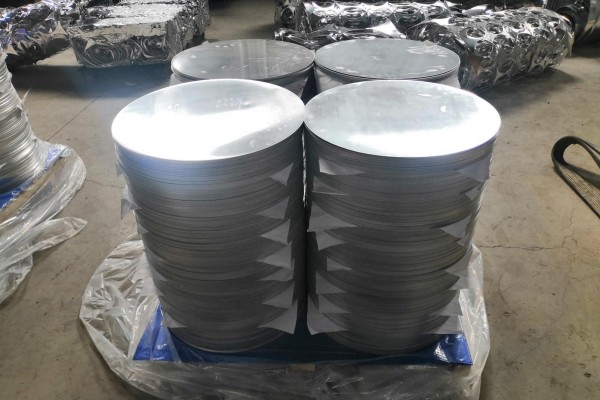
- Eficiencia Logística: Ofrecemos JAT (Justo a tiempo) programas de entrega. Nuestros círculos están intercalados con papel artesanal neutro o película de PE para evitar rayones durante la alimentación automática..
8. Portafolio de aplicaciones ampliado
- Línea dura del consumidor: Sartenes forjadas de alta gama, núcleos de utensilios de cocina de acero inoxidable revestidos, hornos holandeses.
- Pequeños electrodomésticos: Cestas para freidora de aire, ollas interiores de olla arrocera, cuerpos de hervidor eléctrico, calderas para maquinas de cafe.
- Comercial/HORECA: Sartenes para hoteles (Sartenes de mesa de vapor), platos de buffet para frotar, ollas resistentes, moldes para hornear.
- Artículos especiales: Reflectores para iluminación (Utilizando la alta reflectividad del aluminio puro.), disipadores de calor para electrónica.
9. Infraestructura de garantía de calidad
9.1 Capacidades de laboratorio
Nuestro laboratorio interno está equipado con:
- Máquina de pruebas universal Instron: Para pruebas de tracción precisas (Alargamiento, UTS, YS).
- Microscopio metalográfico: Para análisis de tamaño de grano (Norma ASTM E112).
- Espectrómetros: Para una verificación instantánea de la composición química.
- Probadores de adherencia de recubrimientos: Para simular el rendimiento de la aplicación antiadherente.
9.2 Portafolio de Certificaciones
- ISO 9001:2015: Sistema de Gestión de Calidad.
- ISO 14001:2015: Sistema de Gestión Ambiental.
- FDA (EE.UU), DGCCRF (Francia), LFGB (Alemania): Cumplimiento del contacto con alimentos.
- ALCANZAR & RoHS: Restricción de Sustancias Peligrosas.
10. Logística, Embalaje, y soporte
10.1 Embalaje estándar de exportación
- Ojo al cielo o Ojo a la pared: Orientación basada en la preferencia del cliente.
- Barrera de humedad: Cada paquete está envuelto en láminas de LDPE y sellado con paquetes desecantes para evitar la oxidación durante el transporte marítimo..
- Cajas de madera: Tratado térmicamente (Cumple con la NIMF-15) Cajas de madera para máxima protección contra daños de montacargas..
10.2 Asociación Técnica
No solo vendemos aluminio; brindamos soporte de ingeniería. Nuestro equipo técnico puede ayudarle con:
- Cálculo del diámetro en blanco: Le ayudamos a determinar el tamaño de círculo exacto necesario para la forma específica de su maceta para minimizar los desechos de recortes..
- Relaciones de reducción de sorteo: Asesoramiento sobre el número de etapas de embutición necesarias para macetas profundas para maximizar el éxito con nuestro material..
- Provisión de muestra: Muestras gratis (hasta 5kg) están disponibles para pruebas de prensa y verificación de laboratorio..