
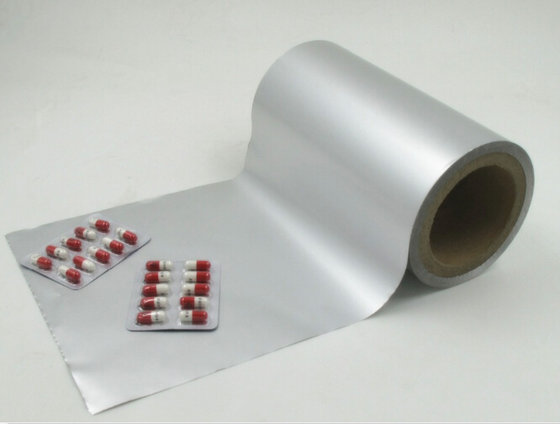
Einfluss und Mechanismus des Dynwerts von pharmazeutischer Aluminiumfolie auf die Produktqualität
HW-A. Einführung: Dynwert der pharmazeutischen Aluminiumfolie – Der “Zentraler Regulierungsindikator” für die Qualität der fertigen Folie
Pharmazeutisch Aluminiumfolie (z.B., Aluminiumfolie für PTP-Aluminium-Kunststoff-Blister, Kaltverformung pharmazeutischer Aluminiumfolie) dient als kritisches Verpackungsmaterial im direkten Kontakt mit Arzneimitteln. Die Qualität der fertigen Folienprodukte bestimmt direkt die Sicherheit der Arzneimittellagerung, Medikamenteneinhaltung, und Patientenrisiko. Der Dynwert von pharmazeutischer Aluminiumfolie (Oberflächenspannung, Einheit: mN/m), als quantitativer Indikator für die Oberflächenenergie pharmazeutischer Aluminiumfolie, ist nicht nur ein “Oberflächenparameter” – durch die Regulierung der Benetzungs- und Haftvermögen von pharmazeutischer Aluminiumfolie gegenüber Klebstoffen, Tinten, und pharmazeutische Komponenten, Es beeinflusst maßgeblich die Kerneigenschaften der fertigen Folienprodukte, inklusive Verbundabdichtung, gedruckte Markierung, Pharmazeutische Verträglichkeit, und Verarbeitungsformbarkeit.
Branchendaten zeigen, dass in der 2024 Stichprobenprüfung chinesischer pharmazeutischer Verpackungsmaterialien, etwa 35% der nicht konformen fertigen Folienverpackungen standen in direktem Zusammenhang mit abnormalen Dyn-Werten der pharmazeutischen Aluminiumfolie. Unter diesen, über 60% wurden auf Verbundleckagen und Abblättern der Tinte zurückgeführt, die durch Dynwerte der pharmazeutischen Aluminiumfolie unter 32 mN/m verursacht wurden, während die durch die schlechte Gleichmäßigkeit des Dynwerts induzierte Rissbildungsrate bei der Kaltumformung erreicht wurde 22%. daher, Die Analyse des Einflusses des Dynwerts von pharmazeutischer Aluminiumfolie auf fertige Folienprodukte ist der Schlüssel zur Kontrolle der Qualität von pharmazeutischer Aluminiumfolie.
HW-B. Kernwirkung 1: Der Dynwert von pharmazeutischer Aluminiumfolie bestimmt die Verbundhaftungsleistung – gewährleistet die Folienversiegelung und die Sicherheit der pharmazeutischen Lagerung
Pharmazeutische Aluminiumfolie muss mit Substraten wie PVC und PE laminiert werden (z.B., “Pharmazeutische Aluminiumfolie//PVC” für PTP-Blister, “pharmazeutische Aluminiumfolie//PE” für Kaltumformverpackungen). Der Dynwert der pharmazeutischen Aluminiumfolie wirkt sich direkt auf die aus benetzende und verteilende Wirkung von Klebstoffen auf seiner Oberfläche, Dadurch werden die Schälfestigkeit und die Versiegelungsleistung der Verbundschicht bestimmt – die zentrale Verteidigungslinie für fertige Folienprodukte, um die Aufnahme und Oxidation von pharmazeutischer Feuchtigkeit zu verhindern.
(A) Schlagmechanismus: “Wetting-Matching-Prinzip” Zwischen dem Dynwert von pharmazeutischer Aluminiumfolie und Klebstoffen
Die Oberflächenspannung medizinischer PU-Klebstoffe (häufig verwendete Verbundklebstoffe) reicht von 30 bis 32mN/m. Ihr Aufbringen auf pharmazeutischer Aluminiumfolie erfordert die Einhaltung des Grundsatzes “der Dynwert der pharmazeutischen Aluminiumfolie ≥ die Oberflächenspannung des Klebstoffs”:
- Wenn der Dynwert der pharmazeutischen Aluminiumfolie ≥ 32 mN/m beträgt, Der Klebstoff verteilt sich kontinuierlich in einem “filmische Art und Weise” und bildet Wasserstoffbrückenbindungen + Van-der-Waals-Kräfte mit den Hydroxylgruppen (-OH) auf der Oberfläche pharmazeutischer Aluminiumfolie, was zu einem größeren Adhäsionsflächenverhältnis führt 92% und keine Schwachstellen in der Verbundschicht;
- Beim Dyn-Wert von pharmazeutischer Aluminiumfolie < 30mN/m, der Kleber schrumpft hinein “Perlen” aufgrund unzureichender Oberflächenenergie, mit einem Haftflächenverhältnis von weniger als 75%. Dies führt dazu “lokale klebstofffreie Bereiche” in der Verbundschicht, die zu Kanälen für die Absorption und Oxidation pharmazeutischer Feuchtigkeit werden.
(B) Quantitative Daten: Direkte Korrelation zwischen dem Dynwert von pharmazeutischer Aluminiumfolie und der Verbundleistung
Basierend auf der YBB 00152002-2015 “Schälfestigkeitstest” (Verbundstruktur: Pharmazeutische Aluminiumfolie//PVC, Klebstoff: Zweikomponentiger medizinischer PU-Kleber), Die Leistungsdaten, die den verschiedenen Dyn-Werten der pharmazeutischen Aluminiumfolie entsprechen, sind wie folgt:
| Dynwert der pharmazeutischen Aluminiumfolie (mN/m) | Klebstoffbenetzungsflächenverhältnis (%) | 180° Schälfestigkeit (N/15mm) | Versiegelungstest (Leckrate, atm·cc/s) | Risiko bei der Lagerung von Arzneimitteln (40℃/RH75 %, 6 Monate) |
| 28 (Nicht konform) | 75 | 0.7 | 1.2×10⁻³ | Pharmazeutische Feuchtigkeitsaufnahme (Die Luftfeuchtigkeit stieg ab 3% Zu 8%), 12% Abbau von Vitamin C |
| 30 (Kritisch) | 85 | 1.0 | 5.8×10⁻⁴ | Lokale Delaminierung der Verbundschicht, 30% erhöhtes Risiko einer zu hohen Gesamtkeimzahl |
| 32 (Minimale Konformität) | 92 | 1.3 | 8.5×10⁻⁵ | Keine nennenswerte Feuchtigkeitsaufnahme, Änderungsrate des pharmazeutischen Inhalts < 1% |
| 34 (Optimal) | 98 | 1.8 | <1×10⁻⁶ | Vollständig versiegelt, Die pharmazeutische Stabilität entspricht den YBB-Anforderungen |
| 36 (Übermäßig hoch) | 100 | 1.7 | <1×10⁻⁶ | Kein Risiko, aber der Corona-Energieverbrauch von pharmazeutischer Aluminiumfolie stieg um 20% |
(C) Branchenfall: Massenrückruf aufgrund unzureichenden Dynwertes von pharmazeutischer Aluminiumfolie
Problem mit der PTP-Aluminium-Kunststoff-Blisterverpackung eines Pharmaunternehmens in 2023:
- Grundursache: Der Dyn-Wert der gekauften pharmazeutischen Aluminiumfolie betrug nur 29 mN/m (Die Leistung der Corona-Behandlung entsprach nicht dem 3-kW-Standard, erreicht nur 2,2 kW), und die durchschnittliche Schälfestigkeit nach der Laminierung betrug 0,9 N/15 mm (unter der 1,2N/15mm-Anforderung in YBB);
- Risiko des fertigen Produkts: Nach 6 Monate Kühlung bei 4℃, 15% der Blasen zeigten eine lokale Delaminierung der Verbundschicht. Der Gehalt an Vitamin-C-Tabletten im Inneren verringerte sich von 100 mg/Tablette auf 88 mg/Tablette, die in der Norm angegebene Grenze für die Gehaltsschwankung von ±5 % überschreitet Chinesisches Arzneibuch;
- Berichtigung: Die Koronaleistung der pharmazeutischen Aluminiumfolie wurde auf 4,5 kW erhöht, stabilisierte den Dyn-Wert bei 33-34 mN/m, und die Verbundschälfestigkeit erholte sich auf 1,6 N/15 mm, ohne Auffälligkeiten bei nachfolgenden Chargen.
HW-C. Kernwirkung 2: Der Dynwert der pharmazeutischen Aluminiumfolie stellt die Druckkonformität sicher und garantiert klare Folienmarkierungen und GMP-Kompatibilität
Pharmazeutische Aluminiumfolien erfordern den Aufdruck von Arzneimittelnamen, Chargennummern, und Ablaufdaten (in Übereinstimmung mit Kapitel 12 “Pharmazeutisches Kennzeichnungsmanagement” von GMP). Ursache hierfür ist ein unzureichender Dynwert der pharmazeutischen Aluminiumfolie Fehler bei der Tintenhaftung, Dies führt zu verschwommenen Markierungen und zum Abblättern der Tinte, Dies wirkt sich direkt auf die Rückverfolgbarkeit von Arzneimitteln und die Arzneimittelsicherheit aus.
(A) Schlagmechanismus: “Kernlogik” des Dynwerts der pharmazeutischen Aluminiumfolie und der Tintenhaftung
Die Oberflächenspannung medizinischer lösemittelbasierter Polyamidtinten beträgt ca. 31–33 mN/m. Ihre feste Haftung hängt davon ab “der Dynwert der pharmazeutischen Aluminiumfolie ≥ die Oberflächenspannung der Tinte”:
- Wenn der Dynwert der pharmazeutischen Aluminiumfolie ≥ 32 mN/m beträgt, Das in der Tinte enthaltene Polyamidharz bildet auf der Oberfläche einen durchgehenden Film, Erreichen der Note 0 Haftung (Kein Abblättern der Tinte) durch “die Kombination polarer Gruppen (-COOH) und Hydroxylgruppen auf pharmazeutischer Aluminiumfolie”;
- Beim Dyn-Wert von pharmazeutischer Aluminiumfolie < 30mN/m, Die Tinte kann den Oberflächenwiderstand nicht überwinden und bleibt haften “diskontinuierliche Punkte”. Es löst sich nach Reibung oder Arzneimittelkontakt ab, mit nur Note 3-4 Haftung (Bereich mit abblätternder Tinte > 20%).
(B) Quantitativer Vergleich: Dynwert der pharmazeutischen Aluminiumfolie und Druckleistung
Laut YBB 00122003 “Druckqualitätstest für Pharmaverpackungen” (Tinte: Schwarze Tinte auf Lösungsmittelbasis in medizinischer Qualität; Testbedingungen: 500g Gewicht Reibungswiderstand, 3M-Tape löst sich ab), Die Daten sind wie folgt:
| Dynwert der pharmazeutischen Aluminiumfolie (mN/m) | Tintenhaftung (Klebebandablösung) | Reibungswiderstand (Nach 100 Zyklen) | Textklarheit (50x Vergrößerung) | GMP-Konformität | Medikamentenrisiko |
| 29 | 32% Bereich zum Abblättern der Tinte | Verschwommener Text, 25% Verschleiß der Tintenschicht | gezackte Kanten,gebrochene Striche | Nicht konform | Nicht identifizierbare Chargennummer, fehlgeschlagene Rückverfolgbarkeit |
| 30 | 8% Bereich zum Abblättern der Tinte | Leicht verschwommener Text, 8% Tragen | Leicht gezackte Kanten | Kritisch konform | Gefahr von unscharfen Markierungen nach längerer Lagerung |
| 32 | < 3% Bereich zum Abblättern der Tinte | Klartext, < 2% Tragen | Glatte Kanten, keine Schlaganfallfehler | Konform | Kein Risiko |
| 34 | Kein Abblättern der Tinte | Kein Verschleiß | Keine Mängel | Konform | Kein Risiko |
(C) Risikofall: Medikamentengefährdung durch unzureichenden Dynwert der pharmazeutischen Aluminiumfolie
2024 Stichprobenkontrolle durch eine Arzneimittelregulierungsbehörde der Provinz: Der Dynwert der pharmazeutischen Aluminiumfolie für eine Charge Ganmaoling-Granulat betrug nur 28 mN/m. Die gedruckte “Verfallsdatum: 2025.06” Markierung danach abgeblättert 6 Monate, Dies führt dazu, dass ein Patient abgelaufene Medikamente einnimmt und unter Magen-Darm-Beschwerden leidet – dieser Fall verdeutlicht direkt die entscheidende Rolle des Dyn-Werts von pharmazeutischer Aluminiumfolie für die Druckkonformität.
HW-D. Kernwirkung 3: Der Dynwert von pharmazeutischer Aluminiumfolie kontrolliert die pharmazeutische Kompatibilität – reduziert die Migration von Aluminiumionen und das Risiko eines pharmazeutischen Abbaus
Pharmazeutische Aluminiumfolie steht in direktem Kontakt mit Arzneimitteln. Abnormale Dyn-Werte von pharmazeutischer Aluminiumfolie gehen häufig mit einher unebene Oberflächenbehandlung (unvollständige Passivierungsschicht, lokale Abwesenheit von Corona-Spuren), Dadurch wird die Aluminiummatrix freigelegt und die Migration von Aluminiumionen sowie Reaktionen mit pharmazeutischen Komponenten werden ausgelöst, die die Medikamentensicherheit gefährden.
(A) Schlagmechanismus: “Verknüpfungsbeziehung” Zwischen dem Dynwert pharmazeutischer Aluminiumfolie und der Oberflächenbehandlung
Der Dyn-Wert von pharmazeutischer Aluminiumfolie wird durch reguliert “Corona-Behandlung + Passivierungsbeschichtung”, mit einem direkten Zusammenhang zwischen den beiden:
- Wenn der Dyn-Wert der pharmazeutischen Aluminiumfolie stabil bei 32–34 mN/m liegt, Die Koronabehandlung ist gleichmäßig und die Abdeckungsrate der Passivierungsschicht beträgt ≥ 99% (z.B., Chromfreier Passivierungsfilm), Dadurch kann die Aluminiummatrix vollständig vom Arzneimittelkontakt isoliert werden;
- Beim Dyn-Wert von pharmazeutischer Aluminiumfolie < 30mN/m oder schwankt > 3mN/m, Eine ungleichmäßige Koronabehandlung führt zum lokalen Fehlen der Passivierungsschicht (Abdeckungsrate < 85%). Die freigelegte Aluminiummatrix reagiert mit sauren/alkalischen Arzneimitteln (z.B., Al + 3H⁺ → Al³⁺ + 3/2H₂ ↑), Dies führt zu einer Migration von Aluminiumionen.
(B) Quantitative Daten: Dynwert der pharmazeutischen Aluminiumfolie und pharmazeutische Kompatibilität
Laut YBB 00142002 “Kompatibilitätstest zwischen pharmazeutischem Verpackungsmaterial und pharmazeutischem Material”, Simulation der Lagerbedingungen für saure Arzneimittel (Aspirin-Tabletten, pH3,5) und alkalische Arzneimittel (Natriumbicarbonat-Tabletten, pH8,2) (40℃/RH75 %, 3 Monate), Die Daten sind wie folgt:
| Dynwert der pharmazeutischen Aluminiumfolie (mN/m) | Abdeckung der Passivierungsschicht (%) | Aluminiumionenmigration (μg/dm²) (Saure Arzneimittel) | Aluminiumionenmigration (μg/dm²) (Alkalische Arzneimittel) | Änderungsrate des pharmazeutischen Inhalts (%) | Einhaltung des YBB-Limits (≤50μg/dm²) |
| 28 (Ungleichmäßig) | 82 | 78 | 92 | -5.2 (Aspirin-Abbau) | NEIN |
| 31 (Schwankung 3mN/m) | 90 | 35 | 48 | -1.5 (Leichte Verschlechterung) | Kritisch |
| 33 (Uniform) | 99 | 12 | 18 | -0.8 (Normal) | Ja |
| 34 (Uniform) | 100 | 10 | 15 | -0.5 (Normal) | Ja |
(C) Warnfall: Kompatibilitätsprobleme durch schwankenden Dynwert von pharmazeutischer Aluminiumfolie
2022 Verpackungsproblem von magensaftresistenten Omeprazol-Kapseln (saure Arzneimittel, pH-Wert 1,5–3,0) von einem Pharmaunternehmen:
- Der Dyn-Wert von pharmazeutischer Aluminiumfolie schwankte um 4 mN/m (29-33mN/m), mit einer Passivierungsschicht-Abdeckungsrate von nur 88%;
- Nach 3 Monate Lagerung, Die Aluminiumionenwanderung erreichte 65 μg/dm² (Überschreitung der YBB-Grenze um 30%), “Aluminiumflecken” erschien auf den Kapselhüllen, und die pharmazeutische Auflösungsrate nahm ab 95% Zu 82%, Nichterfüllung der Anforderungen des Chinesisches Arzneibuch und letztendlich zu einem Rückruf führte.
HW-E. Kernwirkung 4: Der Dynwert von pharmazeutischer Aluminiumfolie bestimmt die Verarbeitungsanpassungsfähigkeit – Verbesserung der Qualifizierungsrate von Kaltumformfolien
Kaltverformbare pharmazeutische Aluminiumfolie (Wird für Kapseln und unregelmäßig geformte Tabletten verwendet) muss einer tiefen Dehnung von 5–8 mm standhalten. Der Gleichmäßigkeit Der Dyn-Wert pharmazeutischer Aluminiumfolie wirkt sich direkt auf die lokale Duktilität aus, Dadurch wird die Umformqualifikationsrate bestimmt – ein Schlüsselfaktor für die Massenproduktion von Kaltumformfolien.
(A) Schlagmechanismus: “Korrelationslogik” Zwischen der Dynwertgleichmäßigkeit pharmazeutischer Aluminiumfolie und der Duktilität
Beim Kaltumformen, Die Duktilität pharmazeutischer Aluminiumfolie hängt von einer gleichmäßigen Oberflächenspannung ab:
- Wenn der Dynwert der pharmazeutischen Aluminiumfolie gleichmäßig ist (Schwankung ≤ 1,5 mN/m), Die Oberflächenspannung wird gleichmäßig verteilt, Die Dehnungsverformung ist gleichmäßig, und es gibt keine lokale Spannungskonzentration;
- Wenn der Dynwert der pharmazeutischen Aluminiumfolie ungleichmäßig ist (Fluktuation > 3mN/m), Bereiche mit niedrigen Dyn-Werten (< 31mN/m) haben eine niedrige Oberflächenenergie und eine schlechte Duktilität, wodurch sie anfällig für Risse werden; Bereiche mit hohen Dynwerten (> 33mN/m) eine übermäßige Duktilität aufweisen, wodurch sie anfällig für Überdehnung und Faltenbildung werden.
(B) Quantitativer Vergleich: Dyne-Wert-Gleichmäßigkeit der pharmazeutischen Aluminiumfolie und Formleistung
Laut YBB 00272004 “Leistungstest zur Kaltumformung von Aluminiumfolie” (Dicke der pharmazeutischen Aluminiumfolie: 0.045mm, Formtiefe: 5mm, Chargengröße: 1000 Stücke), Die Daten sind wie folgt:
| Dyne-Wertebereich der pharmazeutischen Aluminiumfolie (mN/m) | Dynwertschwankung von pharmazeutischer Aluminiumfolie (mN/m) | Qualifizierungsquote bilden (%) | Hauptfehlertypen | Verlust der Massenproduktion (RMB/10.000 Stück) |
| 32-33 | ≤1,5 | 99.2 | Keine Mängel | 500 |
| 30-34 | 4 | 92.5 | Lokale Falten (15%) | 3500 |
| 29-32 | 3 | 85.7 | Risse (8%), Falten (22%) | 7800 |
| 28-31 | 3 | 72.3 | Risse (18%), Falten (30%) | 15000 |
(C) Massenproduktionsfall: Regulierung des Dynwertes von pharmazeutischer Aluminiumfolie zur Verbesserung der Umformqualifikationsrate
2023 Massenproduktionsproblem eines Unternehmens, das pharmazeutische Aluminiumfolie kaltumformt:
- Der Dynwert von pharmazeutischer Aluminiumfolie schwankte um 3,5 mN/m (30-33.5mN/m), mit einer Kaltumformrissrate von 12% und eine Faltenbildungsrate von 25%;
- Berichtigung: Der Abstand der Koronaelektroden wurde optimiert (von 15mm bis 12mm) und führte die Online-Dynwertüberwachung von pharmazeutischer Aluminiumfolie ein (einmal alle 10 m testen), Kontrolle von Schwankungen innerhalb von 1,5 mN/m;
- Wirkung: Die Ausbildungsqualifikationsquote stieg von 83% Zu 98.5%, und der Verlust pro 10,000 Stücke verringerten sich von RMB 12,000 zu RMB 600.
HW-F. Schlussfolgerungen und Empfehlungen zur Kontrolle des Dynwertes von pharmazeutischer Aluminiumfolie
Der Dyn-Wert von pharmazeutischer Aluminiumfolie übt einen aus “Auswirkungen auf die gesamte Kette” auf die Qualität der fertigen Folienprodukte. Um die Qualität sicherzustellen, ist eine genaue Kontrolle erforderlich, mit folgenden Kernempfehlungen:
- Wichtige Schwellenwerte für den Dynwert von pharmazeutischer Aluminiumfolie:
-
- Pharmazeutische Aluminiumfolie für PTP-Aluminium-Kunststoff-Blister: Stabiler Dynwert von 32–34 mN/m, Schwankung ≤ 2mN/m (Ausgleich zwischen Laminierung und Druck);
-
- Kaltverformbare pharmazeutische Aluminiumfolie: Stabiler Dynwert von 33–36 mN/m, Schwankung ≤ 1,5 mN/m (Reduzierung von Umformfehlern);
-
- Pharmazeutische Aluminiumfolie für saure/alkalische Arzneimittel: Dynwert ≥ 33mN/m, Deckungsrate der Passivierungsschicht ≥ 99% (Kontrolle der Aluminiumionenmigration).
- Praktische Kontrollmaßnahmen:
-
- Beschaffung von Pharmaunternehmen: Beziehen Sie den Dyn-Wert von pharmazeutischer Aluminiumfolie in die Beschaffungsspezifikationen ein, und verlangen von den Lieferanten, dass sie diese bereitstellen “Dynwert-Testkurven für jede Rolle pharmazeutischer Aluminiumfolie” um zu vermeiden, dass bei der Chargenbemusterung lokale Abweichungen übersehen werden;
-
- Produktionsseite: Einführung von Online-Oberflächentensiometern (z.B., KRÜSS K100) in der pharmazeutischen Aluminiumfolienproduktion, Verbindung mit automatischer Korona-Leistungsanpassung, und steuern Sie den Dynwert in Echtzeit;
-
- Lagerung: Lagern Sie pharmazeutische Aluminiumfolie in einer vakuumversiegelten Verpackung mit Trockenmitteln (RH ≤ 55%, 15-25℃) um eine Verringerung des Dynwerts aufgrund von Feuchtigkeitsaufnahme zu verhindern.
Durch die oben genannten Maßnahmen, Das Risiko fehlerhafter fertiger Folienprodukte, die durch anormale Dyn-Werte der pharmazeutischen Aluminiumfolie verursacht werden, kann effektiv reduziert werden, Gewährleistung der Sicherheit und Konformität von Arzneimittelverpackungen.