

Kernunterschiede zwischen 1050 Und 1060 Aluminiumscheiben
Aluminiumscheiben gehören zu den am häufigsten verwendeten Grundmaterialien aus Aluminium.
Mit ausgezeichneter Plastizität, Wärmeleitfähigkeit, und Korrosionsbeständigkeit, Sie dienen als Kernrohstoffe bei der Herstellung von Kochgeschirr, Beleuchtungskomponenten, Verkehrsbeschilderung, elektrische Teile, und Tiefziehanwendungen. Innerhalb der reinen Aluminiumserie (1xxx), 1050 und 1060 Aluminiumscheiben sind die beiden am häufigsten verwendeten Produkte auf dem Markt.
Obwohl sie ähnlich aussehen und vergleichbare Grundeigenschaften haben – es handelt sich bei beiden um hochreines industrielles Reinaluminium –, verwechseln sie viele Käufer und Hersteller bei der Materialauswahl oft.
In Wirklichkeit, Diese beiden Legierungen weisen subtile, aber entscheidende Unterschiede in der chemischen Zusammensetzung auf, mechanische Eigenschaften, Formbarkeit, thermische/elektrische Leitfähigkeit, und Oberflächenqualität. Jedes bietet außerdem deutliche Vorteile hinsichtlich Kosten und Anwendungseignung. Die genaue Unterscheidung ihrer Eigenschaften ermöglicht es Unternehmen, basierend auf den Produktionsanforderungen den kostengünstigsten Rohstoff auszuwählen, Produktpositionierung, und Budget.
Dieser Artikel bietet eine umfassende Analyse der Unterschiede zwischen 1050 Und 1060 Aluminiumscheiben dienen als vollständige Referenz für die industrielle Materialauswahl.
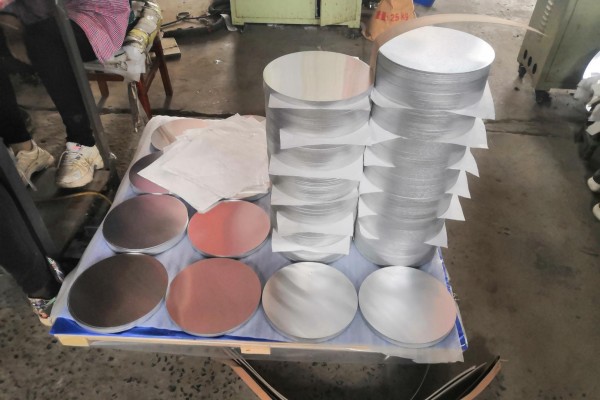
1. Grundlegende Definitionen & Übersicht über die wichtigsten Parameter
1.1 1050 Aluminiumscheiben: Kostengünstiges Allzweck-Reinaluminium
1050 Aluminiumscheiben gehören zur nationalen Norm 1xxx-Serie aus industriellem Reinaluminium, mit einem Aluminiumgehalt von mindestens 99.5%.
Sie stellen ein äußerst vielseitiges dar, Grundmaterial, das die Kernvorteile von reinem Aluminium beibehält: ausgezeichnete Korrosionsbeständigkeit, stabile thermische und elektrische Leitfähigkeit, hervorragende Formbarkeit, und einfache Schweißbarkeit und Prägung.
Diese Eigenschaften machen 1050 für die allermeisten herkömmlichen Verarbeitungstechniken geeignet. Dank seiner ausgewogenen Leistung und seines erschwinglichen Preises, 1050 ist das bevorzugte Material für allgemeine zivile und industrielle Anwendungen.
Typische Spezifikationen:
- Gemüter: O, H12, H14
- Dickenbereich: 0.3mm – 6,0 mm
- Durchmesserbereich: 80mm – 1200 mm
- Oberflächenbeschaffenheit: Standard-Mühlenfinish, Erfüllt die meisten konventionellen Produktionsanforderungen.
1.2 1060 Aluminiumscheiben: Hochreines Spezialmaterial für die Tiefenverarbeitung
1060 Aluminiumscheiben gehören ebenfalls zur 1xxx-Serie, weisen jedoch einen erhöhten Aluminiumreinheitsgrad auf ≥99,6 %, mit deutlich reduzierten Verunreinigungen im Vergleich zu 1050.
Diese höhere Reinheit verbessert die Duktilität, Tiefziehleistung, Oberflächenästhetik, und Leitfähigkeit bei gleichzeitiger Minimierung von Problemen, die bei der Tiefenverarbeitung häufig auftreten – wie z. B. Rissbildung, schlechte Formbarkeit, und Oberflächenfehler. Als solche, 1060 ist die Speziallegierung der Wahl für den High-End-Bereich, tiefverarbeitete Produkte.
In Bezug auf Abmessungen und Temperamente, 1060 stimmt eng mit überein 1050. Der grundlegende Unterschied liegt nicht in der Größe, sondern in der Materialreinheit und den daraus resultierenden Leistungsvorteilen.
2. Chemische Zusammensetzung: Die Wurzel von Leistungsunterschieden
Alle Leistungsunterschiede zwischen diesen beiden Legierungen sind auf geringfügige Unterschiede in der chemischen Zusammensetzung zurückzuführen – hauptsächlich auf die Reinheit und den Gehalt an Verunreinigungen des Aluminiums. Geringere Verunreinigungen und eine höhere Reinheit führen zu einer größeren Gleichmäßigkeit und Stabilität der Mikrostruktur, was zu überlegenen Gesamteigenschaften führt.
| Element | 1050 Aluminiumscheibe | 1060 Aluminiumscheibe |
|---|---|---|
| Aluminium (Al) | ≥99,5 % | ≥99,6 % |
| Silizium + Eisen (Ja+Glaube) | ≤0,40 % | ≤0,35 % |
| Kupfer (Cu) | ≤0,05 % | ≤0,05 % |
| Mangan (Mn) | ≤0,05 % | ≤0,03 % |
| Magnesium (Mg) | ≤0,05 % | ≤0,03 % |
| Zink (Zn) | ≤0,05 % | ≤0,05 % |
Die Daten zeigen das deutlich 1060 zeichnet sich durch eine höhere Aluminiumreinheit und geringere Gesamtverunreinigungen aus (Ja+Glaube) sowie reduzierter Mn- und Mg-Gehalt. Diese Reduzierung mildert interne strukturelle Inkonsistenzen, Zähigkeit und Gleichmäßigkeit deutlich verbessert.
Jedoch, Dies stellt eine geringfügige Verbesserung dar; in Standardverarbeitungsszenarien, Der praktische Unterschied ist minimal. Der Unterschied wird nur bei Hochpräzisions- und Tiefbearbeitungsanwendungen deutlich.

3. Mechanische Eigenschaften: Balance zwischen Festigkeit und Duktilität
Die mechanischen Eigenschaften bestimmen direkt die Leistung einer Aluminiumscheibe beim Stanzen, Zeichnung, und Verformungswiderstand. 1050 Und 1060 bieten ergänzende Eigenschaften, die auf unterschiedliche Verarbeitungsanforderungen zugeschnitten sind.
| Eigentum | 1050 Aluminiumscheibe | 1060 Aluminiumscheibe |
|---|---|---|
| Zugfestigkeit | 60–95 MPa | 55–95 MPa |
| Streckgrenze | ≥20 MPa | ≥18 MPa |
| Dehnungsrate | 20–35 % | 25–40 % |
| Härte | Etwas höher | Etwas niedriger |
| Formbarkeit | Exzellent | Vorgesetzter |
1050 bietet eine geringfügig höhere Härte, Streckgrenze, und Zugfestigkeit, Bietet einen besseren Widerstand gegen geringfügige Verformungen. Es ist ideal für konventionell gestanzte Produkte, die strukturelle Stabilität erfordern. Im Gegensatz, 1060 tauscht etwas Stärke gegen deutlich höhere Dehnung und Flexibilität, Dies führt zu einer überlegenen Zähigkeit und Rissbeständigkeit. Es ist die optimale Wahl für komplexe Umform- und Großverformungsprozesse.
4. Tiefe Verarbeitungsleistung: Die kritische Kluft im Zeichnen & Spinnen
Bei Produkten, die Tiefziehen oder Drehen erfordern – wie Kochgeschirr und Präzisionsgehäuse – ist die Formbarkeit weitaus wichtiger als die Grundfestigkeit. Hier ergeben sich die primären Auswahlkriterien zwischen den beiden Legierungen.
4.1 1050 Aluminiumscheiben: Geeignet für konventionelles mittelflaches Zeichnen
1050 bietet hervorragende Produktionsstabilität und gute Spinnformbarkeit, mit konstanten Ertragsraten und niedrigeren Rohstoffkosten, bietet eine hohe Kosteneffizienz. Jedoch, Aufgrund seiner begrenzten Dehnung eignet es sich nur für mitteltiefe Zeichnungen und einfache Formen.
Tiefes Ziehen oder komplexe Krümmungen können zu Kantenrissen und ungleichmäßigen Texturen führen. Typische Anwendungen sind Bratpfannen, Standard-Kochgeschirr, Topfdeckel, Lampengehäuse, und Verkehrszeichen.
4.2 1060 Aluminiumscheiben: Entwickelt für hochpräzises Tiefziehen & Komplexe Bildung
1060 zeichnet sich durch tiefe Verarbeitung aus. Seine höhere Dehnung ermöglicht größere Ziehtiefen und geringere Ohrringraten, Rissbildung effektiv reduziert, Verformung, und Kantenfehler. Fertige Produkte weisen eine gleichmäßige Wandstärke und eine präzise Geometrie auf.
Es ist das bevorzugte Material für Reiskocher-Innenteile, Gehäuse für elektrische Wasserkocher, Schnellkochtöpfe, Hochwertiges, individuelles Kochgeschirr, und präzise rotierende Komponenten.

5. Thermal, Elektrisch & Vergleich der Korrosionsbeständigkeit
5.1 Wärmeleitfähigkeit: Ein entscheidender Vorteil für Premium-Kochgeschirr
Die thermische Leistung ist für Kochgeschirr von entscheidender Bedeutung, wirkt sich direkt auf die Gleichmäßigkeit und Effizienz der Erwärmung aus. 1050 hat eine Wärmeleitfähigkeit von ca 222 W/m·K, während 1060 erreicht 234 W/m·K. Die höhere Reinheit von 1060 ermöglicht eine schnellere Wärmeübertragung und eine gleichmäßigere Ableitung, Die Beseitigung heißer Stellen und die Verbesserung der Kochleistung – ein Hauptgrund, warum Premium-Kochgeschirr diese Legierung bevorzugt.
5.2 Elektrische Leitfähigkeit: Unverzichtbar für elektrische Komponenten
In elektrischen Anwendungen, 1060 hat wiederum den Vorteil. 1050 Angebote über 61% IACSLeitfähigkeit, wohingegen 1060 erreicht 62–63 % IACS, Gewährleistung einer stabileren Leitung mit geringeren Verlusten. Folglich, 1060 ist die Standardauswahl für Kondensatordosen, Sammelschienen, leitfähige Armaturen, und elektrische Reflektoren.
5.3 Korrosionsbeständigkeit: Fast identisch
Beide Legierungen bilden eine dichte Verbindung, schützende Oxidschicht, Bietet eine hervorragende Korrosionsbeständigkeit gegenüber Feuchtigkeit, schwache Lebensmittelsäuren, Industrieatmosphären, und Außenbewitterung. Aufgrund ihrer minimalen Reinheitslücke, ihr Korrosionsverhalten ist nahezu identisch, Damit sind beide für den Außenbereich geeignet, Sanitär, und Industrieumgebungen.
6. Oberflächenqualität & Kostenüberlegungen
6.1 Oberflächenqualität: 1060 Bietet ein erstklassiges Finish
Dank höherer Reinheit und weniger Verunreinigungen, 1060 Discs verfügen über eine glattere, feinere Grundfläche frei von Partikelfehlern. Beim Eloxieren, Polieren, oder Beschichtung, es ergibt eine gleichmäßigere Färbung, höherer Glanz, und besseres Reflexionsvermögen – was zu einem deutlich hochwertigeren Erscheinungsbild führt. Das macht 1060 die Anlaufstelle für hochwertige Dekorationsteile, reflektierende Beleuchtungskörper, und Premium-Kochgeschirr. 1050 Bietet ausreichende Ebenheit für standardmäßige ästhetische Anforderungen.
6.2 Kosten: 1050 Bietet einen höheren Wert
Bei der Großserienproduktion sind die Kosten von entscheidender Bedeutung. Die Bearbeitungskosten sind zwar vergleichbar, 1060Aufgrund der strengeren Reinheitsanforderungen an Rohstoffe ist dies in der Regel der Fall 1–3 % teurer als 1050 (unterliegen Marktschwankungen). Für großvolumige Commodity-Produkte, Diese Lücke führt zu erheblichen Einsparungen, Festigung der Rolle von 1050 in der kostenorientierten Fertigung.
7. Vergleich der Anwendungsfelder
Basierend auf ihren ausgeprägten Stärken in Sachen Reinheit, Formbarkeit, Leitfähigkeit, Oberflächenqualität, und Kosten, 1050 Und 1060 bedienen klar segmentierte Märkte in fünf Hauptsektoren.
7.1 Hauptanwendungen von 1050 Aluminiumscheiben
- Kochgeschirr: Mittelflache Gegenstände wie Bratpfannen, Antihaftbeschichtete Pfannen, Deckel, und Suppentöpfe – bei denen eine stabile Formung und eine angemessene Wärmeübertragung den Anforderungen des Massenmarkts gerecht werden.
- Beleuchtung: Standardlampengehäuse und -sockel ohne strenge Anforderungen an das Reflexionsvermögen oder die Textur.
- Verkehr & Im Freien:Verkehrsschilder und einfache dekorative Aluminiumschilder für den Außenbereich, Nutzung zuverlässiger Korrosionsbeständigkeit.
- Industrielle Fertigung: Generische Stanzteile, Blechteile, und Gerätegehäuse mit Schwerpunkt auf Verarbeitbarkeit und Ausbeute.

7.2 Hauptanwendungen von 1060 Aluminiumscheiben
- Premium-Kochgeschirr: Tiefgezogen, komplex geformte Gegenstände wie Reiskochereinlagen, Kesselkörper, Schnellkochtöpfe, und Gourmet-Kochgeschirr – mit Schwerpunkt auf einwandfreier Formgebung und thermischer Leistung.
- Elektrische Präzision: Kondensatordosen, Sammelschienen, reflektierende Schilde, und leitende Teile, die einen minimalen elektrischen Verlust erfordern.
- Beleuchtung & Dekor:Hochwertige Reflektorbecher, architektonische eloxierte Oberflächen, und dekorative Beleuchtung, die optische Präzision und Oberflächenperfektion erfordert.
- Hochpräzisionsindustrie: Komplizierte Drehteile und stark verformte Stanzteile für anspruchsvolle technische Anwendungen.
8. Präzise Auswahlhilfe: Auswählen nach Bedarf
8.1 Priorisieren 1050 Wann:
- Kosteneffizienz und Großserienfertigung stehen im Vordergrund.
- Zu den Anwendungen gehören: Standard-Antihaftpfannen, Bratpfannen, Deckel, allgemeine Stanzteile, einfache Lampenabdeckungen, Verkehrszeichen, und jedes Produkt ohne extreme Anforderungen an das Tiefziehen oder die Oberflächenqualität.
8.2 Priorisieren 1060 Wann:
- Produktqualität, tiefe verarbeitung, und hohe Präzision sind entscheidend.
- Zu den Anwendungen gehören: Reiskocher, elektrische wasserkocher, Schnellkochtöpfe, High-End-Lichtreflektoren, eloxierte Zierteile, Kondensatordosen, Sammelschienen, und komplexe Dreh- oder Tiefziehteile.
9. Abschluss
Beide 1050 Und 1060 Aluminiumscheiben sind hochwertige Reinaluminiummaterialien der 1xxx-Serie mit ausgezeichneter Korrosionsbeständigkeit, Wärmeleitfähigkeit, und Formbarkeit für eine breite Palette von Industrie- und Konsumgütern.
Ihr Kernunterschied liegt darin Reinheit und Positionierung: 1050 ist das Kostenoptimierter Generalist, Balance zwischen moderater Stärke und Erschwinglichkeit für eine Massenproduktion. 1060 ist das Hochleistungsspezialist, sorgt für eine verbesserte Duktilität, überlegene Oberflächenqualität, und bessere physikalische Eigenschaften für die Tiefenverarbeitung und Premiumanwendungen.
Eine effektive Materialauswahl bedeutet nicht, immer die „höherwertige“ Option zu wählen. Stattdessen, Richten Sie Ihre Wahl an der Verarbeitungskomplexität aus, Leistungsziele, und Budgetbeschränkungen.
Entscheiden Sie sich für 1050 um den Wert herkömmlicher Produkte zu maximieren, und wählen 1060 um die Qualität zu steigern und die Ausschussquote bei anspruchsvollen Produkten zu reduzieren, Tiefziehware– Erreichen der optimalen Balance zwischen Exzellenz und Wirtschaftlichkeit.