

Eliminating Minor Scratches on Aluminum Discs for Furniture Decoration: Precision Polishing and Dimensional Control
1. Introduction: Surface Quality Requirements and Polishing Pain Points of Aluminum Discs for Furniture Decoration
Aluminum discs for furniture decoration are widely used in specific furniture components. These include coffee table inlays, wardrobe decorative buckles, lamp bases, and cabinet handles—all visible parts that directly impact furniture aesthetics.
Notably, their core quality requirements focus on two non-negotiable aspects: “visual aesthetics” and “dimensional accuracy”. For visual appeal, a scratch-free surface with uniform luster is essential; for assembly, diameter/thickness deviation must be ≤0.01mm to fit tight furniture gaps (e.g., mortise-tenon structures).
Most of these aluminum discs use 1050 pure aluminum or 3003 aluminum alloy. Specifically, 1050 pure aluminum offers high ductility (HV 25-30) for easy forming, while 3003 alloy balances strength and workability (HV 35-40) for components like cabinet handles that bear light loads.
Surface finishes further vary by furniture style: matte (Ra 0.05-0.1μm) is preferred for modern minimalist designs, while high-gloss (Ra ≤0.03μm) suits luxury styles (e.g., high-end lamp bases).
Unfortunately, minor scratches are the most common defect during production and transportation. These scratches typically range from 1-5μm in depth and 5-20μm in width, caused by either mechanical abrasion (e.g., transit friction) or residual abrasives from prior stamping.
According to 2024 furniture hardware industry data, 38% of aluminum discs require rework due to such scratches. The cost is substantial—a single batch loss averages over 50,000 yuan. For example, a 20% rework rate on 200mm-diameter, 2mm-thick discs wastes 1,200 pieces, halting production temporarily.
Traditional polishing processes exacerbate issues with two critical flaws. First, uncontrolled mechanical polishing pressure/speed leads to “over-polishing”, causing diameter deviations >0.02mm (incompatible with furniture assembly). Second, excessive chemical polishing corrosion results in thickness loss >0.015mm, weakening structural integrity.
Thus, a precision polishing system is urgently needed. It must feature “targeted scratch elimination + minimal dimensional loss control” to address the unique minor scratch characteristics of aluminum discs for furniture decoration.
2. Scratch and Material Characteristics of Aluminum Discs for Furniture Decoration: Basis for Polishing Process Selection
(1) Key Parameters and Hazards of Minor Scratches
Minor scratches on these aluminum discs are not just cosmetic—they are “shallow surface defects” with measurable impacts. Their core parameters and product hazards are detailed below:
|
Scratch Type
|
Depth Range (μm)
|
Width Range (μm)
|
Cause
|
Hazard to Furniture Decoration
|
|
Mechanical Abrasion
|
1-3
|
5-15
|
Friction with hard objects during transportation
|
Uneven light reflection, appearing “cloudy” visually and reducing product grade
|
|
Abrasive Residue Scratch
|
2-5
|
8-20
|
Uncleaned abrasives after prior stamping
|
Dust accumulation, leading to hard-to-clean stains after long-term use
|
|
Minor Indentation Scratch
|
0.8-2
|
10-25
|
Local overpressure during stacking
|
“Dark spots” on high-gloss surfaces, damaging overall aesthetics
|
Mechanical abrasions are most prevalent in transit. For instance, coffee table inlays with such scratches disrupt light reflection, making the furniture look “low-grade”—a major concern for premium brands.
Abrasive residue scratches are particularly problematic for kitchen cabinet handles. They trap oil and dust, forming stubborn stains that consumers cannot remove, leading to complaints and returns.
Beyond these, minor indentation scratches ruin high-gloss lamp bases. Under ambient light, they create “dark spots” that break the uniform mirror effect, defeating the purpose of decorative lighting.
(2) Limitations of Aluminum Disc Material Characteristics on Polishing
Material properties further complicate polishing, as aluminum’s inherent traits impose strict constraints.
First, low hardness and easy deformation pose a challenge. 1050 pure aluminum has a very low HV (25-30)—so soft that polishing pressure exceeding 0.3MPa causes plastic deformation. For a 300mm-diameter disc, 0.4MPa pressure leads to a 0.03mm diameter expansion, which is too large for tight furniture fits (e.g., lamp base sockets).
Second, oxidation susceptibility hinders polishing effectiveness. Aluminum naturally forms a 2-5nm Al₂O₃ layer, which has an extremely high hardness (HV 1500). Without pretreatment, this layer causes polishing abrasives to “slip”, preventing them from reaching the scratched aluminum substrate—leaving defects unaddressed.
Equally critical is decorative coating compatibility. Some aluminum discs for furniture decoration require post-coating, such as matte paint or wood grain transfer. Excessive chemical polishing damages the base material’s surface activity, reducing coating adhesion by up to 30%. This leads to paint peeling within months of use, a costly quality failure.
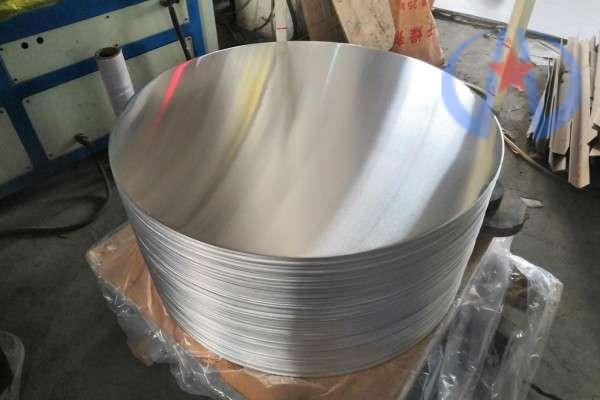
3. Polishing Process System and Parameter Optimization for Minor Scratch Elimination
To overcome these challenges, the polishing process is split into three sequential stages: pretreatment, main polishing, and finishing. Each stage is designed to build on the previous one, ensuring scratch elimination without compromising dimensions.
The core goal throughout is to balance two priorities: thorough scratch removal and minimal dimensional loss. This balance is achieved through three strategies: abrasive grit gradient control, precise energy/chemical concentration adjustment, and real-time dimensional monitoring.
(1) Pretreatment Process: Removing Oxide Layers and Surface Impurities
Pretreatment is the foundation of effective polishing, as it prepares the aluminum surface by removing barriers to scratch elimination.
First and foremost, alkaline degreasing is essential. Use a solution of NaOH (5%-8%) and 0.5% sodium dodecylbenzenesulfonate, heated to 50-60℃, and soak the discs for 15-20s.
This step targets surface oil, which is a common byproduct of stamping. Oil causes abrasives to “clump” during polishing, leading to uneven scratch treatment—some areas get over-polished, while others remain scratched.
Following degreasing, weak acid pickling removes the oxide layer. Use 10%-15% HNO₃ at room temperature for 5-8s, which only strips 2-3nm of Al₂O₃.
Crucially, thickness loss is controlled to ≤0.002mm, avoiding dimensional issues. After pickling, immediately rinse with deionized water—residual acid causes irreversible “white spots” in later polishing, which are impossible to repair.
(2) Main Polishing Process: Eliminating Minor Scratches by Type
Main polishing is tailored to the disc’s surface finish (matte/high-gloss) and scratch depth, as different applications demand distinct approaches.
1. Mechanical Polishing (Suitable for Flat Aluminum Discs, Matte/Semi-Gloss Finish)
For flat aluminum discs requiring a matte or semi-gloss finish (e.g., coffee table inlays), mechanical polishing is ideal. It uses abrasive friction to remove scratches, following a “coarse-to-fine” grit sequence to avoid over-polishing.
|
Polishing Stage
|
Abrasive Type
|
Grit (#)
|
Polishing Pressure (MPa)
|
Polishing Speed (rpm)
|
Single-Pass Time (s)
|
Scratch Removal Depth (μm)
|
Dimensional Deviation Control Measures
|
|
Coarse Polishing
|
Aluminum Oxide Flap Wheel
|
1200
|
0.2-0.25
|
1500-1800
|
20-30
|
1-2
|
Use a “floating pressure head” with pressure fluctuation ≤±0.02MPa
|
|
Medium Polishing
|
Silicon Carbide Cloth Wheel
|
2000
|
0.15-0.2
|
1800-2000
|
15-20
|
0.5-1
|
Sample 3 discs per batch and check thickness deviation with a laser thickness gauge
|
|
Fine Polishing
|
Chromium Oxide Wool Wheel
|
3000
|
0.1-0.15
|
2000-2200
|
10-15
|
0.3-0.5
|
Adopt a “spiral polishing path” to avoid over-polishing the edges
|
Dimensional Control Effect: For a 300mm-diameter aluminum disc, mechanical polishing delivers precise results. Diameter deviation is ≤0.01mm, thickness deviation ≤0.005mm, and the surface Ra 0.05-0.08μm—perfectly meeting furniture matte decoration standards.

2. Electropolishing (Suitable for High-Gloss Aluminum Discs, Ra≤0.03μm)
In contrast, for high-gloss aluminum discs for furniture decoration (e.g., lamp bases), electropolishing is preferred. It uses anodic dissolution to remove scratches, as scratches act as surface protrusions and dissolve first—creating a smooth, reflective finish.
Electrolyte Formula: Mix phosphoric acid (65%-70%), sulfuric acid (20%-25%), nitric acid (5%-10%), and 0.5% hexamethylenetetramine (a corrosion inhibitor).
The inhibitor is critical: it prevents local over-dissolution, which would create “pits” on the surface—ruining the high-gloss effect and requiring costly rework.
Process Parameters: Strictly control temperature at 50-60℃, current density at 1.2-1.5A/dm², and treatment time at 30-45s.
Too high a current density (>1.8A/dm²) causes rapid edge dissolution. This leads to diameter deviations >0.015mm, making the disc incompatible with lamp base fixtures—a common failure point in traditional electropolishing.
Dimensional Deviation Control: To avoid uneven dissolution, use a constant-voltage electrolytic power supply (voltage fluctuation ≤±0.5V) and fix the cathode-anode distance at 15mm.
Uneven distance (e.g., 10mm at edges, 20mm in the center) is a frequent mistake, causing edges to thin excessively while the center retains scratches.
Effect: When executed correctly, electropolishing completely eliminates 1μm minor scratches. The surface achieves a mirror finish (Ra 0.02-0.03μm), thickness loss is only 0.003-0.004mm, and dimensional deviation is ≤0.008mm.
3. Laser Polishing (Suitable for Special-Shaped Aluminum Discs, e.g., Curved Decorative Buckles)
When it comes to special-shaped aluminum discs for furniture decoration (e.g., curved wardrobe buckles), laser polishing is the only viable option. It uses high-energy laser beams to melt the aluminum surface, removing scratches without mechanical stress—critical for maintaining the disc’s complex shape.
Core Parameters: Use a fiber laser (wavelength 1064nm), set energy density to 5-8J/cm², scanning speed to 100-150mm/s, and scanning times to 2-3.
Each scan removes 0.5-1μm of material—enough to eliminate scratches but not so much to alter dimensions. Too high an energy density (>10J/cm²) melts excessive aluminum, creating “熔坑” (melting pits) that are visible on decorative surfaces.
Dimensional Control: To ensure precision, integrate a visual positioning system. It corrects the laser focus in real time (deviation ≤±0.01mm), preventing the laser from concentrating on one area (which would cause local over-melting and dimensional errors).
Effect: Laser polishing eliminates 3μm scratches completely. The surface Ra is 0.04-0.06μm, dimensional deviation is ≤0.005mm, and no mechanical pressure means no disc deformation—essential for curved decorative pieces that must fit specific furniture grooves.
(3) Finishing Process: Repairing Polishing Defects and Stabilizing Dimensions
Finishing is the final quality check, addressing minor flaws and locking in dimensional stability.
First, deburring removes residual aluminum chips. Use ultrasonic cleaning (frequency 40kHz) for 5-10min—this targets tiny chips left from polishing, which can scratch other furniture parts during assembly (e.g., a chip on a cabinet handle could damage the cabinet door finish).
Next, final dimensional inspection and fine-tuning ensures accuracy. Use a coordinate measuring machine (accuracy 0.001mm) to check diameter. If deviation exceeds 0.01mm, perform local fine polishing—for example, a 0.012mm edge deviation can be fixed by polishing the edge with a 3000# wool wheel for 5s at 0.08MPa.
Finally, anti-oxidation treatment protects the surface. Spray a 5-10nm thick silane coupling agent, which improves oxidation resistance. This prevents new scratches during storage and transportation, as oxidized aluminum is far more prone to scratching than fresh aluminum.
4. Common Polishing Issues and Solutions for Dimensional Deviations
Even with optimized processes, common issues arise in production. To maintain consistency, targeted solutions are required for each problem.
One common issue is “cloudy” surfaces after polishing, often seen in matte finishes. This is caused by excessive grit jumps (e.g., skipping from 1200# directly to 3000#), which leaves fine scratches from the coarse grit. To fix this, add a 2000# medium polishing stage—ensuring each grit removes over 70% of the previous stage’s scratches, creating a uniform matte surface.
Another typical problem is over-thin edges after electropolishing, which affects large-diameter discs (>250mm) most. The root cause is uneven cathode-edge distance (<10mm at edges). The solution is to adjust the cathode to an “annular shape”, ensuring a uniform 15mm distance from the aluminum disc edge—this balances dissolution across the entire disc.
A third challenge is local “dark spots” after laser polishing, caused by excessive energy density (>10J/cm²). To resolve this, reduce energy density to 5-8J/cm² and increase scanning times from 2 to 3—spreading the laser energy evenly and avoiding over-melting.
Lastly, dimensional deviations exceeding 0.015mm in mechanical polishing are usually due to operator error (e.g., pressure >0.3MPa or prolonged polishing time). Install a pressure sensor for real-time alarms (shutdown if pressure exceeds 0.25MPa) and inspect dimensions every 10 discs—catching issues early and reducing waste.
5. Process Verification and Industry Application Case
(1) Performance Verification (Taking 300mm×2mm 1050 Aluminum Discs for Furniture Decoration as an Example)
To validate the optimized processes, comprehensive testing was conducted on 300mm×2mm 1050 aluminum discs—one of the most common sizes for coffee table inlays and lamp bases.
|
Verification Item
|
Pre-Treatment Status
|
After Mechanical Polishing (Matte)
|
After Electropolishing (High-Gloss)
|
Furniture Industry Standard Requirement
|
|
Minor Scratch Depth
|
2-3μm
|
Completely Eliminated
|
Completely Eliminated
|
No Visible Scratches (Depth ≤0.1μm)
|
|
Surface Roughness Ra (μm)
|
0.2-0.3
|
0.06-0.08
|
0.02-0.03
|
Matte ≤0.1, High-Gloss ≤0.05
|
|
Diameter Deviation (mm)
|
±0.005
|
±0.008
|
±0.007
|
≤±0.01
|
|
Thickness Deviation (mm)
|
±0.003
|
±0.004
|
±0.003
|
≤±0.005
|
|
Coating Adhesion (Cross-Cut Test)
|
—
|
5B (No Peeling)
|
5B (No Peeling)
|
≥4B
|
Mechanical polishing results are ideal for matte applications. For example, a 300mm×2mm disc used as a coffee table inlay has no visible scratches, fits perfectly with the table’s frame, and its uniform matte finish complements modern furniture styles.
Electropolished discs excel as lamp bases. Their mirror finish (Ra 0.02-0.03μm) reflects light evenly without dark spots, enhancing the lamp’s decorative value—a key selling point for luxury furniture brands.
Coating adhesion (5B) is another critical result. It means the disc can be painted or printed without peeling, which is essential for wood-grain transfer discs used on wardrobe doors—ensuring long-term durability.
(2) Industry Application Case: Process Upgrade of a Furniture Hardware Enterprise
To illustrate the practical impact of these optimized processes, consider a domestic furniture hardware enterprise that produces 1 million aluminum discs for furniture decoration annually. In 2023, the company faced severe quality issues that threatened its partnerships with major furniture brands.
Problem: The enterprise struggled with a 22% rework rate due to minor scratches and 8% of products failing dimensional checks. Customer complaints reached 12%, primarily about “uneven matte surfaces” (coffee table inlays) and “loose lamp bases” (due to diameter deviations). These issues led to lost orders and a 15% drop in revenue.
Key Improvements: To turn things around, the enterprise adopted the optimized polishing process outlined above:
- For flat matte discs (e.g., coffee table inlays): Implemented mechanical polishing with a 1200#→2000#→3000# grit sequence. Added a pressure monitoring system to shut down if pressure exceeded 0.25MPa.
- For special-shaped high-gloss discs (e.g., curved wardrobe buckles): Used laser polishing with an energy density of 6J/cm² and integrated visual positioning to avoid over-melting.
- For electropolished lamp base discs: Switched to an annular cathode to ensure a uniform 15mm cathode-anode distance, eliminating edge thinning.
Results: The changes delivered transformative results:
- Scratch rework rate dropped from 22% to 3%, and dimensional deviation non-conformity fell from 8% to 0.5%.
- Product qualification rate rose from 70% to 96.5%, reducing annual losses by over 3 million yuan.
- Customer complaints plummeted to 1.2%, and the enterprise regained trust from high-end brands like Kuka Home and Oppein Home. Notably, its high-gloss lamp base discs gained a reputation for “uniform mirror finishes”, leading to a 20% increase in orders.
6. Conclusions and Outlook
(1) Core Conclusions
In summary, eliminating minor scratches on aluminum discs for furniture decoration requires strict adherence to three key principles: precision positioning (targeting only scratched areas), gradient treatment (coarse-to-fine processes), and real-time monitoring (preventing dimensional drift).
Pretreatment is non-negotiable: oxide layer removal must be controlled to ≤3nm to expose fresh aluminum without excessive corrosion.
Main polishing processes must be application-specific: mechanical polishing for matte flat discs, electropolishing for high-gloss discs, and laser polishing for special-shaped discs.
Parameter optimization is the final piece of the puzzle. For example, mechanical polishing pressure should be limited to 0.1-0.25MPa, and electropolishing current density to 1.2-1.5A/dm². These constraints ensure dimensional deviation stays ≤0.01mm—critical for furniture assembly.
(2) Future Development Directions
Looking ahead, two areas will drive innovation in aluminum disc polishing for furniture decoration:
First, intelligent polishing systems will reduce reliance on manual operation. Integrating AI visual inspection (which automatically identifies scratch depth and position) with robotic polishing (which adjusts pressure/energy in real time) will create a closed-loop “scratch-process-dimension” system. This will improve process stability to over 99% and reduce labor costs by 30%.
Second, eco-friendly polishing technologies will align with global sustainability trends. Developing acid-free pretreatment (e.g., plasma oxide layer removal) will reduce chemical use by 50%, while recyclable electropolishing electrolytes (with a recovery rate ≥80%) will meet strict EU REACH standards—opening up export markets for furniture hardware manufacturers.
(3) Core Principle
Ultimately, the polishing process for these aluminum discs must strike a delicate balance between aesthetics and precision.
Only when scratch elimination and dimensional control work in tandem can the discs meet both furniture assembly needs (tight fits) and decorative requirements (flawless surfaces). This balance is not just a technical requirement—it is the key to upgrading furniture hardware from “functional components” to “decorative assets” that enhance overall furniture value.