

Cookware-Grade 1060 Aluminum Discs – Engineered for Spinning and Deep Drawing Applications
1. Introduction
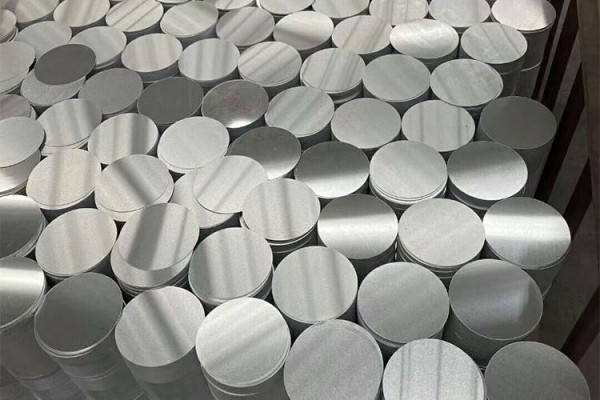
The global cookware industry has entered a stage of rapid material optimization, with manufacturers increasingly choosing high-purity aluminum alloys to improve forming efficiency, thermal conductivity, and surface consistency. Among the available materials, cookware-grade 1060 aluminum discs have become the dominant substrate for pots, pans, kettles, non-stick cookware bases, and induction-ready composite bottoms. Their exceptional ductility and stability during deformation make them ideal for both spinning and deep drawing, two of the most critical forming processes in cookware production.
This article provides an in-depth technical analysis of 1060 aluminum discs, covering material characteristics, forming behavior, process advantages, mechanical performance, surface treatments, and application scenarios. The goal is to present a comprehensive and professional reference suitable for manufacturers, R&D engineers, quality auditors, and global buyers of aluminum cookware materials. The content is structured to be easily indexed by Google and optimized for international technical searches.
2. Why 1060 Aluminum is the Preferred Alloy for Cookware
1060 aluminum belongs to the 1xxx series, containing 99.6% minimum aluminum purity. This extremely high purity gives it unique forming characteristics unmatched by medium-strength alloys such as 3xxx or 5xxx series.
2.1 Key Material Properties
| Property | Typical Value (Annealed State) | Relevance to Cookware |
|---|---|---|
| Aluminum purity | ≥ 99.6% | Enables uniform metal flow and stable deep drawing |
| Elongation | 35%–42% | Supports extreme deformation without cracking |
| Yield strength | 35–45 MPa | Allows easy forming with low press force |
| Thermal conductivity | 230 W/m·K | Ensures fast and even heat distribution |
| Density | 2.71 g/cm³ | Reduces cookware weight |
| Hardness (HB) | 25–30 | Compatible with spinning and forming dies |
These properties enable cookware manufacturers to achieve:
- Efficient press cycles
- Reduced tool wear
- Higher surface precision
- Consistent dimensional stability
- Better thermal efficiency in the final cookware product
3. The Role of 1060 Aluminum Discs in Modern Cookware Manufacturing
Cookware applications require materials with exceptional deformability and surface uniformity. 1060 aluminum discs are widely used for:
3.1 Deep-Drawn Cookware
- Rice cooker inner pots
- Sauce pans
- Stock pots
- Pressure cooker bodies
- Household kettles
3.2 Spun Cookware
- Woks
- Frying pans
- Milk pans
- Large kitchen bowls
3.3 Composite Cookware Bases
- Induction cooker composite bottom plates
- Multi-layer cookware
- Clad metal cookware
3.4 Specialized Cookware Applications
- Camping cookware
- Hotel & restaurant heavy-duty pans
- Industrial kitchen vessels
These applications rely on 1060 aluminum discs for their predictable forming behavior and exceptional yield stability.
4. Forming Processes: Why 1060 Aluminum Excels in Spinning and Deep Drawing
4.1 Spinning Characteristics
Spinning is ideal for producing round cookware with smooth curvature. The pressure of the roller gradually reshapes the flat aluminum disc into a desired geometry.
Advantages of 1060 Alloy in Spinning
- Extremely stable metal flow
- Low risk of tearing or wrinkling
- Smooth surface after forming
- Minimal spring-back
- Uniform wall thickness
Even after multiple forming passes, the material maintains its ductility, enabling complex shapes such as deep woks or multi-curved vessels.
4.2 Deep Drawing Characteristics
Deep drawing (冷挤压/拉深) is widely used for cookware bodies requiring high depth-to-diameter ratios.
Why 1060 Aluminum Performs Better in Deep Drawing
- High elongation allows deep deformation without cracking.
- Consistent grain structure reduces deformation resistance.
- Low yield strength prevents thinning or stress concentration.
- Excellent isotropy ensures balanced material flow from center to rim.
- Low work-hardening rate avoids excessive strain accumulation.
For deep-drawn cookware such as pressure cooker bodies, 1060 aluminum delivers:
- Cleaner forming lines
- Near-zero orange peel effect
- Minimal surface roughness
4.3 Comparison with Other Cookware Alloys
| Alloy | Formability | Strength | Thermal Conductivity | Cost | Suitability |
|---|---|---|---|---|---|
| 1060 | ★★★★★ Excellent | Low | ★★★★★ Very high | Low | Spinning & deep drawing |
| 3003 | ★★★★ Good | Medium | ★★★ Good | Low | General cookware |
| 5052 | ★★★ Good | High | ★★★ Medium | Medium | Premium cookware requiring durability |
| 6061 | ★ Low | High | ★★ Low | High | Not suitable for cookware forming |
Conclusion:
For cookware manufacturing that requires high degrees of deformation, 1060 remains the most reliable and cost-effective alloy.
5. Manufacturing Specifications of Cookware-Grade 1060 Aluminum Discs
To ensure stable forming performance, manufacturers typically supply 1060 aluminum discs under strict dimensional and mechanical standards.
5.1 Common Thickness Range
- 0.5 mm – 6.0 mm depending on cookware size
- Most frequently used: 0.8 / 1.0 / 1.2 / 1.5 / 2.0 mm
5.2 Diameter (Popular Sizes)
- 120 mm
- 240 mm
- 260 mm
- 300 mm
- 320 mm
- Up to 600 mm for industrial cookware
5.3 Tempers Available
- O (annealed) – ideal for spinning & deep drawing
- H12, H14 – slightly hardened, used for shallow forming
- H0 – customized temper balancing softness and surface hardness
5.4 Surface Requirements
Cookware requires premium surfaces because defects can transfer during forming.
Typical Industrial Surface Standards
- No rolling cracks
- No inclusions
- No color variation
- No water stains
- No black spots
- Bright, uniform, defect-free texture
Manufacturers employ edge-trimming and deburring to prevent die scratches.
6. Thermal Advantages of 1060 Aluminum in Cookware
Heat performance is essential to cookware quality. 1060 aluminum provides significant thermal benefits:
6.1 High Thermal Conductivity
- Up to 230 W/m·K
- Distributes heat quickly and evenly
- Prevents hot spots
- Enhances cooking efficiency
6.2 Fast Heat Response
Ideal for:
- Sautéing pans
- Flat-bottom frying pans
- Stir-fry woks
Because of its fast heat transfer, 1060 cookware achieves:
- Shorter cooking times
- Lower energy usage
- More stable cooking temperatures
6.3 Weight Advantage
Lightweight cookware is easier to handle, especially for:
- Home kitchens
- Commercial food service
- Camping cookware

7. Surface Treatment Options for 1060 Cookware Discs
Different cookware applications require different surface treatments.
7.1 Mill Finish
- Raw, clean surface
- Used for pressed and spun stainless-steel clad cookware
7.2 Anodized Finish
- Hardness up to 300 HV after anodizing
- Anti-corrosion
- Suitable for food contact
7.3 Multi-layer Composite Bonding
1060 aluminum discs can be bonded with:
- Stainless steel
- Copper
- Magnetic steel
Widely used for induction cookware.
8. Quality Control in 1060 Cookware Disc Manufacturing
A cookware-grade disc must pass strict quality tests:
8.1 Mechanical Tests
- Yield strength
- Tensile strength
- Elongation
- Hardness uniformity
8.2 Surface Inspection
- Optical scanning
- Rolling line detection
- Oil residue testing
8.3 Annealing Control
- Precision temperature control (320–380°C)
- Grain size stability
- Reduction of work-hardening
8.4 Forming Simulation
- Deep drawing simulation
- Spinning stress prediction
- Thickness reduction monitoring
9. Production Processes of Cookware-Grade 1060 Aluminum Discs
Producing high-quality 1060 aluminum discs for cookware requires a controlled and systematic manufacturing workflow. Each stage—from casting to annealing—directly affects the disc’s formability, thickness stability, and final surface quality.
9.1 Melt Treatment and Casting
The production process begins with high-purity aluminum ingot melting.
Objectives of Melt Treatment
- Remove impurities
- Eliminate dissolved hydrogen
- Stabilize alloy cleanliness
- Ensure consistent chemical composition
Degassing and filtration technologies such as rotary degassing and ceramic foam filtration are used to guarantee purity levels above 99.6% Al content, which is essential for cookware forming.
Continuous Casting
1060 alloy is typically cast using:
- Direct Chill (DC) Casting
- Continuous Casting & Rolling (CCR)
DC casting is preferred for cookware-grade discs due to better grain refinement, improved anisotropy control, and superior surface flatness.
9.2 Hot Rolling
After casting, the aluminum slabs are preheated to 400–500°C and hot-rolled to reduce thickness.
Purpose of Hot Rolling
- Refine grain structure
- Improve mechanical consistency
- Enhance surface cleanliness
- Prepare the material for cold rolling
A smooth and defect-free hot-rolled surface ensures a stable foundation for subsequent cold-rolling operations.
9.3 Cold Rolling
Cold rolling defines the final gauge and induces the mechanical properties required for spinning and deep drawing.
Key Technical Goals
- Achieve accurate thickness tolerance ±0.02 mm
- Improve surface brightness
- Enhance hardness uniformity
- Control rolling texture for isotropic formability
Cold rolling is typically performed in several passes to maintain structural integrity.
9.4 Disc Blanking
Blanking transforms coil sheets into circular discs of specified diameter.
Precision Requirements
- Burr-free edges
- No deformation
- No waviness
- Accurate diameter variation ≤ ±0.1 mm
Laser-cutting or CNC blanking machines are often used for high-end cookware.
9.5 Annealing Treatment
Annealing is one of the most critical steps because it defines the deep drawing and spinning behavior of the final product.
Standard Annealing Curve
- Ramp to 320–380°C
- Hold for 2–6 hours depending on disc thickness
- Controlled cooling
Effects of Proper Annealing
- Grain recrystallization
- Reduced hardness
- Enhanced ductility
- Lower yield strength
- Optimal elongation for forming
Annealed 1060 discs reach elongation rates of 38–42%, ideal for cookware forming.
9.6 Surface Treatment and Inspection
Before packaging, each disc undergoes:
- Degreasing
- Brushing or slight polishing
- Film-coating (optional, to protect surface)
- Optical inspection
- Flatness testing
- Mechanical sampling tests
High-grade cookware requires extremely stable surface appearance because any surface defect becomes amplified after spinning or deep drawing.

10. Common Forming Defects & How 1060 Aluminum Helps Prevent Them
Cookware forming processes face challenges such as wrinkling, tearing, orange peel effects, and uneven wall thickness. The material behavior of 1060 alloy significantly reduces the risk of these defects.
10.1 Wrinkling Prevention
During spinning or drawing, metals under compression tend to wrinkle.
Why 1060 Aluminum Minimizes Wrinkling
- Low yield strength
- High ductility
- Smooth metal flow
- Balanced thickness distribution
Proper annealing further reduces wrinkling risk.
10.2 Tearing Resistance
Tearing often occurs when the material lacks elongation or experiences localized thinning.
1060 Aluminum Benefits
- Elongation above 38%
- Even grain size distribution
- Low work-hardening rate
This ensures stable deformation even under high depth ratios.
10.3 Avoiding the Orange Peel Effect
Orange peel surfaces appear due to coarse or uneven grain structure.
How 1060 Controls This Issue
- Fine-grain casting
- Stable annealing
- Consistent texture after rolling
- Alloy purity above 99.6%
Most cookware manufacturers choose 1060 specifically because it minimizes orange peel after deep drawing.
10.4 Preventing Cracking at High Draw Ratios
High draw ratios (≥ 2.2) increase failure rates for most alloys.
1060 performs excellently because:
- Soft temper states allow deep deformation
- Grain boundary stability prevents intergranular fracture
- Uniform mechanical properties reduce stress concentration
This is why 1060 is preferred for pressure cooker bodies and deep rice cooker linings.
11. Advanced Spinning Techniques for 1060 Aluminum Cookware
Spinning is a highly flexible and efficient process for forming curved cookware shapes.
11.1 Manual Spinning
- Used for customized cookware
- Suitable for small-batch production
- Relies heavily on craftsman skill
11.2 Semi-Automatic Spinning
- Popular in mid-range cookware factories
- Combines precision and cost-effectiveness
- Allows good thickness control
11.3 CNC Computer-Controlled Spinning
- Used for mass production
- Ensures uniform thickness
- Reduces forming time
- Produces high repeatability
How 1060 Aluminum Enhances Spinning Quality
- Predictable deformation behavior
- Low resistance during roller contact
- Stable curvature formation
- Smooth final surface finish
This results in cookware with:
- Better shape accuracy
- Minimal waviness
- Improved thermal conduction performance
12. Deep Drawing Techniques for 1060 Aluminum Discs
Deep drawing is essential for producing tall, highly contoured cookware bodies.
12.1 Single-Stage Deep Drawing
Used for shallow pots and pans.
12.2 Multi-Stage Drawing
Necessary for deep cookware such as:
- Stock pots
- Water kettles
- Pressure cooker chambers
12.3 Ironing and Redrawing Steps
These are used to:
- Equalize wall thickness
- Increase body height
- Improve dimensional uniformity
Compatibility of 1060 Aluminum
1060 alloy:
- Avoids cracking during redraw
- Maintains even thickness
- Remains soft enough for multiple forming cycles
13. Surface Coating and Functional Finishes in Cookware
After forming, cookware undergoes finishing processes. 1060 aluminum is compatible with various coatings:
13.1 Non-stick Coatings
- PTFE
- Ceramic coatings
- Silicone-based coatings
These adhere well to 1060 aluminum due to its stable oxide layer.
13.2 Hard-Anodized Surfaces
- Increases hardness
- Enhances wear resistance
- Adds corrosion protection
13.3 Decorative Finishes
- Color anodizing
- Brushed aluminum
- Sandblasted finishes
Each finish complements the smooth surface produced by spinning and deep drawing.
14. International Standards for Cookware-Grade 1060 Aluminum Discs
Applicable Standards
- ASTM B209 – Aluminum sheet & plate specification
- EN 485 – Aluminum and aluminum alloys
- ISO 6361 – Wrought aluminum and aluminum alloy sheets
- FDA food-contact regulations
- LFGB food-grade certification (Europe)
- GB/T 3880 (China)
Compliance ensures:
- Traceable quality
- Food-grade safety
- Mechanical reliability
15. Global Market Demand for 1060 Cookware Aluminum
The cookware sector demands millions of tons of light metal annually.
15.1 Growth Drivers
- Global shift toward lightweight cookware
- Expansion of non-stick and induction cookware markets
- Rising energy efficiency requirements
- Booming restaurant and hotel industry
- Growth in international OEM cookware manufacturing
15.2 Regional Demand Trends
- Asia-Pacific: Largest producer and consumer
- Europe: Strong demand for anodized cookware
- North America: High preference for non-stick and composite cookware