
Comparative Analysis of Industrial 1060 vs. 5052 Aluminum Discs
Introduction
Aluminum discs are widely utilized across modern industrial manufacturing due to their excellent formability, lightweight properties, and corrosion resistance.
As stable semi-finished circular aluminum materials with strong processing adaptability, they meet diverse fabrication needs—from consumer goods production to heavy industrial equipment manufacturing—serving as indispensable foundational raw materials for downstream industries.
Among numerous aluminum alloy grades, 1060 and 5052 aluminum discs stand out as the most widely adopted and versatile materials for global industrial buyers and manufacturers.
While both fulfill general industrial forming and machining requirements, they exhibit significant differences in chemical composition, mechanical properties, corrosion resistance, applicable scenarios, and cost structures—factors that directly determine their suitability for specific working conditions and product fields.
For procurement engineers, product designers, and factory purchasing personnel, understanding the core distinctions between 1060 and 5052 aluminum discs is crucial for aligning material selection with project demands, ensuring optimal cost-efficiency, and sourcing high-performance raw materials.
This article provides a comprehensive, data-driven comparison across multiple dimensions to offer professional guidance for precise material selection.

What is 1060 Aluminum Disc?
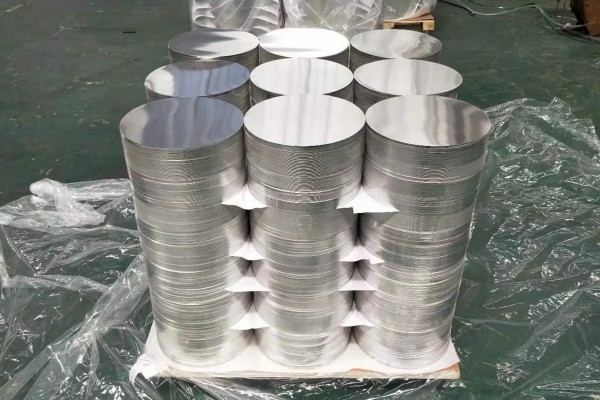
1060 aluminum disc belongs to the 1000 series of commercially pure aluminum alloys, with a minimum aluminum content of 99.6%. It is a mainstream industrial pure aluminum product characterized by minimal impurity levels and outstanding cost-effectiveness, making it the most commonly used pure aluminum disc for general industrial forming applications.
Produced via continuous casting and rolling processes, these discs feature uniform thickness and high surface finish, ensuring stability in high-volume industrial production.
Core Characteristics
- High-Purity Aluminum: Aluminum content ≥99.6%, with extremely low impurities; material is pure and stable.
- Excellent Thermal & Electrical Conductivity: Offers top-tier heat and electricity transfer performance among conventional aluminum alloys.
- Superior Formability & Ductility: Easily processed via spinning, bending, stamping, and deep drawing without cracking.
- Good Atmospheric Corrosion Resistance: Spontaneously forms a dense oxide layer that resists oxidation in standard environments.
- Low Mechanical Strength: Material is relatively soft, prioritizing formability over load-bearing capacity.
- Exceptional Cost-Effectiveness: Low production and processing costs, ideal for large-scale manufacturing.
Primary Industrial Applications
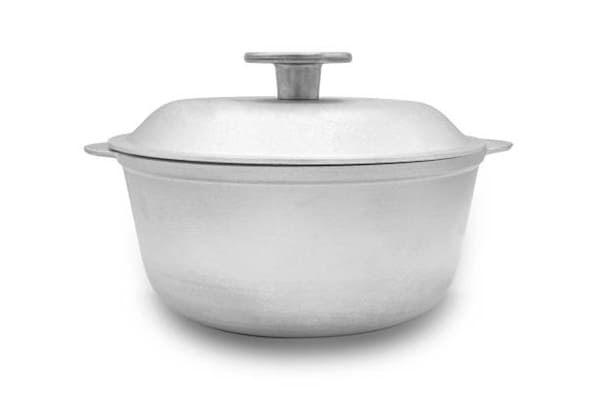
1060 aluminum discs are primarily suited for scenarios requiring precise forming, high thermal/electrical conductivity, and low cost, but where structural strength is not critical. Core applications include cookware blanks, lamp reflector covers, traffic signs, low-voltage conductive components, decorative nameplates, and linings for ordinary chemical equipment.
What is 5052 Aluminum Disc?
5052 aluminum disc is a classic 5000-series Al-Mg alloy, with magnesium as its primary alloying element, supplemented by trace chromium to enhance overall performance.
Unlike the pure aluminum 1060, the addition of magnesium significantly boosts structural strength, fatigue resistance, and environmental adaptability. Classified as a medium-to-high-strength industrial-grade aluminum disc, it is engineered for demanding operational environments.
Core Characteristics
- Medium-to-High Structural Strength: Tensile and yield strengths far exceed those of pure aluminum series.
- Superior Corrosion Resistance: Withstands moisture, salt spray, and mild chemical exposure.
- Excellent Fatigue Resistance: Maintains stable performance under prolonged cyclic loading and vibration.
- Good Weldability & Machinability: Easily welded and formed into various structural components.
- Enhanced Wear Resistance: Surface durability surpasses that of 1000-series pure aluminum.
- Robust Harsh-Environment Performance: Specifically designed for marine, coastal, and outdoor industrial scenarios.
Primary Industrial Applications
Leveraging its core advantages of high strength, stability, and corrosion resistance, 5052 aluminum discs are extensively used in load-bearing and anti-corrosion industrial parts.
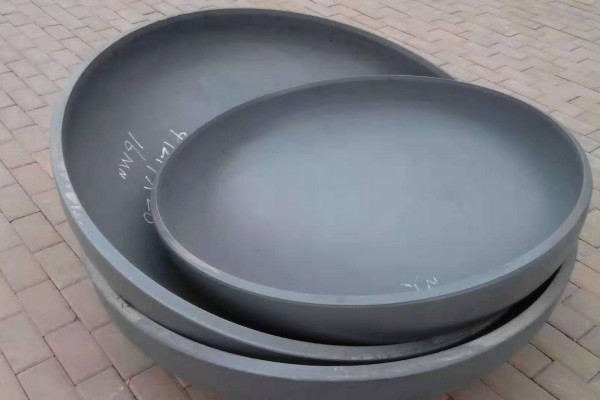
Typical products include pressure vessel blanks, marine hardware, automotive fuel tanks, industrial storage tanks, machinery housings, and structural components for construction and engineering machinery.
Chemical Composition Comparison
The performance divergence between 1060 and 5052 aluminum discs fundamentally stems from their distinct chemical compositions. The table below outlines key elemental content per international industrial standards.
| Element | 1060 Aluminum | 5052 Aluminum |
|---|---|---|
| Aluminum (Al) | ≥99.6% | Remainder |
| Magnesium (Mg) | ≤0.03% | 2.2%–2.8% |
| Silicon (Si) | ≤0.25% | ≤0.25% |
| Iron (Fe) | ≤0.35% | ≤0.40% |
| Chromium (Cr) | None | 0.15%–0.35% |
Composition Analysis
The ultra-high aluminum purity of 1060 minimizes impurity interference, yielding exceptional electrical/thermal conductivity and extreme ductility—ideal for precision forming and conductive products.
In contrast, magnesium serves as the primary strengthening agent in 5052, while trace chromium further optimizes corrosion resistance and structural stability. This alloyed formulation fundamentally distinguishes 5052 from pure aluminum, enabling superior mechanical load-bearing capacity and resilience in aggressive environments.
Mechanical Properties Comparison
Mechanical properties are critical metrics for assessing load-bearing capability and service life. The table below compares key standardized parameters for 1060 and 5052 aluminum discs, guiding structural component selection.
| Property | 1060 Aluminum Disc | 5052 Aluminum Disc |
|---|---|---|
| Tensile Strength | 60–95 MPa | 210–260 MPa |
| Yield Strength | 20–35 MPa | 130–180 MPa |
| Elongation | 25%–40% | 12%–25% |
| Hardness | Low | High |
| Fatigue Resistance | Fair | Excellent |
Performance Analysis
5052 aluminum discs offer approximately three times the tensile strength and up to five times the yield strength of 1060, alongside markedly higher hardness and fatigue resistance.
While 1060 exhibits greater elongation and flexibility, its insufficient strength precludes it from enduring sustained loads or vibrational impacts. Conversely, 5052 maintains structural integrity under continuous mechanical stress, making it the preferred choice for industrial structural parts, load-bearing components, and long-service-life equipment accessories.
Corrosion Resistance Comparison
Corrosion resistance directly dictates aluminum’s service life across different environments and is a pivotal criterion for material selection in outdoor, marine, and chemical industrial settings.
1060 Aluminum Disc
1060 pure aluminum spontaneously develops a dense, stable oxide film that effectively resists atmospheric oxidation and corrosion in dry indoor environments. It performs reliably in standard factory settings, interior equipment, and food-contact products without rusting or surface degradation.
However, its resistance to salt spray, humidity, and chemical corrosion is limited, rendering it unsuitable for outdoor exposure, coastal regions, or corrosive industrial atmospheres.
Suitable Environments: Indoor production facilities, general atmospheric industrial settings, food-contact products, decorative components.
5052 Aluminum Disc
Enhanced by Mg-Cr alloying, 5052 aluminum discs form an exceptionally dense protective oxide layer with high chemical stability. They effectively withstand coastal salt spray, marine water exposure, and mild chemical media in processing plants. Even under prolonged outdoor exposure or high-humidity conditions, the material retains surface integrity and structural stability, resisting aging and damage.
Suitable Environments: Marine engineering, coastal outdoor equipment, chemical processing plants, high-humidity industrial sites.
Winner: 5052 Aluminum Disc
In virtually all harsh industrial and corrosive environments, 5052 aluminum discs deliver significantly longer service life and superior corrosion resistance compared to 1060.
Formability and Deep Drawing Performance
Formability and deep drawing capability directly impact production yield and manufacturing complexity, representing core advantages in spinning and stamping processes.
1060 Aluminum Disc
The soft, highly ductile nature of 1060 pure aluminum enables ultra-deep drawing, complex spinning, and precision stamping with minimal risk of cracking or wrinkling. Its uniform internal stress ensures consistent forming results and high finished-product yields, fully supporting high-precision and irregularly shaped fabrication requirements.
Key Advantages: Outstanding ductility, top-tier deep drawing performance, crack-free conventional spinning, stable mass-forming capability.
Primary Applications: Household cookware, thin-walled lampshades, precision decorative parts, deep-drawn container blanks.
5052 Aluminum Disc
5052 aluminum discs offer good overall formability, accommodating routine stamping, bending, and moderate deep drawing. Post-forming, components exhibit high rigidity and dimensional stability with minimal deformation. However, compared to 1060, its higher hardness and lower elongation limit its suitability for ultra-deep drawing and extremely complex spinning operations, resulting in relatively higher processing difficulty.
Key Advantages: Stable performance in moderate forming, high post-processing structural integrity, strong resistance to deformation.
Primary Applications: Pressure vessels, industrial storage tanks, automotive structural parts, machinery housings.
Winner: 1060 Aluminum Disc
For projects requiring ultra-deep drawing, complex spinning, or high-precision flexible forming, 1060 aluminum discs achieve higher yields and lower processing costs, representing the optimal choice.
Thermal & Electrical Conductivity
Conductivity is a decisive factor for aluminum components used in heat dissipation and electrical transmission, directly impacting suitability for electrical and thermal management equipment.
| Property | 1060 Aluminum | 5052 Aluminum |
|---|---|---|
| Electrical Conductivity | Excellent | Moderate |
| Thermal Conductivity | Excellent | Good |
Scenario Analysis
The high purity of 1060 aluminum minimizes internal electrical resistance, granting it among the best thermal and electrical conductivity in conventional aluminum discs. It is widely specified for conductive busbars, heat exchanger fins, lamp reflectors, and low-voltage electrical accessories requiring efficient heat or electricity transfer.
5052 aluminum, due to its alloying elements, exhibits reduced conductivity. It is rarely employed in thermal or electrical conduction roles; its core value lies in structural strength and corrosion resistance.
Winner: 1060 Aluminum Disc
For all high-conductivity and high-thermal-management industrial applications, 1060 aluminum discs are prioritized to ensure optimal device performance through superior heat and electricity transfer efficiency.
Cost Comparison
Raw material expenditure and total lifecycle cost are central considerations in B2B industrial procurement and project budgeting. Both disc types offer distinct cost advantages depending on the perspective.
1060 Aluminum Disc: Upfront Cost Advantage
As a pure aluminum product without expensive alloying elements, 1060 incurs lower smelting costs. Its softness reduces tool and equipment wear, enhances production efficiency, and keeps batch processing costs manageable. For budget-conscious, short-lead-time, general-purpose industrial projects, 1060 aluminum discs provide clear upfront cost benefits.
5052 Aluminum Disc: Lifecycle Cost Advantage
While 5052 commands a higher initial purchase price, its superior strength, corrosion resistance, and fatigue life significantly extend finished-product service life. This reduces replacement frequency, maintenance expenses, and downtime losses. In long-service, heavy-duty, high-reliability industrial equipment scenarios, 5052 delivers greater overall cost-effectiveness.

Cost Analysis Summary
- Choose 1060 for budget-sensitive, general forming, short-lifecycle projects to control upfront costs.
- Choose 5052 for long-running, harsh-environment, high-reliability projects to minimize total lifecycle costs.
Industrial Application Comparison
1060 Aluminum Disc Applicable Industries
| Industry Sector | Core Application Products |
|---|---|
| Cookware Manufacturing | Pots, kettles, various cookware blanks |
| Lighting Industry | Lamp reflector panels, light shades, decorative lighting fittings |
| Electrical Industry | Conductive components, heat sinks, low-voltage electrical accessories |
| Signage & Decoration | Nameplates, road signs, decorative aluminum fittings |
5052 Aluminum Disc Applicable Industries
| Industry Sector | Core Application Products |
|---|---|
| Marine Industry | Ship fittings, marine corrosion-resistant parts, offshore equipment accessories |
| Automotive Industry | Fuel tanks, wheel housings, body structural components |
| Chemical Industry | Chemical storage tanks, anti-corrosion vessel blanks |
| Construction & Machinery | Structural components, industrial equipment enclosures, pressure vessel blanks |
1060 vs. 5052 Aluminum Disc Selection Guide
The cornerstone of scientific material selection is aligning material properties with actual project requirements. The following criteria assist B2B buyers and engineers in making precise choices:
Choose 1060 Aluminum Disc if your project requires:
- Exceptional deep drawing and complex forming capabilities.
- High electrical or thermal conductivity for heat dissipation or conductive parts.
- Lightweight decorative or general-purpose formed products.
- High-volume production with stringent budget controls.
- Application in indoor or standard atmospheric industrial environments.
Choose 5052 Aluminum Disc if your project requires:
- High structural strength with load-bearing or compression resistance.
- Long-term cyclic operation demanding superior fatigue resistance.
- High corrosion resistance in humid, salt-spray, or mildly corrosive environments.
- Suitability for demanding industrial settings such as marine, coastal, chemical, or outdoor exposure.
- Extended product lifespan and minimized long-term maintenance costs.
Conclusion
Both 1060 and 5052 aluminum discs serve as fundamental materials in modern industrial manufacturing. Their performance profiles and application scopes are distinctly differentiated—neither is universally “better,” only more appropriately matched to specific needs.
1060 aluminum discs, as high-purity pure aluminum, excel in deep drawing formability, thermal/electrical conductivity, and upfront cost-efficiency. They are the premier choice for cookware, lighting/decorative items, electrical conductive components, and general thin-walled formed products.
5052 aluminum discs, as high-performance Al-Mg alloys, offer outstanding mechanical strength, fatigue resistance, and corrosion protection. They are extensively deployed in demanding applications including marine hardware, automotive components, pressure vessels, chemical storage tanks, and outdoor industrial structural parts, delivering exceptional reliability.
The optimal strategy for industrial procurement and production material selection involves holistically evaluating three core factors: product performance requirements, service environment, and project budget. Precisely matching the aluminum grade to these parameters maximizes product quality and overall project economic efficiency.