
8011 Aluminum Foil for Food Containers: Material Advantages and Industry Applications
In the global food packaging and container market, 8011 food container aluminum foil has become a core raw material for disposable lunch boxes, fresh food trays, microwaveable containers, and other products, thanks to its unique alloy properties and food contact safety. As a representative of Series 8 aluminum alloys (mainly composed of aluminum, iron, and silicon), 8011 aluminum foil not only possesses excellent processability and corrosion resistance but also meets international food contact safety standards (such as FDA and EU No 10/2011). It caters to the overseas market’s demand for “safe, efficient, and eco-friendly” food containers. In-depth understanding of its characteristics and applications is of great reference value for food packaging enterprises, kitchenware brands, and end-users.
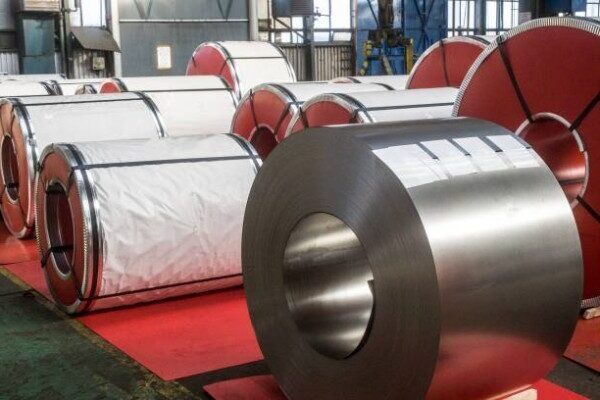
1. Core Characteristics of 8011 Aluminum Alloy Foil: Why Is It Suitable for Food Container Needs?
8011 aluminum alloy consists of over 99% pure aluminum and small amounts of alloying elements such as iron (Fe: 0.7%-1.3%) and silicon (Si: 0.5%-1.0%). This composition ratio endows it with unique advantages distinct from other aluminum alloys, perfectly matching the manufacturing and usage scenarios of food containers.
1.1 Excellent Ductility and Formability: Meeting Complex Container Processing Requirements
Food containers need to be made into various shapes (square, round, irregular) according to requirements, with thicknesses mostly ranging from 0.03mm to 0.1mm (thin gauge). The ductility of 8011 aluminum foil can perfectly meet this demand:
- Its elongation rate can reach 25%-35% (higher than the 20%-25% of Series 1 pure aluminum), so it is not easy to break during stamping, folding, and deep drawing processes. It can be accurately formed into the concave-convex structure of disposable lunch boxes and the divided design of fresh food trays;
- It has high material uniformity, with a smooth and crack-free surface after processing. This avoids container leakage caused by material defects and ensures the sealing of food packaging—critical for storing liquid-based foods (such as takeaway soups and prepared meals).
1.2 Moderate Mechanical Strength: Balancing Durability and Lightweight
Food containers need to bear a certain weight (e.g., lunch boxes filled with ingredients) and resist slight collisions during transportation. The mechanical strength design of 8011 aluminum foil balances “durability” and “lightweight”:
- Its tensile strength ranges from 120MPa to 160MPa, higher than that of pure aluminum (approximately 90MPa). Containers made from it are not easy to deform and can maintain their shape even when holding bone-in meat;
- With a density of only 2.7g/cm³ (consistent with other aluminum alloys), it is much lighter than plastic (approximately 1.0g/cm³, but requiring greater thickness to achieve equivalent strength). Containers made from it are lightweight and easy to carry, suitable for overseas scenarios such as takeaways and picnics.
1.3 Outstanding Corrosion Resistance: Adapting to Diverse Food Contact Scenarios
Food containers come into contact with ingredients of different properties, such as acidic (e.g., tomatoes, lemons), oily (e.g., fried foods), and salty (e.g., pickled foods). The corrosion resistance of 8011 aluminum foil prevents chemical reactions between the material and food:
- The addition of iron and silicon forms stable alloy phases, reducing chemical reactions between the aluminum matrix and acidic substances. Tests show that when in contact with pH=3 acidic solution at 60℃ for 24 hours, the aluminum migration amount is ≤0.05mg/kg, far below the international standard limit;
- Its surface can be further enhanced in corrosion resistance through passivation treatments (e.g., chromate passivation, chromium-free passivation). Even when storing high-oil foods (e.g., bacon, French fries) for a long time, the aluminum foil will not oxidize and turn black, ensuring food hygiene.
2. International Safety Compliance of 8011 Food Container Aluminum Foil: The Key to Entering Overseas Markets
Overseas markets have strict requirements for the safety of food contact materials. 8011 food container aluminum foil must pass multiple international certifications to enter mainstream markets such as Europe, America, Japan, and South Korea—one of the core reasons why it has become a high-frequency keyword in Google searches.
2.1 Alignment with Core International Certifications and Standards
- U.S. FDA 21 CFR Part 175.300: Explicitly classifies 8011 aluminum alloy as an “aluminum alloy permitted for food contact,” specifying that it releases no harmful substances below 250℃ (the conventional temperature for microwave and oven heating). Tests show that the migration amounts of heavy metals (lead, cadmium, mercury) from 8011 aluminum foil are all ≤0.01mg/kg, meeting the requirements of this standard;
- EU Regulation No 10/2011: Sets strict limits on the migration of food contact materials. When 8011 aluminum foil is in contact with acidic or oily foods and heated to 200℃, the aluminum migration amount is ≤0.1mg/kg, satisfying the EU’s special requirements for “aluminum food containers”;
- Japanese JIS H4160 Standard: Requires food-grade aluminum foil to meet specifications for purity and impurity content. 8011 aluminum foil has an aluminum content of ≥98.7%, with iron, silicon, and other impurities controlled within limited ranges, making it directly applicable to bento boxes and fresh food packaging in the Japanese market.
2.2 Microwave and Oven Compatibility: Expanding Container Usage Scenarios
Overseas users often use food containers directly for microwave heating or oven reheating. The high-temperature resistance and stability of 8011 aluminum foil can meet this demand:
- It can withstand short-term high temperatures up to 220℃. When used in microwaves (following “no metal reflection risk” design, such as no sharp protrusions on container edges), it will not melt or release harmful substances;
- When used for reheating prepared meals in ovens (e.g., heating at 180℃ for 10 minutes), the thermal conductivity of aluminum foil ensures uniform heating of food while preventing container deformation—an advantage over most plastic containers (only some high-temperature-resistant plastics can withstand temperatures above 100℃).
3. Practical Application Scenarios of 8011 Food Container Aluminum Foil: Covering Mainstream Overseas Demands
From disposable catering to fresh food storage, from prepared meal packaging to home kitchens, 8011 food container aluminum foil has been deeply integrated into overseas daily life, with its characteristics highly matching the needs of different scenarios.
3.1 Disposable Takeaway Lunch Boxes: Efficiently Adapting to Fast-Paced Lifestyles
The takeaway market in Europe, America, Southeast Asia, and other regions is large, and disposable lunch boxes made of 8011 aluminum foil are the preferred choice:
- They can be made into a “aluminum foil lunch box + sealing film” combination, suitable for various takeaway foods such as hamburgers, fried chicken, and pasta. The barrier property of aluminum foil prevents soup leakage and odor cross-contamination;
- Some lunch boxes are designed as “directly heatable” types. After receiving takeaways, users can heat them directly in microwaves or ovens without transferring ingredients, catering to the overseas trend of “convenient cooking.” For example, U.S. fast-food chains often use 8011 aluminum foil lunch boxes to hold pre-made hamburger patties, ensuring tender taste after reheating.
3.2 Fresh and Frozen Food Trays: Ensuring Food Freshness
In the fresh food sections of overseas supermarkets, 8011 aluminum foil trays are widely used for packaging meat, seafood, and bakery semi-finished products:
- The barrier property of aluminum foil isolates oxygen and moisture, extending the shelf life of fresh meat (e.g., steak, salmon) by 2-3 days compared to plastic trays;
- It has excellent low-temperature resistance and will not become brittle and crack in a -20℃ freezing environment, making it suitable for trays of frozen pizza crusts and frozen vegetables. After thawing, it still maintains stable shape—”frozen roasted chicken trays” commonly seen in EU supermarkets are mostly made of 8011 aluminum foil with a thickness of 0.05mm.
3.3 Reusable Food Containers for Home Use: Balancing Eco-Friendliness and Practicality
With the improvement of environmental awareness overseas, reusable 8011 aluminum foil containers have become increasingly popular:
- Their thickness is usually 0.08mm-0.1mm, thicker than disposable lunch boxes. They can be washed and reused repeatedly (hand washing is recommended to avoid scratching the surface with steel wool), suitable for storing leftovers and portioning ingredients at home;
- Some brands have launched “foldable aluminum foil containers,” which can be folded for storage when not in use to save kitchen space. Their recyclability complies with the EU’s “circular economy” policy. For example, 8011 aluminum foil food storage boxes launched by German brands can be recycled through local “metal recycling systems,” reducing plastic pollution.
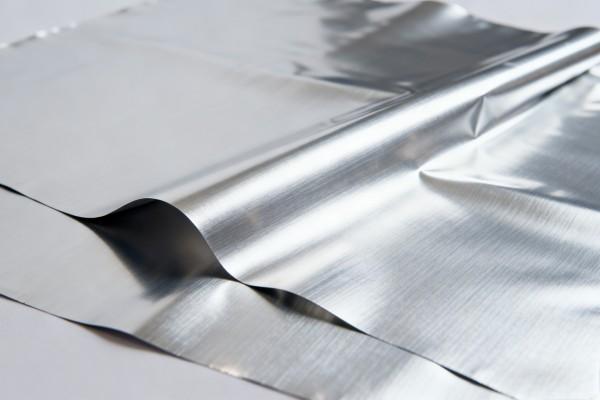
4. 8011 Food Container Aluminum Foil vs. Other Materials: Core Competitive Advantages
In the food container material market, 8011 aluminum foil has irreplaceable comprehensive advantages compared to plastic, other aluminum alloys, and tin foil—explaining why its market share in overseas markets continues to increase.
4.1 vs. Plastic Containers: Safer and More Eco-Friendly
- Safety: Plastic containers (e.g., PP, PS) may release plasticizers and benzene-based substances at high temperatures, while 8011 aluminum foil releases no harmful substances below 220℃, making it especially suitable for heating scenarios;
- Eco-Friendliness: The degradation cycle of plastic containers is hundreds of years, while the recycling rate of 8011 aluminum foil can reach over 95%, and the energy consumption for recycling and reprocessing is only 5% of that for primary aluminum. It complies with the EU’s “2030 plastic reduction” target. For example, France has legislated to restrict the use of disposable plastic lunch boxes, and 8011 aluminum foil lunch boxes have become the main alternative.
4.2 vs. Other Aluminum Alloy Foils (e.g., 1235, 3003): More Suitable for Food Containers
- 1235 Pure Aluminum Foil: It has good ductility but low strength. Containers made from it are easy to deform, so it is only suitable for light packaging (e.g., candy wrappers) and cannot bear heavy loads;
- 3003 Aluminum Alloy Foil: It contains manganese, with strong corrosion resistance but poor ductility. It is prone to cracking when processing complex containers and costs 15%-20% more than 8011;
- 8011 aluminum foil balances “strength, ductility, and cost,” making it a cost-effective choice for food containers. Approximately 70% of aluminum food containers worldwide use 8011 alloy.
4.3 vs. Traditional Tin Foil: Purer and More Compliant
Traditional tin foil (containing approximately 90% tin) has risks of lead and tin migration, and its use in food contact has been restricted in some countries (e.g., the EU). In contrast, 8011 aluminum foil has high purity (aluminum content ≥98.7%) and low impurity content, fully complying with international food safety standards. Moreover, its thermal conductivity is 30% higher than that of tin foil, ensuring higher heating efficiency.
5. Future Trends of 8011 Food Container Aluminum Foil: Technological Upgrades and Market Expansion
With the upgrading of overseas food packaging industry demands for “safety, eco-friendliness, and convenience,” 8011 food container aluminum foil is developing toward “thinner gauge, functionalization, and customization,” further consolidating its market position.
5.1 Thinner Gauge Development: Reducing Costs and Resource Consumption
Currently, the thickness of mainstream 8011 food container aluminum foil ranges from 0.03mm to 0.1mm. In the future, it will develop toward thinner gauges (e.g., 0.02mm-0.03mm):
- Relying on high-precision rolling technology, material usage is reduced while ensuring strength, lowering production costs and transportation energy consumption;
- Thinner gauge aluminum foil is lighter, suitable for small food packaging (e.g., single dessert trays, condiment boxes), expanding application scenarios.
5.2 Functional Upgrades: Adding Additional Value
- Antibacterial Coatings: Coating the surface of 8011 aluminum foil with antibacterial agents (e.g., silver ion coatings) inhibits the growth of Escherichia coli and Staphylococcus aureus, extending food shelf life. It is suitable for fresh food and ready-to-eat food packaging;
- Easy-Tear Design: Special rolling processes create “easy-tear edges” on aluminum foil containers, making them convenient for users to open and improving user experience. For example, 8011 aluminum foil takeaway boxes launched in the Southeast Asian market can be torn open by hand without tools.
5.3 Customization Services: Adapting to Brand Needs
Overseas food enterprises have increasing demands for container brand recognition, and 8011 aluminum foil containers can provide customization services:
- Brand logos and cooking instructions (e.g., “Microwave for 2 minutes”) can be printed on the surface using food-grade inks, ensuring no migration;
- Shapes can be customized according to product characteristics, such as “circular perforated aluminum foil trays” for pizza brands (perforations designed for heat dissipation to prevent sogginess of pizza bottoms) and “layered aluminum foil lunch boxes” for salad brands (separating sauces and ingredients).
As a core material in the food container industry, 8011 food container aluminum foil serves as a key link connecting material production, food packaging, and end consumption, thanks to its excellent performance, strict international compliance, and wide application scenarios. Both the rapid expansion of the overseas takeaway market and the plastic replacement trend driven by environmental policies have brought sustained growth in market demand for it. In the future, with technological upgrades and functional expansion, 8011 aluminum foil will further break through application boundaries, providing safer, more efficient, and more eco-friendly solutions for the global food packaging industry. It will also continue to be a core content carrier for “food-grade aluminum foil + container” related keywords in Google searches.