
Impact and Mechanism of Pharmaceutical Aluminum Foil Dyne Value on Product Quality
HW-A. Introduction: Dyne Value of Pharmaceutical Aluminum Foil – The “Core Regulatory Indicator” for Finished Foil Quality
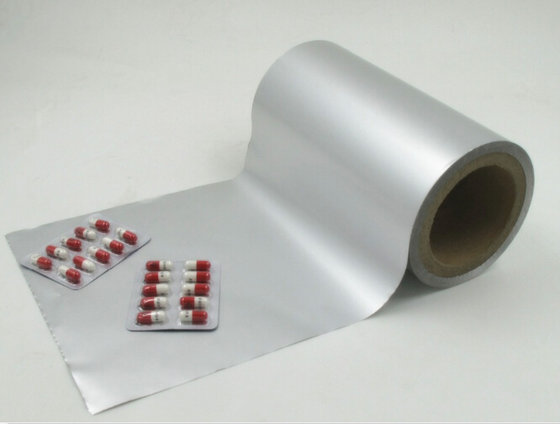
Pharmaceutical aluminum foil (e.g., aluminum foil for PTP aluminum-plastic blisters, cold-forming pharmaceutical aluminum foil) serves as a critical packaging material in direct contact with pharmaceuticals. The quality of finished foil products directly determines pharmaceutical storage safety, medication compliance, and patient risk. The dyne value of pharmaceutical aluminum foil (surface tension, unit: mN/m), as a quantitative indicator of the surface energy of pharmaceutical aluminum foil, is not merely a “surface parameter” – by regulating the wetting and adhesion capabilities of pharmaceutical aluminum foil toward adhesives, inks, and pharmaceutical components, it profoundly influences core properties of finished foil products, including composite sealing, printed marking, pharmaceutical compatibility, and processing formability.
Industry data shows that in the 2024 sampling inspection of Chinese pharmaceutical packaging materials, approximately 35% of non-conforming finished foil cases were directly related to abnormal dyne values of pharmaceutical aluminum foil. Among these, over 60% were attributed to composite leakage and ink peeling caused by dyne values of pharmaceutical aluminum foil below 32mN/m, while the cold-forming cracking rate induced by poor dyne value uniformity reached 22%. Therefore, analyzing the impact of the dyne value of pharmaceutical aluminum foil on finished foil products is key to controlling the quality of pharmaceutical aluminum foil.
HW-B. Core Impact 1: Dyne Value of Pharmaceutical Aluminum Foil Determines Composite Adhesion Performance – Safeguarding Foil Sealing and Pharmaceutical Storage Safety
Pharmaceutical aluminum foil needs to be laminated with substrates such as PVC and PE (e.g., “pharmaceutical aluminum foil//PVC” for PTP blisters, “pharmaceutical aluminum foil//PE” for cold-forming packaging). The dyne value of pharmaceutical aluminum foil directly affects the wetting and spreading effect of adhesives on its surface, thereby determining the peel strength and sealing performance of the composite layer – the core defense line for finished foil products to prevent pharmaceutical moisture absorption and oxidation.
(A) Impact Mechanism: “Wetting Matching Principle” Between Dyne Value of Pharmaceutical Aluminum Foil and Adhesives
The surface tension of medical PU adhesives (commonly used composite adhesives) ranges from 30 to 32mN/m. Their spreading on pharmaceutical aluminum foil requires compliance with the principle that “the dyne value of pharmaceutical aluminum foil ≥ the surface tension of the adhesive”:
- When the dyne value of pharmaceutical aluminum foil ≥ 32mN/m, the adhesive spreads continuously in a “film-like manner” and forms hydrogen bonds + van der Waals forces with the hydroxyl groups (-OH) on the surface of pharmaceutical aluminum foil, resulting in an adhesion area ratio exceeding 92% and no weak sealing points in the composite layer;
- When the dyne value of pharmaceutical aluminum foil < 30mN/m, the adhesive shrinks into “beads” due to insufficient surface energy, with an adhesion area ratio of less than 75%. This leads to “local adhesive-free areas” in the composite layer, which become channels for pharmaceutical moisture absorption and oxidation.
(B) Quantitative Data: Direct Correlation Between Dyne Value of Pharmaceutical Aluminum Foil and Composite Performance
Based on the YBB 00152002-2015 “Peel Strength Test” (composite structure: pharmaceutical aluminum foil//PVC, adhesive: two-component medical PU adhesive), the performance data corresponding to different dyne values of pharmaceutical aluminum foil are as follows:
| Dyne Value of Pharmaceutical Aluminum Foil (mN/m) | Adhesive Wetting Area Ratio (%) | 180° Peel Strength (N/15mm) | Sealing Test (Leak Rate, atm·cc/s) | Pharmaceutical Storage Risk (40℃/RH75%, 6 months) |
| 28 (Non-conforming) | 75 | 0.7 | 1.2×10⁻³ | Pharmaceutical moisture absorption (humidity increased from 3% to 8%), 12% degradation of vitamin C |
| 30 (Critical) | 85 | 1.0 | 5.8×10⁻⁴ | Local delamination of composite layer, 30% increased risk of excessive total bacterial count |
| 32 (Minimum Conforming) | 92 | 1.3 | 8.5×10⁻⁵ | No significant moisture absorption, pharmaceutical content change rate < 1% |
| 34 (Optimal) | 98 | 1.8 | <1×10⁻⁶ | Fully sealed, pharmaceutical stability meets YBB requirements |
| 36 (Excessively High) | 100 | 1.7 | <1×10⁻⁶ | No risk, but corona energy consumption of pharmaceutical aluminum foil increased by 20% |
(C) Industry Case: Mass Recall Caused by Insufficient Dyne Value of Pharmaceutical Aluminum Foil
A pharmaceutical company’s PTP aluminum-plastic blister packaging issue in 2023:
- Root cause: The dyne value of the purchased pharmaceutical aluminum foil was only 29mN/m (corona treatment power failed to meet the 3kW standard, reaching only 2.2kW), and the average peel strength after lamination was 0.9N/15mm (below the 1.2N/15mm requirement in YBB);
- Finished product risk: After 6 months of refrigeration at 4℃, 15% of the blisters showed local delamination of the composite layer. The content of vitamin C tablets inside decreased from 100mg/tablet to 88mg/tablet, exceeding the ±5% content fluctuation limit specified in the Chinese Pharmacopoeia;
- Rectification: Increased the corona power of pharmaceutical aluminum foil to 4.5kW, stabilized the dyne value at 33-34mN/m, and the composite peel strength recovered to 1.6N/15mm, with no abnormalities in subsequent batches.
HW-C. Core Impact 2: Dyne Value of Pharmaceutical Aluminum Foil Ensures Printing Compliance – Guaranteeing Clear Foil Markings and GMP Compatibility
Pharmaceutical aluminum foil requires printing of pharmaceutical names, batch numbers, and expiration dates (in compliance with Chapter 12 “Pharmaceutical Marking Management” of GMP). Insufficient dyne value of pharmaceutical aluminum foil causes ink adhesion failure, leading to blurred markings and ink peeling, which directly affects pharmaceutical traceability and medication safety.
(A) Impact Mechanism: “Core Logic” of Dyne Value of Pharmaceutical Aluminum Foil and Ink Adhesion
The surface tension of medical solvent-based polyamide inks is approximately 31-33mN/m. Their firm adhesion depends on “the dyne value of pharmaceutical aluminum foil ≥ the surface tension of the ink”:
- When the dyne value of pharmaceutical aluminum foil ≥ 32mN/m, the polyamide resin in the ink forms a continuous film on its surface, achieving Grade 0 adhesion (no ink peeling) through “the combination of polar groups (-COOH) and hydroxyl groups on pharmaceutical aluminum foil”;
- When the dyne value of pharmaceutical aluminum foil < 30mN/m, the ink cannot overcome surface resistance and adheres in “discontinuous dots”. It peels off after friction or pharmaceutical contact, with only Grade 3-4 adhesion (ink peeling area > 20%).
(B) Quantitative Comparison: Dyne Value of Pharmaceutical Aluminum Foil and Printing Performance
According to the YBB 00122003 “Print Quality Test for Pharmaceutical Packaging” (ink: medical-grade solvent-based black ink; test conditions: 500g weight friction resistance, 3M tape peeling), the data are as follows:
| Dyne Value of Pharmaceutical Aluminum Foil (mN/m) | Ink Adhesion (Tape Peeling) | Friction Resistance (After 100 Cycles) | Text Clarity (50x Magnification) | GMP Compliance | Medication Risk |
| 29 | 32% Ink Peeling Area | Blurred text, 25% Ink Layer Wear | 锯齿状边缘,笔画断裂 | Non-compliant | Unidentifiable batch number, failed traceability |
| 30 | 8% Ink Peeling Area | Slightly blurred text, 8% Wear | Slightly 锯齿状边缘 | Critically Compliant | Risk of blurred markings after long-term storage |
| 32 | < 3% Ink Peeling Area | Clear text, < 2% Wear | Smooth edges, no stroke defects | Compliant | No Risk |
| 34 | No Ink Peeling | No Wear | No Defects | Compliant | No Risk |
(C) Risk Case: Medication Hazard Caused by Insufficient Dyne Value of Pharmaceutical Aluminum Foil
2024 sampling inspection by a provincial drug regulatory authority: The dyne value of pharmaceutical aluminum foil for a batch of Ganmaoling Granules was only 28mN/m. The printed “Expiration Date: 2025.06” marking peeled off after 6 months, leading to a patient taking expired medication and suffering from gastrointestinal discomfort – this case directly highlights the decisive role of the dyne value of pharmaceutical aluminum foil in printing compliance.
HW-D. Core Impact 3: Dyne Value of Pharmaceutical Aluminum Foil Controls Pharmaceutical Compatibility – Reducing Aluminum Ion Migration and Pharmaceutical Degradation Risks
Pharmaceutical aluminum foil is in direct contact with pharmaceuticals. Abnormal dyne values of pharmaceutical aluminum foil are often accompanied by uneven surface treatment (incomplete passivation layer, local absence of corona traces), exposing the aluminum matrix and triggering aluminum ion migration and reactions with pharmaceutical components, which threaten medication safety.
(A) Impact Mechanism: “Linkage Relationship” Between Dyne Value of Pharmaceutical Aluminum Foil and Surface Treatment
The dyne value of pharmaceutical aluminum foil is regulated through “corona treatment + passivation coating”, with a direct correlation between the two:
- When the dyne value of pharmaceutical aluminum foil is stably 32-34mN/m, corona treatment is uniform and the passivation layer coverage rate is ≥ 99% (e.g., chromium-free passivation film), which can completely isolate the aluminum matrix from pharmaceutical contact;
- When the dyne value of pharmaceutical aluminum foil < 30mN/m or fluctuates > 3mN/m, uneven corona treatment leads to local absence of the passivation layer (coverage rate < 85%). The exposed aluminum matrix reacts with acidic/alkaline pharmaceuticals (e.g., Al + 3H⁺ → Al³⁺ + 3/2H₂↑), causing aluminum ion migration.
(B) Quantitative Data: Dyne Value of Pharmaceutical Aluminum Foil and Pharmaceutical Compatibility
According to the YBB 00142002 “Pharmaceutical Packaging Material-Pharmaceutical Compatibility Test”, simulating storage conditions for acidic pharmaceuticals (aspirin tablets, pH3.5) and alkaline pharmaceuticals (sodium bicarbonate tablets, pH8.2) (40℃/RH75%, 3 months), the data are as follows:
| Dyne Value of Pharmaceutical Aluminum Foil (mN/m) | Passivation Layer Coverage (%) | Aluminum Ion Migration (μg/dm²) (Acidic Pharmaceuticals) | Aluminum Ion Migration (μg/dm²) (Alkaline Pharmaceuticals) | Pharmaceutical Content Change Rate (%) | Compliance with YBB Limit (≤50μg/dm²) |
| 28 (Uneven) | 82 | 78 | 92 | -5.2 (Aspirin Degradation) | No |
| 31 (Fluctuation 3mN/m) | 90 | 35 | 48 | -1.5 (Slight Degradation) | Critical |
| 33 (Uniform) | 99 | 12 | 18 | -0.8 (Normal) | Yes |
| 34 (Uniform) | 100 | 10 | 15 | -0.5 (Normal) | Yes |
(C) Warning Case: Compatibility Issues Caused by Fluctuating Dyne Value of Pharmaceutical Aluminum Foil
2022 packaging issue of omeprazole enteric-coated capsules (acidic pharmaceuticals, pH1.5-3.0) from a pharmaceutical company:
- The dyne value of pharmaceutical aluminum foil fluctuated by 4mN/m (29-33mN/m), with a passivation layer coverage rate of only 88%;
- After 3 months of storage, the aluminum ion migration reached 65μg/dm² (exceeding the YBB limit by 30%), “aluminum spots” appeared on the capsule shells, and the pharmaceutical dissolution rate decreased from 95% to 82%, failing to meet the requirements of the Chinese Pharmacopoeia and ultimately leading to a recall.
HW-E. Core Impact 4: Dyne Value of Pharmaceutical Aluminum Foil Determines Processing Adaptability – Improving Cold-Forming Foil Qualification Rate
Cold-forming pharmaceutical aluminum foil (used for capsules and irregularly shaped tablets) needs to withstand deep stretching of 5-8mm. The uniformity of the dyne value of pharmaceutical aluminum foil directly affects local ductility, thereby determining the forming qualification rate – a key factor for mass production of cold-forming foil.
(A) Impact Mechanism: “Correlation Logic” Between Dyne Value Uniformity of Pharmaceutical Aluminum Foil and Ductility
During cold forming, the ductility of pharmaceutical aluminum foil depends on uniform surface stress:
- When the dyne value of pharmaceutical aluminum foil is uniform (fluctuation ≤ 1.5mN/m), surface stress is evenly distributed, stretching deformation is uniform, and there is no local stress concentration;
- When the dyne value of pharmaceutical aluminum foil is uneven (fluctuation > 3mN/m), areas with low dyne values (< 31mN/m) have low surface energy and poor ductility, making them prone to cracking; areas with high dyne values (> 33mN/m) have excessive ductility, making them prone to over-stretching and wrinkling.
(B) Quantitative Comparison: Dyne Value Uniformity of Pharmaceutical Aluminum Foil and Forming Performance
According to the YBB 00272004 “Cold-Forming Aluminum Foil Forming Performance Test” (thickness of pharmaceutical aluminum foil: 0.045mm, forming depth: 5mm, batch size: 1000 pieces), the data are as follows:
| Dyne Value Range of Pharmaceutical Aluminum Foil (mN/m) | Dyne Value Fluctuation of Pharmaceutical Aluminum Foil (mN/m) | Forming Qualification Rate (%) | Main Defect Types | Mass Production Loss (RMB/10,000 Pieces) |
| 32-33 | ≤1.5 | 99.2 | No Defects | 500 |
| 30-34 | 4 | 92.5 | Local Wrinkles (15%) | 3500 |
| 29-32 | 3 | 85.7 | Cracks (8%), Wrinkles (22%) | 7800 |
| 28-31 | 3 | 72.3 | Cracks (18%), Wrinkles (30%) | 15000 |
(C) Mass Production Case: Regulating Dyne Value of Pharmaceutical Aluminum Foil to Improve Forming Qualification Rate
2023 mass production issue of a cold-forming pharmaceutical aluminum foil enterprise:
- The dyne value of pharmaceutical aluminum foil fluctuated by 3.5mN/m (30-33.5mN/m), with a cold-forming cracking rate of 12% and a wrinkling rate of 25%;
- Rectification: Optimized the corona electrode spacing (from 15mm to 12mm) and introduced online dyne value monitoring of pharmaceutical aluminum foil (testing once every 10m), controlling fluctuations within 1.5mN/m;
- Effect: The forming qualification rate increased from 83% to 98.5%, and the loss per 10,000 pieces decreased from RMB 12,000 to RMB 600.
HW-F. Conclusions and Recommendations for Controlling Dyne Value of Pharmaceutical Aluminum Foil
The dyne value of pharmaceutical aluminum foil exerts a “full-chain impact” on the quality of finished foil products. Precise control is required to ensure quality, with core recommendations as follows:
- Key Thresholds for Dyne Value of Pharmaceutical Aluminum Foil:
-
- Pharmaceutical aluminum foil for PTP aluminum-plastic blisters: Stable dyne value of 32-34mN/m, fluctuation ≤ 2mN/m (balancing lamination and printing);
-
- Cold-forming pharmaceutical aluminum foil: Stable dyne value of 33-36mN/m, fluctuation ≤ 1.5mN/m (reducing forming defects);
-
- Pharmaceutical aluminum foil for acidic/alkaline pharmaceuticals: Dyne value ≥ 33mN/m, passivation layer coverage rate ≥ 99% (controlling aluminum ion migration).
- Practical Control Measures:
-
- Pharmaceutical company procurement: Include the dyne value of pharmaceutical aluminum foil in procurement specifications, and require suppliers to provide “dyne value testing curves for each roll of pharmaceutical aluminum foil” to avoid missing local non-conformities in batch sampling;
-
- Production side: Introduce online surface tensiometers (e.g., KRÜSS K100) in pharmaceutical aluminum foil production, link with automatic corona power adjustment, and control the dyne value in real time;
-
- Storage: Store pharmaceutical aluminum foil in vacuum-sealed packaging with desiccants (RH ≤ 55%, 15-25℃) to prevent dyne value reduction due to moisture absorption.
Through the above measures, the risk of non-conforming finished foil products caused by abnormal dyne values of pharmaceutical aluminum foil can be effectively reduced, ensuring the safety and compliance of pharmaceutical packaging.