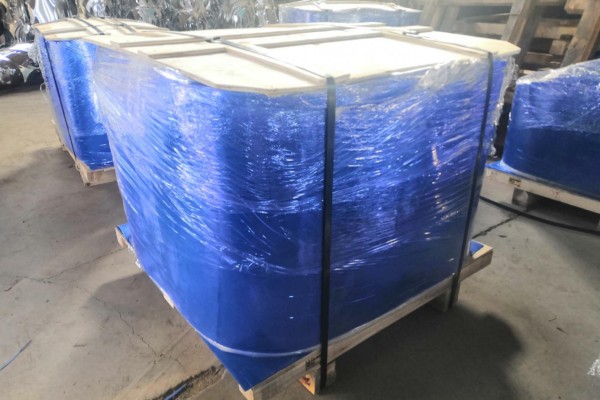
1050 アルミディスクパッケージ

熱間圧延におけるエッジ割れのメカニズムと防止技術 5052 アルミサークル

熱間圧延におけるエッジ割れのメカニズムと防止技術 5052 アルミサークル

5052 アルミニウム合金, as the most widely used medium-strength alloy in the Al-Mg series, holds a significant position in shipbuilding, 交通機関, エレクトロニクス, and cookware due to its excellent corrosion resistance, 溶接性, と成形性. しかし, in the production of hot-rolled circles, edge cracking (edge split)​ is a core defect that constrains yield rates and product quality—manifesting as minor saw-tooth micro-cracks at best and developing into through-thickness splits at worst, directly rendering subsequent cold rolling and stamping processes impossible. This article systematically analyzes the key influencing factors across the entire chain—material, ingot, and hot rolling—based on the crack formation mechanism. It proposes a comprehensive prevention and control strategy to provide technical support for the stable production of high-quality 5052 熱間圧延アルミニウム円.

1. Formation Mechanism of Edge Cracks in 5052 Hot-Rolled Aluminum Circles

1.1 The Mechanical Nature of Crack Formation

The core of fracture in metal hot rolling is that the additional tensile stress at the edge exceeds the material’s critical fracture stress (σ⁺ ≥ σc). During the hot rolling of 5052 サークル, there is a significant temperature and deformation difference between the center and edge of the slab: the center undergoes sufficient deformation with higher temperature, remaining in a compressive stress state; the edge cools faster with lagging deformation, generating additional tensile stress. When this tensile stress exceeds the material’s critical crack resistance at the current temperature, micro-cracks initiate at grain boundaries or defects and propagate along the tensile stress direction, eventually forming visible edge cracks.

アルミ両面フライパン
アルミ両面フライパン

1.2 の “Sodium EmbrittlementCharacteristic of 5052 合金 (Intrinsic Cause)

5052 contains 2.2%–2.8% Mg, classifying it as a high-magnesium Al-Mg alloy. Sodium embrittlementis the core material-induced cause of its edge cracking.

  • Trace amounts of Na (w(Na) > 5×10⁻⁶) adsorb in a free state at grain boundaries during solidification, forming a low-melting-point (97.7℃) liquid film, significantly reducing grain boundary strength and the critical fracture stress σc.
  • During hot rolling, the liquid film at grain boundaries cracks easily under tensile stress, and the crack propagation speed increases significantly with higher Na content (crack depth is positively correlated with Na content).
  • さらに, imbalances in the Fe/Si ratio and impurity segregation (例えば, coarse Al-Fe-Si phases) exacerbate grain boundary weakening, increasing the tendency for edge cracking.

1.3 Non-uniform Deformation During Hot Rolling (Extrinsic Cause)

  • Temperature Non-uniformity:​ The edge of the circle cools faster, leading to a greater temperature drop and significantly higher deformation resistance than the center, resulting in concentrated additional tensile stress at the edges.
  • Poor Roll Crown and Shape:​ Excessive roll crown causescenter buckle,” forcing the edges to bear extra tensile stress and inducing cracks.
  • Mismatched Process Parameters:​ Excessive reduction per pass, overly high rolling speed, and improper tension control aggravate deformation non-uniformity, amplifying edge tensile stress.
  • Inherent Ingot Defects:​ Ingots with unmachined sides contain subsurface micro-cracks, スラグ介在物, or microstructural segregation, which become crack initiation sites and propagate rapidly during hot rolling.

2. Key Influencing Factors and Failure Characteristics of Edge Cracks

2.1 Material and Melting Factors

  • Excessive Na Content:​ Risk of edge cracking rises sharply when w(Na) > 5×10⁻⁶; severe edge cracking is almost inevitable when w(Na) > 20×10⁻⁶.
  • Poor Impurity Control:​ When Fe < そして, brittle β-phase (Al₃FeSi) easily forms, distributed along grain boundaries and fracturing the matrix; coarse inclusions become stress concentration points.
  • Insufficient Refining:​ Incomplete melt degassing and slag removal leave residual pores and oxide inclusions, inducing cracks during hot rolling.

2.2 Ingot Preparation Factors

  • Unreasonable Casting Process:​ Excessively high casting temperature, excessive speed, or overly strong secondary water cooling generate significant casting stress and subsurface cracks. Side cracks directly propagate into edge splits during hot rolling.
  • Insufficient Homogenization:​ Inadequate homogenization temperature or short holding time prevent full dissolution of non-equilibrium eutectic phases, leaving brittle phases at grain boundaries and reducing crack resistance.
  • Poor Scalping Quality:​ Insufficient or non-standard side scalping fails to remove subsurface defects, creating sources for edge cracking.

2.3 Hot Rolling Process Factors

  • Low Initial Rolling Temperature:​ The suitable hot rolling temperature for 5052 is 480–520°C. Below 460°C, plasticity plummets and deformation resistance surges, making edges prone to cracking.
  • Excessive Reduction per Pass:​ A single-pass reduction >25% in the roughing stage aggravates tensile stress concentration at the edges.
  • Uncontrolled Cooling and Lubrication:​ Excessively low emulsion temperature or uneven spray causes edge overcooling; poor lubrication increases friction, worsening deformation non-uniformity.
  • Poor Tension and Roll Crown Control:​ Excessive back tension or unreasonable roll crown directly leads to edge tensile stress exceeding limits.

2.4 Classification of Crack Failure Characteristics

  • Localized Edge Cracking:​ Punctate/short strip micro-cracks originating from local surface damage, Na segregation, or small inclusions.
  • Regional Edge Cracking:​ Continuous saw-tooth edge cracking, often due to residual oxide scale on the ingot, localized excessive cooling, or deformation non-uniformity.
  • Full-Coil Edge Cracking:​ Deep, through-thickness splits, primarily caused by excessive Na content, overall low temperature, or severe process mismatch.

3. Comprehensive Prevention and Control Technology for Edge Cracks in 5052 Hot-Rolled Aluminum Circles

3.1 溶解と鋳造: EliminatingSodium Embrittlementand Defects at the Source

3.1.1 Strict Chemical Composition Control

  • Na Content Control:​ Strictly control Na sources in raw/auxiliary materials (例えば, Mg ingots, sodium removal agents) to ensure final product w(Na) < 5×10⁻⁶; use sodium-free refining agents, avoiding sodium salt modifiers.
  • Optimize Fe/Si Ratio:​ Control w(鉄) > w(そして), typically Fe:Si ≥ 1.2, to inhibit brittle β-phase formation.
  • Impurity Limits:​ w(そして) ≤ 0.25%, w(鉄) ≤ 0.4%, to reduce coarse intermetallic compounds.

3.1.2 Optimize Casting Process

  • Casting Temperature: 730–750°C, avoiding overheating that causes grain coarsening and stress concentration.
  • キャスト速度: Reduce by 10%–15% to extend solidification time and reduce casting stress.
  • Secondary Cooling: Reduce water cooling intensity, adopt gradient cooling to minimize temperature difference and thermal stress between ingot surface and core.
  • Ingot Dimensions: Control width-to-thickness ratio to avoid excessive edge cooling; perform thorough side scalping to remove subsurface defects.

3.1.3 Strengthen Homogenization Treatment

  • Homogenization Temperature: 460–470°C (avoiding burning), hold for 8–12 h to ensure complete dissolution of non-equilibrium phases and uniform structure.
  • Cooling Method: Furnace cool slowly to below 300°C before removal to eliminate cooling stress.
アルミシート丸2
アルミシート丸2

3.2 熱間圧延工程: Precise Control of Temperature and Deformation to Reduce Edge Tensile Stress

3.2.1 Full-process Temperature Control

  • 初期圧延温度:​ Roughing: 490–520°C, 仕上げ: 460–480°C, ensuring edge temperature ≥450°C to maintain good plasticity.
  • Furnace Temperature Uniformity:​ Regularly calibrate heating furnaces to ensure ingot heating temperature variation ≤ ±10°C, avoiding local undercooling/overheating.
  • Rolling Temperature Drop Control:​ Improve rolling speed matching, optimize emulsion temperature (60–80°C), reduce air cooling time to lower the edge cooling rate.

3.2.2 Deformation and Roll Crown Optimization

  • Pass Reduction Distribution:​ Roughing single-pass reduction: 15%–22%, 仕上げ: 10%–18%, avoiding large reductions causing deformation non-uniformity.
  • Roll Crown Control:​ Use slightly convex rolls (0.05–0.10 mm/m), combined with roll bending technology, to suppress center buckle and balance edge stress.
  • Tension System:​ Employ micro-tension rolling (back tension ≤5 MPa) to avoid extra tensile stress on edges; maintain steady coiling tension to prevent tension surges inducing cracks.

3.2.3 Refined Cooling and Lubrication

  • Emulsion Spraying: Control spray width slightly less than coil width to avoid excessive edge cooling; adjust spray angle to ensure uniform cooling.
  • Lubrication Management: Ensure emulsion concentration (3%–5%) and cleanliness to reduce friction coefficient and minimize uneven deformation resistance.

3.3 Equipment and Process Control: Ensuring Process Stability

  • Roll Maintenance: Regularly regrind rolls to ensure surface finish and dimensional accuracy, preventing roll surface defects from transferring to the product.
  • Edger Roll Optimization: Reasonably adjust edger roll side pressure to correct slab deviation and reduce local tensile stress at edges.
  • Online Monitoring: Install online temperature, shape, and tension detection systems for real-time adjustment of process parameters and timely warning of abnormalities.
  • Clean Production: Prevent oxide scale, 油, and contaminants on ingot surfaces from entering the hot rolling process to avoid surface defects inducing cracks.

4. Verification of Prevention Effects and Quality Improvement

Implementing the above full-process prevention measures can achieve effective control of edge cracks in 5052 熱間圧延アルミニウム円:

  • Material End:​ w(Na) stably controlled below 3×10⁻⁶, Fe/Si ratio optimized to 1.3–1.5, brittle grain boundary phases essentially eliminated.
  • Ingot End:​ Casting stress and subsurface defects significantly reduced, microstructure uniformity after homogenization notably improved.
  • Hot Rolling End:​ Edge temperature difference controlled within 30°C, additional tensile stress reduced below the critical value. The incidence of edge cracking drops from over 60% 以下へ 5%, with yield rate increasing by 15%–20%.

5. 結論と展望

Edge cracks in 5052 hot-rolled aluminum circles result from the combined action of the intrinsicsodium embrittlementmaterial factor and the extrinsic non-uniform hot rolling deformation factor. 予防の核心は、: strictly controlling Na content (w(Na) < 5×10⁻⁶), optimizing ingot microstructure, precisely managing hot rolling temperature and deformation, and balancing edge stress. Through technological coordination across the entire melting—casting—hot rolling process, the edge cracking problem can be fundamentally solved, enabling the stable production of high-quality 5052 熱間圧延アルミニウム円.

将来を見据えて, numerical simulation (例えば, DEFORM) can be further integrated to optimize the hot rolling temperature and stress field distribution. Developing adaptive roll crown and tension control systems can achieve intelligent prevention and control of edge cracks, promoting the development of 5052 aluminum circle production towards higher efficiency, 安定性, and quality.

コメントを残す

あなたのメールアドレスは公開されません. 必須フィールドにマークが付いています *

一番上までスクロール