
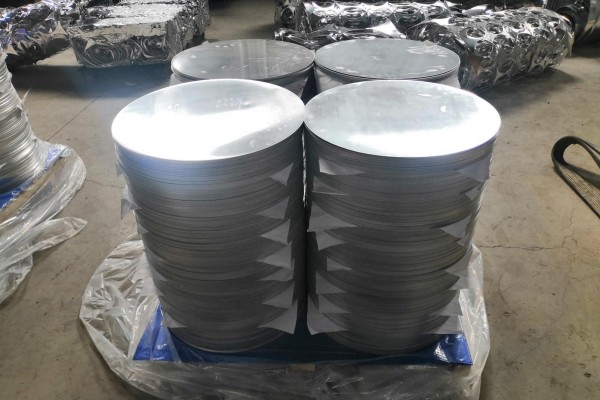
3003 Hot Rolled Aluminum Circles: Technical Solution for Enhancing Compressive Resistance of Food Containers
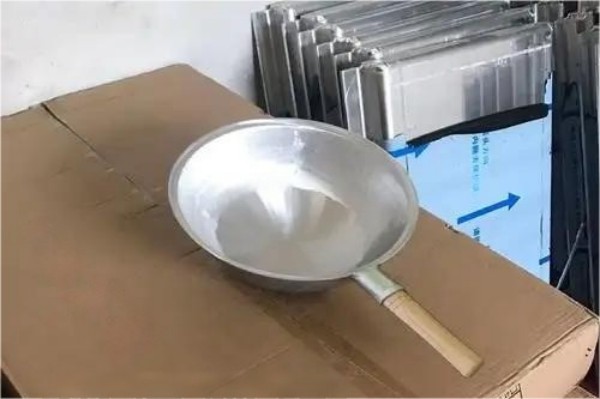
3003 aluminum alloy belongs to the Al-Mn series rust-proof aluminum, offering good formability, corrosion resistance, and weldability. It is a mainstream material for food containers, baking molds, fast-food containers, and beverage can ends. Insufficient compressive resistance can lead to dents, deformation, bulging, and seal failure during stacking, transportation, sterilization, and refrigeration, directly impacting food preservation and shelf display. Enhancing the compressive resistance of food containers made from 3003 hot-rolled aluminum circles requires systematic optimization across four dimensions: alloy composition & hot-rolled microstructure, forming process, structural design, and post-treatment strengthening, achieving a balance of strength, rigidity, and formability.
I. Primary Causes of Insufficient Compressive Resistance in 3003 Food Containers
- Low Material Strength: The annealed state of 3003 has a relatively low yield strength. Without proper work hardening or heat treatment matching after hot rolling, container walls are prone to instability and denting under pressure.
- Coarse Grains, Inhomogeneous Structure: Excessively high hot-rolling temperatures, low finish rolling temperatures, or slow cooling can result in coarse grains and pronounced banded structure, lowering material yield strength and deformation resistance.
- Excessively Thin Walls or Large Thickness Variation: Over-thinning to reduce costs, or poor hot-rolled sheet shape and large thickness tolerance, lead to localized insufficient rigidity and easy deformation under pressure.
- Unreasonable Container Structural Design: The absence of stiffening ribs on sidewalls, corrugated structures on the bottom, overly large fillet transitions, and weak rim curl/beads all significantly reduce axial and radial compressive resistance.
- Material Softening Due to Forming Processes: Insufficient work hardening during drawing/stamping, or excessive subsequent annealing, further reduces container rigidity.
II. Material-End Optimization: Enhancing Base Material Strength from Hot-Rolled Circles
1. Strictly Control 3003 Alloy Composition
- Ensure Mn content 1.0%–1.5%. Mn is the primary strengthening element, forming Al₆Mn dispersoids that significantly increase strength without sacrificing plasticity.
- Control Fe ≤ 0.7% to avoid coarse FeAl₃ intermetallic compounds that cause stress concentration and reduce toughness.
- Keep impurities (Si, Cu, Zn) at low levels to ensure formability and corrosion resistance.
A properly composed 3003 alloy can achieve a tensile strength of 160–220 MPa and a yield strength ≥70 MPa, laying the foundation for high-compression containers.
2. Optimize Hot Rolling Process to Refine Grain Structure
Finer, more uniform grains lead to higher material strength and dent resistance.
- Control Hot Rolling Start Temperature: 480–510°C, avoiding overheating that coarsens grains.
- Increase Finish Rolling Temperature: Control at 300–360°C to ensure uniform post-rolling structure without coarse recrystallized grains.
- Control Pass Reduction: Use high reduction in roughing to break down the as-cast structure. Ensure cumulative deformation in finishing ≥60% to introduce sufficient work hardening.
- Post-Hot Rolling Cooling Regime: Use rapid air + mist cooling to inhibit grain growth, obtaining a uniform fine fibrous structure. Avoid natural slow cooling that leads to grain coarsening and strength reduction.

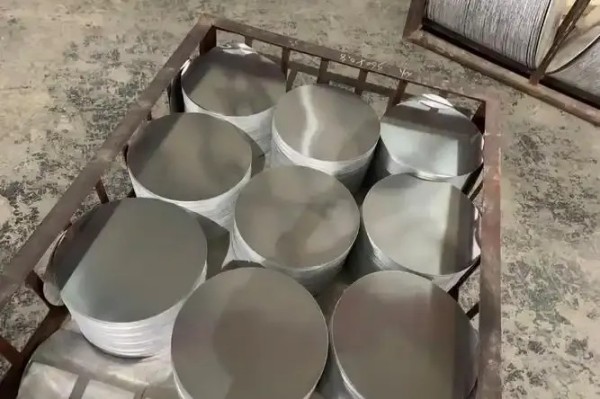
3. Ensure Dimensional Accuracy and Flatness
- Control aluminum circle thickness tolerance within ±0.02 mm for uniform thickness, avoiding localized thin spots that become compression weak points.
- Achieve flatness ≤1 mm/m, free of warp or buckle, ensuring uniform wall thickness distribution after stamping.
III. Forming Process Optimization: Enhancing Work Hardening and Structural Rigidity
1. Reasonably Match Stamping/Drawing Deformation
A key characteristic of 3003 is its significant work hardening. Moderate deformation can substantially increase strength.
- Control drawing ratio within the 15%–35% range. This ensures formability while generating sufficient work hardening, increasing wall strength by 20%–40%.
- Avoid excessive drawing which leads to overly thin walls and a sharp drop in strength.
2. Control Dies and Lubrication to Reduce Wall Thinning
- Polish die surfaces to Ra ≤0.2μm to reduce friction, promoting uniform material flow and avoiding localized excessive thinning.
- Use food-grade specialized drawing oil to reduce tearing and uneven thinning.
- Employ precise blank holder force control to prevent wrinkling while avoiding excessive wall thinning.
3. Rim/Rolled Edge Strengthening Process (Most direct method to boost compression)
Weak points for compressive resistance in food containers are often the rim and rolled edge/curl.
- Incorporate double-rolled/extra-thick curl structures to improve rim circumferential rigidity.
- Use spinning to locally thicken the rim, making the edge 15%–30% thicker than the sidewall.
- Add beading/knecking processes to form circumferential stiffening ribs, significantly improving axial compressive resistance.
IV. Structural Design Reinforcement: Enhancing Deformation Resistance Through Design
With the same material thickness, a rational structure can increase compressive resistance by 50%–100%.
- Base/Bottom Design:
- Use concave base, corrugated base, flower-petal base to distribute pressure and improve base compressive stiffness.
- Avoid large flat base designs prone to denting under pressure.
- Sidewall Design:
- Add vertical or circumferential stiffening ribs to improve lateral compressive and dent resistance.
- Use moderate taper, avoiding large-area straight-wall structures.
- Fillet Transitions:
- Control bottom fillet radius (R) between 3–8 mm to avoid stress concentration.
- Too small an R risks cracking; too large reduces rigidity.
V. Post-Treatment Strengthening: Further Improving Strength and Rigidity
1. Low-Temperature Stabilization Annealing (Key Step)
Perform low-temperature annealing at 120–180°C for 1–3 hours after forming:
- Relieves internal stress, preventing deformation during use (springback).
- Retains most of the work hardening, with minimal strength loss.
- Significantly improves compressive stability.
- Prohibit high-temperature annealing, which causes complete softening and a major drop in compressive resistance.
2. Surface Coating/Anodizing for Reinforcement
- Cured food-grade epoxy phenolic or water-based coatings can provide a rigid reinforcement effect on the aluminum substrate.
- Anodizing increases surface hardness, reducing minor denting from impacts.
VI. Key Control Parameter Table (Directly Applicable to Production)
| Control Stage | Key Parameter | Recommended Control Range | Effect on Compressive Resistance |
|---|---|---|---|
| Alloy Composition | Mn Content | 1.0%–1.5% | Dispersion strengthening, increases yield strength |
| Hot Rolling Start Temp | Temperature | 480–510°C | Prevents coarse grains |
| Finish Rolling Temp | Temperature | 300–360°C | Uniform structure, stable strength |
| Hot Rolling Cumulative Deform. | Deformation | ≥60% | Improves work hardening capability |
| Material Yield Strength | Rₚ₀.₂ | ≥70 MPa | Baseline deformation resistance |
| Drawing Deformation Ratio | Deformation | 15%–35% | Enhances work hardening, increases rigidity |
| Post-Forming Annealing | Temp/Time | 120–180°C, 1–3 h | Stress relief, maintains high strength |
| Container Structure | Stiffening Ribs/Curl | Circ. ribs + Double curl | Significantly boosts axial compression |
VII. Common Problems and Improvement Measures
| Problem Phenomenon | Main Cause | Improvement Measures |
|---|---|---|
| Dents easily when stacked | Low strength, flat structure | Increase Mn content, add stiffening ribs, thicken rim |
| Bulging/deformation after sterilization | High internal stress, improper annealing | Apply low-temp stabilization annealing, optimize cooling |
| Sidewall dents easily when pressed | Thin wall, insufficient work hardening | Increase material thickness, increase drawing deformation |
| Localized easy collapse | Uneven thickness, poor flatness | Improve hot-rolled circle dimensional accuracy |

VIII. Summary
Enhancing the compressive resistance of 3003 hot-rolled aluminum circle food containers is a comprehensive project involving material, hot rolling, forming, structure, and post-treatment:
- Material: Optimize Mn composition; obtain fine-grained, high-strength structure via precise hot rolling.
- Process: Leverage 3003’s work hardening characteristic; apply reasonable drawing deformation; combine with low-temperature annealing to stabilize strength.
- Structure: Maximize rigidity through designs like stiffening ribs, rolled edges, and corrugated bases.
- Control: Stabilize thickness tolerance and flatness to avoid localized weak points.
Implementing the above solution can increase the axial compressive resistance of 3003 food containers by 30%–80%, significantly enhancing dent resistance, stacking capability, and transportation durability, fully meeting the requirements for use in food packaging, catering utensils, and high-temperature sterilization scenarios.