
How to Evaluate the Quality of Aluminum Discs Before Purchasing
The aluminum disc quality inspection process is the most critical step buyers must master before committing to bulk purchasing, because aluminum discs directly determine forming performance, production efficiency, and the final durability of cookware or industrial components. A rigorous aluminum disc quality inspection routine can eliminate forming defects, reduce scrap rates, and ensure stable mass production — especially for deep drawing and spinning applications where even small flaws become amplified during deformation.

1. Why Quality Evaluation Matters Before Purchase
Selecting aluminum discs based only on alloy grade and price is no longer sufficient. Manufacturing lines today run at higher speeds and with thinner margins, making incoming-material quality far more impactful. Poor-quality discs typically lead to:
- Wrinkling during spinning
- Tearing during deep-drawing
- Uneven wall thickness
- Higher tool wear and unstable lubrication behavior
- Higher scrap rates, rework hours, and inconsistent product appearance
Therefore, structured pre-purchase evaluation reduces risk and gives the buyer a technical advantage during supplier comparison.
2. Key Quality Indicators Buyers Must Examine
2.1 Surface Flatness
Flatness determines metal flow symmetry during spinning and deep drawing. Out-of-flatness creates vibration, tearing, eccentric thinning, and poor surface accuracy.
2.2 Thickness Tolerance
Aluminum disc thickness variations change yield strength and forming resistance. Higher ± tolerances correlate with higher breakage or inconsistent drawing height.
2.3 Mechanical Properties
Critical parameters include tensile strength, elongation, and yield strength, all of which must match the target forming process.
2.4 Surface Finish & Defect Screening
Buyers should carefully inspect for:
- Scratches
- Oxide inclusions
- Rolling lines
- Water stains
- Oil contamination
- Micro-cracks at the rim
2.5 Alloy Integrity & Temper Stability
High forming industries prefer 1050 / 1060 / 1100 / 3003 depending on spinning or deep-drawing difficulty. Temper must remain consistent (O, H12, H14, H24, etc.).
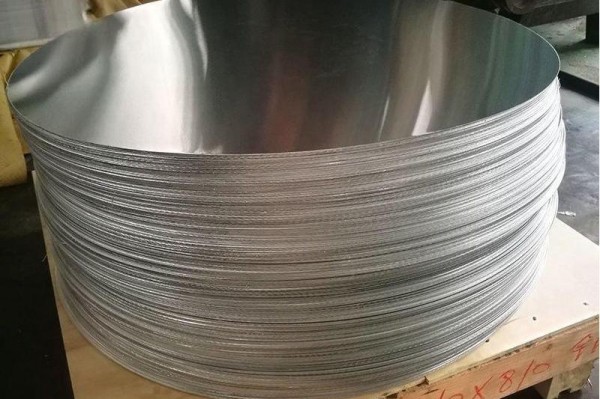
3. Professional Comparison Table: Key Quality Parameters
| Quality Factor | Why It Matters | Good-Level Disc | Poor-Level Disc |
|---|---|---|---|
| Flatness | Controls forming flow and prevents wrinkling | ≤0.4 mm P-V on 300–450 mm discs | >0.8 mm, causing vibration |
| Thickness Tolerance | Ensures uniform drawing behavior | ±0.02–0.03 mm | ±0.08 mm or higher |
| Mechanical Properties | Prevents cracking during forming | TS/YS within narrow supplier range | Large fluctuations between coils |
| Surface Quality | Avoids cosmetic and structural defects | Smooth, uniform, no contamination | Oil marks, scratches, pits |
| Grain Structure | Affects elongation and ductility | Fine, uniform | Mixed grains, coarse patches |
4. Second Technical Table: Alloy & Application Suitability Chart
| Alloy | Formability Level | Typical Temper | Recommended Applications | Risk if Wrong Grade is Chosen |
|---|---|---|---|---|
| 1050 | Very High | O / H12 | Spinning cookware, lampshades | Wrinkling if temper too hard |
| 1060 | High | O / H14 | Deep drawing pots and lids | Cracking at edges if impurities high |
| 1100 | Medium–High | O | Chemical containers, reflectors | Poor brightness if impurity too high |
| 3003 | High | O / H24 | Harder cookware, pressure parts | Excessive springback if un-annealed |
5. Case Example — A Real Factory Problem & Solution
A Middle Eastern cookware manufacturer faced a 7–10% scrap rate in producing 32 cm spinning pans. Defects included wrinkling and eccentric wall thickness. The original discs had:
- Flatness ~1.0 mm
- Thickness tolerance ±0.06 mm
- Surface variation between batches
After switching suppliers, they selected discs from Henan Huawei Aluminum Co., Ltd, a company known for controlled annealing cycles and laser-flatness leveling.
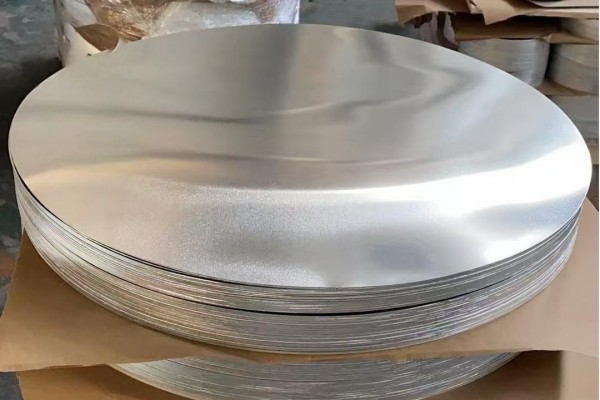
What Huawei Aluminum changed:
- Used hot-rolled base coil with consistent grain structure
- Implemented a 7-roll tension leveler
- Provided per-batch mechanical property reports
- Delivered discs chamfered by CNC edge-trimming to avoid micro-cracks
Result:
- Scrap rate fell from 9% → 1.2%
- Cycle time improved by 12–18%
- Final cookware had smoother surface and fewer vibration marks
This example shows the economic impact of high-quality discs, not just technical benefits.
6. Supplier Capability Checklist
A professional buyer should demand:
- Coil origin certification
- Temper and mechanical property reports
- Surface inspection records
- Tension leveling equipment specifications
- Thickness-control documentation
- Ability to provide sample discs from same production line
- Traceability (coil → sheet → disc)
Suppliers that cannot provide these typically operate with inconsistent upstream control.
7. Risk Indicators That Suggest You Should Reject a Supplier
Reject if you observe:
- Visible edge cracks or burrs
- Discs that “rock” when placed on a flat table
- Loud vibration marks during spinning tests
- Pits or oil streaks visible under 600–800 lux lighting
Because these defects usually worsen during forming, early rejection protects production quality.
8. Frequently Asked Questions (FAQs)
Q1: Is flatness more important than thickness?
For spinning processes, yes — flatness inconsistency is the number-one cause of vibration and wrinkling.
Q2: Can I correct flatness in-house?
Only partially. Without tension leveling equipment, correction is limited and often introduces new stresses.
Q3: What is the best temper for cookware discs?
O-temper for deep drawing; H12/H14 for light spinning applications requiring extra stiffness.
Q4: Should discs be inspected individually or by batch?
Critical industries should inspect at least 10% of each lot or 100% for premium cookware.
Q5: Why does alloy purity matter?
Higher purity reduces inclusions, improves ductility, and prevents unexpected cracking during forming.
Conclusion
Evaluating aluminum disc quality before purchasing is not just a sourcing formality — it is a direct determinant of forming performance, tooling lifespan, and final product consistency. By applying systematic aluminum disc quality inspection methods, using technical measurement tools, and choosing a stable supplier like Henan Huawei Aluminum Co., Ltd, manufacturers can significantly reduce risk and improve process efficiency.