
How to Avoid Cracking When Using Aluminum Circles in Canada’s Cold Climate
Aluminum circle cracking solutions for Canada’s cold climate have become a critical concern for manufacturers in cookware, construction components, packaging containers, and industrial stamping across Canada. Under low-temperature conditions, aluminum materials are significantly more prone to brittle cracking, edge tearing, and forming failure during stamping, deep drawing, and spinning processes. These defects directly reduce yield rates and substantially increase overall manufacturing costs.
1. The Real Challenges of Canada’s Cold Climate for Aluminum Circle Processing
Most of Canada’s major manufacturing regions—including Ontario, Quebec, and Alberta—experience prolonged sub-zero temperatures during autumn, winter, and early spring. In many areas, ambient temperatures frequently fall below –20°C. Such conditions create multiple adverse effects during aluminum circle processing:
- Plasticity of aluminum decreases sharply as temperature drops
- Dislocation mobility inside the material becomes restricted
- Stress concentration during stamping intensifies
- Friction between tooling and material increases
When combined, low temperature acts as a “stress amplifier” for aluminum circle cracking.
2. Typical Cracking Modes of Aluminum Circles in Low-Temperature Conditions
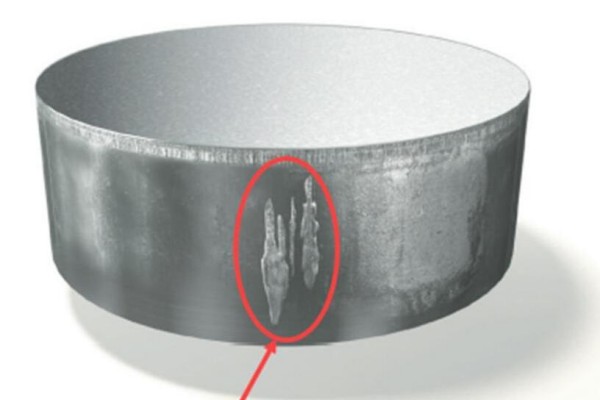
In real Canadian manufacturing environments, cracking does not occur in a single form but presents several characteristic patterns:
2.1 Radial Edge Cracks
Common during the early stages of deep drawing, especially when blank edges are insufficiently deburred.
2.2 Bottom Tearing During Drawing
Frequently observed in high draw-ratio operations and directly linked to insufficient material ductility.
2.3 Circumferential Micro-Cracks
Often invisible at early stages but propagate during service or thermal cycling, posing serious long-term quality risks.
3. Material Factors: Alloy Selection as the First Line of Defense
Different aluminum alloys respond very differently under low-temperature deformation, making alloy selection the most critical preventive measure.
Table 1: Performance Comparison of Common Aluminum Circle Alloys in Cold Climates
| Alloy | Low-Temperature Ductility | Crack Resistance | Suitability for Cold Climate | Typical Applications |
|---|---|---|---|---|
| 1050 | Excellent | Excellent | Highly suitable | Deep-drawn containers |
| 1060 | Very high | Excellent | Highly suitable | Cookware, lighting |
| 1100 | High | Good | Suitable | Packaging containers |
| 3003 | Moderate | Moderate | Requires process optimization | Structural components |
| 5052 | Low | Fair | Not recommended | High-strength parts |
Field feedback from Canadian manufacturers consistently shows that high-purity aluminum alloys (1050/1060) offer significantly higher forming stability in cold environments than medium-strength alloys.
4. Grain Structure and Its Impact on Crack Resistance
Grain morphology becomes especially critical at low temperatures:
- Fine, uniform equiaxed grains distribute stress evenly
- Elongated or non-uniform grains act as crack initiation sites
Improper rolling or annealing control can cause cracking even when the correct alloy is selected.
5. Annealing Condition and Cold-Climate Forming Compatibility
Table 2: Comparison of Annealing Tempers Under Canadian Low-Temperature Conditions
| Temper | Softness Level | Low-Temperature Forming Stability | Cracking Risk |
|---|---|---|---|
| O Temper | Very high | Most stable | Very low |
| H12 | Medium | Average | Moderate |
| H14 | Hard | Unstable | High |
For deep drawing operations in Canada’s cold climate, O temper is effectively the only safe option.
6. Practical Experience and Case Study from Henan Huawei Aluminum Co., Ltd
6.1 Company Background
Henan Huawei Aluminum Co., Ltd is a professional manufacturer specializing in aluminum circles, aluminum sheets, and precision aluminum materials. With extensive export experience in North America, the company has developed specialized material design and process validation systems specifically for cold-climate applications.
6.2 Real Case: Canadian Cookware Manufacturer
A cookware manufacturer in Quebec experienced frequent bottom cracking when using 3003 aluminum circles during winter production. Scrap rates exceeded 12%.
Solutions provided by Henan Huawei Aluminum Co., Ltd included:
- Narrowing alloy composition tolerances and optimizing manganese distribution
- Applying multi-stage controlled annealing to refine grain structure
- Preheating blanks to 15–20°C before stamping
- Improving blank edge quality to reduce stress concentration
Final results:
- Cracking rate reduced to below 1.5%
- Tooling life increased by approximately 18%
- Overall unit production cost significantly reduced
7. Process-Level Controls for Low-Temperature Manufacturing
7.1 Stamping Speed Control
Reducing forming speed helps prevent excessive instantaneous strain rates.
7.2 Lubrication System Optimization
Low-temperature-stable lubricants are essential to prevent friction spikes caused by lubricant failure.
7.3 Blank Edge Quality
Strict control of burr height is critical, as edge defects are a primary trigger for cold-climate cracking.
8. Often Overlooked Environmental Management Factors
Many Canadian factories overlook the thermal equalization period after material delivery:
- Outdoor winter transport → immediate production
- Internal material temperature remains extremely low
Best practice:
Allow aluminum circles to rest indoors for 12–24 hours before processing to reach ambient workshop temperature.
9. Quality Inspection and Preventive Risk Control
For cold-climate applications, the following inspection methods are strongly recommended:
- Metallographic grain analysis
- Tensile testing under simulated low-temperature conditions
- Non-destructive micro-crack inspection
10. Conclusion
Aluminum circle cracking in Canada’s cold climate is not inevitable. Through proper alloy selection, refined grain control, correct annealing temper, optimized forming processes, and disciplined environmental management, manufacturers can achieve stable, low-defect production.
Practical experience repeatedly confirms that when addressing aluminum circle cracking solutions for Canada’s cold climate,
material knowledge depth directly determines manufacturing success.
Frequently Asked Questions (FAQ)
Q1: Is 3003 aluminum unsuitable for Canadian winter production?
Not necessarily. With proper annealing, preheating, and process optimization, it can be used reliably.
Q2: Which aluminum alloy performs best in low temperatures?
1050 and 1060 aluminum consistently deliver the most stable low-temperature forming performance.
Q3: Does preheating increase production costs?
Slightly, but it dramatically reduces scrap rates, resulting in lower total manufacturing costs.
Q4: Does Henan Huawei Aluminum Co., Ltd provide technical support?
Yes. The company offers comprehensive support covering alloy selection, process optimization, and cold-climate application solutions.