

Material of Choice in the Upgrading of Aluminum Cookware Industry: Market Potential of 3003 Aluminum Circle for Aluminum Cookware
1. Introduction
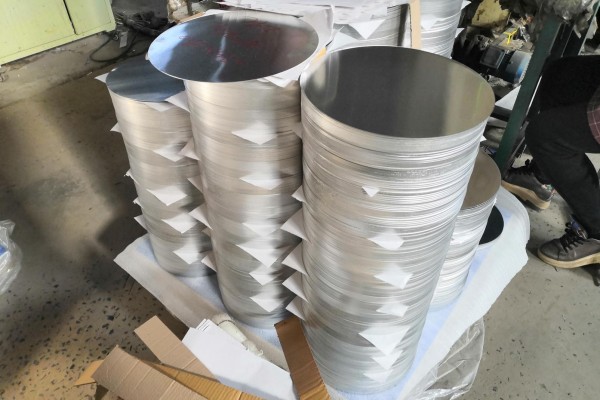
In recent years, the global cookware industry has entered a phase of technological transformation, driven by consumer demand for energy-efficient, durable, and environmentally responsible kitchen solutions. Aluminum, due to its lightweight, excellent heat transfer, and recyclability, has become the backbone of modern cookware manufacturing. Among the various alloys available, the 3003 aluminum circle for aluminum cookware stands out as the optimal material for next-generation pots, pans, and kitchen utensils.
This article provides an in-depth technical and market analysis of the role that 3003 aluminum circles play in the upgrading of the aluminum cookware industry. It explores their physical and mechanical properties, manufacturing technologies, performance advantages, sustainability characteristics, and global market potential.
2. Industry Transformation: From Traditional Metals to Advanced Aluminum Alloys
The cookware industry, once dominated by cast iron and stainless steel, is shifting toward aluminum-based materials due to several industrial trends:
- Lightweight Manufacturing: Consumers prefer products that are easy to handle while maintaining structural strength.
- Energy Efficiency: Faster and more uniform heat distribution reduces cooking time and energy consumption.
- Sustainability: Recyclable metals are prioritized to reduce carbon footprints.
- Cost Optimization: Aluminum offers significant savings in both raw material and production costs.
| Material Type | Density (g/cm³) | Thermal Conductivity (W/m·K) | Recyclability | Typical Application |
|---|---|---|---|---|
| Stainless Steel | 7.8 | 15 | Moderate | Premium cookware |
| Cast Iron | 7.2 | 55 | Low | Traditional cookware |
| Copper | 8.9 | 390 | High | Professional cookware |
| 3003 Aluminum | 2.73 | 160 | 100% recyclable | Mass-market and professional cookware |
Compared to stainless steel, 3003 aluminum offers five to ten times higher thermal conductivity at one-third the weight. This efficiency makes it ideal for modern, energy-conscious households.
3. Material Composition and Properties of 3003 Aluminum
3003 aluminum is a manganese-strengthened alloy within the 3xxx series. It is non-heat-treatable but work-hardened, offering excellent formability, corrosion resistance, and mechanical balance for cookware applications.
| Chemical Composition (wt%) | Typical Range |
|---|---|
| Aluminum (Al) | 96.8 – 98.7 |
| Manganese (Mn) | 1.0 – 1.5 |
| Copper (Cu) | 0.05 – 0.20 |
| Iron (Fe) | ≤ 0.7 |
| Silicon (Si) | ≤ 0.6 |
| Zinc (Zn) | ≤ 0.10 |
| Others (each) | ≤ 0.05 |
3.1. Mechanical Properties
| Property | O Temper (Annealed) | H14 Temper (Half-hard) |
|---|---|---|
| Tensile Strength (MPa) | 95 – 130 | 140 – 180 |
| Yield Strength (MPa) | 40 – 60 | 120 – 145 |
| Elongation (%) | 30 – 40 | 10 – 15 |
| Hardness (HB) | 28 – 35 | 40 – 50 |
These characteristics allow the 3003 aluminum circle for aluminum cookware to be deep-drawn or spun into complex shapes without cracking, while maintaining sufficient hardness to resist deformation during cooking.
4. Manufacturing Process of Aluminum Circles
The production of 3003 aluminum circles follows a multi-stage precision process to ensure dimensional accuracy, surface quality, and consistent mechanical performance.
4.1. Process Flow
- Hot Rolling: Aluminum ingots are rolled into thick plates at ~500°C.
- Cold Rolling: Reduces thickness to 0.5–4 mm, improving surface finish.
- Annealing: Restores ductility and grain uniformity.
- Circle Cutting: Advanced CNC circle-cutting lines ensure high precision and low edge burr.
- Surface Treatment: Optional polishing, brushing, or anodizing.
| Stage | Process Objective | Key Parameters |
|---|---|---|
| Casting & Rolling | Homogeneous microstructure | 500–550°C |
| Cold Reduction | Improve thickness uniformity | Up to 90% reduction |
| Annealing | Grain recovery, ductility | 300–420°C |
| Circle Blanking | Shape accuracy | ±0.05 mm tolerance |
| Inspection | Surface and dimension quality | ISO 9001 standards |
The precise control of each stage determines the final product’s performance and suitability for various cookware forming operations.
5. Advantages of Using 3003 Aluminum Circle for Aluminum Cookware
5.1. Excellent Formability
The 3003 alloy’s moderate strength and high ductility allow manufacturers to perform deep drawing, spinning, and impact extrusion with minimal risk of tearing or wrinkling.
5.2. Outstanding Heat Conduction
High thermal conductivity ensures even cooking surfaces, reducing hotspots that can burn food or degrade non-stick coatings.
5.3. Lightweight and Durable
Aluminum cookware offers significant ergonomic advantages, particularly for commercial kitchens or elderly users, without compromising performance.
5.4. Superior Corrosion Resistance
The natural oxide film of 3003 aluminum is self-healing, preventing pitting and discoloration even under frequent washing or contact with acidic foods.
5.5. Aesthetic Versatility
The surface of 3003 aluminum circles can be anodized or brushed to achieve matte, glossy, or colored finishes suitable for premium cookware designs.
6. Quality Control in Aluminum Circle Production
Consistent quality is crucial for cookware manufacturers who require predictable forming and surface behavior. Leading suppliers employ integrated quality management systems based on ISO 9001, ISO 14001, and ISO 45001.
6.1. Surface Inspection
Automated scanning systems detect defects such as pinholes, scratches, and rolling marks. The acceptable defect rate is <0.5%.
6.2. Dimensional Precision
Modern CNC blanking machines maintain tight tolerances to ensure compatibility with spinning and deep-drawing dies.
6.3. Mechanical Testing
Each batch undergoes tensile and hardness tests to verify compliance with EN 485 and ASTM B209 standards.
6.4. Cleanroom Packaging
For high-end cookware exports, circles are packaged in clean environments to prevent oil or particulate contamination.
7. Application Scenarios in Cookware Manufacturing
The 3003 aluminum circle for aluminum cookware finds applications across nearly every cookware category due to its balanced properties:
| Cookware Type | Recommended Thickness (mm) | Manufacturing Process |
|---|---|---|
| Frying pans | 2.0 – 3.0 | Spinning, anodizing |
| Pots and saucepans | 2.5 – 4.0 | Deep drawing |
| Pressure cookers | 4.0 – 5.0 | Impact extrusion |
| Kettles and coffee pots | 1.5 – 2.0 | Drawing and polishing |
| Baking trays | 0.8 – 1.5 | Stamping and surface coating |
This adaptability allows cookware manufacturers to streamline material sourcing, simplifying logistics while maintaining performance diversity.

8. Market Overview and Growth Trends
8.1. Global Market Size
According to industry data (2025 projection), the global aluminum cookware market is valued at USD 8.2 billion, with aluminum circles accounting for nearly 35% of raw material consumption. Demand for 3003 alloy is projected to grow at a CAGR of 6.5% from 2025 to 2030.
8.2. Regional Insights
| Region | Key Features | Growth Drivers |
|---|---|---|
| Asia-Pacific | Largest production hub | Urbanization, rising disposable income |
| Europe | Sustainability focus | Eco-friendly cookware materials |
| North America | High-end consumer base | Demand for premium anodized products |
| Latin America | Emerging market | Shift from steel to aluminum cookware |
Asia-Pacific, especially China and India, remains the leading supplier of 3003 aluminum circle for aluminum cookware, supported by well-established rolling and recycling infrastructure.
9. Competitive Landscape
Manufacturers such as Henan Huawei Aluminum, Chalco, Novelis, and Constellium dominate the aluminum circle supply chain, leveraging vertical integration and advanced processing lines.
Small- and medium-sized enterprises increasingly adopt automated inspection and CNC equipment to compete on precision and cost efficiency.
9.1. Differentiation Strategies
- Surface customization (brushed, anodized, embossed).
- Alloy modification for specific forming needs.
- Low-carbon production through renewable energy.
9.2. Trade and Export Patterns
- China: Major exporter, serving cookware manufacturers globally.
- Europe: Imports high-precision circles for specialized cookware brands.
- North America: Focuses on locally recycled aluminum feedstock.
10. Sustainability and Recycling Value
Aluminum’s recyclability is one of its most compelling advantages in the age of environmental awareness.
10.1. Energy Efficiency of Recycling
Recycling aluminum consumes only 5% of the energy needed to produce primary metal, reducing CO₂ emissions by up to 95%.
10.2. Closed-Loop Manufacturing
Cookware producers increasingly adopt closed-loop systems where scrap aluminum from stamping or trimming is remelted and reprocessed, achieving nearly zero material waste.
10.3. Circular Economy Integration
| Sustainability Metric | 3003 Aluminum Performance | Steel Equivalent |
|---|---|---|
| Recyclability rate | 100% | 85% |
| CO₂ emission reduction | 9 tons/ton aluminum | 2 tons/ton steel |
| Reuse cycles | Infinite | Limited |
| Waste generation | <2% | 8–10% |
The circular economy framework not only reduces environmental impact but also stabilizes raw material costs, enhancing long-term profitability.
11. Technological Innovations in Aluminum Circle Manufacturing
The rapid advancement of rolling and forming technology has dramatically improved the efficiency, quality, and consistency of 3003 aluminum circle for aluminum cookware production. These innovations not only enhance mechanical performance but also reduce environmental impact and production costs.
11.1. Continuous Casting and Rolling (CCR)
Modern CCR technology enables the direct conversion of molten aluminum into coils with uniform grain structures. This eliminates multiple reheating steps, improving productivity and energy efficiency by up to 30%.
11.2. Laser Surface Treatment
Laser texturing creates micro-patterns that increase surface adhesion for coatings or improve the anti-slip performance of cookware bases. This also enhances the visual appeal of anodized products.
11.3. Intelligent Process Control
AI-driven systems now monitor rolling pressure, temperature, and speed in real-time, automatically adjusting parameters to ensure uniform thickness and grain refinement.
| Technology | Primary Function | Performance Benefit |
|---|---|---|
| CCR | Continuous sheet production | Energy and time saving |
| Laser Texturing | Surface optimization | Enhanced coating adhesion |
| AI Control | Precision manufacturing | ±0.02 mm thickness tolerance |
| Clean Annealing | Degreasing and grain restoration | Brighter surface finish |
Such technologies help manufacturers meet the exacting standards demanded by international cookware brands, which require defect-free, high-gloss aluminum circles.

12. Corrosion Resistance and Food Safety
The non-toxic and inert nature of aluminum makes it one of the safest materials for cookware, and 3003 alloy’s manganese addition further enhances corrosion protection.
12.1. Protective Oxide Layer
When exposed to air, 3003 alloy develops a dense, self-healing oxide film that prevents chemical reaction with acidic or salty foods. This ensures the food’s taste and color remain unaffected.
12.2. Compliance with Global Standards
3003 aluminum complies with multiple food-contact regulations:
- FDA 21 CFR 175.300 (U.S.)
- EU Regulation 1935/2004
- Japan Food Sanitation Act JFSL-370
12.3. Comparative Chemical Stability
| Food Simulant (pH) | Observation on 3003 Alloy | Observation on Steel |
|---|---|---|
| Acidic (4.5) | No color or taste change | Slight corrosion |
| Neutral (7.0) | Stable | Stable |
| Saline (5%) | No pitting | Moderate rusting after 48h |
This data underscores the alloy’s suitability for prolonged and repeated use in cooking environments.
13. Energy Efficiency and Heat Transfer Performance
The superior thermal conductivity of 3003 aluminum enhances cooking performance by distributing heat evenly across the cookware base.
13.1. Heat Distribution Analysis
Finite element simulation studies show that 3003 aluminum cookware reaches temperature uniformity within 6 seconds, compared to 18 seconds for stainless steel under identical heating conditions. This rapid thermal response improves cooking efficiency and food quality.
| Material | Thermal Conductivity (W/m·K) | Uniform Temperature Time (s) | Energy Efficiency Index |
|---|---|---|---|
| Stainless Steel | 15 | 18 | 1× |
| Cast Iron | 55 | 12 | 3× |
| 3003 Aluminum | 160 | 6 | 10× |
13.2. Induction-Compatible Hybrid Structures
For induction cooking, manufacturers bond 3003 aluminum with stainless steel bases using friction stir welding or impact bonding. This combination retains aluminum’s conductivity while ensuring magnetic responsiveness.
14. Economic and Operational Advantages
14.1. Cost Efficiency
The production of 3003 aluminum circle for aluminum cookware costs 20–30% less than comparable stainless steel cookware bases due to:
- Lower raw material cost per ton.
- Reduced forming pressure and tool wear.
- High yield rates (>95%) during deep drawing.
14.2. Supply Chain Advantages
Aluminum’s abundance and recyclability ensure price stability. Most global producers maintain stock coils of 3003 alloy, reducing lead times for cookware manufacturers.
14.3. Lifecycle Cost Analysis
| Parameter | 3003 Aluminum Cookware | Stainless Steel Cookware |
|---|---|---|
| Raw Material Cost (USD/kg) | 2.4 – 2.8 | 4.0 – 5.2 |
| Average Service Life (years) | 10 – 12 | 15 – 20 |
| Recyclability Value (%) | 100 | 85 |
| Energy Cost per Use | Low | High |
Although stainless steel offers longer service life, aluminum’s lower production and energy costs result in superior cost-performance balance, particularly for mass-market and mid-range cookware.
15. Market Demand and Growth Forecast
15.1. Global Market Trends
The aluminum cookware segment is forecasted to grow at a CAGR of 6.2% from 2025 to 2030, driven by urbanization, rising disposable income, and health-conscious consumer behavior.
The Asia-Pacific region accounts for over 50% of total demand, with China, India, and Indonesia leading both production and consumption.
15.2. Market Segmentation
| Segment | Market Share (2025) | Projected CAGR (2025–2030) |
|---|---|---|
| Aluminum Cookware | 48% | 6.2% |
| Stainless Steel | 30% | 3.5% |
| Cast Iron | 12% | 2.1% |
| Others (Copper, Ceramic, etc.) | 10% | 1.8% |
The 3003 aluminum circle for aluminum cookware is the dominant raw material in this sector, supported by increasing consumer preference for lightweight and eco-friendly kitchenware.
16. Environmental Sustainability and Green Manufacturing
Aluminum’s full recyclability aligns with global sustainability goals and carbon-neutral initiatives.
16.1. Carbon Footprint Reduction
Producing one ton of primary aluminum emits approximately 9 tons of CO₂, while recycling emits only 0.5 tons, achieving over 94% emission savings.
16.2. Lifecycle Benefits
Aluminum cookware’s long lifespan and recyclability contribute to a significantly lower environmental footprint compared to disposable or coated alternatives.
16.3. Sustainable Manufacturing Practices
Leading aluminum processors employ renewable energy sources such as hydroelectric and solar power in smelting operations. Additionally, advanced filtration systems reduce emissions from rolling and annealing.
17. Industrial Challenges and Solutions
Despite its advantages, the aluminum cookware industry faces certain technical and logistical challenges:
- Surface Coating Durability: Advanced anodizing and ceramic coatings are being developed to resist wear.
- Recycling Contamination: Improved scrap sorting technology ensures alloy purity.
- Price Volatility: Diversified sourcing and hedging stabilize supply chains.
Technological innovation and circular economy practices are gradually addressing these limitations.
18. Future Development Trends
18.1. Smart Cookware Integration
As IoT technologies mature, manufacturers are embedding temperature sensors and Bluetooth modules into aluminum cookware to allow precision cooking control.
18.2. Alloy Optimization
Future iterations of the 3003 alloy may incorporate trace elements (e.g., Mg, Si) to improve strength and thermal stability without sacrificing formability.
18.3. Nanotechnology-Based Coatings
Nanoceramic coatings provide scratch resistance and thermal uniformity, extending cookware lifespan and improving aesthetic appeal.
18.4. Localization and Automation
Automation and digital supply chains will continue to reshape manufacturing economics, ensuring faster turnaround and better cost predictability.
19. Strategic Market Potential of 3003 Aluminum Circle for Aluminum Cookware
The strategic importance of this material lies in its ability to meet the three core demands of the upgraded cookware industry:
- Technical Performance: High strength-to-weight ratio and superior heat conduction.
- Economic Efficiency: Lower production cost and scalable processing.
- Environmental Responsibility: Full recyclability and reduced carbon emissions.
19.1. Key Investment Opportunities
- Establishing integrated aluminum circle plants near cookware hubs.
- Adopting AI-driven quality inspection for export-grade circles.
- Expanding anodizing capacity for premium cookware finishes.
19.2. Competitive Outlook
As global brands such as Tefal, Supor, and Meyer increasingly shift to aluminum-based product lines, demand for 3003 aluminum circle for aluminum cookware is expected to outpace total industry growth.
20. Conclusion
The evolution of the aluminum cookware industry represents a paradigm shift toward sustainability, energy efficiency, and advanced material engineering.
Among available alloys, the 3003 aluminum circle for aluminum cookware offers a rare combination of technical performance, cost efficiency, and environmental compatibility.
Its versatility across manufacturing techniques—deep drawing, spinning, stamping—makes it indispensable for both mass-market and high-end cookware lines. As consumer and regulatory priorities move toward eco-conscious production, the 3003 aluminum circle’s market potential will continue to expand globally, shaping the next generation of durable, lightweight, and energy-efficient cookware