

Pharmaceutical Aluminum Foil: The Safety Guardian of Pharma Packaging – Key Insights
In the field of pharmaceutical packaging, direct contact packaging materials (DC-PMs) are a critical part of the pharmaceutical quality system. As a core category of DC-PMs, pharmaceutical aluminum foil, with its excellent barrier properties and chemical stability, serves as the “final barrier” to ensure the effectiveness, safety, and stability of pharmaceuticals. This article systematically analyzes the professional value of pharmaceutical aluminum foil from five dimensions: material properties, production processes, application specifications, selection standards, and industry technology trends.
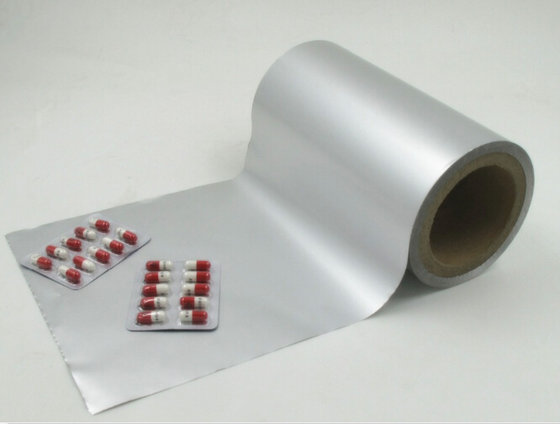
I. Material Definition and Core Technical Indicators of Pharmaceutical Aluminum Foil
Pharmaceutical aluminum foil is not an ordinary aluminum product, but a specialized material that complies with the “General Requirements for Pharmaceutical Packaging Materials” in Volume IV of the Pharmacopoeia of the People’s Republic of China (2025 Edition) and the standard YBB 00162002-2015 Pharmaceutical Aluminum Foil. Its core definition and technical indicators must meet the following requirements:
1. Material Composition and Purity Requirements
- Base Material Purity: Adopts 1060/1235 commercial pure aluminum with a purity of over 99.6% (in accordance with GB/T 3190-2020 Chemical Composition of Wrought Aluminum and Aluminum Alloys), with iron content ≤ 0.5% and silicon content ≤ 0.3% to avoid pharmaceutical component migration caused by impurity elements (e.g., copper, zinc);
- Coating System: Classified into two types based on application scenarios:
-
- Heat-sealable type (PTP aluminum foil): The surface is coated with a pharmaceutical-grade polyvinyl chloride (PVC) or polyvinylidene chloride (PVDC) heat-sealable layer, with a coating thickness controlled at 5-8 μm, which must comply with YBB 00392003-2015 Determination Method for Heat-Sealing Strength of Pharmaceutical Aluminum Foil;
-
- Non-heat-sealable type (sealing aluminum foil): The surface undergoes chromate passivation (Cr³+ content ≤ 0.01 mg/dm²) or chromium-free passivation (using zirconium-titanium-based treatment agents) to form an oxide film of 5-10 nm, meeting the requirements of YBB 00242004-2015 Determination Method for Adhesion of Surface Treatment Layer of Pharmaceutical Aluminum Foil.
2. Key Indicators of Physical Properties
| Indicator Name | Standard Requirement (YBB 00162002-2015) | Test Method |
| Thickness Deviation | ±5% (nominal thickness 0.02-0.04 mm) | YBB 00102003-2015 (laser thickness measurement) |
| Pinhole Quantity | ≤3 pcs/m², single pinhole diameter ≤0.3 mm | YBB 00282004-2015 (vacuum method) |
| Tensile Strength | ≥70 MPa (longitudinal), ≥65 MPa (transverse) | YBB 00112003-2015 (tensile test) |
| Elongation | ≥2% (longitudinal), ≥3% (transverse) | YBB 00112003-2015 |
| Heat-Sealing Strength | ≥7 N/15 mm (after heat-sealing with PVC rigid sheet) | YBB 00392003-2015 |
3. Core Differences from Ordinary Aluminum Foil
Ordinary food-grade aluminum foil (GB/T 32108-2015) only requires a base material purity of ≥98%, without pharmaceutical coatings or passivation treatment. It also does not mandate requirements for heavy metal migration (e.g., lead ≤5 mg/kg, cadmium ≤0.1 mg/kg) or microbial indicators (total bacterial count ≤100 CFU/g), so it is strictly prohibited for pharmaceutical packaging. According to Article 75 of the Drug Administration Law, the use of non-compliant packaging materials shall be treated as substandard drugs.
II. Core Properties and Mechanisms of Pharmaceutical Aluminum Foil
The irreplaceability of pharmaceutical aluminum foil stems from its precise design in three dimensions: barrier performance, chemical stability, and processing adaptability. Its mechanism needs to be elaborated from the molecular level and process adaptability:
1. Molecular Mechanism of Superb Barrier Performance
The core causes of pharmaceutical deterioration are oxygen (oxidative degradation), water vapor (hydrolysis reaction), and light (photooxidation). Pharmaceutical aluminum foil achieves barrier effects through the following mechanisms:
- Oxygen Barrier: Aluminum atoms form a non-porous structure with dense arrangement, resulting in an oxygen transmission rate (OTR) < 0.1 cm³/(m²·24h·0.1MPa) (per ASTM D3985 standard), which is much lower than that of pharmaceutical PVC rigid sheets (OTR ≈15 cm³/(m²·24h·0.1MPa)). This effectively delays the oxidative failure of vitamins C and β-lactam antibiotics;
- Water Vapor Barrier: The water vapor transmission rate (WVTR) is < 0.1 g/(m²·24h) (per ASTM E96 standard). Through the composite sealing of aluminum foil and rubber stoppers, the relative humidity inside blister packaging is controlled at 30%-50%, preventing effervescent tablets (e.g., aspirin effervescent tablets) from moisture-induced disintegration and powders (e.g., probiotic powders) from caking;
- Light Barrier: Aluminum foil achieves a 100% barrier rate for light with wavelengths of 200-800 nm, protecting photosensitive pharmaceuticals (e.g., vitamin B12, nitroglycerin tablets) from photooxidation without the need for additional light-screening agents.
2. Interface Control for Chemical Stability
- Role of Passivation Layer: The Al₂O₃-Cr₂O₃ (or Al₂O₃-ZrO₂) composite film formed by passivation reduces the electrochemical activity of the aluminum base material. In pharmaceutical environments with pH 2-12 (e.g., acidic ibuprofen tablets, alkaline sodium bicarbonate tablets), the aluminum ion migration amount is < 0.1 μg/cm² (per YBB 00272004-2015 Test Method for Heavy Metals in Pharmaceutical Aluminum Foil);
- Coating Compatibility: The heat-sealable layer uses pharmaceutical-grade resins, with residual monomers (e.g., vinyl chloride monomer) content < 0.0001%, complying with YBB 00312004-2015 Test Method for Solvent Residues in Pharmaceutical Packaging Materials to avoid dissolution reactions with pharmaceuticals.
3. Process Design for Processing Adaptability
- Ductility Control: Through cold rolling (reduction rate 70%-80%) and intermediate annealing (350-400℃, holding time 2h), the grain size of aluminum foil is controlled at 10-20 μm, ensuring that it can be stretched to 1.5 times its original area without cracking during blister forming;
- Punching Performance: The transverse elongation is slightly higher than the longitudinal elongation, which can reduce the “burr” phenomenon during capsule blister punching. The flatness of the punching edge must meet the requirements of YBB 00292004-2015 Test Method for Punching Performance of Pharmaceutical Aluminum Foil.
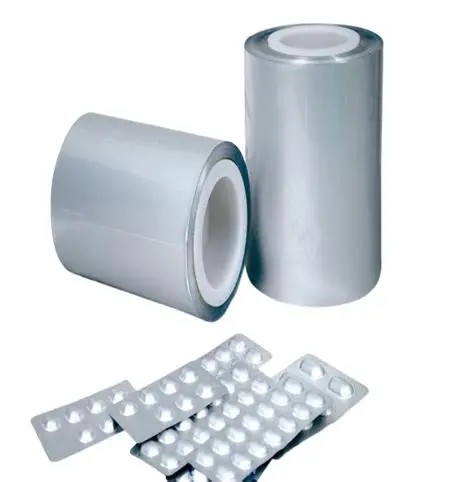
III. Professional Application Scenarios and Adaptation Requirements of Pharmaceutical Aluminum Foil
Different pharmaceutical dosage forms have significant differences in requirements for packaging tightness, sterility, and ease of use. Pharmaceutical aluminum foil must be adaptively designed based on the characteristics of the dosage form:
1. Oral Solid Dosage Forms: Precise Application of PTP Aluminum Foil
- Tablets/Capsules: Uses PTP aluminum foil with a thickness of 0.025-0.03 mm, heat-sealed with PVC/PVDC composite rigid sheets (heat-sealing temperature 120-140℃, pressure 0.3-0.5 MPa). The heat-sealing strength must be ≥7 N/15 mm to ensure the tightness of “single-dose packaging”;
- Modified-Release Preparations: Requires matching with aluminum-plastic composite rigid sheets (Al/PVC/PVDC), and the aluminum foil thickness is increased to 0.035 mm to enhance barrier performance and prevent moisture-induced failure of modified-release films (e.g., ethyl cellulose films);
- Special Requirements: For moisture-sensitive Chinese medicine tablets, a layer of pharmaceutical-grade desiccant (e.g., montmorillonite desiccant) must be added between the aluminum foil and the rigid sheet, and the tightness of the aluminum foil is used to achieve a “dry environment inside the packaging”.
2. Sterile Dosage Forms: Sterility Control of Sealing Aluminum Foil
- Vial Packaging: Uses chromium-free passivated aluminum foil with a thickness of 0.03-0.04 mm, punched into “aluminum cap + rubber stopper” assemblies. It must undergo 121℃ moist heat sterilization (30 min) or 132℃ dry heat sterilization (60 min). After sterilization, the total bacterial count on the aluminum foil surface is ≤1 CFU/100 cm² (per YBB 00012003-2015 Microbial Limit Test for Pharmaceutical Packaging Materials);
- Ampoule Packaging: Aluminum foil is used as the outer protective cover for ampoules, requiring puncture resistance to prevent ampoule breakage during transportation. It must also meet the requirement of ethylene oxide (EO) sterilization residue < 10 μg/g (per YBB 00262004-2015 Test Method for Ethylene Oxide Residues in Pharmaceutical Packaging Materials);
- Biologics: For biological products such as monoclonal antibodies and vaccines, aluminum foil must undergo “electropolishing + ultra-clean cleaning” processes, with surface particle size (particles ≥0.5 μm) ≤10 pcs/cm² to avoid immune reactions caused by particle contamination.
3. Liquid Dosage Forms and Topical Preparations: Tightness and Anti-Leakage Design
- Oral Liquid Bottles: Uses aluminum foil gaskets (with EVA hot-melt adhesive layer) with a thickness of 0.02-0.025 mm. After pressing with the bottle mouth, the tightness must pass the “negative pressure test” (no leakage under -0.09 MPa for 1 min) to prevent liquid volatilization (e.g., compound licorice oral solution);
- Ointment Tubes: Aluminum foil serves as the “inner barrier film” of ointment tubes (composited with PE), with a thickness of 0.015-0.02 mm. It must pass the “solvent resistance test” (no swelling after soaking in ointment base for 72 h) to prevent migration of ointment components (e.g., glucocorticoids);
- Patches: Aluminum foil acts as the “backing layer” of patches, requiring breathability (breathability rate 500-1000 g/(m²·24h)) and passing the “peel strength test” (peel force with the ointment layer ≥5 N/25 mm) to ensure it does not fall off during use.
IV. Professional Selection Standards and Quality Control of Pharmaceutical Aluminum Foil
Pharmaceutical enterprises and packaging manufacturers should establish a “three-in-one” evaluation system of “qualification-testing-process adaptation” when selecting pharmaceutical aluminum foil. The core points are as follows:
1. Supplier Qualification Audit (Basic Threshold)
- Production Qualification: Must hold the Registration Certificate for Pharmaceutical Packaging Materials and Containers (or “conformity statement”), and the production workshop must pass GMP certification (ISO 15378 Quality Management Systems for Pharmaceutical Packaging Materials). Focus on verifying the temperature and humidity control (20-25℃, 45%-65% RH) and pressure difference (≥10 Pa) of the clean workshop (Class 10,000);
- Traceability Capacity: Must provide “material analysis reports” (ICP-MS for impurity content testing), “coating test reports” (HPLC for residual monomer testing), and “sterilization validation reports” (e.g., VHP sterilization validation) for each batch of aluminum foil to ensure traceability to the aluminum ingot batch.
2. Incoming Inspection Items (Key Control Points)
- Physical Performance Testing:
-
- Thickness: Use a laser thickness gauge (accuracy ±1 μm), sample ≥30 points per batch, with deviation ≤±5%;
-
- Pinholes: Use a vacuum pinhole detector (negative pressure -0.08 MPa), test area ≥1 m², and any single pinhole with diameter >0.3 mm is considered unqualified;
-
- Heat-Sealing Strength: Take 15 mm wide samples, test on a tensile machine (speed 300 mm/min), and batches with heat-sealing strength <7 N/15 mm must be returned;
- Chemical Performance Testing:
-
- Heavy Metal Migration: According to YBB 00272004-2015, use an atomic absorption spectrometer to test lead, cadmium, mercury, and arsenic, with migration amount <0.1 μg/cm²;
-
- Solvent Residues: Use a headspace gas chromatograph (FID detector) to test residues of ethyl acetate, ethanol, etc., with total amount <5 mg/m²;
- Microbial Testing: According to YBB 00012003-2015, sample 10 cm², with total bacterial count ≤10 CFU after cultivation, and no Escherichia coli or Staphylococcus aureus detected.
3. Process Adaptation Evaluation (Key to Implementation)
- Heat-Sealing Process Matching: Provide heat-sealing parameter recommendations based on the aluminum foil coating type (e.g., 120-130℃ for PVC coating, 130-140℃ for PVDC coating), and assist enterprises in “heat-sealing process validation” (e.g., DoE experiment for parameter optimization);
- Forming Process Matching: For blister packaging, provide the “forming limit curve” of aluminum foil, specify the maximum stretching depth (usually ≤5 mm), and avoid cracking during forming;
- Sterilization Process Matching: Based on the pharmaceutical sterilization method (moist heat/dry heat/EO), provide the “sterilization resistance report” of aluminum foil to ensure that the physical performance change rate after sterilization is ≤10%.
V. Industry Technology Trends and Innovation Directions of Pharmaceutical Aluminum Foil
With the upgrading of the pharmaceutical industry’s demand for “green packaging” and “smart packaging”, the technology of pharmaceutical aluminum foil is breaking through in the following directions:
1. Environmental Protection Technology: Chromium-Free and Recyclable
- Chromium-Free Passivation Technology: Zirconium-titanium-based passivators (e.g., ZrO₂-TiO₂ composite treatment agents) have been industrialized, with the passivation layer adhesion reaching 100% (cross-cut method) and heavy metal emissions reduced by 90%, complying with the EU REACH Regulation;
- Recyclable Aluminum Foil: Develop “single-component aluminum foil” (with composite coatings removed), increasing the recycling rate to over 98%. Through the closed-loop recycling of “aluminum foil – aluminum ingot – aluminum foil”, the carbon footprint is reduced (each ton of recyclable aluminum foil reduces CO₂ emissions by 13 tons).
2. Intelligent Technology: Online Detection and Traceability
- AI Visual Inspection: Integrate “high-resolution line-scan cameras + AI algorithms” into the aluminum foil rolling process, which can detect pinholes and scratches smaller than 0.1 mm. The detection accuracy is 10 times higher than manual inspection, with a false detection rate <0.1%;
- Blockchain Traceability: Assign a unique “blockchain code” to each batch of aluminum foil, recording information such as aluminum ingot source, production parameters, and test reports. Pharmaceutical enterprises can query in real-time by scanning the code, meeting the requirements of the FDA’s Drug Supply Chain Security Act (DSCSA).
3. Functional Technology: Multi-Dimensional Performance Upgrading
- High-Barrier Composite Aluminum Foil: Develop a three-layer composite structure of “aluminum foil-PVDC-SiO₂” with an oxygen transmission rate <0.01 cm³/(m²·24h·0.1MPa), used for packaging highly active pharmaceuticals (e.g., anti-tumor drugs);
- Temperature-Sensitive Aluminum Foil: Coat the aluminum foil surface with a temperature-sensitive color-changing coating (e.g., spiropyran compounds), which changes color when the packaging temperature exceeds 25℃, used for transportation monitoring of cold-chain pharmaceuticals (e.g., insulin);
- Antibacterial Aluminum Foil: Introduce nano-silver (Ag⁺ concentration 5-10 ppm) into the passivation layer, with an antibacterial rate >99%, used for packaging oral mucosal pharmaceuticals (e.g., lozenges) to reduce the risk of secondary contamination.
Professional FAQ (Questions of Interest to Pharmaceutical Packaging Engineers)
- Which standards should be followed for the compatibility test between pharmaceutical aluminum foil and pharmaceuticals?
Answer: It should comply with YBB 00142002-2015 Guidelines for Compatibility Testing of Pharmaceutical Packaging Materials and Drugs, and conduct migration tests (soaking at 40℃, 75% RH for 14 days), adsorption tests (detecting the adsorption amount of pharmaceutical components on the aluminum foil surface), and safety tests (cytotoxicity, sensitization tests) to ensure no adverse interactions.
- How to solve the “bubbling” problem after heat-sealing of PTP aluminum foil?
Answer: Troubleshooting should be conducted from three aspects: ① Heat-sealing temperature: Excessively high temperature (>140℃) causes coating decomposition, while excessively low temperature results in poor heat-sealing. It is recommended to determine the optimal temperature (usually 125-135℃) through DoE experiments; ② Flatness of rigid sheets: PVC rigid sheets with warpage >1 mm/m cause uneven heat-sealing, so rigid sheets with flatness ≤0.5 mm/m should be selected; ③ Uniformity of aluminum foil coating: Coating thickness deviation >2 μm causes local poor heat-sealing, so suppliers should be required to provide coating thickness distribution reports (deviation ≤1 μm).
- What items should be included in the sterilization validation of aluminum foil for sterile pharmaceuticals?
Answer: Validation should be conducted in accordance with ISO 11135 (EO sterilization) or ISO 11137 (radiation sterilization). The core items include: ① Confirmation of sterilization dosage (e.g., EO concentration 600 mg/L, temperature 50℃, humidity 60%, time 4 h); ② Sterility Assurance Level (SAL) validation (must reach 10⁻⁶); ③ Post-sterilization performance testing (heat-sealing strength, pinhole quantity, heavy metal migration amount) to ensure that the quality of aluminum foil meets standards after sterilization.