
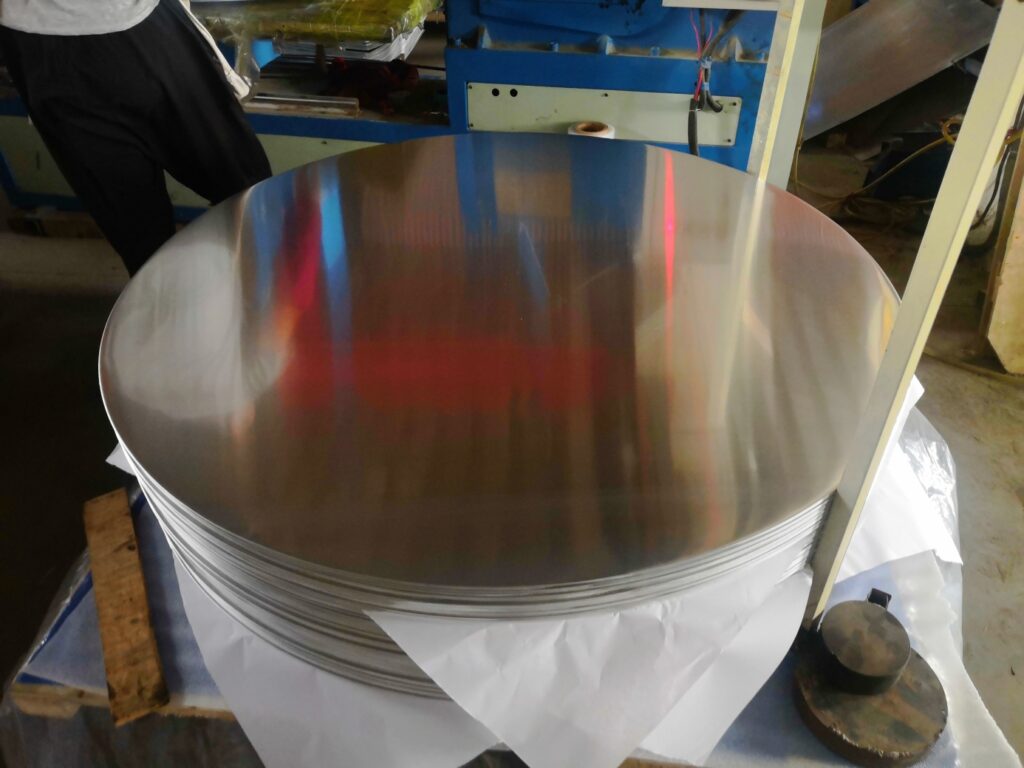
Anti-Corrosion Alloy Hot-Rolled Aluminum Circles: A Comprehensive Technical Guide
As a fundamental forming material in the industrial sector, aluminum circles serve a wide range of industries including kitchenware, automotive, and electronics. Among them, anti-corrosion alloy hot-rolled aluminum circles stand out for their superior resistance to environmental corrosion and stable mechanical properties, thanks to optimized alloy compositions and hot-rolling processes. They have become a core choice for high-demand scenarios. This article systematically organizes their technical characteristics, manufacturing processes, application scenarios, and quality control systems to provide professional references for industry material selection and production.
1. Core Understanding of Anti-Corrosion Alloy Hot-Rolled Aluminum Circles
1.1 Material Definition and Industrial Positioning
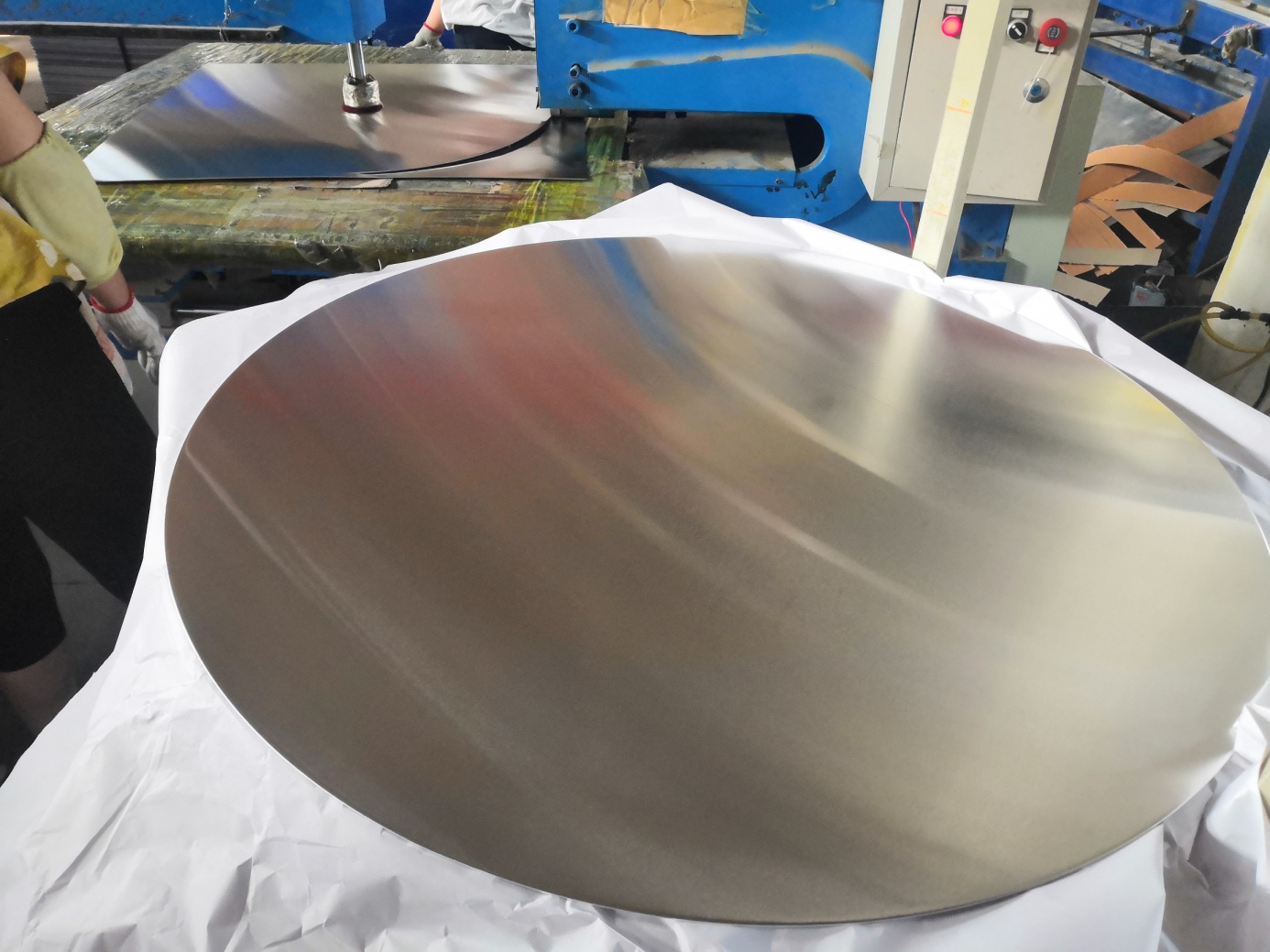
Anti-corrosion alloy hot-rolled aluminum circles are circular aluminum products. They use pure aluminum as the matrix, with alloying elements like manganese, magnesium, and silicon added. After being rolled into aluminum plates via hot-rolling, they are made into circles through precision stamping/cutting. Their core values lie in:
- Achieving corrosion resistance enhancement through alloy composition, enabling tolerance to harsh environments such as acids, alkalis, and salt spray;
- Obtaining a uniform grain structure from the hot-rolling process, balancing strength and formability;
- Being more suitable for heavy-duty components with thickness ≥1mm and high fatigue resistance requirements compared to cold-rolled aluminum circles.
Currently, this material has become a key raw material in fields such as kitchenware (frying pans, pressure cookers), automotive fuel system components, chemical storage tank heads, and lighting reflectors, with a global annual demand exceeding 500,000 tons.
1.2 Core Differences from Ordinary Aluminum Circles
| Comparison Dimension | Anti-Corrosion Alloy Hot-Rolled Aluminum Circles | Ordinary Cold-Rolled Aluminum Circles (1xxx Series) |
| Alloy System | Mainly 3xxx (Al-Mn) and 5xxx (Al-Mg) series | Pure aluminum (Al content ≥99.5%) |
| Corrosion Resistance Level | Excellent (neutral salt spray test ≥500h with no obvious corrosion) | Average (neutral salt spray test ≤200h with pitting corrosion) |
| Tensile Strength | 120-350MPa | 90-120MPa |
| Applicable Thickness Range | 1.0-10.0mm | 0.3-3.0mm |
| Typical Application Scenarios | Chemical equipment, automotive components, outdoor lighting | Food packaging, small reflectors, lightweight kitchenware |
2. Anti-Corrosion Alloy Systems and Composition Design
2.1 Selection Guide for Mainstream Anti-Corrosion Alloys
The core of corrosion resistance lies in the precise proportion of alloying elements. Different alloy series are optimized for different corrosion environments, as shown in the table below:
| Alloy Series | Core Alloying Elements | Corrosion Resistance Characteristics | Mechanical Properties (Room Temperature) | Applicable Scenarios | Chinese Executive Standard |
| 3003 | Mn (1.0-1.5%) | Resists atmospheric and fresh water corrosion; tolerates mild acids/alkalis | Tensile strength: 120-200MPa; Elongation: 10-30% | Kitchenware substrates, heat exchangers, building decoration components | GB/T 3880.2-2022 |
| 3A21 | Mn (1.0-1.6%) | Resists stress corrosion cracking; average seawater corrosion resistance | Tensile strength: 130-180MPa; Elongation: 12-25% | Low-pressure vessel heads, pipeline fittings | GB/T 3198-2020 |
| 5052 | Mg (2.2-2.8%) | Excellent resistance to seawater and salt spray; tolerates organic acids | Tensile strength: 200-250MPa; Elongation: 15-25% | Marine components (shipborne lighting), automotive fuel tanks | GB/T 3880.2-2022 |
| 5083 | Mg (4.0-4.9%) | Resists strong corrosion (Cl⁻-containing environments); tolerates low temperatures | Tensile strength: 270-350MPa; Elongation: 12-20% | Chemical storage tanks, offshore platform structural parts | GB/T 6892-2021 |
2.2 Mechanism of Key Alloying Elements
- Manganese (Mn): In the 3xxx series, it forms MnAl₆ precipitates. On one hand, it inhibits grain growth to improve material strength. On the other hand, it refines the oxide film structure, reducing the penetration rate of corrosive media. This controls the salt spray corrosion rate to ≤0.01mm/year.
- Magnesium (Mg): In the 5xxx series, it forms a solid solution with aluminum, enhancing the matrix’s resistance to electrochemical corrosion. Especially in seawater environments containing Cl⁻, it can inhibit pitting propagation, keeping the corrosion current density of the material in 3.5% NaCl solution ≤1μA/cm².
- Trace Element Control: Adding ≤0.15% titanium (Ti) can refine ingot grains and reduce hot-rolling cracks. Controlling iron (Fe) content ≤0.7% avoids the formation of coarse FeAl₃ phases, preventing local corrosion sources.

3. Hot-Rolling Manufacturing Process and Quality Control
3.1 Complete Production Process Flow (with Key Parameters)
The manufacturing of anti-corrosion alloy hot-rolled aluminum circles requires strict control of parameters such as temperature and rolling force to ensure corrosion resistance and dimensional accuracy. The specific process is as follows:
- Ingot Preparation
-
- Raw Materials: High-purity aluminum ingots (≥99.7%) + alloying elements (Mn, Mg, etc., purity ≥99.9%);
-
- Melting Temperature: 730-760℃, holding time 30-45min, nitrogen purging for degassing (hydrogen content ≤0.15mL/100gAl);
-
- Ingot Specifications: Φ600-1200mm × 3000-6000mm, using semi-continuous casting process with a cooling rate of 15-20℃/min to avoid composition segregation.
- Homogenization Treatment
-
- Temperature: 380-420℃ for 3xxx series, 450-480℃ for 5xxx series;
-
- Holding Time: 8-12h, followed by furnace cooling to room temperature. The purpose is to eliminate internal stress in the ingot, ensure uniform distribution of alloying elements, and improve subsequent rolling stability.
- Hot-Rolling Process
-
- Heating Temperature: 400-430℃ for 3xxx series, 420-450℃ for 5xxx series (holding time 2-3h);
-
- Rolling Passes: 6-8 passes, with a reduction rate of 30-35% for the first pass and 15-20% for subsequent passes to avoid grain breakage;
-
- Finishing Rolling Temperature: ≥280℃ for 3xxx series, ≥300℃ for 5xxx series to ensure material toughness and prevent cold brittleness;
-
- Hot-Rolled Plate Specifications: Thickness 3-12mm, width 1000-2000mm, using a four-high reversing hot rolling mill with a rolling speed of 1.5-3.0m/s.
- Finishing and Forming
-
- Cold-Rolling Fine-Tuning: For some scenarios, cold rolling is required to reach the target thickness (e.g., 1.0-3.0mm) with a reduction rate of 20-30%. Intermediate annealing is conducted at 300-330℃ (holding time 1-2h);
-
- Stamping/Cutting: Using CNC punch presses or laser cutting. The diameter tolerance of the circles is ±0.1mm, flatness ≤0.3mm/m, and edge burrs are avoided (burr height ≤0.05mm);
-
- Surface Treatment: Depending on requirements, pickling (to remove oxide scale), passivation (chromate treatment to improve corrosion resistance), or wire drawing is performed.
3.2 Core Quality Control Points and Testing Standards
| Quality Dimension | Control Requirements | Testing Method | Testing Frequency |
| Alloy Composition | Complies with the standards of the corresponding alloy series (e.g., Mn content 1.0-1.5% for 3003) | Optical Emission Spectrometer (OES) | Once per furnace |
| Dimensional Accuracy | Diameter tolerance ±0.1mm, thickness tolerance ±0.05mm | Laser Thickness Gauge, Digital Caliper | 5% sampling per batch |
| Surface Quality | No scratches (depth ≤0.02mm), no oil stains (residual oil ≤5mg/m²) | Visual Inspection (illuminance ≥500lux), Infrared Oil Tester | 100% full inspection |
| Mechanical Properties | Tensile strength and elongation meet standards | Universal Testing Machine (ASTM E8 Standard) | 3% sampling per batch |
| Corrosion Resistance | Salt spray test ≥500h (3.5% NaCl solution, pH 6.5-7.2) | Neutral Salt Spray Test Chamber (GB/T 10125-2021) | Once per quarter (per batch) |
| Internal Structure | Grain size ≤50μm, no porosity or inclusions | Metallurgical Microscope (200x magnification) | Once per furnace |
4. Analysis of Mechanical Properties and Corrosion Resistance Characteristics
4.1 Key Mechanical Property Parameters (by Alloy Series)
The mechanical properties of anti-corrosion alloy hot-rolled aluminum circles need to adapt to different forming requirements. For example, deep drawing of kitchenware requires high elongation, while automotive components need high tensile strength. Specific parameters are as follows:
| Alloy Grade | Temper | Tensile Strength (MPa) | Yield Strength (MPa) | Elongation (%, A50) | Hardness (HB) | Bending Performance (180°) |
| 3003 | O (Annealed) | 120-150 | 70-90 | 25-30 | 30-40 | No cracks (bending radius = thickness) |
| 3003 | H14 (Half-Hard) | 160-200 | 130-150 | 10-15 | 45-50 | No cracks (bending radius = 2×thickness) |
| 5052 | O (Annealed) | 200-220 | 150-170 | 22-25 | 60-65 | No cracks (bending radius = thickness) |
| 5052 | H34 (Half-Hard) | 230-250 | 180-200 | 15-18 | 70-75 | No cracks (bending radius = 2×thickness) |
| 5083 | O (Annealed) | 270-300 | 110-130 | 18-20 | 80-85 | No cracks (bending radius = 3×thickness) |
Note: The H temper represents the strain-hardened state. H14 is pure strain hardening, while H34 is strain hardening + stabilization treatment, suitable for scenarios requiring long-term temperature resistance (≤100℃).
4.2 Corrosion Resistance Testing and Practical Performance
4.2.1 Testing Results in Typical Corrosive Environments
| Corrosive Environment | Testing Conditions | Corrosion Rate of 3003 (O Temper) (mm/year) | Corrosion Rate of 5052 (O Temper) (mm/year) | Evaluation Standard |
| Neutral Salt Spray (3.5% NaCl) | Temperature 35℃, pH 6.5-7.2, 500h | ≤0.01 | ≤0.005 | Excellent (no pitting, no peeling) |
| Industrial Atmosphere (SO₂ Environment) | Temperature 25℃, SO₂ concentration 0.1%, 1000h | ≤0.02 | ≤0.01 | Excellent (only slight surface discoloration) |
| 5% Hydrochloric Acid Solution (Room Temperature) | Static immersion for 24h | 0.15-0.20 | 0.08-0.12 | Average (slight dissolution for 3003, stable for 5052) |
| 5% Sodium Hydroxide Solution (Room Temperature) | Static immersion for 24h | 0.30-0.35 | 0.20-0.25 | Protection required (anodizing recommended) |
4.2.2 Analysis of Corrosion Resistance Mechanism
- Oxide Film Protection: Aluminum naturally forms a 5-10nm thick Al₂O₃ oxide film in air. Mn and Mg elements in anti-corrosion alloys can refine the oxide film, improve its density, and prevent the penetration of corrosive media.
- Cathodic Protection: Mg in the 5xxx series can form microcells, acting as a sacrificial anode to protect the aluminum matrix and reduce local pitting.
- Process-Assisted Enhancement: Annealing after hot-rolling can eliminate internal stress and avoid stress corrosion cracking (SCC). Especially in the 5xxx series, annealing at ≥450℃ can reduce stress corrosion sensitivity by more than 80%.
5. Industrial Application Scenarios and Selection Cases
5.1 Key Application Fields and Technical Requirements
5.1.1 Kitchenware Industry (Frying Pans, Pressure Cookers)
- Core Requirements: Resistance to open-flame high temperatures (≤300℃), resistance to oil stain corrosion, deep drawing formability (drawing ratio ≥2.5);
- Recommended Alloy: 3003 (O temper / H14 temper), thickness 1.5-3.0mm;
- Key Parameters: Elongation ≥18% (to ensure no cracks during drawing), surface roughness Ra ≤0.8μm (to facilitate coating adhesion);
- Case: A kitchenware enterprise used 3003 H14 temper aluminum circles (diameter 280mm, thickness 2.0mm) to make frying pans. After deep drawing (depth 40mm), no cracks occurred. The salt spray test showed no corrosion for 600h, and the service life reached over 5 years.
5.1.2 Automotive Industry (Fuel Tank Caps, Radiator Components)
- Core Requirements: Resistance to gasoline/antifreeze corrosion, resistance to vibration fatigue, lightweight (60% lighter than steel);
- Recommended Alloy: 5052 (H34 temper), thickness 2.0-4.0mm;
- Key Parameters: Tensile strength ≥230MPa, fatigue life (10⁷ cycles) ≥150MPa;
- Case: An automotive enterprise used 5052 H34 temper aluminum circles (diameter 150mm, thickness 2.5mm) to make fuel tank caps. No damage was found in the vibration test (10-2000Hz, acceleration 10g), and no swelling or corrosion occurred after soaking in No. 92 gasoline for 6 months.
5.1.3 Chemical Industry (Small Storage Tank Heads, Pipeline Flanges)
- Core Requirements: Resistance to acid-alkali corrosion (pH 3-11), pressure resistance (≤1.6MPa);
- Recommended Alloy: 5083 (O temper), thickness 4.0-10.0mm;
- Key Parameters: Yield strength ≥110MPa, excellent weldability (MIG welding used, weld tensile strength ≥250MPa);
- Case: A chemical enterprise used 5083 O temper aluminum circles (diameter 800mm, thickness 6.0mm) to make storage tank heads. No deformation occurred under 1.2MPa pressure, and no corrosion was found after soaking in 5% sulfuric acid solution for 1 year.
5.1.4 Lighting Industry (Outdoor LED Reflectors)
- Core Requirements: Resistance to UV aging, high reflectivity (≥85%), resistance to rainwater corrosion;
- Recommended Alloy: 3A21 (O temper), thickness 1.0-1.5mm;
- Key Parameters: Surface flatness ≤0.2mm/m (to ensure uniform reflection), anodized film thickness ≥10μm (UV resistance);
- Case: A lighting enterprise used 3A21 O temper aluminum circles (diameter 120mm, thickness 1.2mm) to make outdoor street lamp reflectors. After 1000h UV aging test (irradiance 0.89W/m²), the reflectivity decreased by ≤5%, and no corrosion was found in the 800h salt spray test.
5.2 Material Selection Decision Flowchart
- Clarify the core requirements of the application scenario (corrosive environment → temperature → forming method → mechanical requirements);
- Select the alloy series based on corrosion resistance needs (3xxx series: mild corrosion; 5xxx series: moderate to severe corrosion);
- Determine the temper based on the forming method (deep drawing → O temper; static load-bearing → H temper);
- Select the process based on thickness requirements (≥3mm → pure hot-rolling; 1-3mm → hot-rolling + cold-rolling fine-tuning);
- Confirm surface treatment (no special requirements → pickling and passivation; high corrosion resistance → anodizing; high reflectivity → polishing).
6. Surface Treatment Technologies and Performance Enhancement
6.1 Comparison of Mainstream Surface Treatment Processes
| Treatment Process | Process Parameters | Corrosion Resistance Enhancement Effect | Additional Functions | Applicable Scenarios |
| Pickling and Passivation | 5% nitric acid solution, room temperature immersion for 10-15min; passivator (chromate) immersion for 5min | Salt spray life extended to 600-800h | Removes oxide scale, improves surface cleanliness | Components requiring subsequent welding or coating |
| Anodizing | Sulfuric acid electrolyte (15-20%), temperature 18-22℃, current density 1-2A/dm², film thickness 10-20μm | Salt spray life extended to 1000-1500h | Surface coloring (silver white, black, etc.); hardness increased to HV300-400 | Outdoor lighting, kitchenware outer surfaces |
| Electrophoretic Coating | Epoxy resin electrophoretic paint, film thickness 15-25μm, curing temperature 160-180℃ | Salt spray life extended to 1500-2000h | Strong decorative effect; scratch resistance (hardness ≥H) | Automotive exterior components, high-end kitchenware |
| Ceramic Coating | Sol-gel method, coating thickness 5-10μm, sintering temperature 300-350℃ | Salt spray life ≥2000h, temperature resistance ≥400℃ | Open-flame resistance, scratch resistance (hardness ≥9H) | Kitchenware inner surfaces (frying pans, baking trays) |
6.2 Trends in New Surface Treatment Technologies
- Nanoceramic Composite Coatings: Al₂O₃-TiO₂ nanoparticle composite coatings are deposited via magnetron sputtering. With a film thickness of only 3-5μm, their corrosion resistance is twice that of traditional anodizing. The thermal conductivity is ≥200W/(m·K), making them suitable for high-power LED reflectors.
- Superhydrophobic Coatings: Modified via fluorosilane, the surface contact angle is ≥150°, which can repel rainwater and oil stains. They are suitable for outdoor automotive components, reducing cleaning frequency.
- Antibacterial Coatings: Added with silver ion (Ag⁺) antibacterial agents, the antibacterial rate is ≥99% (against Escherichia coli and Staphylococcus aureus). They are suitable for food-contact kitchenware, complying with the GB 4806.1-2016 standard.
7. Supply Chain and Material Selection Recommendations
7.1 Evaluation Indicators for High-Quality Suppliers
| Evaluation Dimension | Core Requirements | Verification Method |
| Qualification Certification | Possesses ISO 9001 (quality) and ISO 14001 (environmental protection) certifications; FDA and LFGB certifications required for food-contact products | Check original certificates, verify certification validity |
| Production Capacity | Hot-rolling mill specifications (≥four-high reversing), annual capacity ≥50,000 tons, customizable diameters (50-2000mm) | On-site inspection of production lines, confirm equipment parameters |
| Quality Control | Equipped with testing equipment such as spectrometers, salt spray test chambers, and universal testing machines; able to provide quality reports | Randomly check quality reports, witness testing processes on-site |
| Delivery Cycle | Delivery of conventional specifications (e.g., 3003 φ200mm) ≤7 days; delivery of customized specifications ≤15 days | Refer to historical order delivery records |
| Technical Support | Able to provide alloy selection and forming process optimization suggestions; has after-sales problem-solving capabilities | Communicate technical solutions, evaluate response speed |
7.2 Cost and Economic Analysis
- Material Cost: The unit price of 3003 O temper aluminum circles (thickness 2mm, φ200mm) is approximately 15-18 RMB/piece; the unit price of 5052 H34 temper (thickness 2mm, φ200mm) is approximately 20-23 RMB/piece, which is more than 40% lower than 304 stainless steel circles (unit price approximately 35 RMB/piece).
- Processing Cost: Hot-rolled aluminum circles have good formability, with a stamping scrap rate ≤3%, which is lower than that of cold-rolled aluminum circles (scrap rate ≤5%).
- Life Cycle Cost: In outdoor scenarios, the service life of 5052 aluminum circles (anodized) is ≥10 years, which reduces one replacement compared to ordinary steel (3-5 years), lowering the total cost by 50%.
8. Future Development Trends and Innovation Directions
8.1 Material Innovation
- High-Corrosion-Resistance Low-Magnesium Alloys: Developing 5xxx series alloys with Mg content of 3.0-3.5%. While maintaining corrosion resistance, the cost is reduced by 15% compared to 5083, making them suitable for mid-end automotive components.
- Aluminum-Lithium Alloy Composite Circles: Adding 0.8-1.2% lithium (Li) reduces the density to below 2.5g/cm³ and increases the strength to 400MPa, making them suitable for lightweight aerospace components (e.g., UAV fuel tanks).
8.2 Process Upgrading
- Integrated Continuous Hot-Rolling + Laser Cutting: Adopting endless rolling technology, the length of hot-rolled plates can reach over 60m. Combined with laser cutting (accuracy ±0.05mm), production efficiency is improved by 30%, and waste generation is reduced.
- Intelligent Quality Control: Introducing AI visual inspection systems to identify surface defects (scratches, inclusions) in real time. The detection accuracy is ≥99.5%, which is 10 times more efficient than manual inspection.
8.3 Application Expansion
- New Energy Field: Used for bipolar plates of hydrogen fuel cells, requiring resistance to H₂ corrosion. 5052 alloy + gold-plating treatment is adopted, with conductivity increased to over 100S/m.
- Medical Field: Developing non-magnetic anti-corrosion aluminum circles (without nickel or cobalt) for MRI equipment housings, complying with the medical biocompatibility standard (ISO 10993-5).
9. Conclusion
Anti-corrosion alloy hot-rolled aluminum circles have become an ideal material for high-demand scenarios in various industries, thanks to their dual advantages of “alloy corrosion resistance + hot-rolled toughness”. Their core values lie in:
- Diverse alloy systems, which can accurately match different corrosive environments (atmosphere, seawater, acids/alkalis);
- Uniform structure obtained from the hot-rolling process, balancing strength and formability, and reducing subsequent processing losses;
- Further extension of corrosion resistance life and functions (e.g., antibacterial, hydrophobic) through surface treatment technologies;
- Comprehensive advantages of lightweight, low cost, and recyclability compared to materials such as stainless steel and copper.
In the future, with optimized alloy design, intelligent process upgrading, and expanded application scenarios, this material will play a greater role in high-end fields such as new energy, aerospace, and medical care, providing key support for the green and lightweight development of the industry.