
Why 3003 Aluminum Disc Performs Better in Deep-Drawing Cookware
Introduction
The superior forming performance of 3003 aluminum disc has made it one of the most widely used materials in deep-drawing cookware, particularly for pots, pans, pressure cookers, kettles, and multi-stage drawn kitchenware. Compared with common commercial-pure aluminum alloys such as 1050 or 1060, the 3003 aluminum disc delivers a more balanced combination of tensile strength, elongation, corrosion resistance, and structural stability, all of which are essential for deep-drawing processes where the material must endure significant plastic deformation without cracking.
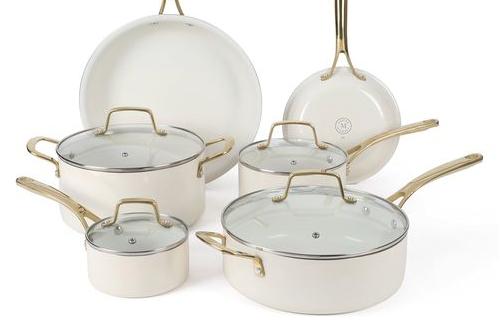
Why 3003 Aluminum Disc Is Ideal for Deep-Drawing Operations
Deep-drawing requires a material with high ductility, uniform grain structure, and controlled work-hardening characteristics. The 3003 alloy, strengthened by manganese, provides better hardness and improved resistance to deformation, reducing risks such as:
- Tearing at the bottom radius
- Wrinkling at the flange
- Orange-peel surface defects
- Post-forming distortion
This alloy’s balanced mechanical profile supports complex cookware geometries, making it especially advantageous for deep or multi-layer forming applications.
Metallurgical Advantages of 3003 for Deep-Drawing
1. Manganese-Enhanced Strength
The addition of 1.0–1.5% Mn improves strength by 10–20% compared to pure aluminum while maintaining adequate elongation.
2. Excellent Strain-Hardening Response
The alloy work-hardens gradually, enabling smooth deformation during drawing without sudden strain accumulation.
3. High Elongation for Deep Cavities
Elongation values typically range from 20–30%, ideal for cookware geometries with deep walls and narrow bottom radii.
4. Improved Corrosion Resistance
This is particularly relevant for cookware exposed to boiling water, salt, oils, and acidic foods.
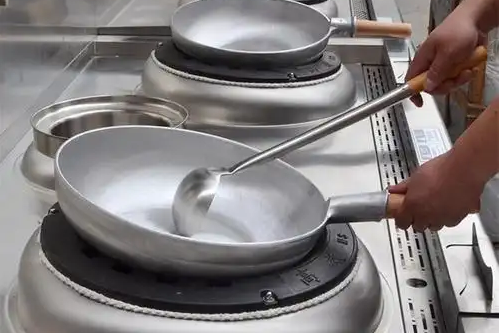
Table 1: Mechanical Properties of 3003 Aluminum Disc (Representative Deep-Drawing Tempers)
| Alloy / Temper | Tensile Strength (MPa) | Yield Strength (MPa) | Elongation (%) | Typical Application |
|---|---|---|---|---|
| 3003-O | 95–130 | 30–55 | 25–30 | Deep cookware, multi-draw forming |
| 3003-H12 | 125–150 | 65–95 | 15–23 | Medium-deep forming, cookware lids |
| 3003-H14 | 140–180 | 85–120 | 12–20 | Shallow cookware, discs, covers |
Comparison With 1050/1060 Aluminum Discs
While 1050 and 1060 are widely used in general cookware, they lack the strength and deformation resistance needed for demanding deep-drawing applications.
Table 2: Comparison of 3003 vs 1050/1060 in Deep-Drawing Performance
| Property | 1050 Aluminum Disc | 1060 Aluminum Disc | 3003 Aluminum Disc |
|---|---|---|---|
| Tensile Strength | Low | Low | Medium-High (Better stability) |
| Elongation | High | High | High (More uniform grain) |
| Deep-Draw Crack Resistance | Medium | Medium | Excellent |
| Hardness | Very soft | Soft | Moderate |
| Corrosion Resistance | Medium | Medium | High |
| Multi-Stage Drawing | Limited | Limited | Highly suitable |
| Best Application | General cookware | General cookware | Deep-drawing and pressure cookware |
The comparison shows that 3003 aluminum disc provides better mechanical stability during high deformation, making it a preferred choice for premium cookware manufacturers.

Why Surface Stability Matters in Deep-Drawing Cookware
Surface integrity directly influences final product aesthetics and coating adhesion. 3003 offers:
- Reduced risk of orange-peel under deep strain
- Better response to surface treatments like anodizing
- More uniform reflectivity after polishing
- Improved adhesion for non-stick coatings
These features are essential for cookware that undergoes hard-anodizing or ceramic coating.
Thermal Behavior of 3003 Discs in Cookware Manufacturing
One overlooked advantage of the 3003 alloy is its thermal performance. During thermal cycling:
- The alloy maintains dimensional stability
- Warping risk decreases due to balanced internal stress
- Heat distribution becomes more uniform than commercial-pure aluminum
This ensures that cookware retains flatness and resists base deformation after repeated heating.
Formability in Multi-Stage Drawing
For pressure cookers, large pots, and deep woks, the material may undergo:
- First draw
- Redraw
- Reverse draw
- Flanging
- Ironing
The 3003 alloy maintains structural integrity across each stage, reducing scrap rates and improving consistency.
Table 3: Deep-Drawing Performance Index of Popular Cookware Alloys
| Alloy | Single-Draw Depth Capacity | Multi-Draw Stability | Wrinkling Resistance | Tearing Resistance | Overall Rating |
|---|---|---|---|---|---|
| 1050 | Medium | Medium | Medium | Medium | ★★★☆☆ |
| 1060 | Medium | Medium | Medium | Medium | ★★★☆☆ |
| 3003 | High | High | High | Very High | ★★★★★ |
| 5052 | Very High | Medium | Very High | High | ★★★★☆ |
3003 stands out as the most cost-effective and stable material for cookware deep-drawing not requiring high-strength alloys like 5052.
Typical Cookware Made Using 3003 Aluminum Discs
- Deep stock pots
- Cooking pots and basins
- Frying pans (especially deep-shape pans)
- Pressure cookers
- Electric rice cooker inner pots
- Jumbo woks and large-depth cookware
- Multi-draw industrial kitchen basins
Its versatility makes it the preferred alloy in both automated and manual forming processes.

Common Questions About 3003 Aluminum Discs
1. Why is 3003 better than 1050 for deep-drawing?
Because it has higher strength and better crack resistance while maintaining ductility.
2. Does 3003 aluminum disc have good corrosion resistance?
Yes. The manganese addition significantly improves corrosion resistance, especially in food-contact environments.
3. Is 3003 suitable for both shallow and deep cookware?
It performs best in medium-to-deep cookware. For very shallow items, 1050/1060 may still be used.
4. Does 3003 respond well to anodizing or non-stick coating?
Yes, it offers stable surface quality and excellent coating adhesion.
5. Can 3003 aluminum disc be used for induction cookware?
Yes, but typically as part of a composite structure with a stainless-steel bottom plate.
Conclusion
The 3003 aluminum disc provides a distinct advantage in deep-drawing cookware manufacturing thanks to its ideal combination of strength, ductility, and surface stability. Its metallurgical properties allow cookware producers to achieve higher forming depths, improved yield rates, and superior product durability. As consumer demand for premium cookware continues to grow, 3003 remains the most practical and optimized alloy for deep-drawn kitchenware.