
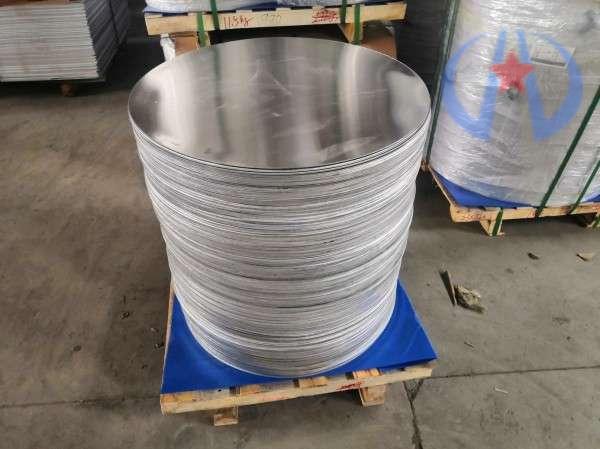
Como evitar casca de laranja ou babados no fundo de uma panela ao estampar discos de alumínio?
HW-A. Introdução: Impacto central dos defeitos de estampagem na qualidade do fundo do vaso
Estampagem de disco de alumínio (principalmente usando ligas 1060 e 3003) é um processo central na fabricação de fundo de panela para utensílios de cozinha. Formação de textura de casca de laranja durante estampagem de disco de alumínio e bordas onduladas são dois defeitos de aparência de alta frequência: este defeito de casca de laranja se manifesta como padrões côncavo-convexos irregulares na superfície do fundo da panela (parecendo casca de laranja, com rugosidade superficial Ra > 1.6μm), enquanto as bordas onduladas referem-se a deformações onduladas periódicas na borda inferior do pote (altura da onda > 0.1milímetros, espaçamento de onda 5-10mm). Entre esses dois defeitos, esse problema de textura não prejudica apenas a estética do produto (a taxa de defeitos de aparência para panelas de alta qualidade deve ser controlada abaixo 0.5%) mas também reduz a adesão subsequente do revestimento (revestimentos em texturas de casca de laranja tendem a descascar). Portanto, a prevenção direcionada da causa raiz é essencial.
HW-B. Análise aprofundada das causas dos defeitos: Efeitos sinérgicos do material, Processo, e Molde
Este defeito de casca de laranja e bordas onduladas não são causados por um único fator, mas resultam dos efeitos combinados das propriedades do material do disco de alumínio., parâmetros do processo de estampagem, projeto de molde, e condições de lubrificação. As diferenças específicas são as seguintes:
(UM) Principais causas do defeito de casca de laranja na estampagem de discos de alumínio
- Desequilíbrio entre a ductilidade do material e o estado do grão
-
- Primeiro, o índice de ductilidade (alongamento δ10) dos discos de alumínio está diretamente relacionado ao tamanho do grão: Para liga 1060, se os grãos são grossos (>50μm, sem recozimento de homogeneização), a deformação dos grãos durante a estampagem torna-se irregular – alguns grãos ficam esticados demais, enquanto outros mantêm sua forma original, formando “concavidades e convexidades em nível de grão” que acabam por levar a este defeito de casca de laranja;
-
- Segundo, têmpera inadequada da liga agrava o problema: Se liga 3003 adota o temperamento duro H14 (resistência à tração σb = 150MPa) em vez do temperamento O (σb=120MPa), ductilidade insuficiente causa concentração de tensão local durante a estampagem. Exceder o limite de rendimento do material resulta em deformação plástica irregular, com padrões semelhantes a lágrimas aparecendo na superfície, induzindo tal formação de textura.
- Distribuição desigual da tensão de estampagem
-
- Velocidade de estampagem excessivamente alta (>30mm/s) é um gatilho chave: Os discos de alumínio têm um curto tempo de deformação (<0.5é) dentro do molde, impedindo a transmissão uniforme do estresse. A diferença da taxa de deformação entre a borda e o centro excede 20%, e a área central sofre deformação plástica primeiro devido à concentração de tensões, formando uma casca de laranja “centro alto, borda baixa” forma que causa diretamente esse defeito;
-
- Adicionalmente, força insuficiente do suporte do blank (<5kN) piora o problema: A borda do disco de alumínio está sujeita a “alongamento instável” durante a estampagem. A extensão das áreas locais excede 25% (o alongamento final da liga 1060 é aproximadamente 30%), e rugas irregulares aparecem na superfície quando se aproxima do limite plástico, desenvolvendo ainda mais esta questão da casca de laranja.
- Deterioração da condição da superfície do molde
-
- Rugosidade superficial ruim do punção do molde (Rá > 0.8μm, sem cromagem) contribui significativamente: Durante a estampagem, o coeficiente de atrito entre o disco de alumínio e a superfície do molde excede 0.3. Experiência em áreas locais “aderência do material” devido à resistência excessiva ao atrito, e o material de alumínio é arranhado por saliências na superfície do molde, formando padrões semelhantes a arranhões que agravam esse defeito de textura;
-
- Além disso, temperatura do molde excessivamente alta (>50℃) é outro fator crítico: Estampagem contínua (>500 peças/hora) causa acúmulo de calor no molde, aumentando a temperatura local do disco de alumínio para 80-100°C. Amolecimento irregular do material (os limites dos grãos suavizam primeiro) leva ao deslizamento do limite de grão durante a deformação, produzindo concavidades e convexidades superficiais que se tornam um indutor chave deste defeito de estampagem.
(B) Principais causas de bordas onduladas
- Incompatibilidade entre a folga do molde e a espessura do material
-
- Folga excessivamente grande da matriz do punção (>15% da espessura do material) é uma causa primária: Pegando uma espessura de 1,5 mm 3003 disco de alumínio como exemplo, se a folga exceder 0,225 mm, a borda do disco de alumínio sofre “deformação livre” dentro da folga do molde e não pode ser efetivamente restringido pela parede do molde, formando ondas;
-
- Em contraste, folga irregular (erro circunferencial >0.05milímetros) leva a defeitos direcionais: Se o punção e a matriz não estiverem concêntricos durante a instalação do molde, a folga é muito pequena (<0.1milímetros) em uma direção e muito grande (>0.2milímetros) em outro. Isso causa tensão desigual na borda do disco de alumínio, com alongamento excessivo em áreas com grande folga, formando bordas onduladas direcionais.
- Falha do Sistema de Lubrificação
-
- O tipo de lubrificante inadequado atrapalha o processo de estampagem: Usando lubrificantes à base de óleo mineral (viscosidade >100cSt) evita a cobertura uniforme da superfície do molde durante a estampagem. Lubrificação insuficiente em áreas locais (por exemplo, ponta de corte) causa um aumento repentino no coeficiente de atrito, e a borda do disco de alumínio é “arrastado” e deformado, produzindo bordas onduladas irregulares;
-
- Notavelmente, a aplicação desigual amplifica ainda mais o problema: Se houver “áreas não revestidas” (área >5%) durante a aplicação manual de lubrificante, o disco de alumínio entra em contato direto com o molde nessas áreas. A resistência ao atrito é 3-5 vezes maior do que em áreas lubrificadas, levando a diferenças nas taxas de deformação das bordas e formando bordas onduladas periódicas.
- Tolerância excessiva à espessura dos discos de alumínio
-
- Desvio de espessura superior a ± 0,05 mm (ultrapassando GB/T 3880.2 requisitos) cria deformação irregular: Áreas mais espessas requerem maior força de estampagem para deformação, enquanto áreas mais finas são propensas a esticar demais. A quantidade de alongamento de áreas de borda fina (por exemplo, 1.4espessura mm) é 15-20% maior do que em áreas espessas (1.6milímetros), finalmente formando bordas onduladas;
-
- Além disso, rebarbas de borda excessivamente grandes (>0.1milímetros) induzir acumulação local: Se os discos de alumínio não forem rebarbados após o corte, rebarbas são comprimidas pelo molde durante a estampagem, causando acúmulo local de material e formação “induzido por rebarbas” bordas onduladas.
HW-C. Soluções de prevenção sistemática: Otimização de material em cadeia completa, Processo, Mofo, e Lubrificação
Para resolver esse defeito da casca de laranja e bordas onduladas, um sistema de prevenção deve ser estabelecido a partir de três aspectos: controle de origem, otimização de processos, e garantia de equipamentos. As medidas específicas para prevenir o problema da casca de laranja são as seguintes:
(UM) Pré-tratamento de materiais: Estabelecendo as bases para uma produção livre de defeitos
- Seleção precisa de parâmetros de disco de alumínio
-
- Liga e temperamento: Para evitar esse defeito da casca de laranja, a estampagem do fundo do pote prioriza a liga 1060-O (d10 ≥30%, tamanho de grão 20-30μm) ou 3003-O (δ10 ≥25%), e evita temperamentos duros H14/H18. Para fundos de panela de alta precisão (por exemplo, frigideiras de alta qualidade), discos de alumínio sofrem “recozimento de homogeneização + laminação a frio,” com tamanho de grão controlado em 15-20μm (detectado via microscópio metalográfico). Isso elimina indutores do problema de textura do ponto de vista da ductilidade do material e da uniformidade dos grãos;
-
- Espessura e tolerância: Com base nos requisitos de espessura do fundo do vaso (por exemplo, 2milímetros), discos de alumínio com tolerância de espessura ≤±0,03mm e rebarbas de borda ≤0,05mm (detectado via medidor de espessura a laser e perfilômetro) são selecionados para garantir a uniformidade do material, reduzir a deformação irregular causada por diferenças de espessura, e indiretamente evitar esse defeito de estampagem.
- Otimização do Processo de Pré-tratamento
-
- O recozimento de alívio de tensão elimina a tensão residual: Os discos de alumínio cortados são submetidos a recozimento a 180-200°C para 1 hora para eliminar a tensão residual do corte (tensão residual ≤50MPa após recozimento), evitando a deformação irregular induzida pela superposição de tensão durante a estampagem e evitando esse problema de casca de laranja;
-
- A limpeza de superfícies reduz os riscos relacionados ao atrito: As superfícies dos discos de alumínio são limpas com 95% álcool antes de carimbar para remover óleo e poeira (limpeza atende ISO 16232 Aula 5), evitando o aumento do atrito local causado por impurezas e reduzindo esse defeito de textura induzido pelo atrito.
(B) Otimização de parâmetros de processo: Controle Preciso do Processo de Deformação
- Ajuste dos parâmetros de estampagem do núcleo (Focado na prevenção do defeito da casca de laranja)
| Tipo de parâmetro | Valores otimizados para prevenir o defeito da casca de laranja | Valores otimizados para bordas onduladas | Explicação do Princípio |
| Velocidade de estampagem | 15-20mm/s | 10-15mm/s | A redução da velocidade prolonga o tempo de deformação para transmissão uniforme de tensão, evitando textura de casca de laranja induzida por concentração de estresse local |
| Força de suporte em branco | 8-12kN (para discos de φ200mm) | 10-15kN | Força suficiente no suporte do blank restringe as bordas para evitar estiramento instável, reduzindo indutores do problema de textura |
| Profundidade de estampagem | Definido com precisão com base na curvatura do fundo do pote (por exemplo, 5milímetros) | Controle síncrono do curso do punção (erro ≤0,02 mm) | Evitar o estiramento excessivo local evita concavidades e convexidades superficiais que formam o defeito casca de laranja |
| Tempo de permanência | 0.3-0.5é | 0.5-0.8é | Dwell elimina o retorno elástico e estabiliza a deformação, evitando o problema de textura causado pela liberação de estresse |
- Controle de folga e alinhamento do molde
-
- Liberação de molde: Definir como “espessura do material × (8%-12%)” (por exemplo, 0.16-0.24mm para discos de alumínio de 2mm). A folga circunferencial é detectada através de calibradores de folga, com erro ≤0,02 mm;
-
- Calibração de coaxialidade: Após cada instalação do molde, um instrumento de alinhamento a laser detecta a coaxialidade do punção e da matriz, garantindo desvio ≤0,01 mm para evitar deformação da borda causada por folga irregular e auxiliar indiretamente na prevenção deste defeito de casca de laranja.
(C) Otimização de Moldes: Melhorando a estabilidade da conformação (Focado na inibição do defeito da casca de laranja)
- Superfície do molde e projeto estrutural
-
- O tratamento de superfície reduz defeitos induzidos por fricção: Para reduzir este defeito de casca de laranja causado por fricção, as superfícies do punção e da matriz adotam um “cromagem + polimento” processo, com espessura de camada de cromo de 5-10μm e rugosidade superficial Ra ≤0,2μm (detectado através do testador de rugosidade superficial). Isto reduz o coeficiente de atrito para 0.1-0.15, evitando arranhões entre o material de alumínio e a superfície do molde;
-
- O design de filete dispersa o estresse: O raio do filete da aresta de corte R = 1,5-3mm (ajustado com base na espessura do disco de alumínio – filetes maiores para materiais mais espessos) para evitar arranhões de arestas vivas. O punch top apresenta um “arco micro-convexo” projeto (raio de curvatura 500-800mm) para dispersar o estresse central, eliminando este defeito de textura do ponto de vista da distribuição de tensões.
- Temperatura e manutenção do molde
-
- O sistema de controle de temperatura estabiliza as propriedades do material: Termopares são incorporados no molde para monitorar a temperatura em tempo real. Quando a temperatura excede 40 ℃, um sistema de refrigeração a água (fluxo de água de resfriamento 5-10L/min) é ativado para controlar a temperatura do molde em 25-35℃, evitando o amolecimento irregular do alumínio causado por moldes superaquecidos e prevenindo esse defeito de casca de laranja;
-
- A manutenção regular preserva o desempenho do molde: Depois de carimbar 5,000 pedaços, a superfície do molde é polida com lixa metalográfica (800#) para remover lascas de alumínio presas. A aresta de corte é substituída após a estampagem 20,000 peças para evitar o aumento da rugosidade superficial devido ao desgaste e reduzir o risco deste defeito de estampagem.
(D) Atualização do sistema de lubrificação: Reduzindo a interferência de fricção
- Seleção e aplicação de lubrificantes
-
- A seleção do tipo prioriza a compatibilidade: Lubrificantes emulsionados à base de água (por exemplo, parafina clorada + emulsionante, viscosidade 30-50cSt) são preferidos por sua lubrificação e facilidade de limpeza combinadas, evitando resíduos de óleo mineral. Para fundos de panela de alta precisão, um “lubrificante + revestimento de nitreto de boro” combinação pode ser usada para reduzir ainda mais o coeficiente de atrito para 0.08-0.1, minimizando este defeito de casca de laranja causado por fricção;
-
- O método de aplicação garante uniformidade: Um sistema de pulverização automático (diâmetro do bico 0,5 mm, pressão de pulverização 0,3MPa) é usado para formar um revestimento uniforme (espessura 5-10μm) no disco de alumínio e nas superfícies do molde, alcançar 100% cobertura. Isso evita o aumento do atrito local devido à falta de revestimento e evita esse problema de textura.
- Tratamento Pós-Lubrificação
-
- O lubrificante residual é seco com ar quente (60-80℃) após a estampagem para evitar a redução da adesão do revestimento subsequente causada por resíduos de lubrificante. Para fundos de panelas que requerem anodização, produtos de limpeza alcalinos (pH 8-9) são usados para garantir que nenhum óleo permaneça na superfície.
HW-D. Detecção de defeitos e verificação de qualidade: Garantindo a eficácia da prevenção (Focado no defeito da casca de laranja)
(UM) Detecção on-line: Interceptação em tempo real do defeito da casca de laranja
- Sistema de Inspeção Visual
-
- Uma câmera industrial (2-megapixel, frequência de disparo 50 quadros/s) é instalado na saída da máquina de estampar, emparelhado com um algoritmo de IA (precisão de reconhecimento ≥99,5%) para detectar a superfície do fundo da panela em tempo real. Para este defeito de casca de laranja, áreas côncavo-convexas com Ra > 1.6μm são identificados através de diferenças em tons de cinza; para bordas onduladas, ondas com altura >0.1mm são identificados através da análise do perfil da borda;
-
- Quando este defeito de textura é detectado, o sistema aciona automaticamente um alarme e pausa a estampagem para evitar defeitos no lote.
- Detecção Dimensional e Morfológica
-
- Um perfilômetro a laser (precisão ±0,001mm) detecta a borda inferior do pote para registrar a altura da onda e o espaçamento das bordas onduladas. Um testador de rugosidade superficial (comprimento de amostragem 2,5 mm) mede a superfície para garantir Ra ≤1,2 μm (Ra ≤0,8μm para fundos de panela de alta qualidade), verificando diretamente o efeito de prevenção deste defeito da casca de laranja;
-
- Uma amostra por 100 peças são submetidas à análise metalográfica para verificar a uniformidade da deformação dos grãos, garantindo que não haja grãos grossos óbvios ou áreas concentradas de tensão e eliminando riscos ocultos deste defeito de estampagem no nível micro.
(B) Verificação off-line: Garantindo estabilidade a longo prazo
- Teste de adesão: Anodização (espessura do filme 10-12μm) é realizado em fundos de panela estampados, seguido por um teste transversal por GB/T 9286 (espaçamento de corte 1mm). Nenhum descascamento do revestimento após o descascamento da fita (grau de adesão ≥4B) verifica o controle efetivo deste defeito da casca de laranja;
- Teste de uniformidade de aquecimento: O fundo da panela é aquecido em um fogão de indução (potência 2000W) para 10 minutos, e um termovisor infravermelho detecta a distribuição da temperatura da superfície. Uma diferença de temperatura ≤5℃ (normalmente ≤3℃ para fundos de panelas com prevenção qualificada de bordas onduladas) garante aquecimento uniforme.
HW-E. Casos de aplicação na indústria: Verificação prática dos efeitos da prevenção (Focado na resolução do defeito da casca de laranja)
- Linha de produção inferior Supor Wok (Discos de alumínio de liga 1060-O, φ280 mm)
-
- Edição Original: Velocidade de estampagem 25 mm/s, força de suporte em branco 6kN, esta taxa de defeito de casca de laranja 8%, taxa de defeito de borda ondulada 5%;
-
- Medidas de otimização: ① Velocidade de estampagem reduzida para 18 mm/s e aumento da força do suporte da peça bruta para 10kN para melhorar a distribuição de tensão; ② Folga do molde ajustada de 0,25 mm a 0,2 mm e superfície cromada para Ra = 0,15 μm para reduzir o atrito; ③ Adotou um sistema automático de pulverização de lubrificante à base de água para garantir uma lubrificação uniforme;
-
- Efeito: Esta taxa de defeito de textura foi reduzida para 0.3%, taxa de defeito de borda ondulada reduzida para 0.2%, atendendo aos requisitos da linha de produtos de alta qualidade.
- Linha de produção de fundo de frigideira ZWILLING (Discos de alumínio de liga 3003-O, φ240 mm)
-
- Edição Original: Tamanho de grão do disco de alumínio 40-50μm, temperatura do molde superior a 50 ℃, defeitos graves de casca de laranja;
-
- Medidas de otimização: ① Discos de alumínio submetidos a recozimento de homogeneização a 200 ℃ para 1.5 horas para reduzir o tamanho do grão para 20-25μm e melhorar a uniformidade da ductilidade; ② Instalou um sistema de resfriamento de água para o molde controlar a temperatura em 30 ℃, evitando o amolecimento irregular do alumínio;
-
- Efeito: Este defeito da casca de laranja foi completamente eliminado, rugosidade superficial Ra reduzida de 2,0μm para 0,8μm, e o grau de adesão do revestimento atingiu 5B.
HW-F. Conclusões e Tendências Futuras
A prevenção deste defeito de casca de laranja no núcleo de estampagem de disco de alumínio reside na obtenção de sinergia entre “uniformidade de materiais, precisão do processo, estabilidade do molde, e eficácia da lubrificação.” No futuro, com a aplicação de tecnologias inteligentes, soluções de prevenção serão ainda mais atualizadas: ① Introduzir sistemas de autoajuste de parâmetros de IA (otimizando automaticamente a velocidade de estampagem e a força do suporte do blank com base em dados de detecção em tempo real deste problema de textura); ② Adotar “gêmeo digital” tecnologia para simular o processo de estampagem e prever antecipadamente os riscos desse defeito específico; ③ Desenvolver novos nanolubrificantes (por exemplo, lubrificantes à base de grafeno) para reduzir ainda mais o coeficiente de atrito, empurrando a taxa de defeitos desta questão da casca de laranja para “zero.”
Geral, o controle livre de defeitos desse defeito de estampagem exige quebrar a mentalidade de “otimização de link único” e estabelecer um sistema de controle de qualidade de cadeia completa. O controle preciso em cada etapa – desde a inspeção de entrada do material até o teste do produto acabado – garante que tanto a aparência quanto o desempenho dos fundos dos potes atendam aos padrões.