
A base de panelas polidas com espelho de última geração: Uma análise abrangente da tecnologia de controle de casca de laranja e aplicação para Premium 1060 Círculos de Alumínio
In the highly competitive high-end cookware market, the visual texture of a product is as crucial as its durability. A frying pan or saucepan that achieves a flawless mirror finish is not just a cooking tool but a piece of art in the kitchen and a direct carrier of brand value. No entanto, many manufacturers on the quest for perfect gloss often encounter a stubborn challenge: Casca de laranja. This microscopic, orange-skin-like waviness that appears on the metal surface after deep drawing is the “natural enemy” of mirror polishing. It causes uneven light scattering, significantly diminishes the mirror effect, and severely impacts the final product’s grade and yield rate.
This article provides an in-depth analysis of why Prêmio 1060 Círculos de Alumíniosão reconhecidos em toda a indústria como o substrato ideal para resolver este problema e alcançar a produção em massa de utensílios de cozinha polidos espelhados de primeira linha. Faremos uma dissecação sistemática, de sua genética material e das causas metalúrgicas da casca de laranja, para processos precisos de controle de produção, e, finalmente, a rigorosas aplicações de utilização final e avaliação de aquisições.
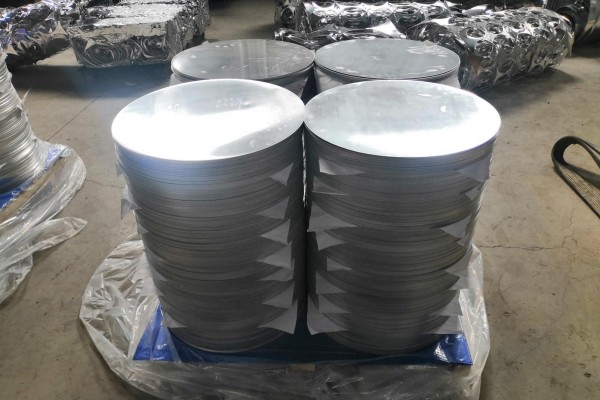
EU. A Fundação Material: A genética e propriedades de alta pureza de 1060 Liga de alumínio
Como representante por excelência o 1000 série alumínio comercialmente puro, a principal característica do 1060 liga reside em sua pureza excepcionalmente alta (teor de alumínio ≥ 99.6%). Esse “pureza” é a raiz de sua trabalhabilidade superior.
I.1 Composição Química e Valor Central
Sua composição química típica (fração de massa %) é o seguinte:
| Elemento | E | Fé | Cu | Mn | mg | Zn | Al |
|---|---|---|---|---|---|---|---|
| Contente | ≤0,25 | ≤0,35 | ≤0,05 | ≤0,03 | ≤0,03 | ≤0,05 | ≥99,6 |
- Vantagem de baixas impurezas: O teor extremamente baixo de elementos de impureza, como o ferro (Fé) e silício (E) significa que a formação de partículas duras de fase secundária dentro da liga é mínima e fina. Isso traz diretamente dois grandes benefícios: primeiro, a estrutura interna do material é mais uniforme e consistente; segundo, durante a subsequente deformação por estampagem profunda, o efeito dificultador dessas partículas duras no fluxo contínuo do material é minimizado, reduzindo o início de microdefeitos.
- Design sem manganês: Em comparação com ligas de panelas comumente usadas, como 3003, 1060 não contém manganês. Embora o manganês possa fornecer algum fortalecimento de solução sólida, aumenta a tendência de endurecimento da liga e dificulta o controle do tamanho do grão recristalizado, aumentando inadvertidamente o risco de casca de laranja. O “pureza” de 1060 torna seu comportamento cristalográfico mais simples e controlável.
I.2 Principais propriedades físicas para panelas de última geração
- Ductilidade excepcional e estampabilidade profunda: Seu alongamento normalmente pode facilmente exceder 35%. Combinado com uma taxa moderada de endurecimento por trabalho, isso permite que o material se estique de maneira uniforme e suave durante processos severos de deformação plástica, como estampagem profunda e fiação, reduzindo a probabilidade de rachaduras ou afinamento excessivo local.
- Excelente condutividade térmica: Como um alumínio puro, sua eficiência de condução térmica está entre as mais altas em ligas de alumínio comumente usadas, garantindo um aquecimento rápido e uniforme dos utensílios de cozinha e atendendo às necessidades condutivas da cozinha profissional.
- Boas características de anodização: Sua alta pureza permite a formação de uma camada de óxido mais transparente e uniforme durante a anodização, fornecendo uma boa base para a produção de utensílios de cozinha anodizados coloridos ou anodizados duros.
II. O assassino do acabamento espelhado: Uma análise aprofundada da formação da casca de laranja
Para derrotar um inimigo, é preciso primeiro entender isso. A casca de laranja não é um simples arranhão superficial, mas um “desenvolvimento” da microestrutura do material sob deformação macroscópica.

II.1 Definição e Manifestação
Casca de laranja é irregular, ondulação microscópica fosca que aparece na superfície de uma folha de metal após o processamento de plástico, como estampagem profunda ou alongamento. Pode ser difícil detectar antes do polimento, mas uma vez polido, essas ondulações causam reflexão difusa da luz, criando manchas de brilho e escuridão irregulares, impedindo a obtenção de uma clara, imagem espelhada contínua.
II.2 Mecanismo de Formação Metalúrgica
Sua essência é a manifestação macroscópica de Inomogeneidade de deformação plástica em materiais policristalinos. As principais razões concentram-se nos seguintes pontos:
- Tamanho de grão excessivo e não homogêneo: Este é o fator mais fundamental. A deformação plástica em metais ocorre principalmente através do deslizamento de discordâncias dentro dos grãos. Quando os grãos são grossos, cada grão atua como uma unidade de deformação independente, com diferenças significativas em sua direção de deslizamento e quantidade de deformação. Macroscopicamente, a incompatibilidade de deformação entre estes “independente” grãos grandes são amplificados em uma ondulação de superfície visível. Quanto mais desigual for a distribuição do tamanho dos grãos, mais caótica se torna essa ondulação, e quanto mais severa a casca de laranja.
- Processo de recozimento de recristalização inadequado: Círculos de alumínio após laminação a frio requerem recozimento para restaurar a plasticidade. Se a temperatura de recozimento for muito alta ou o tempo de espera for muito longo, pode desencadear crescimento anormal de grãos (recristalização secundária), causando diretamente um aumento acentuado na propensão à casca de laranja.
- Textura Inicial e Anisotropia: A orientação cristalográfica (textura) formado durante o processo de laminação de chapas, se for muito forte, pode fazer com que o material tenha diferentes capacidades de deformação em diferentes direções, exacerbando a falta de homogeneidade da deformação.
III. O segredo premium: Tecnologia Sistemática de Controle de Casca de Laranja
A diferença entre “Prêmio” nota 1060 círculos de alumínio e círculos standard reside precisamente na intervenção sistemática ao longo de todo o processo, desde a fundição até ao produto acabado, com controle de grãos como núcleo.
III.1 Engenharia de Refinamento de Grãos: Da fundição à laminação a frio
- Fundição e Homogeneização: Lingotes de alumínio de alta pureza são usados, e técnicas avançadas de purificação de fusão e adição de refinador de grãos são empregadas para obter uma estrutura fundida fina e uniforme a partir da fonte de fundição.
- Controle de temperatura de laminação a quente e acabamento: O controle preciso da temperatura de acabamento durante a laminação a quente visa obter uma estrutura recuperada/recristalizada adequada, fornecendo uma estrutura inicial ideal para laminação a frio subsequente.
- Otimização do Processo de Laminação a Frio: Uma alta taxa de redução total (tipicamente >70%) é usado com um cronograma de aprovação razoável. A deformação severa a frio armazena alta energia de distorção no material, fornecendo uma força motriz poderosa para formar uniformes, grãos recristalizados finos em recozimento subsequente.
III.2 O Processo da Alma: Regime de recozimento preciso
O recozimento é a etapa chave que confere as propriedades finais do serviço (O-temperamento) ao material e fechaduras no estado de grão. Prêmio 1060 utiliza uma curva de recozimento controlada dinamicamente:
- Aquecimento escalonado e imersão precisa: Evita diferenças excessivas de temperatura entre a superfície e o núcleo causadas pelo aquecimento rápido, garantindo aquecimento uniforme em toda a folha.
- Janela de recristalização ideal: Controla rigorosamente a temperatura de recozimento dentro da faixa otimizada de 330-360°C. Esta temperatura é suficiente para conduzir a recristalização completa, formando finos grãos equiaxiais, enquanto permanece bem abaixo da temperatura perigosa para o crescimento anormal de grãos.
- Resfriamento Controlado: Após o período de retenção, uma taxa de resfriamento lenta programada é usada para evitar a introdução de novas tensões internas devido ao resfriamento excessivamente rápido ou o engrossamento dos grãos por permanecer por muito tempo na faixa de alta temperatura.
Através da combinação de processos acima, o tamanho do grão do círculo final de alumínio é estabilizado e controlado uniformemente dentro Grau ASTM 8-10 (gama de grãos finos), estabelecendo uma base microestrutural sólida para resistir à casca de laranja.

III.3 Garantia de Integridade da Superfície
Corte de precisão, Supressão CNC, ou corte a laser são usados para garantir que as bordas em branco estejam livres de rebarbas, sem lágrimas, e livre de camadas endurecidas. Esses defeitos nas bordas podem se tornar pontos de concentração de tensão e origens de casca de laranja na estampagem subsequente.
4. Verificação rigorosa: Métricas de desempenho e sistemas de teste para panelas polidas espelhadas
Ter um substrato superior é apenas o primeiro passo; seu desempenho deve ser verificado por meio de métricas quantitativas e testes de simulação.
IV.1 Requisitos Básicos de Métricas de Desempenho
| Métrica de desempenho | Requisito Típico (Prémio 1060-O) | Significado para polimento de espelho |
|---|---|---|
| Alongamento | ≥ 38% | Mede o limite plástico do material. Valores mais altos indicam melhor estampabilidade profunda e resistência à fissuração. |
| Resistência à tracção | 70-95 MPa | Garante que o corpo formado da panela tenha resistência básica de suporte. |
| Força de rendimento | 20-35 MPa | O ponto de tensão no qual a deformação permanente começa, afetando as configurações de força de formação. |
| Porcentagem de ganho | ≤ 2% | Um indicador chave. Reflete a anisotropia do material. Brinco baixo significa que a borda do copo estampado tem altura uniforme, com menos sucata, e fluxo de grãos mais uniforme na área da borda, reduzindo a probabilidade de casca de laranja local. |
| Rugosidade Superficial (Rá) | ≤ 0.8 μm | Quanto mais lisa for a superfície da matéria-prima, menores serão os custos de mão de obra e consumíveis para polir até obter um acabamento espelhado (Ra ≤ 0.2 μm). |
IV.2 Sistemas Avançados de Inspeção e Simulação da Qualidade
- Teste de precisão offline:
- Análise Metalográfica: Amostragem regular para observar e avaliar diretamente o tamanho do grão e a distribuição da fase secundária sob um microscópio. Este é o método microscópico mais direto para avaliar o risco de casca de laranja.
- Teste de Propriedade Mecânica: Teste de tração com uma máquina de teste universal, Teste de escavação Erichsen para avaliar o desempenho da conformação por estiramento.
- Perfilometria de Superfície: Medição sem contato da rugosidade e planicidade da superfície da matéria-prima.
- Teste de Simulação de Processo (Crucial):
- Limitando a proporção de desenho (LDR) Teste: Avalia a profundidade máxima moldável do material.
- Ventosaterapia Simulada + Experiência de polimento: Uso de ferramentas em escala de laboratório próximas aos moldes de produção para estampagem de pequenas amostras, seguido de polimento padrão da parede lateral do copo (área de deformação máxima). Este é o mais eficaz “ensaio de batalha” para casca de laranja antes da produção em massa.
V. Comparação Horizontal e Tomada de Decisão de Seleção de Materiais
Por que 1060, e não outras ligas? A tabela abaixo revela claramente suas vantagens abrangentes em aplicações de alto brilho:
| Grau de liga | Principais características | Ductilidade | Sensibilidade à casca de laranja | Adequação para polimento de espelho | Consideração de custo |
|---|---|---|---|---|---|
| 1060 | 99.6% Al puro, estrutura uniforme | Excelente | Muito baixo | Ideal | Médio, alto custo-desempenho |
| 1100 | Pureza ligeiramente inferior (≥99,0%), desempenho semelhante | Excelente | Baixo | Excelente | Médio |
| 3003 | Contém ~1,2% Mn, maior resistência | Bom | Relativamente alto | Justo | Relativamente alto |
| 5052 | Contém 2.5% mg, alta resistência, resistente à corrosão | Moderado | Alto | Não adequado | Alto |
Para utensílios de cozinha que buscam acabamentos espelhados de primeira linha, 1060 atinge o melhor equilíbrio entre “conformabilidade,” “dificuldade de controle de qualidade de superfície,” e “custo.”Enquanto 3003 ou 5052 oferecer maior resistência, sua anisotropia mais forte e maior risco de casca de laranja os tornam mais adequados para aplicações com menores requisitos de brilho superficial, como corpos de panelas de pressão ou substratos para panelas antiaderentes comuns.
VI. Aplicações finais e realização de valor
O valor do Prêmio 1060 círculos de alumínio são totalmente realizados nas seguintes categorias de utensílios de cozinha de alta qualidade:
- Panelas revestidas de aço inoxidável polido espelhado: Como a camada intermediária de núcleo de alumínio, sua excelente capacidade de estampagem profunda e superfície sem casca de laranja garantem que a chapa revestida possa ser polida até obter um acabamento espelhado perfeito, mesmo após estampagem severa.
- Frigideiras de alumínio puro de alta qualidade, Panelas: Usado diretamente como camada interna de contato com alimentos, passando por anodização ou revestimento cerâmico. Uma estrutura de substrato uniforme e fina é fundamental para uma forte adesão do revestimento e uma aparência de cor consistente.
- Panelas para catering comercial: Em cenários que exigem produção em massa com alta consistência, um substrato com baixo risco de casca de laranja pode aumentar significativamente o rendimento da primeira passagem do processo de polimento, reduzindo os custos gerais de produção.
- Panelas decorativas de marca de grife: Fornece o mais puro e confiável “tela” para utensílios de cozinha que requerem efeitos estéticos únicos através de vários tratamentos de superfície, como polimento, escovar, e jato de areia.

VII. Principais pontos de avaliação técnica para aquisição de substratos de alta qualidade
Selecionando Premium 1060 os círculos de alumínio não devem parar no nível de “grau de liga” e “Ó temperamento.” Em vez de, um sistema de diálogo técnico e verificação deve ser estabelecido.
VII.1 Especificações Técnicas do Pedido que Devem Ser Esclarecidas
- Temperamento: Especifique claramente “Ó temperamento (totalmente recozido),” e opcionalmente “adequado para estampagem profunda e polimento espelhado.”
- Tolerâncias Dimensionais: A tolerância de espessura deve ser mais rigorosa do que os padrões nacionais, por exemplo, exigindo ±0,02 mm, tolerância de diâmetro ±0,1 mm.
- Qualidade de Superfície: Deve ser “Superfície de grau A,” livre de arranhões, marcas de rolo, manchas de óleo, ou manchas de oxidação. É aconselhável solicitar amostras de qualidade de superfície selada.
- Embalagem: Exigir embalagem profissional à prova de umidade (forrado com papel/sacos VCI) e resistente a impactos (empilhamento vertical com intercalação), para evitar danos no transporte.
VII.2 Documentos de Certificação de Qualidade que Devem Ser Solicitados
- Certificado de teste de material (CTM): Lista a composição química para cada número de calor de fusão, confirmando o cumprimento do 1060 padrão.
- Relatório de teste de propriedades mecânicas: Inclui dados importantes, como limite de rendimento, resistência à tracção, e alongamento.
- Relatório de Teste Metalográfico: Mostra fotomicrografias da estrutura do grão e o resultado da classificação do tamanho do grão (alvo: Grau ASTM 8-10).
- Relatório de desempenho do processo (Cenário Ideal): Relatórios fornecidos pelo fornecedor sobre o valor da degustação, porcentagem de ganho simulado, ou resultados de testes de profundidade.
VIII. Conclusão
No campo da fabricação de panelas de alta qualidade, a competição material há muito ultrapassou o reino da “utilizável” e entrou nas águas profundas “alto desempenho” e até mesmo “imbuindo produtos com genes superiores.” Controlar a casca de laranja é, em essência, a busca final por uniformidade e estabilidade na microestrutura de materiais metálicos.
Prêmio 1060 círculos de alumínio, através de sua essência de material de alta pureza combinada com o gerenciamento de refinamento de grãos da 全程 desde a fundição, rolando para recozimento, minimizar com sucesso o risco de casca de laranja. Não é apenas uma matéria-prima, mas uma solução de alto desempenho que integra ciência dos materiais, processos metalúrgicos, e gestão da qualidade.
Para marcas comprometidas em criar utensílios de cozinha polidos espelhados de primeira linha, investir em substratos de alta qualidade traz retornos -maior rendimento do produto, processos de polimento simplificados, e saltos no brilho e na qualidade do produto—que superam em muito o custo incremental do próprio material. Esta é a escolha inteligente para construir diferenciação de produtos essenciais e fossos de marca em um mercado do oceano vermelho. Escolher o substrato certo é o primeiro e mais crucial passo no nascimento de um acabamento espelhado perfeito.