

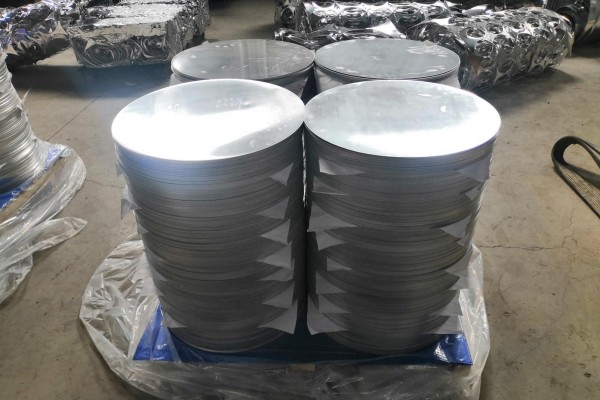
Produksi peralatan memasak dan dapur berkualitas tinggi yang istimewa 1100 lembaran bulat aluminium
1. Latar Belakang Industri: Mengapa Manufaktur Peralatan Masak Sangat Diandalkan 1100 Lingkaran Aluminium?
Dalam sistem pembuatan peralatan masak modern, konduktivitas termal, keuletan, dan stabilitas stamping bahan dasar secara langsung menentukan tingkat kualitas dan daya saing pasar produk akhir, baik itu pot yang ditarik, wajan kosong, kapal uap, panci, atau panci bagian dalam penanak nasi. Sebagai bahan perwakilan dari 1000 seri aluminium murni komersial, 1100 lingkaran aluminiummerupakan bahan baku inti peralatan masak deep-drawing karena kemurniannya yang tinggi (Al ≥ 99.0%) dan kemampuan deformasi plastik yang sangat baik.
Dibandingkan dengan paduan sejenisnya 3003 Dan 5052, 1100 aluminium menekankan:
- Daktilitas yang luar biasa
- Konduktivitas termal yang unggul
- Kualitas permukaan yang sangat baik
- Biaya terkendali
- Keamanan kontak makanan yang baik
Karena itu, 1100 lingkaran aluminium telah lama memegang pangsa pasar yang signifikan di sektor base blank untuk peralatan dapur kelas menengah hingga atas.

2. Analisis Mendalam tentang 1100 Sifat Dasar Paduan Aluminium
2.1 Komposisi Kimia dan Sifat Bahan
| Elemen | Rentang Konten (%) |
|---|---|
| Al | ≥ 99.00 |
| Ya+Iman | ≤ 0.95 (Biasanya Si<0.2, Fe<0.4 untuk nilai yang lebih baik) |
| Cu | 0.05 – 0.20 |
| Yang lain | ≤ 0.15 |
Alam Material: 1100 adalah a aluminium murni komersial, diperkuat terutama oleh pengerasan regangan (kerja dingin) daripada perlakuan panas. Sifat-sifatnya disesuaikan melalui proses pengerjaan dingin dan anil, menawarkan berbagai keadaan mekanis yang dapat dicapai.
2.2 Sifat Fisika dan Kimia Utama
| Milik | Nilai Khas / Keterangan |
|---|---|
| Kepadatan | 2.71 gram/cm³ |
| Konduktivitas Termal | ~222 W/(m·K) |
| Konduktivitas Listrik | ~59% IACS |
| Titik lebur | ~660 °C |
| Koefisien Ekspansi Linier | 23.6 x 10⁻⁶ /K |
| Ketahanan Korosi | Adil. Membentuk lapisan oksida pelindung. Membutuhkan perawatan permukaan (misalnya, anodisasi, lapisan) untuk penggunaan makanan. |
Konduktivitas termal yang tinggi adalah keunggulan utamanya, memungkinkan cepat, pemanasan seragam dan efisiensi energi.
2.3 Sifat Mekanik berdasarkan Temper (Kunci Peralatan Masak)
'Kemarahan’ penunjukan mendefinisikan riwayat pemrosesan dan properti akhir. Untuk 1100 lingkaran peralatan masak, yang paling umum adalah:
| Melunakkan | Kekuatan Tarik (MPa) | Kekuatan Hasil (MPa) | Pemanjangan (%) | Aplikasi Utama dalam Peralatan Masak |
|---|---|---|---|---|
| HAI (Anil) | 90 – 110 | ≥ 35 | ≥ 30 | Gambar yang dalamuntuk bentuk kompleks (misalnya, tubuh wajan, undian pertama). Kemampuan mampu bentuk maksimum. |
| H14 (Setengah Keras) | 110 – 145 | ≥ 95 | 8 – 12 | Penarikan atau bagian sedang yang memerlukan kekakuan pasca pembentukan. Keseimbangan yang luar biasa. |
| H24 | 130 – 160 | ≥ 110 | 6 – 10 | Mirip dengan H14. Digunakan untuk bagian yang membutuhkan kekuatan lebih tinggi setelah dibentuk. |
Prinsip Seleksi:Gunakan emosi yang lebih lembut (HAI) untuk hasil imbang yang parah dan emosi yang lebih keras (H14/H24) untuk bentuk akhir atau bagian yang membutuhkan kekakuan.
3. Keuntungan Tak Tergantikan dalam Produksi Peralatan Masak
3.1 Daya Tarik Dalam yang Unggul: Mekanisme Mikro
- Eksponen Pengerasan Regangan Tinggi (nilai-n):Mempromosikan deformasi seragam, menolak penipisan lokal (leher), memungkinkan Rasio Gambar Pembatas yang lebih tinggi (LDR).
- Rasio Regangan Plastik Tinggi (nilai-r): Menunjukkan ketahanan terhadap penipisan dalam arah ketebalan, mendukung aliran material ke dalam rongga cetakan untuk penarikan yang lebih dalam.
- Bagus, Struktur Butir Equiax: Dicapai melalui anil yang tepat. Ini adalah landasan mikrostrukturuntuk sifat mampu bentuk yang sangat baik, mencegah “kulit jeruk” permukaan dan retak.
- Anisotropi Planar Rendah:Hasil rendah dan seragam “subang” (tepi bergelombang setelah menggambar), memaksimalkan pemanfaatan material dan meminimalkan sisa trim.
3.2 Konduktivitas Termal yang Luar Biasa
Dengan konduktivitas termal sekitar 5x dari baja tahan karat, 1100 aluminium:
- Memungkinkan respon yang cepatuntuk memanaskan masukan.
- Menciptakan sebuah medan termal seragammelintasi permukaan memasak, mencegah hot spot.
- Meningkat efisiensi energidi dapur rumah dan komersial.

3.3 Kualitas Permukaan: Landasan Pelapisan
Daya tahan anti lengket (PTFE, keramik) atau lapisan hard-anodized bergantung sepenuhnya pada substrat.
- Kebersihan:Penting untuk adhesi lapisan. Residu minyak atau kontaminan apa pun dapat menyebabkan lepuh dan pengelupasan.
- Profil Permukaan: Yang terkontrol dengan baik, kekasaran permukaan yang seragam memberikan sifat mekanis “jangkar” untuk pelapis (saling mengunci secara mekanis).
3.4 Efektivitas Biaya
- Biaya peleburan/paduan yang lebih rendah.
- Pembentukan lebih mudah, mengurangi keausan alat, siklus produksi yang lebih cepat.
- Nilai sisa yang tinggi dan kemudahan daur ulang.
4. Aplikasi Inti dan Proses Manufaktur
4.1 Wajan / Wajan Penggorengan
- Proses: Gambar dalam sering kali diikuti dengan pemintalan untuk menyelesaikan bentuk dan ketebalan dinding.
- Persyaratan Bahan: Nilai n dan nilai r yang sangat tinggi untuk menahan deformasi parah.
- Menyelesaikan: Interior sering kali menerima lapisan anodisasi keras atau anti lengket. Eksterior mungkin dipoles, dilukis, atau dilapisi dengan lapisan magnet (untuk induksi).
4.2 Panci Bagian Dalam Penanak Nasi
- Proses: Gambar dalam multi-tahap. Menuntut keseragaman ketebalan yang luar biasa dan tidak ada cacat permukaan.
- Persyaratan Bahan: Kemurnian tinggi sangat penting. Pengotor atau inklusi dapat menjadi titik awal kegagalan pelapisan dalam siklus termal.
- Menyelesaikan:Lapisan anti lengket di bagian dalam (fluoropolimer atau keramik).
4.3 Pot Stok, kapal uap, panci
- Proses: Gambar tunggal atau sedang, diikuti dengan flanging/crimping.
- Persyaratan Bahan: Isotropi planar tinggi untuk sifat pelek yang seragam dan tinggi dinding yang konsisten setelah flanging. Toleransi ketebalan yang ketat adalah kunci untuk pot berdiameter besar.
5. Proses Produksi dan Kontrol Kualitas untuk Kualitas Tinggi 1100 lingkaran
Alur Proses Inti:Mencair & Pengecoran → Homogenisasi → Pengerolan Panas → Pengerolan Dingin → Anil Menengah → Penggulungan Selesai → Anil Akhir → Pengosongan/Penggorengan Lingkaran → Pembersihan Permukaan → Inspeksi & Sedang mengemas.
| Titik Kontrol Kunci | Target & Dampak |
|---|---|
| anil | Mengontrol ukuran butir akhir dan keseragaman. Secara langsung menentukan performa deep draw. |
| Penggulungan Dingin | Mempengaruhi penyelesaian permukaan, kebosanan, dan toleransi ketebalan. |
| Mengosongkan Mati | Memastikan diameter yang tepat dan duri minimal. |
| Jalur Pembersihan | Mencapai pembersihan kimia, permukaan aktif untuk pelapisan selanjutnya. |
Metrik Kualitas Utama:
- Ukuran Butir:Biasanya ASTM 6-8 untuk sifat mampu bentuk yang optimal.
- Persentase Pendapatan:Harus diminimalkan (<3% untuk nilai premium).
- Toleransi Dimensi:Toleransi ketebalan ±0,02mm atau lebih ketat untuk aplikasi kelas atas.
- Kebersihan Permukaan: Diverifikasi dengan uji water-break atau analisis instrumental.
6. Pedoman Pembelian dan Seleksi
6.1 Spesifikasi Teknis
Tentukan persyaratan yang merujuk pada standar seperti ASTM B209, DI DALAM 485, atau GB/T 3880, dengan lebih ketat “khusus peralatan masak” kriteria.
6.2 Item Inspeksi Utama
- Kimia:Sertifikat uji pabrik untuk setiap panas.
- Sifat Mekanik:Uji tarik per temper tertentu.
- Tes Kemampuan Bentuk:Tes Bekam Erichsen (nilai yaitu) atau, idealnya, Membatasi Rasio Gambar (LDR) tes.
- Metalografi: Ukuran butir dan peringkat inklusi.
- Dimensi & Pemeriksaan Dimensi: Ketebalan, diameter, kebosanan.
- Kualitas Permukaan:Inspeksi visual di bawah pencahayaan yang baik. Bebas dari goresan, penyok, noda, tanda gulungan.
- Kebersihan:Tes pemecah air atau sejenisnya.
6.3 Penilaian Pemasok
Evaluasi apakah pemasok memiliki peralatan utama seperti Continuous Annealing Line (CAL), kontrol bentuk online, dan sistem inspeksi permukaan, yang sangat penting untuk konsistensi batch-ke-batch.
7. Perbandingan Terperinci: 1100 vs. 3003 untuk Peralatan Masak
| Milik | 1100 (Aluminium Murni Komersial) | 3003 (Paduan Al-Mn) | Panduan Seleksi |
|---|---|---|---|
| Komposisi Utama | Al≥99,0%, Cu 0.05-0.20 | Al bal., M N 1.0-1.5 | |
| Penguatan | Pengerasan Regangan | Solusi Padat (M N) + Pengerasan Regangan | |
| Tarik O-Temper Khas | 90-110 MPa | 110-130 MPa | 3003 adalah ~20% lebih kuat |
| Pemanjangan O-Temper yang Khas | ≥30% | ≥25% | 1100 lebih ulet |
| Konduktivitas Termal | ~222 W/(m·K) | ~193 W/(m·K) | 1100 adalah ~15% lebih baik |
| Daya Tarik yang Mendalam | Bagus sekali, LDR yang lebih tinggi | Bagus | Untuk undian yang rumit: Memilih 1100 |
| Resistensi Sag | Adil (lebih lembut pada suhu tinggi) | Lebih baik | Mempertimbangkan 3003 untuk barang-barang yang digunakan dalam oven |
| Biaya | Lebih rendah | Sedikit Lebih Tinggi | 1100 memiliki keunggulan biaya |
| Penggunaan Khas | Panci penanak nasi, wajan yang dalam, badan pot | Badan panci presto, loyang, grid | Pilih berdasarkan tantangan desain dan proses |
8. Tren Masa Depan dan Persyaratan yang Berkembang
- Teknologi Butir Ultra Halus:Pemrosesan termomekanis tingkat lanjut untuk mencapai butiran submikron, meningkatkan kekuatan sambil mempertahankan keuletan.
- Kualitas Permukaan Sangat Tinggi: Untuk pelapis generasi berikutnya (misalnya, keramik, karbon seperti berlian), membutuhkan kontrol permukaan skala nano. Proses seperti pemolesan listrik dan pembersihan plasma akan digunakan lebih luas.
- Kustomisasi Kinerja: Menyesuaikan tekstur lembaran, anisotropi, dan kurva properti berdasarkan simulasi CAE pelanggan agar optimal “bahan-proses-produk” cocok.
- Keberlanjutan: Menggunakan proporsi aluminium daur ulang yang lebih tinggi dengan pemurnian tingkat lanjut. Mengembangkan bahan kimia pengerolan/pembersihan yang lebih ramah lingkungan.
- Bahan Berlapis/Komposit: 1100 sebagai inti, dilapisi dengan bahan lain (baja tahan karat, tembaga, lapisan antimikroba) untuk multifungsi.
9. Pertanyaan yang Sering Diajukan (Pertanyaan Umum) – Canggih
Q1: Pot stok kami menjadi kasar “kulit jeruk” permukaan setelah menggambar. Mengapa?
A:Hal ini biasanya disebabkan oleh butiran yang terlalu kasardalam lembaran aluminium. Hal ini dapat disebabkan oleh anil yang tidak tepat (terlalu panas). Minta material dengan ukuran butiran halus bersertifikat (misalnya, ASTM 7 atau lebih baik) dan tinjau proses anil Anda sendiri jika memungkinkan.
Q2: Bagaimana kita dapat menguji apakah a 1100 lingkaran cocok untuk yang baru, desain panci yang rumit?
A:Selain tes standar Erichsen, melakukan a tes menggambar simulasi produksi menggunakan alat dengan geometri serupa. Cara yang paling ilmiah adalah a Membentuk Diagram Batas (bidang) tes. Praktik terbaik: berkolaborasi dengan pemasok material Anda, menyediakan desain bagian dan rasio gambar untuk rekomendasi dan dukungan perkakas percobaan.
Q3: Mengapa lapisan anti lengket pada wajan kita terkelupas setelah beberapa kali digunakan? Mungkinkah substrat menjadi penyebabnya?
A:Sangat mungkin. Selain masalah proses pelapisan, masalah substrat yang menyebabkan kegagalan adhesi termasuk: 1) Kontaminasi permukaan (minyak). 2) Cacat permukaan (mikro-inklusi, pori-pori). 3) Kemurnian bahan rendah (pemisahan fase pengotor pada antarmuka). 4) Pra-perawatan yang tidak memadaisebelum pelapisan. Analisa (misalnya, SEM/EDS) antarmuka kegagalan disarankan untuk mengidentifikasi akar permasalahan.
Q4: Kami ingin membuat wajan yang kompatibel dengan induksi 1100 aluminium. Bagaimana kita harus mendesainnya?
A:Aluminium murni bersifat non-magnetik. Solusi standarnya adalah a berpakaian bagian bawah: Itu 1100 Bodi aluminium dipadukan dengan piringan baja tahan karat magnetis (misalnya, 430 nilai) di bagian bawah eksterior melalui pengelasan tekanan, mematri, atau ikatan mekanis. Desain harus memperhitungkan ekspansi termal diferensial, sering menggunakan struktur berlapis multi-lapis (misalnya, Al-SS-Al).
10. Kesimpulan
Posisi 1100 lingkaran aluminium dalam pembuatan peralatan masak berasal dari mereka kombinasi properti yang unik: daya tarik dalam yang luar biasa, konduktivitas termal yang unggul, kesesuaian yang sangat baik untuk finishing permukaan, dan efektivitas biaya. Ini bukan sekedar bahan baku, tapi sebuah pendukung rekayasauntuk desain inovatif dan produksi massal berkualitas tinggi.
Untuk produsen peralatan masak, membangun kemitraan strategis dengan pemasok, mendapatkan pemahaman mendalam tentang proses rantai pasokan lengkap, dan bersama-sama mengembangkan spesifikasi material yang disesuaikan dengan kebutuhan produk spesifik adalah strategi utama untuk melampaui persaingan yang dikomoditisasi dan menciptakan produk yang andal, produk bernilai tinggi. Di bidang ilmu material yang terus berkembang, pemahaman mendalam dan penerapan sederhana dari bahan-bahan klasik seperti 1100 aluminium sering kali menghasilkan keunggulan pasar yang paling tahan lama.