
1050 Aluminum Disc: The Preferred Pure Aluminum Material for Metal Spinning Processing
In the field of precision metal forming and processing, driven by the growing demand for lightweight, personalized, and complex curved parts, metal spinning technology is being increasingly adopted across industries such as lighting, high-end cookware, hardware appliances, and precision industrial components due to its unique curved surface forming capabilities, high processing flexibility, and strong material adaptability.
Among the many available materials, 1050 aluminum discs, as a representative of the 1xxx series pure aluminum, have become one of the most mainstream, mature, and cost-effective raw materials for metal spinning processing, thanks to their ultimate ductility, stable plastic deformation ability, and excellent surface forming quality.
This article will comprehensively analyze the characteristics of 1050 spinning-specific aluminum discs from multiple dimensions, including materials science, process parameters, quality control, and market selection, providing in-depth professional references for material optimization and production efficiency improvements in processing enterprises.

I. What is a 1050 Aluminum Disc (for Metal Spinning)?
1.1 Basic Introduction to 1050 Aluminum Discs
1050 aluminum alloy belongs to the 1xxx series of pure aluminum specified in the national standard “GB/T 3190-2008” and is a commonly used high-purity aluminum material in industry.
Its absolute advantage lies in its aluminum content ≥99.5%, minimal impurity components, and extremely high material purity.
Unlike alloyed aluminum, which contains alloying elements such as manganese, magnesium, and silicon, 1050 pure aluminum retains the most primitive physical properties of aluminum: an extremely soft texture, excellent plasticity, and outstanding thermal and electrical conductivity.
Additionally, this material offers good atmospheric corrosion resistance, is non-magnetic, easy to process, polishes well, and can successfully undergo diverse surface treatment processes such as anodizing, spraying, and wire drawing.
It is precisely based on these superior characteristics that 1050 aluminum, after being precision-blanked into circular blanks, becomes a core raw material suitable for deep metal spinning processing.
1.2 Introduction to Metal Spinning Process
Metal spinning is a precision processing technique that integrates plasticity and flow forming.
Its core principle utilizes the high-speed rotation of a spindle to drive a circular metal blank (i.e., the aluminum disc) in circular motion, while spinning rollers apply axial and radial pressure along a preset path.
This forces the metal blank to undergo continuous, localized plastic deformation, ultimately conforming to the mold and forming a hollow revolving curved part.
Depending on the processing temperature, this process is mainly divided into two categories:
- Cold Spinning: Performed at room temperature without heating the blank. This method boasts significant advantages such as high finished product accuracy, no surface oxidation layer, and good dimensional stability, making it the mainstream method for aluminum disc spinning processing today.
- Hot Spinning: Requires preheating the blank. It is typically used for special forming scenarios involving large thicknesses (e.g., over 6mm), high deformation volumes, or specific alloy materials.
Compared to traditional stamping or deep drawing processes, the greatest advantage of metal spinning lies in the absence of expensive integral stamping molds. Only simple mandrels are required to complete processing. This not only significantly reduces mold development costs and shortens production cycles but also provides strong processing flexibility, making it particularly suitable for small-batch customization, multi-product switching, and the production of large-sized complex curved parts.
1.3 Core Reasons Why 1050 Aluminum Discs are Suitable for Spinning Processing
Among numerous aluminum grades, 1050 aluminum discs stand out as the preferred choice for spinning primarily due to their unique material compatibility:
- Ultimate Ductility: The material exhibits extremely high deformation tolerance, capable of withstanding intense extrusion and stretching during spinning. It adapts well to multi-pass continuous spinning, greatly reducing the risk of material cracking or tearing during processing.
- Stable Plastic Flow: During deformation under stress, the metal flow inside the material is very uniform, ensuring consistency in the wall thickness of the part and avoiding defects such as local accumulation or uneven thickness.
- Excellent Surface Inheritance: Due to the purity and fineness of the material, the finished product after spinning exhibits high surface smoothness with no obvious processing marks. Often, only light polishing or even no polishing is required before direct use, perfectly meeting the production requirements for high-end appearance parts.

II. Core Technical Parameters of 1050 Aluminum Discs
To ensure the smooth progress of spinning processing, 1050 aluminum discs possess a standardized specification system and strict mechanical parameter indicators. The following table details the core parameters and specifications of this material:
| Item | Parameter Range / Description |
|---|---|
| Alloy Grade | 1050 (International 4-digit designation system) |
| Temper | O-temper (Annealed), H12 (1/4 Hard), H14 (1/2 Hard) |
| Thickness Range | 0.5mm – 6.0mm (Selectable based on product rigidity requirements) |
| Diameter Range | Φ100mm – Φ1200mm (Covers from small lamp cups to large lampshades) |
| Tensile Strength | 60 – 95 MPa (Far lower than alloyed aluminum, easy to form) |
| Elongation | ≥35% (High elongation guarantees deep spinning) |
| Surface Quality | Free from oil, scratches, burrs, indentations, roll marks |
2.1 Analysis of Common Tempers for Spinning Processing
Different product structures and deformation volume requirements correspond to different material heat treatment tempers:
- 1050 O-temper Aluminum Discs (Recommended): In a fully annealed state, this is the softest temper with the highest elongation. Its plasticity reaches its peak, capable of withstanding the most severe deformations without cracking. It is the preferred temper for complex deep spinning, multi-curved surface forming, and high-deformation processing (such as parabolic lampshades, deep cylindrical containers), with almost no risk of cracking.
- 1050 H12 Aluminum Discs: A half-hard temper, treated with mild work hardening. It balances certain plasticity with rigidity. While its deformation capacity is slightly lower than O-temper, it offers better flatness and slight resistance to deformation, making it suitable for conventional shallow spinning and structurally simple formed parts.
- 1050 H14 Aluminum Discs: A quarter-hard temper, with higher hardness and strength but significantly reduced plasticity. It is only applicable for simple spinning processing with minimal deformation and certain requirements for product rigidity (such as simple flat disks or shallow dishes) and is absolutely unsuitable for multi-pass deep processing.
2.2 Core Requirements for Dimensional Tolerances
Spinning processing is a high-precision forming operation with near-stringent requirements for the dimensional tolerances of aluminum discs:
- Thickness Tolerance: Must be controlled within ±0.05mm and remain uniform across the entire sheet. Uneven thickness will directly lead to wall thickness deviations in the spun product and may even cause uneven roller stress, damaging the equipment.
- Diameter Tolerance: Must be precise and controllable, strictly prohibiting “tapered edges” or ovality deviations to ensure concentricity during clamping.
- Sheet Flatness: The material should be straight, free from warping or waviness, to prevent jumping during high-speed rotation.
- Edge Quality: Edges must be finely cut or slit, free from burrs and chipping, to avoid micro-cracks caused by stress concentration at the initial stage of spinning.
III. Core Advantages of 1050 Aluminum Discs in Spinning Processing
3.1 Ultra-High Plasticity and Ductility, Excellent Formability
The core competitive advantage of 1050 high-purity aluminum lies in its ultimate plasticity and ductility.
Its elongation rate typically reaches 35% or even higher, a figure far exceeding that of ordinary alloyed aluminum.
During spinning, the material demonstrates uniform and smooth metal flow, easily coping with the forming challenges of complex structures such as arcs, cones, irregular curved surfaces, and deep cylinders.
This excellent physical property supports multi-pass repeated spinning deformation, ensures processing stability, significantly reduces the probability of product cracking and scrap, and makes it an ideal material for conquering various high-difficulty spinning processes.
3.2 Excellent Surface Quality, Significantly Reducing Post-Processing Costs
High-quality 1050 aluminum discs feature flat, clean surfaces free from impurities and oxidation spots.
After spinning, the finished product inherits this smooth, delicate texture with uniform and natural grain.
This means that in most cases, enterprises do not need to invest heavily in labor-intensive grinding and polishing processes. Simultaneously, due to the high material purity, its performance in surface treatment stages such as anodizing, spraying, and wire drawing is also exceptional.
The oxide film is uniform and translucent, with strong dye adhesion and vibrant colors, perfectly meeting the stringent appearance quality requirements of high-end lighting, decorative parts, and cookware, effectively reducing comprehensive manufacturing costs.

3.3 Outstanding Thermal Conductivity, Suitable for Temperature-Control Products
Pure aluminum naturally possesses excellent heat conduction and dissipation properties.
1050 aluminum has a high thermal conductivity coefficient, enabling rapid and uniform heat transfer. Based on this physical characteristic, the material is widely used in manufacturing functional products such as lighting reflector/heat sink structures, cookware bottoms, and electrical heat sinks.
It not only ensures the geometric accuracy of product structure forming but also significantly enhances the product’s heat dissipation efficiency and thermal conduction performance during actual use, extending the life of electronic components or improving the cooking experience.
3.4 Lightweight Material, Enhancing Product Competitiveness
Under the trend of “replacing steel with aluminum” and lightweight design, the advantage of aluminum’s low density is becoming increasingly apparent. 1050 pure aluminum is lightweight, and spun parts made from it have a significantly lower overall weight compared to iron products.
This not only reduces the final product’s self-weight, improving portability and user experience, but also substantially lowers handling costs and freight during logistics, strengthening the product’s market competitiveness.
3.5 High Cost-Effectiveness, Suitable for Batch and Large-Scale Production
From a full life-cycle cost perspective, 1050 aluminum discs offer extremely high cost-effectiveness.
Compared to 1060, 3003, and other aluminum materials, the raw material procurement cost for 1050 is lower. At the same time, due to its stable processing performance, scrap rates and edge material loss are minimal.
The material also causes less wear on molds, indirectly reducing mold maintenance costs. Whether for large-batch standardized production or small-batch, multi-variety flexible manufacturing, 1050 provides highly advantageous comprehensive cost benefits.
IV. Key Factors Affecting the Spinning Forming Quality of 1050 Aluminum Discs
4.1 Raw Material Quality Itself (Hot Rolled vs. Cast Rolled)
Raw materials are the cornerstone of spinning quality. Currently, aluminum discs on the market are mainly divided into two process routes: hot rolled and cast rolled:
- Hot Rolled Aluminum Discs (Preferred): Having undergone high-temperature rolling and prolonged annealing treatment, the material’s internal grains are fully refined and homogenized, resulting in a dense structure with minimal residual stress. This material offers strong plasticity and crack resistance, with excellent surface gloss after spinning, making it the top choice for high-end spinning.
- Cast Rolled Aluminum Discs: Made by directly casting molten aluminum into sheets, this process has a short production cycle and low cost. However, the grain structure is relatively coarse and uneven, with complex internal stresses. During deep processing (especially thinning and drawing), issues such as orange peel effect, cracking, and uneven grain are highly likely to occur. They are only suitable for very simple shallow spinning or stamping parts.
4.2 Reasonable Selection of Aluminum Disc Temper
“Prescribing the right medicine” is key to material selection. If hard-temper materials like H12 or H14 are incorrectly chosen for products requiring high deformation volume, deep spinning, or complex curved surfaces, material brittle fracture or severe tearing will inevitably occur.
Conversely, if overly soft O-temper materials are selected for products requiring slight flatness or rigidity, the finished product may be prone to collapse or deformation. Therefore, accurately matching the material temper according to drawing requirements is crucial.
4.3 Spinning Equipment and Mold Precision
- Equipment Rigidity: Automated CNC spinning machines have overwhelming advantages over traditional manual spinning machines in terms of speed control, feed precision, and pressure stability, serving as the prerequisite for ensuring batch product consistency.
- Mold Quality: The concentricity, surface finish (Ra value), and transition radius design of the mold directly determine the appearance quality of the finished product. Severely worn molds can cause product eccentricity, chatter marks, or surface scratches.
4.4 Precise Control of Process Parameters
Spinning is an art of balance, and the following four parameters must be coordinated:
- Spinning Roller Pressure: Excessive pressure is the number one culprit for material tearing, while insufficient pressure fails to make the material conform to the mold.
- Spindle Speed: Excessively high speeds can cause the material to heat up, harden, and develop surface waviness, while too low speeds reduce production efficiency and may lead to work hardening.
- Feed Ratio: Uneven feed speed is the primary cause of wall thickness deviations.
- Lubrication and Cooling: Dedicated spinning oil or emulsion must be used for lubrication and cooling to reduce frictional heat, prevent aluminum chip adhesion (built-up edge), and thus obtain a smooth surface.

V. Typical Application Areas of 1050 Aluminum Disc Spinning Processing
5.1 Lighting Industry (Primary Application)
Relying on excellent reflectivity, formability, and heat dissipation, 1050 aluminum discs are the absolute main force in manufacturing various lighting accessories.
Typical products include: LED reflectors, tunnel light/industrial high-bay light shades, high-bay light housings, streetlight reflectors, downlight/spotlight decorative rings, etc. The spinning process imparts smooth curves and high optical reflection efficiency to these products.
5.2 Cookware Manufacturing Industry
1050 pure aluminum is non-toxic, harmless, safe, environmentally friendly, and offers exceptional thermal conductivity, complying with food contact material standards.
It is widely used in the deep processing of various cookware (such as woks, frying pans) housings, steamer bodies, rice cooker/electric pressure cooker inner liner outer layers, cookware decorative rings, etc. Spun cookware is smooth, rounded, beautiful, and durable.
5.3 Electrical and Electronics Industry
With advantages of lightweight, non-magnetism, good heat dissipation, and electromagnetic shielding performance, this material is often used to manufacture motor end covers, electrical cooling fan housings, electrical protective covers, instrument and meter housings, and other precision components, providing reliable physical protection and thermal management support for electronic equipment.
5.4 Decoration and Construction Industry
With the pursuit of metallic textures in architectural decoration, 1050 aluminum is used to process various artistic metal domes, architectural decorative vents, irregular ceiling aluminum panels, etc.
Spinning processes can achieve extremely complex geometries, endowing buildings with a unique modern aesthetic.
5.5 Industrial Equipment Field
In the industrial sector, this material can be used to process accessories such as small portable gas/liquid storage tanks, ventilation duct irregular elbows, and chemical anti-corrosion linings.
Its excellent corrosion resistance and forming precision meet the dual requirements of reliability and durability for industrial equipment.
VI. Performance Comparison of 1050 Aluminum Discs with Other Spinning Aluminum Materials
To assist enterprises in making the most accurate material selection decisions under different working conditions, we have conducted a comprehensive horizontal comparison of 1050 aluminum with industry-common spinning aluminum materials 1060, 1100, and 3003:
| Performance Indicator | 1050 | 1060 | 1100 | 3003 |
|---|---|---|---|---|
| Aluminum Purity | 99.5% | 99.6% | 99.0% | Al-Mn Alloy |
| Ductility | ★★★★★ | ★★★★★ | ★★★★☆ | ★★★★ |
| Tensile Strength | ★★★ | ★★★ | ★★★★ | ★★★★★ |
| Corrosion Resistance | ★★★★★ | ★★★★★ | ★★★★★ | ★★★★ |
| Spinning Formability | ★★★★★ | ★★★★★ | ★★★★☆ | ★★★★ |
| Material Cost | ★★★★ | ★★★★ | ★★★ | ★★★ |
| Overall Evaluation | King of Cost-Effectiveness | Ultimate Ductility | Balanced Performance | Strength Priority |
Material Selection Suggestions:
- Extreme Deep Spinning / Complex Shapes: Prioritize 1050 or 1060 pure aluminum discs. Both offer the best forming results and are resistant to cracking.
- High Strength / Deformation Resistance Requirements: Such as containers needing to withstand high pressure, prioritize 3003 alloy aluminum discs.
- Balancing Strength and Formability / Cost-Effectiveness: For general structural parts, 1100 aluminum is a good compromise choice.
VII. Standardized Production Process for High-Quality 1050 Spinning Aluminum Discs
High-quality spinning aluminum discs are by no means a simple cutting product; they require meticulous production control throughout the entire process. Each procedure safeguards the final spinning performance:
7.1 Raw Material Melting and Refining Impurity Removal
Select A00 high-purity aluminum ingots as the basic raw material.
Strictly control the chemical composition during the melting process, precisely removing impurity elements such as iron and silicon, ensuring the aluminum content remains stable above 99.5%, thus guaranteeing material purity and plasticity from the source.
7.2 Hot Rolling Processing and Grain Refinement
Through high-temperature hot rolling (typically between 400°C-500°C), the coarse dendritic crystals formed during casting are broken.
This causes recrystallization within the material, significantly refining the grains. This process eliminates internal stress and builds a uniform fiber structure, which is key to enhancing the deep processing performance of the material.

7.3 Cold Rolling and Finish Rolling with Shape Control
Gradually reduce the sheet thickness through a multi-pass cold rolling process.
During this process, advanced shape control systems (such as AGC automatic gauge control) are utilized to ensure minimal thickness tolerance across the entire coil while improving sheet flatness and surface finish.
7.4 Precise Annealing Treatment
Develop exclusive annealing process curves tailored to customer requirements for different tempers (O, H12, H14).
By precisely controlling the annealing temperature and time, the work hardening stress generated during cold rolling is eliminated, adjusting the grain size to obtain the desired elongation and hardness indicators.
7.5 High-Precision Blanking and Deburring
Use high-precision hydraulic or mechanical punching equipment, coupled with sharp dies, for disc cutting.
Strictly control the punching clearance to ensure vertical, smooth cuts. Subsequently, deburring or chamfering treatments are performed to guarantee smooth edge feel and the absence of micro-cracks.
7.6 Comprehensive Finished Product Inspection and Packaging
Before leaving the factory, each batch of products undergoes rigorous quality inspection.
This includes: using thickness gauges to check thickness tolerance, hardness testers to verify temper, roughness meters to inspect surface quality, and sampling for cupping tests or elongation testing, ensuring every aluminum disc meets the stringent standards for spinning processing.
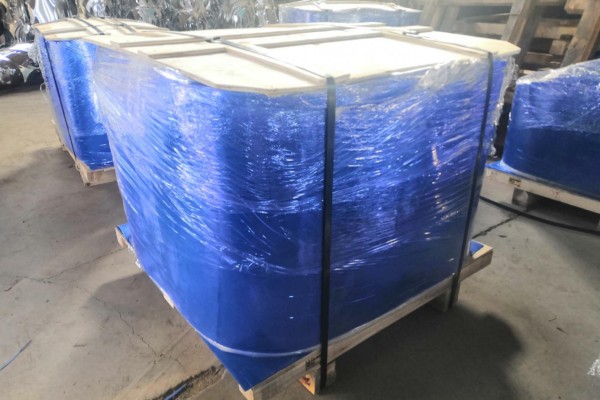
Qualified products require moisture-proof paper interlayer packaging to prevent scratches during transportation.
VIII. Core Procurement Assessment Indicators for 1050 Spinning Aluminum Discs
For purchasers, merely looking at price and grade is insufficient; a multi-dimensional assessment indicator system must be established:
8.1 Material Performance Indicators (Core)
- Elongation Test: Be sure to request third-party test reports from suppliers to confirm whether the elongation is ≥35%. This is the “lifeline” for measuring whether a material can withstand multi-pass continuous spinning and deep spinning.
- Grain Size Grade: Inquire about the grain size grade of the material. The finer and more uniform the grains, the more delicate the surface after spinning and the less likely the orange peel phenomenon will occur.
8.2 Surface Quality Indicators
- Visual Inspection: Randomly select samples and observe under natural light whether the sheet surface is clean, free from oil, yellow spots, black streaks (impurity lines), scratches, or roller marks.
- Oxide Layer Check: For products requiring anodizing, pay special attention to whether the surface oxidation level is uniform; otherwise, it can lead to blotchy coloration after anodizing.
8.3 Dimensional Accuracy Indicators
- Thickness Uniformity: Do not just look at single-point thickness; measure the thickness difference at various positions on the same sheet. Smaller fluctuations are better.
- Roundness and Flatness: Place the aluminum disc on a marble platform to observe if there is any warping or wavy edges.
8.4 Supply Guarantee and Quality Certification
- Supplier Qualifications: Prioritize large-scale aluminum processing plants or first-tier agents with stable monthly production capacity (e.g., over 1,000 tons), support for customized sizes, and controllable delivery cycles.
- System Certification: Verify whether the supplier possesses ISO9001 quality management system certification, whether the products comply with RoHS directives (no heavy metal excess), and request that Material Test Certificates (MTC) and SGS test reports accompany the shipment.
IX. Frequently Asked Questions (FAQ)
Q1: Are 1050 aluminum discs suitable for extremely deep spun parts (like deep lamp cups)?
A: Very suitable. Especially when using 1050 O-temper hot-rolled aluminum discs, their elongation is extremely high and plasticity is excellent, capable of withstanding very high thinning rates and drawing depths. They are the best choice for forming complex curved parts such as deep cylinders and paraboloids, offering strong forming stability.
Q2: 1050 and 1060 aluminum discs feel similar during spinning; which one is better to choose?
A: Indeed, both are high-quality materials in the spinning field with very close performance. 1060 has a slightly higher aluminum purity (99.6%), theoretically offering a marginal advantage in ductility, suitable for ultra-high precision, extremely complex scenarios with demanding surface finish requirements. However, 1050 material offers higher overall cost-effectiveness while meeting the vast majority of needs, making it the preferred choice for batch production to reduce costs and increase efficiency.
Q3: What thickness of 1050 aluminum discs is typically used for spinning LED lampshades?
A: This primarily depends on the diameter of the lampshade and the required rigidity. Industry experience suggests: Small precision downlights/spotlights (diameter 50-150mm) use 0.6-1.2mm thickness; Medium industrial high-bay lights (diameter 200-400mm) use 1.5-2.0mm thickness; Large streetlights/projectors require over 2.0mm.
Q4: Why do some manufacturers say hot-rolled material is good, while others say cast-rolled material is cheap and sufficient?
A: This depends on your product positioning. If you are producing high-end export lighting or appearance parts with extremely high surface requirements, you must choose hot-rolled aluminum discs, otherwise issues like cracking and surface orange peel will occur. If your product is a low-end stamped part or a very simple shallow dish, insensitive to surface and cracking, you can choose cast-rolled material to reduce costs.
Q5: Can 1050 aluminum discs undergo anodizing treatment directly after spinning?
A: Absolutely, and the effect is excellent. 1050 high-purity aluminum has few impurities and uniform material composition. After anodizing, the generated oxide film is dense and uniform, with strong dye adsorption capacity, capable of achieving various decorative effects such as matte, glossy, champagne gold, and black. It is an ideal base material for high-end appearance part production.
X. Summary
In summary, 1050 metal spinning-specific aluminum discs have become indispensable core raw materials in fields such as lighting, cookware manufacturing, electrical electronics, and industrial components, owing to their ultimate ductility brought by high purity, stable plastic deformation capability, excellent surface forming effects, and highly competitive cost-effectiveness.
Compared to other aluminum materials, 1050 aluminum discs demonstrate the most balanced performance in terms of forming capability, surface quality, processing stability, and production costs, adapting to the batch production and custom processing of most revolving curved parts.
For deep processing enterprises, establishing a scientific material selection standard, opting for 1050 O-temper hot-rolled aluminum discs, and matching them with reasonable processing techniques and equipment parameters, is not only an effective means to improve product yield and reduce processing costs, but also the key to optimizing finished product appearance and performance, thereby standing out in fierce market competition.