

1060 Aluminum Circle 1mm for Traffic Sign: The Ultimate Engineering and Procurement Guide
1. Introduction: The Critical Role of 1060 Aluminum Circles in Traffic Safety
The evolution of traffic infrastructure globally has shifted towards materials that offer durability, lightweight properties, and cost-effectiveness. Within this landscape, aluminum circles have emerged as the gold standard for traffic signage manufacturing. As nations invest heavily in highway expansion and smart city development, the demand for reliable sign blanks has skyrocketed.
The 1060 Aluminum Circle 1mm stands out as a premier choice for fabricators. Its specific thickness offers the perfect balance between structural rigidity and ease of handling. This guide delves into why this specific alloy and gauge are indispensable for modern traffic management systems, ensuring safety and longevity on roads worldwide.
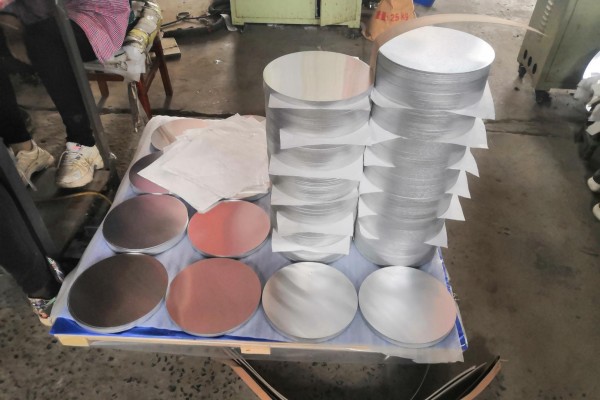
2. What Is 1060 Aluminum Circle 1mm?
2.1 Introduction to 1060 Aluminum Alloy
The 1060 alloy belongs to the 1000 series (commercially pure aluminum). Defined by an aluminum content of 99.6% or higher, it retains the primary characteristics of pure aluminum. It is renowned for its excellent workability, high corrosion resistance, and superior welding characteristics, making it a staple in industrial manufacturing.
2.2 Defining the 1mm Thickness Specification
A thickness of 1mm is considered the “sweet spot” for standard traffic signs. It is thick enough to prevent warping in high winds yet thin enough to be easily handled and installed.
- Common Diameters: Ranges from 100mm (small warning signs) to 1200mm (large highway guide signs).
- Stamping Characteristics: 1mm gauge allows for clean blanking without excessive tool wear.
2.3 Core Performance Characteristics
- Lightweight: Density of only 2.7 g/cm³, roughly one-third the weight of steel.
- Excellent Thermal & Electrical Conductivity: Useful in specific sensor-integrated signs.
- High Ductility: Can be bent or shaped without cracking, ideal for curved sign faces or decorative edges.
3. Why Choose 1060 Aluminum Circles for Traffic Signs?
3.1 Superior Corrosion Resistance
Outdoor infrastructure faces relentless exposure to rain, snow, salt (in winter regions), and UV radiation. Unlike steel, 1060 aluminum naturally forms a protective oxide layer that prevents rust. This ensures the sign blank remains intact and structurally sound for decades with minimal maintenance.
3.2 Lightweight Advantage
The lightweight nature of 1060 circles revolutionizes installation and logistics:
- Reduced Installation Difficulty: A single worker can often handle a 1mm aluminum sign, whereas steel would require lifting equipment.
- Lower Transportation Costs: Lighter loads mean lower freight expenses for distributors.
- Improved Construction Efficiency: Faster mounting on posts and overhead structures.
3.3 Excellent Adhesion for Reflective Sheeting
The surface morphology of 1060 aluminum provides an ideal substrate for high-intensity prismatic or diamond-grade reflective films. The smooth yet micro-textured surface ensures a permanent bond with pressure-sensitive adhesives, preventing delamination—a critical factor for nighttime visibility and road safety.
3.4 Outstanding Workability
Traffic signs often require drilling for mounting, cutting for specific shapes, or bending for channel letters. 1060 aluminum excels here:
- Easy Stamping: Cuts cleanly without burrs.
- Easy Drilling: Does not chip or crack around fastener holes.
- Easy Bending: Allows for the creation of rigid return edges.
3.5 High Recycling Value & Environmental Benefits
Aluminum is 100% recyclable without loss of properties. At the end of its lifecycle (often 20+ years), the scrap value of a 1060 aluminum sign is significant, contributing to the circular economy and meeting green building standards.

4. Manufacturing Process of 1060 Aluminum Circle 1mm
4.1 Raw Material Melting and Casting
The process begins with high-purity aluminum ingots.
- Chemical Control: Strict limits on Si, Fe, Cu, Mn, and Zn to ensure conductivity and corrosion resistance.
- Impurity Removal: Fluxing and degassing to remove hydrogen and non-metallic inclusions.
4.2 Hot Rolling and Cold Rolling
- Hot Rolling: The slab is heated and passed through a hot mill to break down the cast structure.
- Cold Rolling: The material is further reduced to the precise 1mm thickness, ensuring tight gauge tolerances (e.g., ±0.05mm).
4.3 Blanking and Stamping
- Automated Blanking Lines: High-speed presses cut the aluminum coils into precise circles.
- CNC Punching: For custom diameters and patterns.
- Dimensional Accuracy: Ensuring perfect roundness (circularity) for aesthetic and functional consistency.
4.4 Surface Treatment
- Mill Finish: The standard smooth surface, ideal for reflective film application.
- Brushing/Polishing: For decorative signs or high-aesthetic architectural signage.
- Protective Film Lamination: Applied immediately after blanking to prevent surface scratches during transit and handling.
4.5 Finished Product Quality Inspection
Every batch undergoes rigorous testing:
- Thickness Gauging: Micrometer checks.
- Flatness Testing: Ensuring no oil canning or warpage.
- Edge Quality: Burr-free inspection.
5. Technical Parameters of 1060 Aluminum Circle 1mm
5.1 Chemical Composition (ASTM B209 Standard)
| Element | Content (%) |
|---|---|
| Aluminum (Al) | ≥ 99.60 |
| Silicon (Si) | ≤ 0.25 |
| Iron (Fe) | ≤ 0.35 |
| Copper (Cu) | ≤ 0.05 |
| Manganese (Mn) | ≤ 0.03 |
| Zinc (Zn) | ≤ 0.05 |
| Titanium (Ti) | ≤ 0.03 |
5.2 Typical Mechanical Properties
| Property | Value (Typical) | Test Standard |
|---|---|---|
| Tensile Strength | 85 – 105 MPa | ASTM E8 |
| Yield Strength (0.2% offset) | ≥ 35 MPa | ASTM E8 |
| Elongation at Break | ≥ 25% | ASTM E8 |
| Hardness (Brinell) | 19 – 25 HB | ASTM E10 |
5.3 Common Specifications
- Thickness: 1.0mm (Fixed)
- Diameter Range: 100mm, 300mm, 600mm, 800mm, 1000mm, 1200mm (Custom available)
- Temper: O (Annealed – Soft), H14 (Half Hard)
5.4 Surface Quality Standards
- No visible scratches deeper than 0.05mm.
- Free from oil stains and fingerprints.
- No oxidation spots or water marks.
- Edges are smooth, deburred, and crack-free.
6. Applications of 1060 Aluminum Circle 1mm in Traffic Signage
6.1 Road Traffic Signs
- Regulatory Signs: Speed limit signs, stop signs, yield signs.
- Warning Signs: Curve ahead, pedestrian crossing, animal crossing.
- Guide Signs: Destination markers, distance indicators.
6.2 Highway Signage
- Overhead Gantries: Large format directional signs.
- Chevron Alignment Signs: Guiding drivers through sharp turns.
- Information Boards: Rest area and service information.
6.3 Urban Traffic Facilities
- Parking Lot Signs: Entry, exit, and restriction signs.
- Public Transit Indicators: Bus stop signs, metro station identifiers.
- Municipal Identification: City welcome signs, park identification.
6.4 Industrial & Safety Warning Signs
- Factory Floor Safety: “Caution: Forklift Traffic,” “Safety Helmet Required.”
- Warehouse Signage: Aisle marking, fire exit signs.
- Construction Zones: Temporary warning signs.
6.5 Custom Reflective Traffic Discs
Specifically manufactured for high-visibility applications requiring perfect adhesion of reflective vinyl, ensuring 24-hour readability.
7. Competitive Advantage Analysis
7.1 Comparison: 1060 Aluminum Circle vs. Galvanized Steel Plate
| Item | 1060 Aluminum Circle | Galvanized Steel Plate |
|---|---|---|
| Weight | ~2.7 kg/m² (Very Light) | ~7.85 kg/m² (Heavy) |
| Rust Resistance | Excellent (Self-passivating) | Fair (Zinc layer wears off) |
| Processing Difficulty | Low (Easy to cut/drill) | High (Hard tools needed) |
| Service Life | 20+ Years | 5-10 Years |
| Recycling Value | High | Low |
7.2 Comparison: 1060 Aluminum vs. Plastic Sign Boards
- Strength: Aluminum is far more rigid and impact-resistant than plastic.
- Weathering: Aluminum does not become brittle under UV exposure like plastics do.
- Environmental: Aluminum is infinitely recyclable; plastic contributes to micro-plastic pollution.
7.3 Lifecycle Cost Advantage
While the initial purchase price of aluminum might be higher than some alternatives, the Total Cost of Ownership (TCO) is significantly lower due to zero maintenance, easy installation, and high scrap resale value.
8. Quality Inspection and Industry Standards
8.1 Dimensional and Tolerance Inspection
- Thickness Accuracy: Checked with micrometers to ensure compliance with nominal 1.0mm.
- Circularity Control: Laser measurement to ensure the disc is a perfect circle.
- Flatness: Placed on a granite table to check for any twists or bows.
8.2 Surface Quality Inspection
- Visual inspection under 1000 lux lighting for scratches and dents.
- Cleanliness inspection for oil and debris.
8.3 Mechanical Property Verification
- Tensile Testing: Confirming strength and elongation.
- Bend Testing: Bending the material to 180 degrees without cracking.
8.4 Compliance with International Standards
Reputable manufacturers ensure compliance with:
- ASTM B209 (Aluminum and Aluminum-Alloy Sheet and Plate)
- EN 485 (European Standard for Aluminum and Aluminum Alloys)
- ISO 9001 (Quality Management Systems)

9. How to Choose a Reliable 1060 Aluminum Circle Supplier
9.1 Raw Material Integrity
Verify if the supplier uses primary aluminum ingots rather than low-quality scrap. Request a Material Test Report (MTR) or Mill Certificate for every batch.
9.2 Production Equipment Capability
Look for suppliers with:
- Automated Blanking Lines: Ensures high precision and no manual handling errors.
- Precision Rolling Mills: Guarantees the 1mm thickness is consistent across the entire sheet.
9.3 Quality Control System
A robust QC system includes in-process inspection, final random inspection, and third-party lab support.
9.4 Export Packaging and Logistics
Proper packaging is vital:
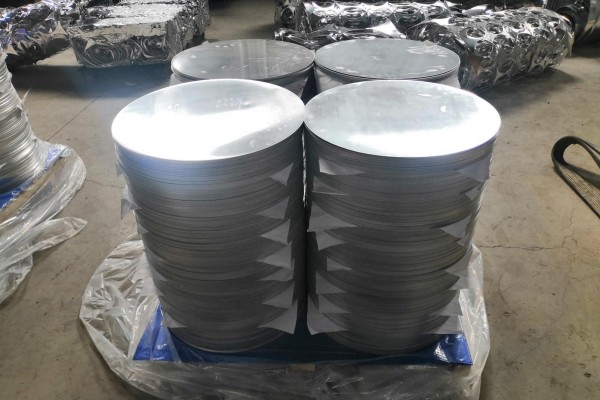
- Moisture-proof Packaging: Each circle interleaved with kraft paper, wrapped in shrink film.
- Wooden Pallet Packaging: Fumigated pallets for international shipping.
- Experience: Knowledge of Incoterms and global logistics.
9.5 Customization Capability
The ability to provide non-standard diameters, specific tempers (O vs H14), and OEM services is a mark of a top-tier manufacturer.
10. Market Trends and Future Development
10.1 Global Infrastructure Upgrades
The ongoing boom in highway construction across Asia, Africa, and South America continues to drive demand for high-quality aluminum sign blanks.
10.2 Sustainability and Lightweighting
Governments are mandating the use of recyclable and lightweight materials in public infrastructure projects, favoring aluminum over plastic and steel.
10.3 Smart Traffic Signage
The rise of “Smart Cities” is leading to the integration of solar panels and LED lighting into traditional signs. The 1060 aluminum circle serves as the perfect heat sink and structural base for these electronic components.
11. Conclusion
11.1 Summary of Core Advantages
The 1060 Aluminum Circle 1mm is the definitive choice for traffic signage due to its lightweight nature, exceptional corrosion resistance, and superior workability.
11.2 Application Value in the Industry
It provides a safe, durable, and cost-effective solution for road authorities and construction companies, ensuring that traffic guidance systems remain functional and visible for decades.
11.3 Recommendations for Buyers
- Always prioritize alloy purity (99.6% Al) over price alone.
- Select the appropriate temper (O or H14) based on whether you need to bend the sign edges.
- Partner with suppliers who have proven export experience and rigorous quality control systems.
Investing in high-quality 1060 aluminum circles is investing in the safety and efficiency of tomorrow’s transportation networks.