

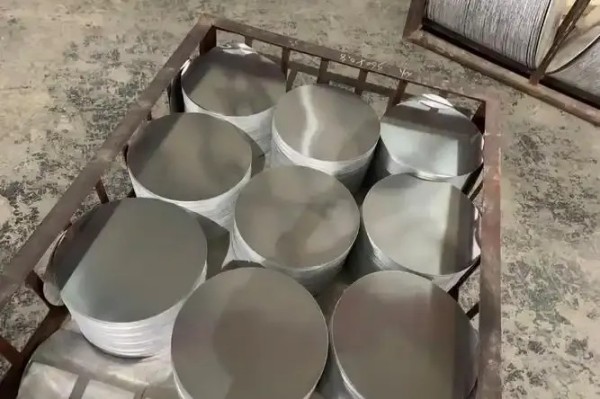
1060 Aluminum Circle 1mm for Pressure Cooker: The Ultimate Industry White Paper
I. Executive Summary: The Global Journey of a Metal Disc
In the tide of globalization, a cost-effective and lightweight pressure cooker might begin its life on a stamping line in Vietnam, undergo PTFE coating in Germany, and eventually land on a kitchen stove in the United States. More often than not, the starting point of this journey is a 1060 Aluminum Circle sourced from China or Southeast Asia.
Driven by the global consumer’s relentless demand for fast cooking, energy efficiency, and lightweight handling, the 1060 Aluminum Circle has firmly established itself as the absolute backbone of modern pressure cooker manufacturing. Industry estimates suggest that billions of aluminum discs are stamped into cookware every single year.
This guide will take you beyond the surface. We will dive deep into the microscopic world of material science, navigate the macro landscape of global supply chains, and provide a 360-degree dissection of the 1060 aluminum circle—from the smelting furnace all the way to the modern dining table.

II. Deep Dive: The “Genetic Code” of 1060 Aluminum
To truly understand why 1060 is the undisputed king of pressure cooker materials, we must zoom into the atomic level.
2.1 The Magic of ≥99.6% Purity
1060 belongs to the 1xxx series of commercial pure aluminum. In metallurgy, what does a purity level of 99.6% actually mean?
- A Carnival of Free Electrons (Thermal & Electrical Conductivity): Metals conduct heat through the movement of free electrons. The higher the purity, the fewer impurity atoms are present to scatter these electrons. This is why 1060 aluminum boasts an incredibly high thermal conductivity (approximately 234 W/m·K)—far surpassing stainless steel (around 16 W/m·K). This property allows a pressure cooker to reach cooking temperature almost instantly, saving significant amounts of energy.
- A Natural Anti-Oxidation Shield (Corrosion Resistance): Aluminum is highly reactive. However, upon exposure to air, its surface instantly reacts with oxygen to form a dense, tenacious, and ultra-thin layer of Aluminum Oxide (Al₂O₃). This passive film acts as an impenetrable barrier against moisture and oxygen. Because 1060 is so pure, this oxide layer forms uniformly, granting the cookware exceptional long-term rust and corrosion resistance.
2.2 The Crucial Role of Trace Elements (The Fe, Si, Cu Balance)
While 1060 is defined by its aluminum content, the remaining <0.4% of trace elements (primarily Iron, Silicon, and Copper) act as carefully calibrated “seasoning” by materials scientists:
- Iron (Fe) & Silicon (Si): These typically exist as intermetallic compounds (e.g., Al₃Fe, α-AlFeSi). In controlled amounts, they refine the grain structure and increase the recrystallization temperature, thereby enhancing the aluminum’s strength without severely compromising its plasticity.
- Copper (Cu): Compared to 1050 pure aluminum, 1060 contains trace amounts of copper. Copper provides solid-solution strengthening to the aluminum matrix, giving 1060 better anti-wrinkling properties and superior surface gloss compared to its 1050 counterpart.
2.3 The “Face-Centered Cubic” Crystal Secret
In crystallography, aluminum naturally possesses a Face-Centered Cubic (FCC) crystal structure. FCC structures feature a high number of slip systems (12 in total). This means that when external force is applied (such as during stamping and drawing), the atomic layers can slide over one another easily without breaking the metallic bonds. This intrinsic atomic characteristic is the fundamental reason why 1060 aluminum can withstand extreme deformation to form deep, seamless pots without cracking.
III. Global Market Context: The Supply & Demand Map of 1060 Aluminum
Understanding your position in the global landscape is crucial for making smart business decisions.
- The Manufacturing Powerhouse (China & Asia): China dominates the global aluminum circle market, leveraging a complete integrated electrolytic aluminum supply chain, mature rolling technologies, and highly competitive energy costs.
- The Rising Engines (Southeast & South Asia): As manufacturing hubs rapidly expand in Vietnam, Thailand, and India, local demand for mid-to-high-end 1060 aluminum discs is surging.
- The Premium Markets (Europe & North America): Demand volume is high, but the barriers to entry are strict. Buyers here require rigorous compliance (FDA, LFGB certifications), impeccable surface quality for high-end anodizing, and customized solutions (like induction-compatible composite bases).
- Navigating Trade Barriers: With increasing anti-dumping measures against Chinese aluminum products in some regions, multinational cookware brands are adopting a “China + 1” sourcing strategy to mitigate risks.

IV. Manufacturing Decoded: From Ingot to Finished Aluminum Circle
4.1 Melting & Casting: The Foundation
It all starts with melting high-purity ingots. The key here is refining. Advanced filtration and degassing systems are employed to remove non-metallic inclusions and hydrogen gas from the molten aluminum. Failure to do so results in pinholes and surface defects later in the process.
4.2 Homogenization & Hot Rolling
The cast ingots are heated to a specific temperature to homogenize the internal structure before being passed through a series of massive hot rolling mills. Hot rolling breaks down the coarse cast structure, refines the grains, and induces the formation of a uniform fiber texture. This is absolutely critical for achieving the high elongation required for deep drawing.
4.3 Cold Rolling & Precision Annealing
To reach the exact 1.0mm thickness, the material undergoes cold rolling. Precise intermediate and final annealing processes (often using continuous strip annealing lines) are then applied to achieve the desired O-temper (fully annealed) state, maximizing softness and ductility.
4.4 Precision Blanking (Circle Shearing)
Finally, the coiled strips are fed into high-speed blanking presses equipped with specialized circular dies. For pressure cooker applications, the cut edges must be perfectly smooth, burr-free, and free of edge cracking to prevent tearing during the subsequent deep drawing process.
V. Technical Specifications & Alloy Comparison
5.1 Key Technical Parameters
The following table outlines the standard specifications for 1060 Aluminum Circle 1mm used in pressure cooker manufacturing.
| Parameter | Specification | Technical Note |
|---|---|---|
| Alloy | 1060 | High-Purity Commercial Aluminum |
| Thickness | 1.0 mm | The “Sweet Spot” for lightweight pressure cookers |
| Temper | O / H12 / H14 | O-temper is strongly recommended for deep drawing |
| Diameter | 100 – 1000 mm | Customizable based on pot capacity |
| Al Content | ≥ 99.6% | Guarantees optimal thermal conductivity |
| Process | Hot Rolled / Cold Rolled | Hot rolled for deep drawing; Cold rolled for surface finish |
| Application | Pressure Cookers, Electric Pots, Composite Bases | – |
5.2 Competitive Alloy Analysis
How does 1060 stack up against common alternatives? The table below provides a quick comparison to aid in material selection.
| Alloy | Thermal Conductivity | Deep Drawing | Strength | Primary Application |
|---|---|---|---|---|
| 1060 | Excellent | Excellent | Medium | Pressure Cookers, General Cookware |
| 1050 | Excellent | Very Good | Slightly Lower | General Cookware, Decorative Panels |
| 3003 | Good | Good | Higher | High-Strength Cookware, Bakeware |
Strategic Advantage of 1060: Superior thermal response, stable deep drawing performance, excellent surface treatment compatibility, and high cost-effectiveness.
VI. Workshop Playbook: Mastering the Stamping Process
Sourcing good material is only half the battle; knowing how to process it flawlessly is the other half. Here is a practical guide for your engineering team:
6.1 Stamping Lubrication
- Selection: Aluminum is soft and prone to galling (sticking to the die). Use a high-viscosity, extreme-pressure (EP) stamping lubricant specifically formulated for light metals.
- Application: Uniform application via roller coaters is highly recommended. Too little oil causes tearing; too much causes wrinkling.
6.2 Die Design & Clearance
- Die Clearance: Set the unilateral clearance between the punch and die at approximately 1.1 to 1.2 times the material thickness (1.1mm – 1.2mm for 1.0mm stock). Tight clearances cause scoring; excessive clearances promote wrinkling.
- Die Radius (R): Utilize a generous die entry radius (typically 3 to 5 times the material thickness) to reduce drawing stress and prevent fracture at the corners of the pressure cooker body.
6.3 Blank Holder Force (BHF) Control
- Insufficient BHF causes severe wrinkling in the flange area.
- Excessive BHF increases friction, leading to bottom tearing.
- Pro Tip: Use nitrogen springs or a hydraulic cushion system to maintain constant, precisely calibrated pressure throughout the stroke.
6.4 Stamping Orientation
Always pay attention to the rolling direction of the aluminum disc (usually indicated by an arrow). For optimal results and to minimize earring, align the major axis of your stamping die at a 45-degree angle to the material’s rolling direction.
VII. Quality Control & Compliance
7.1 Quality Control Checklist
To ensure the safety and performance of the final pressure cooker, the 1060 aluminum circles must undergo rigorous inspection.
| QC Item | Detection Method | Acceptance Criteria | Impact on Final Product |
|---|---|---|---|
| Gauge Control | Micrometer / X-ray Gauge | ±0.02mm | Ensures uniform heating and prevents scorching |
| Surface Quality | Visual / Optical Scanner | No scratches, oil, oxidation | Prevents coating defects (fish eyes) |
| Tensile Properties | Tensile Testing Machine | Elongation ≥ 25% (O-temper) | Determines deep drawing success rate |
| Earring Rate | Stretching Test | < 3% | Maximizes material yield and ensures rim flatness |
7.2 Compliance & Safety: Crossing International Borders
If you plan to sell pressure cookers in Europe or North America, your raw materials must pass stringent safety audits.
- USA (FDA 21 CFR 175.300): Regulates materials intended for food contact. 1060’s high purity ensures it easily passes heavy metal leaching tests (Lead, Cadmium, Arsenic).
- Europe (LFGB & DGCCRF): These German and French standards are exceptionally strict. They simulate extreme cooking conditions to measure the migration of aluminum ions into acidic and fatty foods. Sourcing from a certified supplier like Huawei Aluminum ensures you have the necessary third-party test reports (e.g., SGS) to clear customs and enter supermarkets.
- China (GB 4806.9): Compliance with domestic food-grade metal standards is mandatory for the Chinese market.
VIII. Frontiers of Innovation: The Future of 1060 Aluminum
Driven by sustainability and evolving consumer demands, the humble 1060 aluminum disc is quietly evolving:
- Ultra-Thinning Technology: Through optimized thermo-mechanical processing, manufacturers can now produce 1060 discs as thin as 0.4mm that still retain incredible deep-drawing capabilities, paving the way for ultra-lightweight “cloud cookware.”
- Micro-Structure Surface Engineering: By altering the microscopic texture of the aluminum surface (e.g., via specialized shot blasting or etching), researchers are creating surfaces that utilize the Leidenfrost effect to achieve natural, chemical-free physical non-stick properties.
- Closed-Loop Recycling & Low-Carbon Aluminum: With the looming implementation of the Carbon Border Adjustment Mechanism (CBAM) in Europe, using “Green Aluminum” (produced using hydropower) or recycled secondary aluminum is becoming a necessity for exporters. This not only reduces the carbon footprint but also acts as a powerful marketing tool.
IX. Procurement Masterclass: Calculating the Real Cost
For procurement professionals and business owners, buying aluminum discs is never just about the “price per ton.” It is about calculating the Total Cost of Ownership (TCO).
9.1 What to Inspect During a Factory Audit?
When visiting a potential supplier, ignore the sales presentation and check these three areas:
- Does the melting furnace have online degassing and ceramic foam filtration? (This determines the internal soundness and surface quality).
- Is the cold rolling mill a 4-high or 6-high stand with AGC (Automatic Gauge Control)? (This guarantees thickness tolerance and flatness).
- What type of blanking equipment do they use? (Precision rotary shears produce cleaner edges than traditional guillotines).
9.2 The “Acetone Wipe Test” & Other Sample Checks
When you receive samples, perform this simple test: vigorously rub the surface with a white cotton cloth soaked in acetone. If the cloth turns black, the disc has excessive residual rolling oil. This will make it nearly impossible to clean properly, inevitably leading to “craters” (fish-eyes) in your final non-stick coating.
9.3 Strategic Sourcing & Inventory Management
- Locking in the Base Price: The formula is
Final Price = LME/Local Exchange Aluminum Ingot Price + Processing Fee. Learn to read metal exchange trends and lock in the base price with your supplier during market dips. - VMI (Vendor Managed Inventory): Negotiate with your trusted supplier to establish a VMI program where they stock the 1060 discs in a warehouse near your factory. You only pay for the material as it is consumed, drastically reducing your working capital tie-up.
X. Expert-Level FAQ
Q1: Under a microscope, how do premium and subpar 1060 discs differ?
A: High-quality, fully annealed 1060 aluminum exhibits a uniform, equiaxed recrystallized grain structure (typically ASTM Grade 5-7). Poor-quality material often retains coarse, columnar grains or dendritic arms, which leads to severe earring and uneven deformation during stamping.
Q2: What is the best way to test the drawability of a new batch of aluminum discs?
A: Conduct a Swift Cup Test or Fukui Conical Cup Test. By stretching the disc until fracture using a standardized die set, you can measure the limiting drawing ratio (LDR). A higher dome height indicates superior deep-drawing potential.
Q3: How should 1060 discs be stored to prevent deterioration?
A: While aluminum is corrosion-resistant, 1060 pure aluminum is highly sensitive to Chloride ions (Cl⁻). Storage areas must be dry, well-ventilated, and completely isolated from cleaning agents or acidic fumes. Additionally, avoid stacking too many heavy coils directly on top of each other to prevent “blocking” (the discs fusing together under pressure).
Q4: Why do fine cracks sometimes appear on the drawn pot edges?
A: This is usually caused by Stretcher Strains (or Lüders bands). It happens when the material undergoes slight natural aging after rolling, creating a discontinuous yield point. The solution is to request “pre-tempered” or “light-reduced” material from your supplier to eliminate the yield plateau before stamping.
XI. Conclusion: The Macrocosm Within the Microcosm
As we have demonstrated, the 1060 Aluminum Circle 1mm for Pressure Cookers is far more than just a piece of stamped metal. It is the culmination of advanced material science, precision mechanical engineering, surface chemistry, and complex global logistics.
Its unparalleled thermal conductivity guards the flavor and nutrition of our food, while its extraordinary ductility allows it to be shaped into the modern, lightweight cookware that defines the contemporary kitchen.
Looking ahead, the 1060 aluminum disc will continue to evolve, driven by the dual engines of technological innovation and environmental responsibility. For pressure cooker manufacturers, partnering with a technically proficient, globally compliant, and quality-driven supplier like Huawei Aluminum is the most strategic investment you can make to build a lasting competitive moat in the red ocean of the global cookware market.