
Easy to Weld and Form: A Guide to Working with 1mm 3003 Aluminum Discs
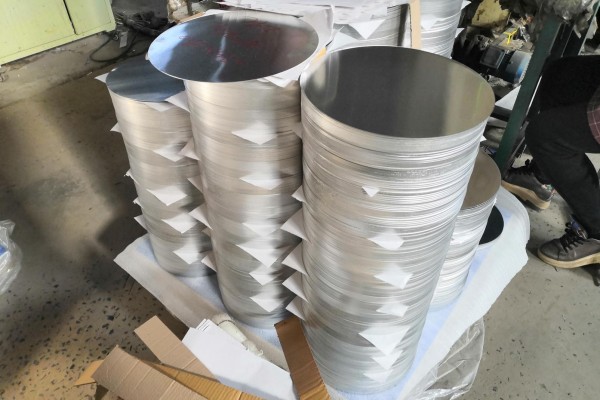
In the field of metalworking, 3003 aluminum alloy stands out as an ideal choice for many DIY enthusiasts, model makers, and small-scale manufacturers due to its excellent overall performance. When fashioned into 1mm thick discs, it offers exceptional flexibility for handmade items and small part fabrication. This article provides a comprehensive guide to processing 1mm 3003 aluminum discs, focusing on its two core advantages: ease of welding and good formability.

1. Know Your Material: 3003 Aluminum Alloy
3003 aluminum is a widely used aluminum-manganese alloy. Its main characteristics include:
- Good Formability: Especially in the annealed (O) condition, it has excellent ductility, making it highly suitable for cold working processes like stamping, drawing, and bending.
- Good Weldability: It can be reliably welded using various fusion welding methods, ranking among the better weldable common aluminum alloys.
- Corrosion Resistance: Its dense surface oxide film provides good corrosion resistance, suitable for general environments.
- Moderate Strength: Harder than pure aluminum, meeting the requirements for many structural parts and enclosures.
A 1mm thickness is one of the “golden thicknesses” in sheet metal work—it is sturdy enough to hold its shape yet thin enough to allow for manual or simple mechanical forming.
2. Core Preparation Before Processing
- Condition Selection: Different tempers of 3003 aluminum alloy have distinct working properties. Choose based on your project needs.
| Material Condition | Designation | Key Properties | Suitable Processing Types |
|---|---|---|---|
| Annealed | O | Softest material, excellent ductility, optimal formability, but lowest strength. | Complex bending, deep drawing, spinning, and other processes requiring significant plastic deformation. |
| Half-Hard | H14/H24 | Good balance of strength and formability, offers moderate stiffness and some shaping capability. | Simple bending, shallow drawing, or parts requiring some final rigidity. |
| Hard | H18 | Highest strength, but poor formability, prone to cracking when bent. | Mainly for flat parts not requiring forming, only cutting or drilling. |
Recommendation: For projects involving extensive shaping, prioritize annealed (O) condition blanks.
- Safety and Tools:
- Essential Protection: Always wear safety glasses and cut-resistant gloves when working. Aluminum edges can be very sharp.
- Basic Tools: Include a scribe for metal, metal shears, a mallet or rubber hammer, files, and sandpaper (coarse to fine grits).
3. Core Technique One: Welding Guide
Welding aluminum differs from steel due to its high-melting-point aluminum oxide surface layer and high thermal conductivity. For 1mm thick 3003 aluminum discs, Gas Tungsten Arc Welding (GTAW/TIG) is the optimal choice.
Welding Steps and Key Points:
- Pre-Weld Cleaning (Crucial!):
- Use a stainless steel wire brush or sandpaper dedicated for aluminum to thoroughly remove the oxide layer from the weld area until bare metal shines through.
- Remove oils with acetone or a dedicated cleaner. Weld as soon as possible after cleaning.
- Welding Method and Technique:
- Equipment: Use a DCEN (DC Straight Polarity) TIG welder with pure argon shielding gas.
- Parameter Reference: The following are suggested starting parameters for TIG welding 1mm thick 3003 aluminum discs. Fine-tune based on actual conditions.
| Parameter | Recommended Range/Choice | Notes |
|---|---|---|
| Current | 40 – 70 A | Start with lower current to avoid immediate burn-through. |
| Tungsten Electrode Diameter | 1.6 mm (1/16″) | Use a sharpened point for a focused arc. |
| Filler Rod Diameter | 1.0 – 1.6 mm | Common types: 4043 or 5356 aluminum filler. |
| Shielding Gas Flow Rate | 8 – 12 L/min (17-25 CFH) | Argon with 99.99%+ purity. |
| Welding Technique | Tack or short bead welding | Use quick, intermittent welding to control heat input and prevent distortion. |
- Operational Points:
- Use tack welds or rapid, short weld beads to prevent excessive heat buildup that can cause burn-through or severe warping.
- When adding filler wire, maintain a low angle and feed smoothly.
- Critical Considerations:
- Preventing Distortion: Due to the thin material, keep heat input low and speed high. Clamp the workpiece to a heavy metal heat sink to help dissipate heat.
- Preventing Burn-Through: Watch the weld pool closely. Move the arc away immediately if the pool shows signs of “sagging” or dropping through.
4. Core Technique Two: Forming Processes Explained
1mm thick 3003 aluminum discs can be formed in various ways. The table below compares common manual or simple mechanical forming methods:
| Forming Method | Primary Tools Required | Suitable Shapes | Key Tips & Precautions |
|---|---|---|---|
| Shearing & Shaping | Metal shears, nibbler, jigsaw (with metal blade), files | Any flat profile | Leave machining allowance; always deburr and smooth edges after cutting to prevent cuts. |
| Bending | Vise, wood blocks, metal rod, rubber mallet | Straight flanges, simple boxes | Place a round rod under the bend line to create a crack-free radius. Avoid repeated bending at the exact same spot. |
| Stamping/Drawing | Homemade dies, arbor press/vise, lubricant | Shallow dishes, recessed covers | Lubrication is essential; apply force slowly and evenly; annealed material has the highest success rate. |
| Spinning | Lathe, spinning tools, mandrel | Axisymmetric shapes (lampshades, cups, bowls) | Start from the center and work material outward slowly. Requires multiple passes; avoid pressing too deep in one go. |
| Hand Hammer Forming | Mallets, sandbag, various stakes | Organic curves,浮雕 effects | Use soft-faced hammers; hammering on a sandbag yields smooth double-curved surfaces. |
General Tip:
- Localized Annealing: If the material work-hardens and becomes difficult to form further, you can locally heat the area needing work with a torch to about 350-400°C (soapstone mark will turn black and dry), then air cool. This will restore its malleability. Note: This alters local material properties and should be used judiciously.

5. Post-Processing and Joining
- Cleaning and Surface Finishing:
- After welding and forming, remove heat discoloration and scratches with a scouring pad or fine sandpaper.
- Finish as desired by polishing, brushing, sandblasting, or anodizing for color to enhance appearance and corrosion resistance.
- Mechanical Joining:
- Besides welding, the 1mm thickness is also suitable for riveting (aluminum rivets or pop rivets) and screw fastening. When drilling, use high speed, slow feed, and cutting fluid for a clean hole.
6. Typical Application Scenarios
Processed 1mm 3003 aluminum discs are widely used for:
- Model & Prototype Making: Robot casings, vehicle model parts, art installations.
- Electronics Heat Sinking & Shielding: Custom heatsinks, equipment shielding covers.
- Home & Decoration: Lampshades, decorative plaques, coasters, small containers.
- Repair & Modification: Making gaskets, cover plates, repair patches.
Summary: A 1mm thick 3003 aluminum disc is a “friendly” and highly versatile material. By adhering to the principles of cleanliness, heat control, and gradual progress, and leveraging its ease of forming and welding with the right tools and patience, you can transform this metal disc into a variety of practical and refined creations. Start with safety preparations, experiment boldly, and enjoy the process of making