
Aluminum Discs Manufacturer in the United States
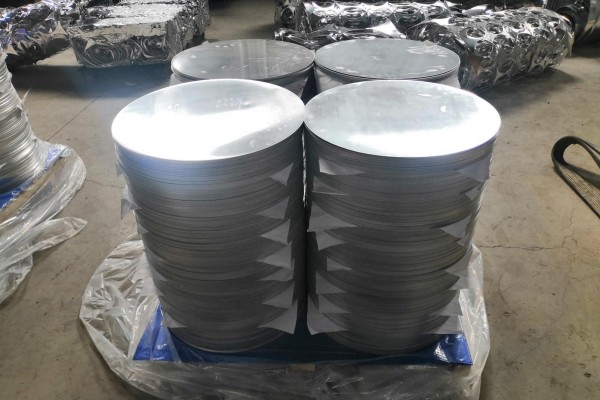
aluminum discs manufacturer USA has become a technically significant topic within the aluminum circles industry as manufacturing localization, regulatory compliance, and downstream forming stability increasingly influence material sourcing decisions for cookware and industrial aluminum disc applications.
1. Industry Background and Technical Importance
The United States represents a mature but technically demanding market for aluminum discs.
Unlike price-driven markets, U.S. buyers—especially cookware manufacturers—place primary emphasis on process repeatability, documentation, and defect predictability.
From an application perspective, aluminum discs are not finished goods.
They are intermediate materials that must survive multiple forming stages, often under automated or semi-automated production conditions.
Key characteristics of the U.S. market include:
- Narrow tolerance windows in forming operations
- High sensitivity to surface and edge defects
- Strong preference for long-term process stability rather than short-term cost optimization
In cookware manufacturing, aluminum discs are commonly subjected to:
- Deep drawing
- Spinning
- Multi-step redraw operations
Each of these processes imposes complex stress states on the material.
Small variations in grain size, residual stress, or thickness distribution can therefore translate directly into cracking, wrinkling, or surface defects.
Industrial applications such as appliance housings or lighting components differ in forming severity but still demand:
- Stable flatness
- Consistent mechanical response
- Clean, defect-free surfaces
For this reason, discussions around aluminum disc sourcing in the U.S. market are inherently engineering-driven, not commercial.

2. Material and Alloy Fundamentals Relevant to the U.S. Market
Aluminum discs supplied to the U.S. market are predominantly based on commercially pure aluminum alloys, with 1050 and 1060 being the most common for cookware and light industrial use.
The rationale behind this preference includes:
- High ductility
- Excellent thermal conductivity
- Favorable corrosion resistance
However, alloy designation alone does not define forming behavior.
From a metallurgical standpoint:
- 1050 aluminum offers a slightly wider processing window
- 1060 aluminum provides higher purity but increased annealing sensitivity
3003 aluminum discs are sometimes selected for industrial applications where higher strength is required, but their reduced elongation limits deep drawing capability.
Table 1. Common Aluminum Disc Alloys and Engineering Characteristics
| Alloy | Typical Application | Key Engineering Feature | Limitation |
|---|---|---|---|
| 1050 | Deep-draw cookware | High elongation, forgiving process window | Lower strength |
| 1060 | Cookware, lighting | Higher purity, cleaner surface | Sensitive to annealing |
| 3003 | Industrial covers | Higher strength | Limited formability |
Higher purity reduces second-phase particles but also alters recrystallization kinetics, which becomes critical during annealing.

3. Core Manufacturing Processes and Technical Mechanisms
The final performance of aluminum discs in U.S. applications is determined primarily by process history, not alloy name.
The typical manufacturing route includes:
- Casting
- Hot rolling
- Cold rolling
- Intermediate annealing
- Final annealing
- Blanking
During cold rolling, plastic deformation introduces dislocations into the aluminum matrix.
The density and distribution of these dislocations directly influence recrystallization behavior during annealing.
Key cause–effect relationships include:
- Excessive rolling reduction → high dislocation density → higher annealing sensitivity
- Insufficient annealing → residual stress → cracking during forming
- Excessive annealing → grain coarsening → orange peel defects
In U.S. manufacturing environments, where forming lines are optimized for consistency, these effects are amplified.
A disc that performs adequately on one press may fail on another if microstructural uniformity is insufficient.
Table 2. Key Process Parameters Affecting Aluminum Disc Performance
| Parameter | Engineering Impact | Sensitivity |
|---|---|---|
| Cold rolling reduction | Controls stored deformation energy | High |
| Annealing temperature | Governs recrystallization | High |
| Holding time | Affects grain growth | Medium |
| Cooling rate | Determines residual stress | Medium |
Because 1060 aluminum recrystallizes more readily, it is generally more sensitive to annealing fluctuations than 1050.

4. Critical Quality Control Points
Quality control for aluminum discs supplied to the U.S. market must address both immediate defects and latent forming risks.
The most critical parameters include:
- Thickness uniformity
- Grain size distribution
- Residual stress level
- Surface cleanliness
Common issues are often misattributed to alloy selection, when in reality they originate from process deviations.
Table 3. Typical Quality Risks and Control Measures
| Risk | Root Cause | Control Method |
|---|---|---|
| Edge cracking | Residual stress | Annealing window optimization |
| Orange peel | Coarse or uneven grains | Grain size control |
| Wrinkling | Low yield strength | Temper adjustment |
In the U.S., quality documentation and traceability are often mandatory, particularly for consumer-facing products.
5. Common Problems and Failure Analysis
Cracking
- Phenomenon: Radial or circumferential cracks during forming
- Cause: Insufficient annealing or high residual stress
- Consequence: Scrap, tooling damage, downtime
Orange peel
- Phenomenon: Surface roughness after deep drawing
- Cause: Excessive grain growth
- Consequence: Cosmetic rejection
Wrinkling
- Phenomenon: Buckling at flange or wall
- Cause: Low yield strength combined with process mismatch
- Consequence: Rework or rejection
These failures demonstrate that alloy compliance does not guarantee forming success.
6. Differences Between Cookware and Other Applications
Cookware applications impose the most severe deformation requirements.
They demand:
- High elongation
- Uniform grain structure
- Stable surface appearance
Industrial applications often tolerate lower ductility but may emphasize flatness or strength.
As a result, aluminum discs acceptable for industrial covers may fail in cookware production, particularly in deep-drawing operations common in the U.S. market.
7. Technical Considerations in Production and Use
From an engineering standpoint:
- Alloy choice must be evaluated together with temper condition
- Process capability is as important as chemical composition
It is not recommended to substitute alloys without validating forming compatibility.
Neither 1050 nor 1060 aluminum discs are suitable for applications requiring:
- High structural rigidity
- Repeated cyclic loading
Alternative alloys should be evaluated in those cases.
8. Engineering Summary
For the U.S. market, the role of an aluminum discs manufacturer is defined by process control capability, not nominal alloy offerings.
Stable microstructure, controlled annealing, and consistent quality systems are the primary determinants of performance in cookware and industrial applications.
9. Technical Q&A
Q: Is domestic production always superior for U.S. applications?
A: No. Process consistency matters more than geographic location.
Q: Can process optimization reduce alloy differences?
A: Yes, within stable manufacturing systems.
Q: Why do discs fail despite meeting alloy standards?
A: Standards do not guarantee correct microstructure or stress control