
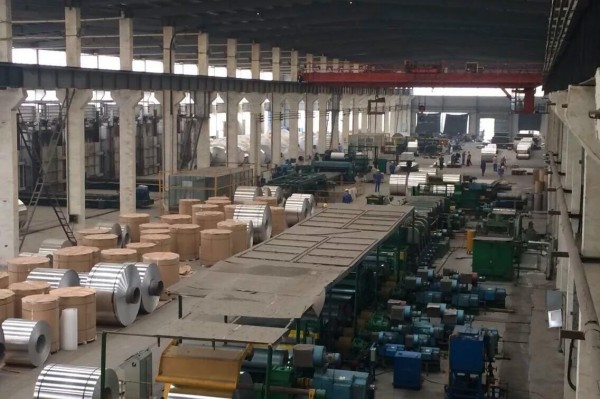
Food-Grade Aluminum Circles for Food Contact: Standards and Assessment Criteria
1. Introduction
In the modern food processing and packaging industry, aluminum circles are widely used due to their excellent thermal conductivity, lightweight, corrosion resistance, and formability. They serve as the raw material for cookware, baking pans, lids, cans, and laminated packaging. However, when aluminum circles are intended for direct or indirect contact with food, it is crucial to ensure they meet food-grade standards to guarantee safety, prevent chemical migration, and maintain product quality.
Selecting appropriate aluminum circles involves understanding both metallurgical properties and global regulatory standards, as well as evaluating surface treatments, coating compatibility, and mechanical properties. The keyword guiding this discussion is food-grade aluminum circles for food contact, focusing on how manufacturers, processors, and regulatory professionals can determine suitability for food applications.

2. Chemical Composition Requirements for Food-Grade Aluminum Circles
The first criterion for food-grade aluminum is its chemical composition. Typical aluminum alloys used for food contact include:
- 1050, 1060, 1100: High-purity aluminum (>99%)
- 3003: Aluminum-manganese alloy with enhanced corrosion resistance
- 8011: High Fe-Si content for foil applications
Key chemical requirements:
| Alloy | Aluminum % | Iron (Fe) | Silicon (Si) | Copper (Cu) | Manganese (Mn) | Notes |
|---|---|---|---|---|---|---|
| 1050 | ≥99.5 | 0.4 | 0.25 | 0.05 | – | Excellent corrosion resistance |
| 1060 | ≥99.6 | 0.35 | 0.25 | 0.05 | – | Widely used for cookware |
| 1100 | ≥99.0 | 0.95 | 0.95 | 0.05 | – | Good strength and ductility |
| 3003 | 96.8–99.0 | 0.7 | 0.6 | 0.1 | 1.0–1.5 | Enhanced corrosion resistance |
| 8011 | 97.8–98.6 | 0.6–1.0 | 0.5–0.9 | trace | trace | Foil for food packaging |
Key points:
- High-purity aluminum reduces risk of toxic metal migration.
- Trace elements like Cu, Fe, and Si are limited by regulations to prevent chemical contamination.
- For acidic, salty, or fatty foods, alloys with excellent corrosion resistance (like 3003 or 8011) are preferred.
3. Surface and Coating Standards for Food-Grade Aluminum
Even high-purity aluminum may pose risks if surface contamination or coating issues exist. Important surface criteria include:
- Smooth, defect-free surface
- Avoid scratches, pinholes, or embedded impurities
- Reduces localized chemical migration
- Passivation layer / natural oxide film
- Aluminum naturally forms Al₂O₃ layer
- Provides chemical resistance and reduces leaching
- Food-safe coatings or anodizing
- Only coatings approved for food contact can be used
- Coatings should be stable under high temperatures
- Non-toxic lubricants and release agents during rolling
- Must be fully removable or compliant with food safety standards

4. Regulatory Standards for Food-Grade Aluminum Circles
Food-grade aluminum must comply with national and international regulations. Main standards include:
4.1 European Union (EU)
- Regulation (EC) No. 1935/2004: General food contact materials requirement
- Regulation (EU) No. 10/2011: Specific requirements for materials
- EN 602, EN 1186, EN 13130: Test methods for migration and release
Requirements:
- Overall migration limit (OML): ≤ 10 mg/dm² in food simulants
- Specific migration limits (SML): Element-specific (e.g., Cu, Fe, Al)
- Testing simulants: Acidic, alcoholic, fatty, aqueous
4.2 United States (FDA)
- 21 CFR Part 175–177: Covers coatings, adhesives, and metal materials
- 21 CFR 177.1350: Aluminum and aluminum alloy for food-contact articles
- Requirements: ≤0.5 mg/kg migration of metals in acidic or fatty food simulants
4.3 China (GB Standards)
- GB 4806.1: General food contact safety
- GB 4806.8 / 4806.9: Aluminum and alloy materials for direct food contact
- GB 31604 series: Migration testing methods
4.4 Japan
- Food Sanitation Act: Migration testing and trace element limits
- Emphasis on acidic food simulants and prolonged storage
5. Tests to Determine Food Safety of Aluminum Circles
To verify compliance, manufacturers should conduct:
5.1 Chemical Migration Testing
- Food simulants: 3% acetic acid, 10% ethanol, olive oil
- Conditions: 70°C–121°C, 2–24 hours depending on intended food type
- Analysis: ICP-OES or AAS for aluminum, Cu, Fe, Si
5.2 Surface Morphology and Pinhole Detection
- Pinhole test for foil: ≤50/m² for high-barrier applications
- Microscopy for surface cracks, scratches, and impurities
5.3 Coating Adhesion and Thermal Stability
- Heat cycles to simulate cooking or retort conditions
- Coating must remain intact, no peeling or discoloration
5.4 Mechanical Testing
- Tensile strength and elongation
- Ensures material will withstand forming without cracking

6. Annealing and Temper Influence on Food Contact Performance
Aluminum circles undergo various tempers (O, H12, H14):
- O temper: Fully annealed, softest, ideal for cookware needing deep drawing
- H12: Medium hardness, moderate formability
- H14: Hardest, suitable for shallow forming
Influence on food contact safety:
- Soft annealed circles reduce micro-cracking during forming
- Lower chance of surface defects, improving food contact integrity
- Thermal stability during sterilization and baking is enhanced
7. How to Judge Aluminum Circle Suitability for Food Contact
7.1 Check Alloy Composition
- Only food-approved alloys (1050, 1060, 1100, 3003, 8011)
- Trace metals within allowed limits
7.2 Confirm Surface Condition
- Smooth, oxide-protected, or coated with food-safe material
- No visible cracks, scratches, or pinholes
7.3 Verify Regulatory Compliance
- Certificates: FDA, EU, GB, Japan
- Migration testing reports for intended food type
7.4 Assess Forming and Thermal Stability
- Ensure temper and annealing match intended cookware or packaging process
- Stress tests under simulated use conditions (retort, baking, freezing)
7.5 Evaluate Coating / Laminated Layer Compatibility
- If coated or laminated, ensure coating is food-approved
- Thermal stability of coating must meet processing requirements

8. Common Applications of Food-Grade Aluminum Circles
- Cookware manufacturing: pots, pans, woks, lids
- Baking pans and trays: shallow or deep
- Laminated food packaging: foil layers in retort pouches, snacks
- Canned and preserved foods: lids and containers
Key consideration: each application may impose different thermal, mechanical, and chemical requirements; proper selection of alloy, temper, and surface treatment ensures compliance and safety.
9. Practical Guidelines for Manufacturers
- Source certified food-grade aluminum alloys
- Choose the correct temper for forming process (O/H12/H14)
- Conduct pinhole and surface tests
- Verify coating and lamination food safety
- Perform migration tests with relevant food simulants
- Keep production records for regulatory audits
- Ensure batch-to-batch consistency of alloy and surface properties
10. Future Trends in Food-Grade Aluminum Circles
- Enhanced traceability: QR codes linking material batch to regulatory compliance
- Nano-coatings: Reduce migration and improve corrosion resistance
- Hybrid alloys: Combining corrosion resistance with higher formability
- Sustainable production: Recycling aluminum while maintaining food-grade compliance
11. Conclusion
Selecting and verifying food-grade aluminum circles for food contact is a multi-faceted process encompassing:
- Alloy composition
- Surface quality
- Temper and annealing process
- Coatings and laminates
- Regulatory compliance and migration testing
Only by systematically evaluating these factors can manufacturers ensure that aluminum circles are safe, durable, and suitable for contact with various food products. Compliance with EU, FDA, GB, and Japanese standards is critical, and careful process control during manufacturing preserves material integrity while enabling safe food-contact applications.
Takeaway: Proper selection, testing, and documentation ensure that food-grade aluminum circles serve their essential role in cookware, packaging, and retort applications without compromising food safety or consumer trust.