
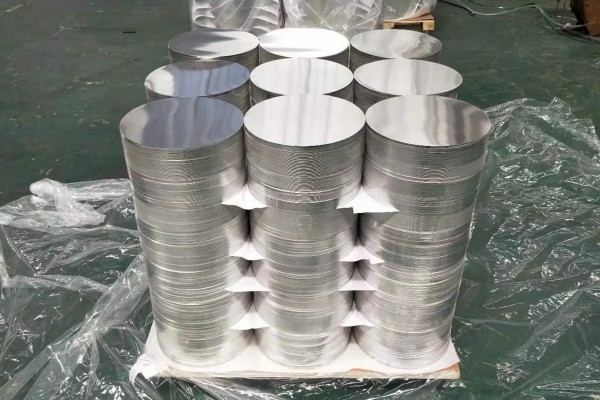
Hot Rolled vs Cast Rolled 1060 Aluminum Circle – Comprehensive Comparison for Industrial Applications
The 1060 aluminum alloy, characterized by its high purity of 99.6% or higher aluminum content, is widely utilized in applications demanding superior ductility, corrosion resistance, and lightweight properties. Among its various forms, 1060 aluminum circles serve as a critical raw material for manufacturing cookware, household items, reflective panels, and technical components. However, the choice between hot rolled and cast rolled 1060 aluminum circles significantly affects both the manufacturing process and the final product performance. Understanding the differences between these two rolling technologies is essential for engineers, manufacturers, and procurement specialists to optimize performance, reduce cost, and maintain consistent quality.
This article provides a detailed analysis of hot rolled versus cast rolled 1060 aluminum circles, focusing on: metallurgical characteristics, mechanical properties, microstructural differences, processing parameters, surface quality, forming behavior, end-use applications, and global industrial trends.
1. Introduction to 1060 Aluminum Alloy Circles
1060 aluminum is a commercially pure alloy that contains minimal alloying elements such as iron and silicon, which do not compromise its high ductility. Its primary properties include:
- Excellent corrosion resistance
- Superior thermal and electrical conductivity
- High plasticity and elongation
- Lightweight, low density (2.71 g/cm³)
These characteristics make 1060 aluminum circles ideal for deep drawing, spinning, and stamping processes in industries such as household cookware, packaging, lighting, and decorative items.
2. Overview of Rolling Technologies
Aluminum circles can be produced using two primary rolling methods: hot rolling and cast rolling. Each process influences the microstructure, surface quality, mechanical properties, and forming capabilities of the final 1060 aluminum circle.
2.1 Hot Rolling
Hot rolling involves heating aluminum billets to temperatures typically above 400°C (752°F) and then passing them through a series of rollers to achieve the desired thickness and diameter. This method provides:
- Homogeneous deformation
- Enhanced ductility due to dynamic recrystallization
- Reduced residual stress in the material
2.2 Cast Rolling
Cast rolling, also known as direct chill casting combined with rolling, starts with molten aluminum poured into molds to form billets, which are then rolled at lower temperatures. Features include:
- Fine surface texture with reduced surface defects
- Improved dimensional accuracy
- Control over microstructure to prevent large grain formation
3. Microstructural Differences
The microstructure of aluminum circles varies significantly depending on whether they are hot rolled or cast rolled. Understanding these differences is crucial for predicting forming behavior, corrosion resistance, and mechanical performance.
| Property | Hot Rolled 1060 Aluminum Circle | Cast Rolled 1060 Aluminum Circle | Implication |
|---|---|---|---|
| Grain Size | 80–120 μm, elongated | 40–80 μm, more uniform | Smaller, uniform grains improve deep drawing |
| Dislocation Density | Moderate, residual stress present | Lower, stress-relieved | Cast rolled reduces springback |
| Surface Microdefects | Possible scale, minor roughness | Fewer microdefects, smoother | Surface finish better for reflective applications |
| Residual Stress | Higher, may require annealing | Lower, less post-processing | Less distortion in downstream forming |
Analysis: Cast rolled circles tend to provide more uniform thickness and finer grain size, making them preferable for high-precision applications. Hot rolled circles are cost-effective and suitable for applications where extreme surface smoothness is not critical.
4. Mechanical Properties Comparison
Mechanical performance dictates the suitability of aluminum circles for deep drawing, spinning, and stamping, particularly for household products.
| Property | Hot Rolled | Cast Rolled | Notes |
|---|---|---|---|
| Tensile Strength (MPa) | 70–100 | 65–95 | Slightly lower in cast rolled due to stress relief |
| Yield Strength (MPa) | 35–50 | 30–45 | Cast rolled more ductile, ideal for deep drawing |
| Elongation (%) | 28–35 | 35–40 | Cast rolled exhibits superior elongation |
| Hardness (HB) | 25–30 | 20–28 | Lower hardness improves formability |
| Surface Roughness (Ra μm) | 0.35–0.50 | 0.15–0.25 | Cast rolled smoother for decorative/reflective surfaces |
Key Insight: Cast rolled 1060 aluminum circles offer better ductility and smoother surfaces, enhancing formability for household items that undergo complex spinning or deep drawing. Hot rolled circles are suitable for cost-sensitive, less demanding applications.
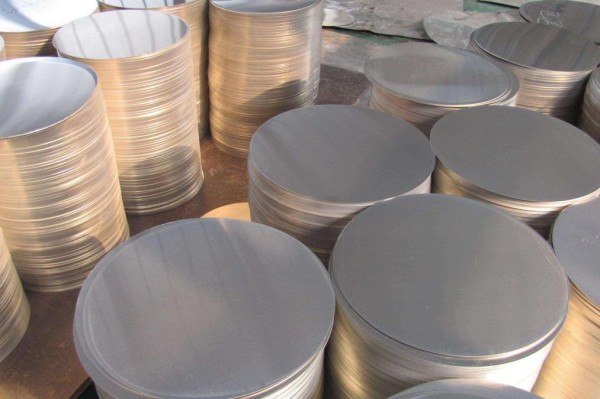
5. Forming Performance: Deep Drawing and Spinning
5.1 Hot Rolled 1060 Aluminum Circle
- Offers moderate formability
- Requires careful lubricant application to prevent surface galling
- May need pre-annealing for deep drawing with high reduction ratios
- Excellent for standard cookware, storage containers, and non-decorative items
5.2 Cast Rolled 1060 Aluminum Circle
- Superior formability, enabling higher draw ratios
- Smooth surface minimizes friction and tooling wear
- Less springback and reduced residual stress
- Ideal for precision kitchenware, decorative cookware, mirror-finished bowls, and reflectors
| Forming Process | Hot Rolled | Cast Rolled | Recommendation |
|---|---|---|---|
| Shallow Draw (≤1.5x) | Excellent | Excellent | Either |
| Deep Draw (≥2.5x) | Moderate | Superior | Cast Rolled |
| Spinning | Moderate | Superior | Cast Rolled |
| Stamping with Fine Details | Moderate | Excellent | Cast Rolled |
6. Surface Quality and Decorative Processing
Surface finish plays a decisive role in both functionality and aesthetics of 1060 aluminum circles used in household items. The rolling process directly impacts the surface roughness, defect frequency, and suitability for further finishing processes such as polishing, brushing, or anodizing.
6.1 Hot Rolled Aluminum Circle Surface Characteristics
- May contain mill scale or oxide residues due to high-temperature exposure
- Surface roughness generally ranges from Ra 0.30–0.50 μm
- Requires mechanical or chemical cleaning prior to decorative finishing
- Suitable for utilitarian household items: pots, storage cans, trays
6.2 Cast Rolled Aluminum Circle Surface Characteristics
- Smoother surfaces due to controlled solidification and rolling
- Surface roughness typically Ra 0.15–0.25 μm
- Fewer microdefects; minimal post-processing required
- Ideal for decorative cookware, polished kitchenware, and lighting reflectors
| Surface Feature | Hot Rolled | Cast Rolled | Implication |
|---|---|---|---|
| Roughness (Ra μm) | 0.30–0.50 | 0.15–0.25 | Cast rolled is better for mirror finish |
| Microdefects | Minor scratches | Rare | Lower polishing effort for cast rolled |
| Oxide Layer | Possible | Minimal | Cast rolled reduces pre-treatment steps |
| Visual Appeal | Moderate | High | Enhances consumer perception for premium items |
Analysis: Cast rolled aluminum circles are preferred when surface aesthetics and high reflectivity are critical, while hot rolled circles suffice for functional, cost-sensitive applications.
7. Thickness Uniformity and Tolerance Control
Precision in thickness directly influences forming quality, mechanical stability, and final product performance.
7.1 Hot Rolled Thickness Variations
- Hot rolling at high temperature can induce minor thickness variation due to roller deflection and thermal expansion
- Typical tolerance: ±0.03–0.05 mm
- May require leveling or light skin pass rolling for precise forming
7.2 Cast Rolled Thickness Advantages
- Cooling during cast rolling produces a more uniform billet
- Post-roll thickness is controlled within ±0.02–0.03 mm
- Provides consistent wall thickness for deep-drawn items such as pots, basins, and containers
| Thickness Feature | Hot Rolled | Cast Rolled | Application Relevance |
|---|---|---|---|
| Tolerance | ±0.03–0.05 mm | ±0.02–0.03 mm | Critical for deep-drawing precision |
| Flatness | Moderate | High | Reduces wrinkling during spinning |
| Dimensional Consistency | Good | Excellent | Supports automation and mass production |
Conclusion: For applications requiring high precision and consistent forming, cast rolled circles outperform hot rolled circles.
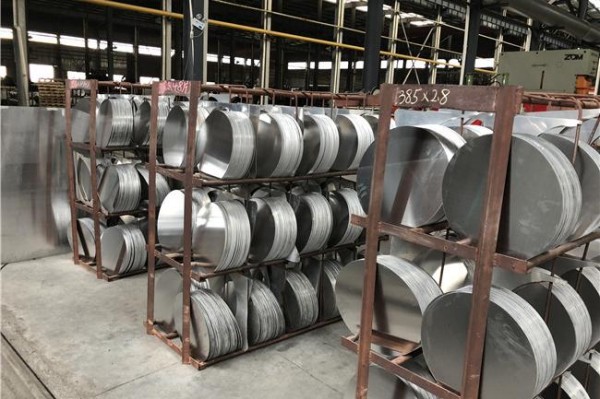
8. Heat Treatment and Annealing Optimization
Heat treatment further differentiates the performance between hot rolled and cast rolled aluminum circles.
8.1 Hot Rolled Aluminum Annealing
- Hot rolling induces residual stresses; annealing is often required before deep drawing
- Typical annealing: O temper (full softening) or H12/H14 (partial hardening) depending on forming requirements
- Optimizes ductility and reduces tearing risk
8.2 Cast Rolled Aluminum Annealing
- Cast rolled circles usually have lower residual stress
- Requires less aggressive annealing, often only a mild pre-drawing anneal
- Preserves the fine grain structure, maintaining superior elongation
| Process | Hot Rolled | Cast Rolled | Effect on Formability |
|---|---|---|---|
| Pre-drawing anneal | Required | Optional | Ensures elongation ≥35% |
| Post-drawing stress relief | Recommended | Often unnecessary | Reduces springback |
| Grain growth control | Moderate | Excellent | Supports multi-stage forming |
Observation: Cast rolled aluminum simplifies process flow while maintaining high formability, reducing production time and energy consumption.
9. Cost, Production Efficiency, and Environmental Considerations
9.1 Cost Analysis
- Hot rolled aluminum circles have lower initial production costs due to simpler billets and higher throughput
- Cast rolled aluminum circles are slightly more expensive but reduce downstream processing costs for polishing, leveling, and finishing
| Parameter | Hot Rolled | Cast Rolled | Implication |
|---|---|---|---|
| Raw material cost | Low | Moderate | Initial cost savings for hot rolled |
| Processing steps | More (cleaning, leveling) | Fewer | Cast rolled reduces labor & equipment wear |
| Yield rate | Moderate | High | Less scrap with cast rolled |
| Forming efficiency | Good | Excellent | Less rework, higher automation compatibility |
9.2 Environmental Benefits
- Aluminum is fully recyclable; both processes support sustainable production
- Cast rolled circles often have lower energy consumption in post-processing due to superior surface and uniformity
- Hot rolled requires more surface treatment, increasing water and chemical use
10. Household Product Applications and Case Studies
The differences in rolling methods directly influence end-use performance in daily-use items.
10.1 Cookware
| Product | Hot Rolled | Cast Rolled | Notes |
|---|---|---|---|
| Frying pans | Functional | Premium | Cast rolled achieves mirror finish, uniform thickness |
| Kettles | Functional | Premium | Reduced springback, smoother spinning |
| Stockpots | Standard | High-end | Cast rolled supports deeper draws without cracking |
10.2 Kitchenware and Storage Containers
- Hot rolled: standard containers, trays, basic storage cans
- Cast rolled: decorative containers, polished bowls, multi-color anodized lids
10.3 Lighting and Reflective Products
- Cast rolled preferred for reflectors and lamp covers due to smoother surfaces and lower surface defects
- Hot rolled suitable for structural components where aesthetics are secondary
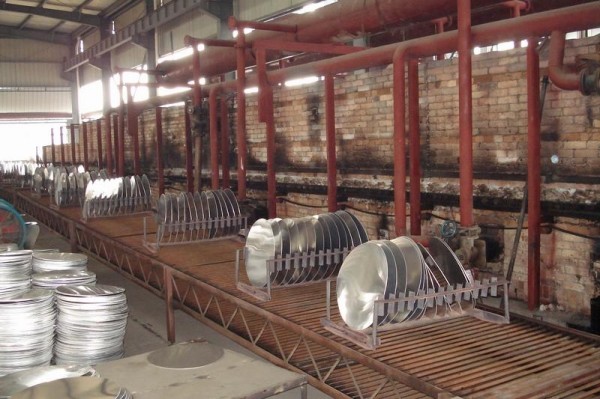
11. Global Market Trends and Supplier Considerations
- Demand for premium household aluminum products is growing in regions like North America, Europe, and Southeast Asia
- Cast rolled 1060 aluminum circles cater to high-end consumer markets due to superior aesthetics and formability
- Hot rolled circles are still widely used in cost-sensitive mass markets
11.1 Supply Chain Analysis
| Factor | Hot Rolled | Cast Rolled | Implication |
|---|---|---|---|
| Lead time | Short | Moderate | Hot rolled easier to source locally |
| Availability | High | Moderate | Cast rolled requires specialized mills |
| Export readiness | Standard | High-quality | Cast rolled suitable for premium export markets |
| Quality consistency | Moderate | Excellent | Reduced rework and defect rate |
12. Microstructural Formation Mechanisms in Hot Rolled and Cast Rolled 1060 Aluminum Circles
The differences in rolling technology fundamentally affect the microstructural evolution of 1060 aluminum circles. Understanding these mechanisms is crucial for predicting formability, mechanical properties, and surface quality.
12.1 Hot Rolled Microstructure
- High-temperature deformation leads to elongated grains in the rolling direction
- Dynamic recovery and partial recrystallization occur during rolling
- Residual stresses may remain, particularly near the surface
- Grain boundaries are less uniform, leading to slightly variable mechanical properties across the thickness
Implications:
- Hot rolled circles may require intermediate annealing for multi-stage forming
- Deep drawing performance is moderate due to potential stress concentration at grain boundaries
- Surface finishing may require more polishing or leveling
12.2 Cast Rolled Microstructure
- Billets cast using controlled solidification produce fine, equiaxed grains
- Subsequent rolling preserves uniformity and reduces dislocation density
- Residual stress is significantly lower compared to hot rolled circles
- Grain size: ~40–80 μm, providing excellent ductility for deep drawing and spinning
Implications:
- Higher elongation and reduced tearing risk in forming operations
- Enhanced surface smoothness allows for premium finishes
- Less springback and more predictable material flow during complex shapes
| Microstructural Feature | Hot Rolled | Cast Rolled | Impact on Forming |
|---|---|---|---|
| Grain Shape | Elongated | Equiaxed | Equiaxed favors deep drawing |
| Dislocation Density | Moderate | Low | Lower stress concentration in cast rolled |
| Residual Stress | Higher | Lower | Cast rolled reduces springback |
| Grain Size | 80–120 μm | 40–80 μm | Finer grains improve elongation |
13. Process Simulation and Stress Analysis
Modern manufacturers often use finite element analysis (FEA) to simulate the forming of 1060 aluminum circles. These simulations highlight the differences between hot rolled and cast rolled circles:
- Stress Distribution: Cast rolled material shows more uniform stress distribution during deep drawing. Hot rolled may develop localized peaks near edges.
- Strain Concentration: Hot rolled circles can reach higher localized strain levels, increasing risk of micro-cracks.
- Springback Prediction: Cast rolled aluminum exhibits less springback due to lower residual stress.
- Tool Wear: Uniform stress and strain reduce tool fatigue when forming cast rolled circles.
Example: Deep Drawing a 200 mm Diameter Pot
| Parameter | Hot Rolled | Cast Rolled | Notes |
|---|---|---|---|
| Maximum Strain | 32% | 38% | Cast rolled tolerates higher deformation |
| Edge Stress (MPa) | 90 | 70 | Lower risk of cracking in cast rolled |
| Wall Thickness Variation | ±0.04 mm | ±0.02 mm | Better uniformity in cast rolled |
| Springback (mm) | 0.8 | 0.3 | Easier to meet tolerance in cast rolled |
Simulation confirms that cast rolled 1060 aluminum circles are more suitable for high-precision, deep-drawn household products.
14. Comprehensive Production Workflow and Equipment Configuration
14.1 Hot Rolled Aluminum Circle Production
- Aluminum billets preheated above 400°C
- Series of hot rolling passes to reduce thickness
- Surface scaling removal and pickling
- Optional annealing for stress relief
- Shearing or blanking to circular discs
- Deburring and quality inspection
Equipment: Hot rolling mills, scalers, annealing furnaces, shear cutting machines
14.2 Cast Rolled Aluminum Circle Production
- Controlled solidification casting to produce billets
- Direct rolling at moderate temperatures
- Minimal surface treatment needed due to smooth billet surface
- Optional pre-drawing annealing
- Blanking to disc shape
- Polishing, brushing, or anodizing if required
- Quality inspection
Equipment: DC casting machines, rolling mills, annealing furnaces, precision blanking machines, polishing lines
14.3 Efficiency Comparison
| Aspect | Hot Rolled | Cast Rolled | Implication |
|---|---|---|---|
| Production Speed | High | Moderate | Hot rolled suitable for high-volume low-end products |
| Post-Processing | Extensive | Minimal | Cast rolled reduces labor and chemical consumption |
| Tool Wear | Moderate | Low | Cast rolled prolongs tool life |
| Energy Consumption | Higher (due to annealing & surface prep) | Lower | More sustainable process |
15. Advanced Household and Industrial Applications
15.1 Cookware and Kitchen Items
- Cast rolled 1060 aluminum circles are preferred for deep-drawn cookware (frying pans, milk pots, stockpots) due to their smooth surface and uniform thickness.
- Hot rolled circles serve basic storage containers, trays, and utilitarian cookware.
15.2 Lighting and Reflective Surfaces
- Cast rolled aluminum discs enable mirror polishing, critical for lampshades, reflectors, and decorative lighting.
- Hot rolled discs are used in structural components where optical finish is less critical.
15.3 Industrial Components
- Certain electrical housings, duct components, and enclosures benefit from cast rolled aluminum for dimensional consistency.
- Hot rolled circles are suitable for shielding plates or less precision-demanding parts.
| Application | Hot Rolled | Cast Rolled | Notes |
|---|---|---|---|
| Frying Pans | Standard | Premium | Cast rolled allows mirror finish |
| Milk Pots | Standard | Premium | Higher draw ratio possible with cast rolled |
| Reflectors | N/A | Yes | Hot rolled unsuitable for high reflectivity |
| Storage Bins | Yes | Yes | Either method acceptable depending on cost |
16. Selection Guidelines for Manufacturers
When deciding between hot rolled and cast rolled 1060 aluminum circles, consider:
- Forming Complexity: Deep-drawing or spinning favors cast rolled
- Surface Requirements: Premium polished or anodized finishes favor cast rolled
- Production Volume: Hot rolled may be more cost-effective for high-volume standard items
- Cost Consideration: Hot rolled lower upfront, cast rolled may reduce downstream processing
- Precision Needs: Cast rolled ensures tighter thickness tolerance and lower springback
Recommendation: For high-end household products, particularly cookware, decorative items, and precision components, cast rolled 1060 aluminum circles are preferred. Hot rolled remains a practical choice for cost-sensitive, functional applications.