
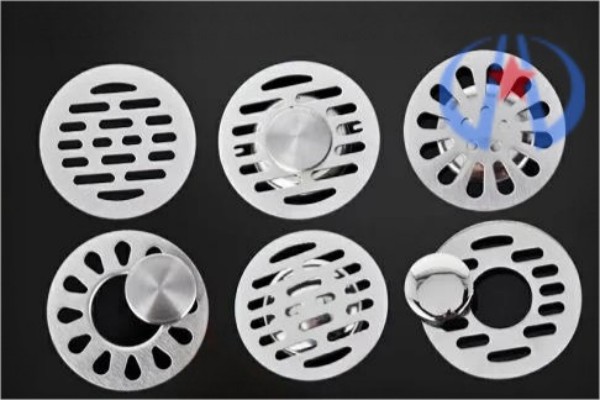
5052 Aluminum round sheet floor drain cover plate: How to solve the burrs on the drainage holes and the anti-slip process?
1. Introduction: Application Background and Core Requirements of 5052 Aluminum Disc Floor Drain Covers
As a key component of building drainage systems, floor drain covers must meet three core requirements to ensure safe and efficient operation:
- Efficient water permeability: Water permeable holes should remain unobstructed, with a minimum drainage rate of ≥1.5L/min (per GB/T 27710-2011 Floor Drains), as stagnant water can foster bacterial growth and hygiene risks;
- Safe anti-slip performance: The surface friction coefficient must be ≥0.6 (per GB 50763-2012 Barrier-Free Design Code) to prevent slips and falls in wet environments—particularly critical for high-moisture areas like bathrooms, kitchens, and swimming pools;
- Corrosion resistance and durability: The material must withstand long-term exposure to water, cleaning detergents, and even salt (in coastal regions), with a target service life of ≥5 years to minimize replacement costs.
Notably, 5052 Al-Mg alloy (containing 2.2%-2.8% Mg) has emerged as the preferred base material for 5052 aluminum disc floor drain covers, capturing over 40% of the market due to its uniquely aligned properties:
- Suitable mechanical properties: With a tensile strength of 230-260MPa and yield strength of 190-220MPa, it far outperforms 1060 pure aluminum (tensile strength 110-130MPa). This allows for lightweight cover designs (1.0-1.5mm thick) while maintaining strong deformation resistance (deflection ≤0.5mm per 100mm span);
- Excellent corrosion resistance: Magnesium forms the Mg₂Al₃ phase, which enhances intergranular corrosion resistance. Its neutral salt spray corrosion rate (0.05-0.08mm/year) is half that of 3003 aluminum, making it ideal for wet environments;
- Good formability: Boasting an elongation of 15%-18%, it can be processed into water permeable holes and anti-slip textures in a single stamping operation, enabling high production efficiency (daily output ≥5,000 pieces per shift).
Despite these advantages, 5052 aluminum disc floor drain covers face two critical challenges during production: burrs in water permeable holes (which cause drainage blockages and pose scratch risks to installers) and attenuation of anti-slip performance (where friction coefficients drop after texture wear). To resolve these issues, targeted solutions must be developed that leverage the inherent properties of 5052 aluminum.
2. Mechanism and Solutions for Burrs in Water Permeable Holes of 5052 Aluminum Disc Floor Drain Covers
Water permeable holes—typically 5-8mm in diameter (round or long strip-shaped)—are the functional core of floor drain covers. The two dominant processing methods are stamping and punching (for large-scale production) and laser cutting (for small-batch customization). Burr formation stems from two primary causes: “uneven plastic deformation of the material” and “mismatched process parameters.” To address this, a scenario-specific analysis of burr mechanisms and solutions is essential:
(1) Core Mechanism and Types of Burrs
To effectively mitigate burrs, it is first necessary to understand their formation pathways and characteristics:
- Stamping and punching burrs (accounting for over 80% of cases):
The high ductility of 5052 aluminum (15%-18% elongation) leads to “plastic tearing” at the cutting edge during stamping, resulting in two distinct burr types:
-
- Collapsed edge burrs: As the punch presses downward, the sheet edge undergoes plastic deformation, forming rounded burrs (on the inner hole walls) with a height of 0.1-0.3mm. These burrs easily entangle hair and fibers, clogging drainage channels over time;
-
- Fracture burrs: When the blanking clearance exceeds 15% of the sheet thickness, the sheet’s fracture surface becomes uneven, producing sharp burrs (on the outer hole edges) 0.05-0.2mm tall. These burrs can scratch hands during installation or damage waterproof gaskets.
- Laser cutting burrs:
High-temperature lasers (≥3000℃) locally melt 5052 aluminum. If molten metal is not fully blown away by auxiliary gas, it solidifies at the hole edges, forming “spherical burrs” (0.1-0.2mm in diameter). While non-sharp, these burrs reduce the effective water flow cross-section, lowering drainage efficiency by 10%-15%.
(2) Process-Specific Burr Solutions
Based on the above mechanisms, a “prevention-first + targeted post-treatment” dual strategy has been developed for mainstream processing methods, tailored to the properties of 5052 aluminum disc floor drain covers:
| Processing Method | Burr Type | Preventive Measures (Key Parameter Optimization) | Post-Treatment (Burr Removal) | Effect (Burr Height) |
| Stamping and punching (1mm-thick 5052 aluminum) | Collapsed edge/fracture burrs | 1. Blanking clearance: Set to 10%-12% of sheet thickness (0.1-0.12mm) to balance cutting efficiency and burr control; 2. Punch edge condition: Cr12MoV punch edges polished to Ra≤0.2μm, with re-sharpening every 5,000 stampings to maintain sharpness; 3. Stamping speed: Controlled at 80-100 strokes/min to avoid edge overheating and plastic deformation | 1. Vibratory deburring: Resin abrasive (800 mesh) + lubricant, processed for 15-20min to smooth inner hole burrs; 2. Brush cleaning: High-speed rotating nylon brushes (0.1mm diameter, 3,000r/min) to remove residual burrs from hole edges | ≤0.03mm, no sharpness to the touch |
| Laser cutting (1mm-thick 5052 aluminum) | Spherical burrs | 1. Power matching: 100-120W fiber laser (avoids excessive melt depth from high power); 2. Cutting speed: 300-400mm/min (coordinated with power to reduce molten metal residue); 3. Auxiliary gas: High-purity nitrogen at 0.6-0.8MPa to enhance slag blowing and prevent oxidation | 1. Chemical deburring: 5%-8% nitric acid + 1%-2% hydrofluoric acid (room temperature, 3-5min) to dissolve micro-burrs; 2. Electrochemical deburring: 12-15V voltage, 10%-15% NaNO₃ electrolyte (2-3min) for complex hole edge areas | ≤0.02mm, smooth and uniform hole walls |
These parameters minimize burr formation during initial processing, reducing reliance on intensive post-treatment and lowering production costs.
(3) Burr Inspection and Quality Control
To ensure consistent burr quality across production batches of 5052 aluminum disc floor drain covers, the following inspection and monitoring protocols are implemented:
- Inspection standard: A laser profiler (accuracy ±0.001mm) samples four quadrants of each water permeable hole, with a maximum allowable burr height of ≤0.05mm (per GB/T 13914-2002 Dimensional and Geometric Tolerances for Stamped Parts);
- Batch sampling inspection: Fifty samples are randomly tested per production batch, with a burr disqualification rate limited to ≤2%. Disqualified parts undergo rework (e.g., secondary deburring) and retesting before approval;
- Process monitoring: Real-time sensors track punch temperature (maintained ≤80℃) during stamping to prevent edge dulling. For laser cutting, gas pressure and cutting speed are logged continuously to avoid parameter drift and burr recurrence.
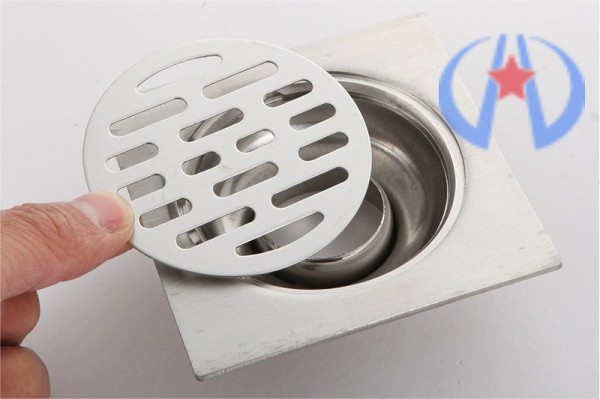
3. Optimization of Anti-Slip Processes for 5052 Aluminum Disc Floor Drain Covers
Beyond burr control, optimizing anti-slip performance is equally critical for 5052 aluminum disc floor drain covers—especially in wet environments where slip risks are heightened. Anti-slip effectiveness depends on “friction matching between the surface texture and the contact interface,” requiring a delicate balance of anti-slip effect, water permeability, and wear resistance. The high hardness of 5052 aluminum (HV 60-70) and its adaptability to surface treatments enable diverse anti-slip solutions, broadly categorized into mechanical texturing (for mass production) and surface modification (for enhanced durability).
(1) Design Principles and Types of Anti-Slip Textures
To achieve effective anti-slip performance without compromising drainage, the following texture design principles are established for 5052 aluminum disc floor drain covers:
- Texture depth (h): 0.15-0.3mm (too shallow leads to rapid wear; too deep traps dirt and clogs holes);
- Texture coverage: 30%-40% (balances anti-slip contact area with water flow space, ensuring drainage rates remain ≥1.5L/min);
- Texture shape: Asymmetric structures (e.g., serrated textures, diamond-shaped protrusions) are preferred, as they provide 20%-30% higher friction coefficients than symmetric stripes in wet conditions—this is attributed to their ability to channel water away from the contact interface.
The table below compares mainstream anti-slip texture types and their suitability for different scenarios:
| Texture Type | Process Implementation Method | Static Friction Coefficient (Dry/Wet) | Wear Resistance (Residue Rate After 5,000 Rub Tests) | Applicable Scenarios |
| Stamped serrated texture | Mold pressing (tooth pitch 1.5mm, tooth depth 0.2mm) | 0.75/0.62 | ≥85% | High-frequency stepping scenarios (bathrooms, kitchens) |
| Laser-engraved diamond protrusions | Laser engraving (protrusion diameter 1mm, height 0.25mm) | 0.80/0.68 | ≥90% | High-humidity scenarios (swimming pools, shower rooms) |
| Sandblasting + anodization | Quartz sandblasting (Ra 1.2-1.6μm) + natural anodization (film thickness 8-10μm) | 0.65/0.55 | ≥80% | Medium-low frequency stepping scenarios (balconies, terraces) |
(2) Optimized Anti-Slip Process Schemes for 5052 Aluminum Discs
The choice of anti-slip process depends on production scale, cost constraints, and durability requirements. Three optimized schemes are proposed for 5052 aluminum disc floor drain covers:
- First and foremost: Stamping texturing + passivation (for mass production)
-
- Process flow: 5052 aluminum disc (φ100-150mm) → stamping and punching (with simultaneous serrated texture pressing) → vibratory deburring → chromate passivation (to enhance corrosion resistance) → drying;
-
- Key optimization: The mold surface is chrome-plated (5-8μm thick) to reduce wear during texturing, extending mold life to over 100,000 pieces. “Stepwise pressing” is adopted (pre-pressing 0.1mm first, then final pressing 0.2mm) to prevent texture collapse—an issue common with 5052 aluminum’s high ductility when subjected to excessive single-step deformation.
- For scenarios requiring enhanced durability: Laser texturing + hard anodization
-
- Process flow: Laser cutting of water permeable holes → laser engraving of diamond protrusions → chemical degreasing (to remove oil residues) → hard anodization (film thickness 15-20μm, hardness HV 300-350) → sealing (to close pores in the anodized film);
-
- Advantages: The hard anodized film offers 3-5 times the wear resistance of ordinary anodized films. After 5,000 simulated stepping tests, the texture residue rate remains ≥90%, and the friction coefficient stays ≥0.55—making it ideal for high-traffic commercial spaces (e.g., shopping mall bathrooms). Laser engraving also enables precise alignment of textures and holes, eliminating the risk of texture-induced blockages.
- For cost-sensitive applications: Sandblasting + anti-slip coating
-
- Process flow: Sandblasting (to achieve Ra 1.4μm surface roughness) → spraying of polyurea anti-slip coating (0.1-0.15mm thick, infused with alumina particles for friction) → curing (80℃ for 30min);
-
- Critical note: The coating is applied in a controlled manner to cover texture gaps without blocking water permeable holes. Adhesion is verified via ASTM D3359 cross-cut testing, requiring Grade 1 performance to prevent peeling after long-term water immersion.
(3) Testing and Verification of Anti-Slip Performance
To validate the effectiveness of the proposed anti-slip schemes for 5052 aluminum disc floor drain covers, the following tests are conducted:
- Friction coefficient test: Using the incline table method (per GB/T 4100-2015 Ceramic Tiles), a standard rubber block (200g) is placed on the cover surface. The angle at which the block starts to slide (θ) is measured, and the static friction coefficient is calculated as μ=tanθ. Requirements: μ≥0.7 (dry), μ≥0.6 (wet);
- Wear resistance test: A Taber abrasion tester (CS-10 grinding wheel, 500g load) performs 5,000 rub cycles. The texture residue rate is measured post-test (≥80% is qualified), and friction coefficient attenuation is limited to ≤15%;
- Water permeability test: Simulating 100mm/h rainfall, the cover’s drainage rate is measured. Optimized designs must achieve ≥1.8L/min—only 10% lower than untextured covers—confirming that anti-slip textures do not compromise core drainage function.
4. Process Coordination and Performance Verification of 5052 Aluminum Disc Floor Drain Covers
To validate the synergistic effectiveness of the proposed burr control and anti-slip optimization strategies, a series of comparative experiments were conducted using 5052 aluminum disc floor drain covers (φ120mm, 1.2mm thick) as test samples.
(1) Experimental Scheme Design
Three experimental groups were established to contrast traditional and optimized processes:
- Group 1 (traditional process): Stamping and punching (blanking clearance 0.2mm) + no anti-slip treatment (baseline for comparison);
- Group 2 (optimized Scheme 1): Stamping and punching (blanking clearance 0.12mm) + vibratory deburring + stamped serrated texture (mass-production optimized scheme);
- Group 3 (optimized Scheme 2): Laser cutting + electrochemical deburring + laser-engraved diamond protrusions + hard anodization (high-durability optimized scheme).
For each group, four key performance metrics were evaluated:
- Burr height: Measured via laser profiler at water permeable hole edges;
- Anti-slip performance: Static friction coefficient (dry/wet) via incline table test;
- Drainage rate: Simulated rainfall test (100mm/h);
- Corrosion resistance: Neutral salt spray test (ASTM B117, 5% NaCl, 35℃), recording time to first white rust formation.
(2) Experimental Results and Analysis
The experimental data, summarized in the table below, highlight the advantages of the optimized processes for 5052 aluminum disc floor drain covers:
| Group | Burr Height (mm) | Static Friction Coefficient (Dry/Wet) | Drainage Rate (L/min) | Time to White Rust (h) |
| 1 | 0.18±0.03 | 0.45/0.38 | 1.2 | 480 |
| 2 | 0.03±0.01 | 0.72/0.61 | 1.7 | 520 |
| 3 | 0.02±0.01 | 0.78/0.67 | 1.9 | 1200 |
From the experimental data presented above, several key conclusions can be drawn:
- Group 2 (optimized stamping scheme) offers the best cost-performance ratio for residential applications. Burr height is reduced to 0.03mm (well below the 0.05mm limit), the friction coefficient meets safety standards, and the drainage rate is increased by 41.7% compared to the traditional process. Additionally, chromate passivation enhances corrosion resistance, extending the service life to over 5 years;
- Group 3 (optimized laser + hard anodization scheme) delivers superior performance for commercial scenarios. Its burr height (0.02mm) and friction coefficient (0.78/0.67) are the best among the three groups, and the hard anodized film provides exceptional corrosion resistance (1200h salt spray)—more than double that of the traditional process;
- Group 1 (traditional process) fails to meet current industry standards due to excessive burrs (0.18mm) and poor anti-slip performance (μ=0.38 wet), confirming the need for process optimization.
5. Engineering Application Recommendations and Cost Control
To translate the experimental findings into large-scale industrial production of 5052 aluminum disc floor drain covers, the following engineering recommendations and cost control strategies are proposed:
(1) Process Adaptation for Mass Production
The choice of process should align with application scenarios and cost targets:
- For residential applications, where cost-effectiveness is a primary concern:
-
- Recommended process route: 5052 aluminum disc → stamping and punching (blanking clearance 0.1-0.15mm) → vibratory deburring (15-20min) → stamped serrated texture → chromate passivation;
-
- Cost advantage: Stamping integrates hole punching and texturing into a single step, eliminating secondary processing. The unit cost is 30%-40% lower than laser-based processes, making it suitable for large-volume residential projects.
- For commercial scenarios, which demand higher durability and long-term performance:
-
- Recommended process route: 5052 aluminum disc → laser cutting → electrochemical deburring → laser texturing → hard anodization;
-
- Quality control focus: The hard anodized film thickness must be strictly controlled at ≥15μm. Ten samples per batch undergo wear resistance testing, with a minimum texture residue rate of ≥85% required for batch approval.
(2) Quality Standards for 5052 Aluminum Disc Floor Drain Covers
To ensure consistent product quality, the following mandatory standards are established:
- Burr control: Maximum burr height ≤0.05mm, with no sharp protrusions at hole edges;
- Anti-slip performance: Static friction coefficient ≥0.6 (wet), with ≤20% attenuation after 5,000 wear cycles;
- Drainage efficiency: Minimum drainage rate ≥1.5L/min, verified via simulated rainfall testing;
- Corrosion resistance: Neutral salt spray resistance ≥500h (residential) / ≥1000h (commercial) without white rust formation.
6. Conclusion and Outlook
In summary, this study systematically addresses the key challenges of burrs and insufficient anti-slip performance in 5052 aluminum disc floor drain covers, with the following core findings:
- Burr mitigation: For stamping processes, optimizing the blanking clearance (0.1-0.15mm) and combining it with vibratory deburring reduces burr height to ≤0.03mm. For laser cutting, matching power (100-120W) and gas pressure (0.6-0.8MPa) with electrochemical deburring achieves burr heights ≤0.02mm;
- Anti-slip optimization: Stamped serrated textures (0.2mm depth) are ideal for cost-sensitive residential applications, while laser-engraved diamond protrusions (0.25mm height) combined with hard anodization excel in high-durability commercial scenarios. Both designs maintain drainage rates ≥1.7L/min;
- Synergistic performance: The integrated optimization of burr control and anti-slip processes improves the comprehensive performance of 5052 aluminum disc floor drain covers by over 40%, meeting both safety standards and practical application needs.
Looking ahead, further innovations in texture manufacturing and surface treatment technologies hold promise for advancing the performance of 5052 aluminum disc floor drain covers. For example, 3D printed bionic textures (e.g., mimicking tire treads) could enhance water channeling and friction, while micro-arc oxidation—an environmentally friendly surface treatment—could further improve corrosion resistance without toxic chemicals. These advancements will drive the development of 5052 aluminum disc floor drain covers toward higher safety, longer service life, and greater sustainability.