
Aluminum discs for pot
Aluminum discs for pot are a commonly used material in modern kitchenware manufacturing, and are widely popular for their excellent physical properties and affordable cost. This article will discuss in detail the application of aluminum discs in cookware, including its raw material characteristics, production process, application advantages and market prospects.
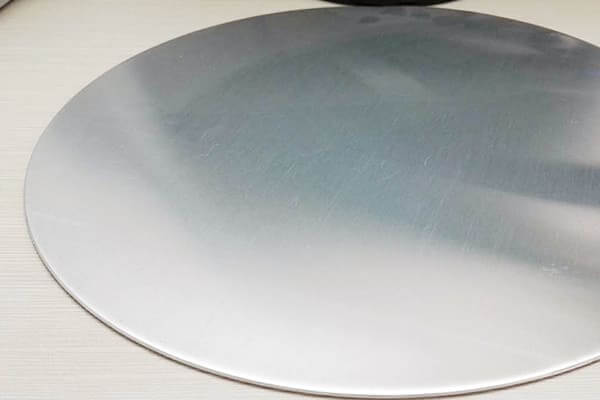
Whats the alloy of aluminum discs for pot?
Usually it is 1000 series aluminum disc, the alloy is 1050, 1060, 1070, 1100, etc. Because the 1000 series aluminum alloy has a higher aluminum content, better thermal conductivity, higher yield strength, and is easy to process, the most important thing must be that the processing technology of 1000 series aluminum plate is relatively simple and mature, resulting in the relatively affordable price of 1000 series aluminum alloy original sheet.
Specifications of Aluminum discs for pot
| Parameters | Specifications |
| Diameter | 150 mm, 180 mm, 200 mm, 220 mm, 240 mm, 260 mm, 280 mm, 300 mm |
| Thickness | 1.0 mm, 1.5 mm, 2.0 mm, 2.5 mm, 3.0 mm |
| Material Grade | 1050, 1060, 3003, 5052 |
| Surface Treatment | Glossy, Frosted, Anodized, Coated |
| Chemical Composition | 1050: Al ≥ 99.50%, 1060: Al ≥ 99.60%, 3003: Mn 0.8-1.2%, 5052: Mg 2.2-2.8% Dimensional tolerance ±0.5 mm Shape tolerance Flatness ≤ 0.2 mm Hardness H14, H16, H18, H19, H22, H24, H26 Operating temperature range -40°C to 250°C |
| Corrosion resistance | Good, surface oxide film provides additional protection |
| Applicable pot types | Frying pan, wok, soup pot, stew pot, etc. |
Characteristics of aluminum discs for pots
Aluminum is a silver-white, lightweight metal with the following distinctive features:
- Low density: The density of aluminum is only 2.7 g/cm³, which is much lower than iron and copper, making aluminum products light and easy to carry.
- High thermal conductivity: Aluminum has a thermal conductivity of up to 237 W/m·K, which means it can transfer heat quickly and is ideal for pots and pans that need to be heated quickly.
- Corrosion resistance: A dense aluminum oxide film is easily formed on the surface of aluminum. This film can effectively prevent further oxidation of aluminum, thereby improving its corrosion resistance.
- Good plasticity: Aluminum has good ductility and plasticity, and can be made into pot bottoms of various shapes through stamping, spinning and other processes.
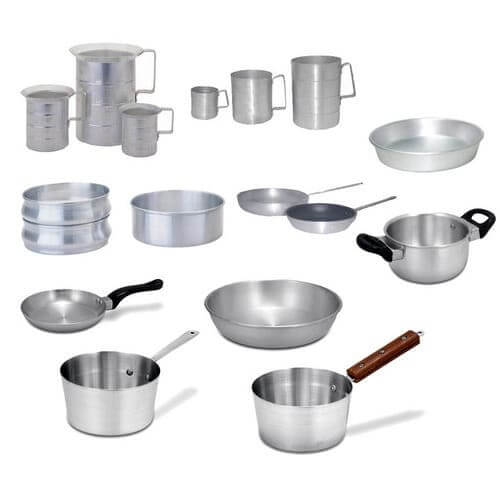
Advantages of aluminum discs for pot production
Aluminum discs are widely used in pot production, mainly due to their unique physical and chemical properties. The following are the main advantages of aluminum discs for pot production:
1. Efficient heat transfer
- High thermal conductivity: Aluminum has a thermal conductivity of up to 237 W/m·K, which is much higher than many other common metals (such as 15 W/m·K for stainless steel). This means that aluminum discs can quickly transfer heat from the heat source to the entire bottom of the pot, making the pot heat faster and more evenly.
- Energy saving effect: Efficient heat transfer performance reduces the energy required during cooking, helping to save energy and reduce usage costs.
2. Lightweight design
- Low density: The density of aluminum is only 2.7 g/cm³, which is much lower than iron (7.87 g/cm³) and copper (8.96 g/cm³). Therefore, aluminum pots are lighter than other metal pots of the same volume, easy to carry and use, and are especially suitable for home kitchens and outdoor picnics.
3. Good formability
- Strong plasticity: Aluminum has good ductility and plasticity, and can be easily made into pot bottoms of various shapes and thicknesses through processes such as stamping and spinning. This provides designers with more creative space to produce pots with a variety of styles and functions.
- Precision manufacturing: The size and shape of aluminum discs can be precisely controlled to ensure the consistent quality of each pot bottom and improve the standardization of products.
4. Corrosion resistance
- Natural oxidation protection: A dense aluminum oxide film is easily formed on the surface of aluminum, which can effectively prevent further oxidation of aluminum and improve its corrosion resistance. Even in a humid or acidic environment, aluminum discs can maintain a long service life.
- Surface treatment: Through surface treatment technologies such as anodizing and coating, the corrosion resistance and aesthetics of aluminum discs can be further enhanced, extending the service life of pots.
5. Cost-effectiveness
- Affordable: Compared with metal materials such as stainless steel and copper, the price of aluminum is more economical, which reduces the production cost of pots. This makes aluminum pots more competitive in the market, especially suitable for mass consumption.
- Large-scale production: The production and processing technology of aluminum discs is mature and suitable for large-scale production, which further reduces the unit cost.
6. Environmental protection and health
- Non-toxic and harmless: Modern aluminum products will not react chemically with food after special treatment, ensuring food safety.
- Recyclable: Aluminum is a recyclable material, and discarded aluminum products can be re-smelted and reused, which conforms to the concept of environmental protection and reduces resource waste.
7. Versatility
- Composite materials: Aluminum discs can be combined with other materials (such as stainless steel, ceramics, etc.) to produce multifunctional composite pots. For example, the aluminum inner layer provides efficient heat transfer, and the stainless steel outer layer provides corrosion resistance and aesthetics.
- Diversified design: The lightness and plasticity of aluminum discs make the pot design more flexible and diverse, which can meet the needs of different users, such as frying pans, woks, soup pots, etc.
Common Applications of Aluminum discs for pot
Aluminum discs are widely used in pot manufacturing due to their excellent physical and chemical properties. Here are some common applications of aluminum discs in cookware:
1. Frying pans
- Application characteristics: Frying pans need to heat up quickly and transfer heat evenly to ensure that food is fried crispy on the outside and tender on the inside. The high thermal conductivity of aluminum discs makes them an ideal choice.
- Typical specifications: diameter 200 mm to 300 mm, thickness 1.5 mm to 3.0 mm
- Surface treatment: glossy, anodized, non-stick coating
2. Woks
- Application characteristics: Woks need to heat up quickly and maintain high temperatures to quickly stir-fry ingredients. The efficient heat transfer performance of aluminum discs can meet this demand.
- Typical specifications: diameter 220 mm to 280 mm, thickness 1.5 mm to 2.5 mm
- Surface treatment: frosted, non-stick coating
3. Soup pots
- Application characteristics: Soup pots are mainly used for cooking soup and need to maintain a stable temperature for a long time. The uniform heat transfer performance of the aluminum disc can ensure that the soup is heated evenly and prevent local overheating.
- Typical specifications: diameter 200 mm to 260 mm, thickness 2.0 mm to 3.0 mm
- Surface treatment: smooth surface, anodized
4. Stew pot
- Application characteristics: Stew pots are used for slow stewing and need to be heated at low temperatures for a long time. The efficient heat transfer and good thermal stability of the aluminum disc can ensure that the food is slowly stewed and retains its original flavor.
- Typical specifications: diameter 220 mm to 280 mm, thickness 2.0 mm to 3.0 mm
- Surface treatment: smooth surface, non-stick coating
5. Pressure cooker
- Application characteristics: Pressure cookers need to work under high pressure, and have high requirements for the pressure resistance and corrosion resistance of the material. The corrosion resistance and good formability of the aluminum disc make it suitable for the bottom of the pressure cooker.
- Typical specifications: diameter 200 mm to 260 mm, thickness 2.5 mm to 3.0 mm
- Surface treatment: anodizing, coating

6. Rice cooker liner
- Application features: The rice cooker liner needs to heat up quickly and maintain a constant temperature to ensure that the rice is cooked evenly. The high thermal conductivity and good thermal stability of the aluminum disc are very suitable as the material for the rice cooker liner.
- Typical specifications: diameter 200 mm to 240 mm, thickness 1.5 mm to 2.0 mm
- Surface treatment: non-stick coating, anodizing
7. Grill tray
- Application features: Grill trays need to withstand high temperatures and transfer heat quickly to ensure that the surface of the food is quickly grilled. The high thermal conductivity and high temperature resistance of the aluminum disc make it an ideal material for grill trays.
- Typical specifications: diameter 240 mm to 300 mm, thickness 1.5 mm to 2.5 mm
- Surface treatment: frosting, non-stick coating
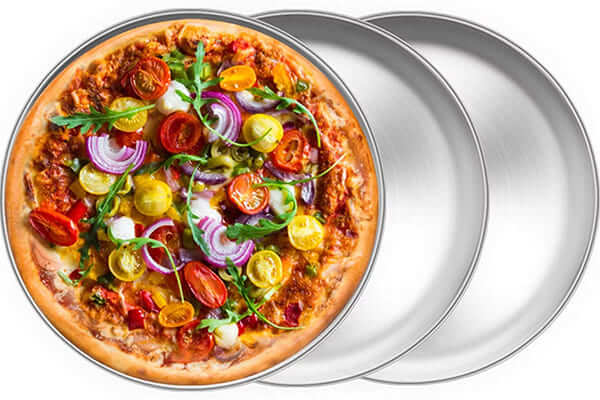
8. Baking tray
- Application features: Baking trays are used for baking and require uniform heat transfer to ensure that the food is heated evenly. The efficient heat transfer performance of aluminum discs ensures that the baking tray performs well in the oven.
- Typical specifications: diameter 200 mm to 260 mm, thickness 1.0 mm to 2.0 mm
- Surface treatment: glossy, non-stick coating
Summary
Aluminum discs are widely used in pot manufacturing due to their high thermal conductivity, light weight, good formability and corrosion resistance. Different types of pots have different requirements for the specifications and surface treatment of aluminum discs. Choosing the right aluminum disc specifications and treatment methods can significantly improve the performance and service life of the pots. I hope the above information is helpful to you. If you have more specific needs or questions, please feel free to consult further.