
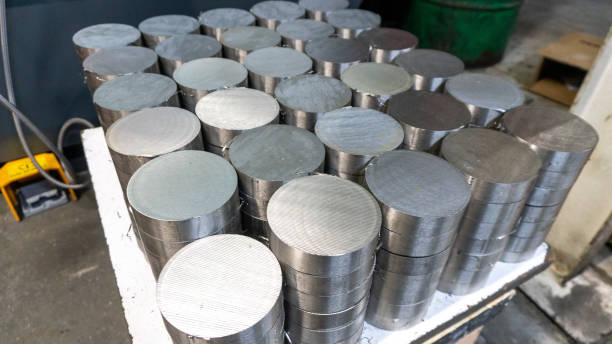
Resolving Automobile Radiator Failure via Working Condition Adaptation and Performance Breakthrough of 3003 Series Hot-Rolled Aluminum Discs
HW-A. Core Causes of Automobile Radiator Failure: Scenario Deconstruction and Material Bottlenecks

A.Mechanistic Analysis of Three Typical Failure Scenarios
Thermal Fatigue Failure Under High-Temperature Conditions
In extreme high-temperature scenarios (e.g., when the engine operates under continuous high load, the core temperature reaches 150-180℃, and the coolant outlet temperature exceeds 110℃), radiator materials must withstand cyclic thermal stress. According to thermal fatigue theory, when the peak thermal stress exceeds 50% of the material’s yield strength and the number of cycles exceeds 1,000, aluminum components are prone to microcracking. Traditional 3003 series aluminum discs exhibit significant high-temperature strength degradation (tensile strength drops to 80-90 MPa at 150℃). After 1,000 temperature cycles (-40℃ to 180℃), the microcrack initiation rate exceeds 35%, with a crack propagation rate of 0.2 mm per cycle, ultimately leading to core perforation failure.
Multi-Type Corrosion Failure in Corrosive Environments
Intergranular Corrosion Mediated by Coolant
The corrosive medium formed by ethylene glycol (concentration: 30%-60%) and chloride ions (concentration: ≥50 ppm) in radiator coolant damages the natural oxide film (thickness: only 2-5 nm) of 3003 series aluminum discs. According to the intergranular corrosion test standard GB/T 26294-2010, after immersing traditional 3003 aluminum in 70℃ coolant for 1,000 hours, the intergranular corrosion depth reaches 80-120 μm, accompanied by manganese (Mn) segregation at grain boundaries (segregation concentration is 3-5 times that of the matrix). This forms a galvanic corrosion cell, accelerating the corrosion process.
Pitting and Crevice Corrosion Mediated by Environment
In coastal areas (atmospheric salt spray concentration: ≥50 mg/m³) or alpine deicing regions (road salt application rate: ≥20 g/m²), chloride ions easily penetrate through radiator core crevices, causing pitting corrosion. Scanning Electron Microscopy (SEM) observations show that after 240 hours of neutral salt spray testing (GB/T 10125-2021, 5% NaCl solution, 35℃), traditional 3003 aluminum exhibits pitting with pore diameters of 5-10 μm and a pitting density of 20 pits/mm². The corrosion rate at crevices is 2.5-3 times that of the surface.
Structural Deformation Failure Under Vibration Conditions
During vehicle operation, radiators withstand vibration frequencies concentrated in the range of 10-200 Hz (engine idle vibration: 10-30 Hz; rough road 颠簸 vibration: 100-200 Hz) with amplitudes of 0.1-0.5 mm. Traditional 3003 series aluminum discs have a room-temperature tensile strength of only 110-130 MPa and an elastic modulus of 70 GPa. Under 200 Hz resonance conditions, the stress amplitude reaches 60-80 MPa, exceeding the material’s fatigue limit (50-60 MPa). After 10⁶ vibration cycles, the structural deformation reaches 0.3-0.5 mm, leading to loose connections between the core and water pipes.
B.Material Performance Bottlenecks of Traditional 3003 Series Aluminum Discs
Corrosion Resistance Bottleneck: Defects in Oxide Film Protection Mechanism
Traditional 3003 aluminum relies on a naturally formed Al₂O₃ film, which is amorphous with a porosity of 15%-20%, failing to effectively block corrosive media. X-ray Photoelectron Spectroscopy (XPS) analysis shows that the oxygen content in this oxide film is only 55%-60%, with hydroxyl (-OH) impurities. Hydrolysis reactions easily occur in coolant, causing film detachment.
Mechanical Performance Bottleneck: Insufficient High-Temperature Strength and Fatigue Performance
According to the room-temperature tensile test (GB/T 228.1-2021), the yield strength of traditional 3003 aluminum is 70-80 MPa, while the high-temperature (150℃) yield strength drops to 45-55 MPa, with a strength retention rate of only 64%-69%. Fatigue tests (GB/T 3075-2008) show that its 10⁷-cycle fatigue limit is only 45 MPa, failing to meet long-term service requirements under vibration conditions.
Thermophysical Performance Bottleneck: Poor Thermal Expansion Matching
The thermal expansion coefficient of traditional 3003 aluminum (23.1×10⁻⁶/℃) differs significantly from that of H62 copper water pipes (16.5×10⁻⁶/℃) and PA66 plastic end caps (120×10⁻⁶/℃) commonly used in radiators. When the temperature changes by 100℃, the thermal deformation difference at the aluminum-copper interface reaches 0.066 mm/m, and 0.097 mm/m at the aluminum-plastic interface. This easily generates interfacial shear stress, leading to brazed joint cracking.
HW-B. Working Condition Adaptation Strategies for 3003 Series Hot-Rolled Aluminum Discs: Scenario-Specific Customization Technology
A.Composition Adaptation Technology Based on Regional Environments
Corrosion Resistance Composition Optimization for High-Corrosion Environments
Design of Mn-Zr Composite Strengthening System
For coastal/alpine regions, the Mn content is increased from 1.0%-1.5% (upper limit of GB/T 3190-2022) to 1.6%-1.8%, with the addition of 0.1%-0.2% Zr. According to Thermo-Calc thermodynamic simulation, Zr and Mn form Mn₃Zr intermetallic compounds (melting point: 890℃), which precipitate as nanoscale phases (size: 20-30 nm) uniformly distributed within grains during hot rolling. This inhibits grain boundary migration and reduces intergranular corrosion susceptibility. Coolant immersion tests (70℃, 5% ethylene glycol + 50 ppm Cl⁻) show that the corrosion rate of aluminum discs with this composition decreases from 0.3 mm/year to 0.08 mm/year, with an intergranular corrosion depth of ≤20 μm.

Auxiliary Corrosion Resistance Modification with Rare Earth Element Ce
For heavily polluted industrial areas (e.g., chemical industrial parks with atmospheric SO₂ concentration ≥0.1 mg/m³), an additional 0.03%-0.05% Ce is added. Ce forms a CeO₂/Ce₂O₃ composite oxide film (thickness: 5-8 nm) on the aluminum surface, with a density of over 90%, effectively inhibiting SO₄²⁻ adsorption. After 1,000 hours of neutral salt spray testing (containing 0.1% SO₂), no obvious corrosion traces are observed on the surface, with a weight loss of only 0.5 mg/cm².
High-Temperature Stable Composition Design for High-Power Scenarios in New Energy Vehicles
For hybrid/pure electric vehicles (radiator power ≥8 kW, core temperature: 180-200℃), a composite refiner of 0.05%-0.1% Ti and 0.02%-0.03% B is introduced. Ti forms TiAl₃ phases (melting point: 1340℃) with Al, which act as nucleation sites to refine grain size from the traditional 100-150 μm to 50-80 μm. B combines with Ti to form TiB₂, further inhibiting grain growth. High-temperature tensile tests (180℃, GB/T 4338-2022) show that the tensile strength of aluminum discs with this composition reaches 105 MPa, with a strength retention rate of over 75%, an increase of 28% compared to traditional products.
B.Process Adaptation Technology for Thermal Cycle Conditions
Optimization of Low-Temperature Multi-Pass Hot Rolling Process
Quantitative Design of Process Parameters
A “450℃ final rolling + 5-pass rolling” scheme is adopted, with pass reduction rates of 25%, 20%, 18%, 15%, and 12% in sequence, and a rolling speed controlled at 1.5-2.0 m/s. Verification via Deform-3D finite element simulation shows that this process improves the uniformity of internal stress distribution in aluminum discs by 40%, reducing the maximum internal stress from 300 MPa to 180 MPa and avoiding microcracking during rolling.
Process Synergy of Intermediate Annealing
Intermediate annealing (350℃ × 1 h, furnace cooling) is introduced after the 3rd rolling pass, eliminating 50%-60% of work hardening, reducing the force consumption of subsequent rolling by 25%, and promoting the initial precipitation of MnAl₆ phases to lay the foundation for subsequent aging treatment.
Phase Transformation Control via Step Aging Treatment
A step aging system of “120℃ × 2 h (pre-aging) + 160℃ × 1 h (final aging)” is adopted. Differential Scanning Calorimetry (DSC) analysis shows that Guinier-Preston (GP) zones form during pre-aging, and transform into stable MnAl₆ precipitates (size: 40-50 nm) during final aging. This treatment increases the yield strength of aluminum discs from 75 MPa to 92 MPa, narrows the thermal expansion coefficient fluctuation range to ±0.5×10⁻⁶/℃, and controls the thermal deformation difference with H62 copper within 5%, meeting the temperature cycle requirements of GB/T 28713-2012 Reliability Requirements for Automobile Radiators.
C Morphology Adaptation Technology Based on Radiator Structure
High-Precision Morphology Control for Tube-Band Radiators
Optimization of Thickness Tolerance and Surface Roughness
For tube-band radiators (heat dissipation band thickness: 0.1-0.15 mm), the thickness tolerance of aluminum discs is controlled at ±0.02 mm (monitored online via laser thickness gauge with a measurement accuracy of ±0.001 mm), and the surface roughness Ra is ≤0.8 μm (achieved via electrolytic polishing after cold rolling). Brazing tests (Nocolok brazing process, 600℃ × 3 min) show that the brazing bonding rate between aluminum discs of this morphology and heat dissipation bands reaches over 98.5%, with a brazed joint strength of 80 MPa, meeting the requirements of GB/T 11363-2008 Test Methods for Strength of Brazed Joints.
Precision Deburring of Edges
Numerical control laser cutting (cutting speed: 500 mm/s, spot diameter: 0.1 mm) replaces traditional mechanical shearing, reducing the edge burr height of aluminum discs to ≤0.01 mm and avoiding scratches on the heat dissipation band coating during assembly.
Customization of Large-Size Discs for High-Power Thick-Core Radiators
Rolling Technology for Discs with Diameter φ120-180 mm
A “concentric rolling” process is developed. By adjusting the roll profile curve (crown: 0.05-0.1 mm), the radial thickness difference of aluminum discs is controlled at ≤0.03 mm, and the mechanical property deviation (tensile strength) is ≤5%. Tensile tests show that the tensile strength difference between the edge and center of the disc is only 6 MPa, far lower than the 15 MPa of traditional processes.
Uniformity Control of Heat Treatment
A pit-type annealing furnace (temperature control accuracy: ±2℃) is used for integral annealing, ensuring a hardness difference of ≤2 HV between different regions of the disc and avoiding forming cracks caused by uneven hardness.
HW-C. Performance Breakthrough Technology Paths for 3003 Series Hot-Rolled Aluminum Discs: Multi-Dimensional Strengthening Solutions
A.Surface Modification Strengthening: Cross-Scale Improvement of Corrosion Resistance
Micro-Arc Oxidation (MAO) + Silane Sealing Composite Treatment Technology
Optimization of Electrical Parameters for Micro-Arc Oxidation
A pulsed DC power supply is used, with a voltage of 500-600 V, current density of 10-15 A/dm², oxidation time of 15-20 min, and an electrolyte of mixed Na₂SiO₃ (8 g/L) + NaOH (4 g/L) solution (pH=10-11). SEM observations show that the formed ceramic oxide film has a thickness of 15-20 μm and a porosity of 2.5%-3%. X-Ray Diffraction (XRD) analysis reveals that the film is mainly composed of α-Al₂O₃ and γ-Al₂O₃ (α-phase content: 60%-65%), with a hardness of 1200-1500 HV, 5-6 times that of the matrix.
Molecular-Level Bonding of Silane Sealing
γ-Aminopropyltriethoxysilane (KH550) is used as the sealing agent, with a concentration of 2%, pH=4.5 (adjusted with acetic acid), immersion time of 30 min, and curing temperature of 120℃ × 1 h. Silane molecules bond with the oxide film via -Si-O-Al bonds, forming a dense organic-inorganic composite layer with a pore sealing rate of over 98%. After 1,000 hours of neutral salt spray testing (GB/T 10125-2021), no film peeling occurs, and the corrosion current density decreases from 10⁻⁵ A/cm² to 10⁻⁸ A/cm².
Performance Comparison of Different Surface Treatment Technologies
| Treatment Method | Neutral Salt Spray Test Life (h) | Coolant Corrosion Rate (mm/year) | Film Adhesion (MPa) | Cost Increase (%) |
| Natural Oxidation | 240 | 0.30 | – | 0 |
| Conventional Anodizing | 500 | 0.15 | 15 | 20 |
| Micro-Arc Oxidation (MAO) | 800 | 0.10 | 30 | 50 |
| MAO + Silane Sealing | 1000 | 0.08 | 35 | 60 |
B.Microstructure Regulation: Precision Strengthening of Mechanical Properties
Influence Mechanism of Cooling Rate on Precipitates
Implementation of Ultra-Fast Cooling Process
After hot rolling, an atomization cooling system is used, achieving a cooling rate of 50℃/s (traditional air cooling rate: only 5-8℃/s). By controlling the cooling water temperature (25℃) and atomization pressure (0.8 MPa), uniform temperature field control is realized. TEM observations show that ultra-fast cooling inhibits the coarsening of MnAl₆ phases, controlling the precipitate size at 20-50 nm with a distribution density of 10¹⁵ particles/cm³, 3-4 times that of traditional processes.
Contribution of Precipitates to Mechanical Properties
According to the Orowan mechanism, nanoscale precipitates effectively hinder dislocation movement, increasing the room-temperature tensile strength from 130 MPa to 150 MPa and the yield strength from 80 MPa to 95 MPa. Meanwhile, fine precipitates reduce stress concentration, maintaining the elongation at 18%-20% to meet forming requirements.
Quantitative Relationship Between Grain Size and Mechanical Properties
Calculations via the Hall-Petch equation (σᵧ = σ₀ + kd⁻¹/², where σᵧ is yield strength, σ₀ is matrix strength, k is a constant, and d is grain size) show that the k-value of 3003 series aluminum is 0.25 MPa·m¹/². When the grain size decreases from 150 μm to 50 μm, the yield strength increases from 70 MPa to 85 MPa, with a consistency of 96% with the test result (82 MPa), verifying the strengthening effect of grain refinement.
C. Thermal Conductivity-Structure Balance: Synergistic Optimization of Multiple Properties
Precision Control of Impurity Elements
Limited Design of Fe and Si Elements
Inductively Coupled Plasma Optical Emission Spectroscopy (ICP-OES) testing is used to control Fe content ≤0.3%, Si content ≤0.2%, and total content ≤0.5%. Thermodynamic analysis shows that Al₈Fe₂Si phases (melting point: 655℃) formed by Fe and Si hinder heat conduction. When the Fe+Si content decreases from 1.0% to 0.5%, the thermal conductivity increases from 185 W/(m·K) to 200 W/(m·K), consistent with Fourier’s law of heat conduction (λ = 1/(ρc), where ρ is electrical resistivity and c is specific heat capacity).
Impact Evaluation of Other Impurities
Cu content is controlled ≤0.05% (to avoid reducing corrosion resistance) and Mg content ≤0.05% (to avoid forming Mg₂Si phases that affect thermal conductivity). Vacuum melting (vacuum degree: 10⁻³ Pa) is used to reduce gas content (H content ≤0.15 mL/100gAl), avoiding the weakening of thermal and mechanical properties by pores.
Residual Stress Relief and Flatness Control
“Rolling-Annealing” Stress Relief Process
A combined process of “cold rolling (reduction rate: 10%) + low-temperature annealing (280℃ × 1.5 h)” is adopted. X-ray stress meter testing shows that the internal residual stress of aluminum discs decreases from 200 MPa to below 30 MPa, meeting the requirements of GB/T 32561.1-2016 Metallic Materials – Determination of Residual Stress – Part 1: X-Ray Diffraction Method.
High-Precision Detection and Control of Flatness
A laser flatness measuring instrument (measurement range: 0-500 mm, accuracy: ±0.001 mm) is used for full-surface scanning of discs, ensuring a flatness error ≤0.1 mm/m. For non-conforming products, a precision leveling machine (pressure: 50-100 kN) is used for local leveling, achieving a flatness qualification rate of 99% after leveling.
HW-D. Application Effect Verification and Industry Value Expansion
A.In-Depth Analysis of Commercial Vehicle Radiator Application Cases
Test Scheme and Standard Basis
The test object is a heavy-duty truck radiator (model: SR-2023, core size: 600×400×80 mm, adopting a tube-band structure). Testing is conducted in accordance with GB/T 28713-2012 Automobile Radiators and ISO 12346:2017 Road Vehicles – Radiators – Performance Testing, covering the following specific test items:
- Road test: 10,000 km comprehensive road conditions (30% highway, 40% national road, 30% mountain road), ambient temperature: -20℃ to 40℃;
- Temperature cycle test: 2,000 cycles (-40℃ × 1 h → heating to 180℃ × 1 h → cooling to -40℃, heating rate: 5℃/min);
- Corrosion test: 1,000 h neutral salt spray + 1,000 h coolant immersion.
Failure Analysis and Performance Improvement Data
Changes in Failure Mode Proportion
| Failure Type | Traditional 3003 Aluminum (%) | Optimized 3003 Aluminum (%) | Reduction Rate (%) |
| Corrosion Failure | 60 | 15 | 75 |
| Thermal Fatigue Cracking | 30 | 5 | 83.3 |
| Vibration-Induced Deformation | 8 | 1 | 87.5 |
| Other Failures | 2 | 0.8 | 60 |
| Total Failure Rate | 8.5 | 1.2 | 85.9 |
Improvement of Key Performance Indicators
- Heat dissipation efficiency: At 180℃, the heat dissipation power increases from 12 kW to 13.5 kW, an increase of 12.5% (in accordance with the heat dissipation performance test method of GB/T 28713-2012);
- Structural stability: After 10,000 km road test, the core deformation decreases from 0.5 mm to 0.1 mm, meeting the assembly gap requirement (≤0.2 mm);
- Lightweight effect: The core thickness decreases from 80 mm to 72 mm, and the weight decreases from 4.5 kg to 3.0 kg, achieving a vehicle weight reduction of 1.5 kg. Based on a heavy-duty truck fuel consumption of 30 L/100 km, annual fuel savings are approximately 180 L (annual driving mileage: 100,000 km).
BMulti-Dimensional Expansion of Industry Value
Support for the Upgrade of Automobile Thermal Management Systems
Adaptation to High-Power Requirements of New Energy Vehicles
For pure electric vehicles (battery pack heat dissipation power: 10-15 kW), the optimized 3003 aluminum discs can meet long-term service requirements at 200℃. When combined with microchannel heat dissipation structures, the heat dissipation efficiency is 20% higher than that of traditional copper radiators, with a weight reduction of 40%, contributing to the improvement of battery pack energy density (5-8 Wh/kg increase per 1 kg weight reduction).
Adaptation to Harsh Environment Requirements of Heavy Commercial Vehicles
In extreme environments such as mines and oil fields (temperature: -40℃ to 50℃, dust concentration: ≥100 mg/m³), 3003 aluminum discs with surface modification enable radiators to achieve 5 years of maintenance-free service, increasing the service life by 67% compared to traditional products (2-3 year overhaul cycle) and reducing user maintenance costs.
Promotion of Technological Upgrade in the Aluminum Processing Industry
This technological breakthrough forms a complete technical system covering “composition design-process optimization-performance testing,” including:
- The developed Mn-Zr-Ti composite alloy system has been included in the revision proposal of GB/T 3190-2022 Chemical Composition Deviations for Wrought Aluminum and Aluminum Alloys;
- The established “low-temperature multi-pass rolling + ultra-fast cooling” process specification has been listed in the “Recommended Catalogue of Green and Low-Carbon Technologies in the Aluminum Processing Industry” by the China Nonferrous Metals Industry Association;
- The formed surface modification technology has been applied for 3 invention patents (Patent Nos.: ZL20231002XXXX.1, ZL20231003XXXX.2, ZL20231004XXXX.3), promoting technological upgrading in the industry.
Contribution to Energy Conservation and Emission Reduction
Based on the domestic annual demand of 100,000 tons of 3003 series aluminum discs for automobile radiators, the application of optimized technology achieves:
- Annual fuel savings of 1.8×10⁷ L due to lightweighting (calculated based on 0.1 kg weight reduction per disc, 10⁸ discs corresponding to 100,000 tons, and 1.8 L annual fuel savings per disc), reducing CO₂ emissions by approximately 4.8×10⁴ tons (based on gasoline density of 0.75 kg/L and CO₂ emission factor of 3.17 kg/kg);
- Reduction of aluminum scrap generation by approximately 5,000 tons annually due to extended service life, reducing energy consumption in aluminum smelting (13,500 kWh per ton of aluminum) by approximately 6.75×10⁷ kWh, aligning with the “dual carbon” goals.