
In-depth Analysis of 3003 Aluminum Circles: Why Are They the Ideal Choice for Lighting Shades and Electronic Enclosures?
3003 aluminum circles are aluminum-manganese non-heat-treatable alloys, with 1.0%~1.5% manganese as the core element. Their balanced performance makes them the top choice for lighting shades and electronic enclosures over pure aluminum and other alloys. This article analyzes their value from alloy properties, scenario fit, process optimization and performance comparison.
I. Core Alloy Properties of 3003 Aluminum Circles
The performance advantages of 3003 aluminum circles come from precise alloy ratio. Manganese forms a stable solid solution with aluminum, making up for pure aluminum’s insufficient room-temperature mechanical properties while retaining its excellent processability and physicochemical performance, forming a dedicated system for high-end lighting and electronic manufacturing.

- Balanced Mechanical Properties: With a room-temperature tensile strength of 110~145MPa and yield strength ≥75MPa (30% higher than 1060 pure aluminum), it maintains 15%~20% elongation. This enables it to withstand assembly and impact loads, and adapt to deep drawing, spinning and other complex forming processes without cracking or excessive deformation.
- Excellent Corrosion Resistance: Manganese’s solid solution strengthening enhances atmospheric and mild chemical corrosion resistance, outperforming pure aluminum. It resists oxidation, UV radiation and wind-rain erosion, extending service life in outdoor and humid indoor environments.
- Adaptable Thermal & Electrical Conductivity: With 190W/(m·K) thermal conductivity and 30%IACS electrical conductivity, it meets lampshade heat dissipation and enclosure electrostatic discharge needs. It is more cost-effective than high-conductivity pure aluminum.
- Compatible Surface Treatment: It adapts well to anodizing, electrostatic spraying and film coating. The treated film has strong adhesion and controllable roughness, improving lampshade reflectivity and providing enclosure protection and aesthetic diversity.
II. Scenario-specific Advantage Analysis for Lighting Shades and Electronic Enclosures
Lighting shades and electronic enclosures have different material requirements. 3003 aluminum circles balance performance dimensions to meet their core needs and solve common industry pain points.

(I) Lighting Shade Scenario: Balancing Reflectivity, Heat Dissipation and Weather Resistance
Lighting shades require high reflectivity, heat dissipation, weather stability and forming accuracy. 3003 aluminum circles’ adaptability is reflected in the following aspects:
- Light-Heat Synergy: Hard anodizing achieves over 80% reflectivity and efficient heat dissipation, preventing lamp thermal deformation and lifespan attenuation, suitable for high-power lighting.
- Outdoor Durability: Lightweight (2.73g/cm³), UV and erosion-resistant, it avoids brittleness and breakage, reducing maintenance costs compared to plastic and glass shades.
- Precise Complex Forming: Its excellent deep drawing and spinning performance enables integrated forming of arcs, cones and paraboloids, ensuring dimensional accuracy and structural stability.
(II) Electronic Enclosure Scenario: Balancing Protection, Performance and Cost
Electronic enclosures require protection, heat dissipation, anti-static capability and mass production feasibility. 3003 aluminum circles’ core advantages are:
- Integrated Protection & Anti-static: Moderate strength provides physical protection, while good conductivity discharges static electricity, avoiding damage to precision components.
- Enhanced Equipment Reliability: It conducts heat efficiently, reducing internal temperature rise by 10~15℃ with heat dissipation textures, outperforming plastic enclosures.
- Mass Production Value: Lower cost and higher forming efficiency than 5052/6061 alloys, it supports customized surface treatment for diversified product designs.
Performance Comparison Table of 3003 and Common Aluminum Grades for Lighting/Electronic Scenarios
| Aluminum Grade | Tensile Strength (MPa) | Thermal Conductivity (W/(m·K)) | Corrosion Resistance | Surface Treatment Effect | Adaptability for Lighting Shades | Adaptability for Electronic Enclosures | Cost Level |
| 3003 Al-Mn Alloy | 110~145 | 190 | Excellent (Atmospheric/Mild Corrosion Resistance) | Good (Strong Adhesion for Anodizing/Spraying) | High (Balanced Reflectivity & Heat Dissipation) | High (Protection & Anti-static) | Medium (Optimal Cost-performance) |
| 1060 Pure Aluminum | ≤95 | 237 | General (Easy to Oxidize) | Excellent (High Surface Finish) | Medium (Good Heat Dissipation but Insufficient Strength) | Low (Strength Unable to Meet Protection Needs) | Medium-High (Expensive Pure Aluminum Raw Material) |
| 5052 Al-Mg Alloy | 195~240 | 140 | Superior (Extremely Strong Corrosion Resistance) | General (Obvious Color Difference After Anodizing) | Medium (Insufficient Heat Dissipation) | Medium (Relatively High Cost) | High (Magnesium Element Premium) |
| 6061 Al-Mg-Si Alloy | 240~310 | 167 | Good | Medium (Complex Surface Treatment Process) | Low (Heavy Weight & Poor Reflectivity) | Medium (Suitable for High Strength Requirements) | High (High Alloy Cost) |
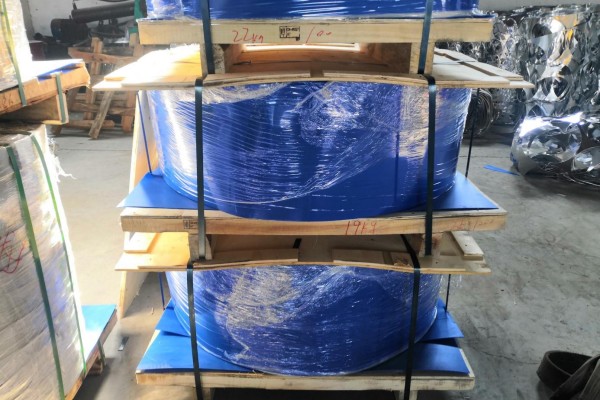
III. Process Adaptation and Optimization Points of 3003 Aluminum Circles
To maximize 3003 aluminum circles’ performance, rolling, surface treatment and forming processes need optimization. Henan Huawei Aluminum Co., Ltd. has built a scenario-specific process system based on mass production experience.
(I) Rolling Process Optimization: Balancing Formability and Flatness
The rolling process determines grain structure, flatness and formability, with key parameters controlled as follows:
- Cold Rolling Reduction: 70%~85% to balance strength and plasticity. Henan Huawei Aluminum Co., Ltd. uses multi-pass rolling with tension closed-loop control, limiting flatness error to ≤0.03mm.
- Annealing Process: Intermediate annealing (380~420℃×2~3h) eliminates work hardening; final annealing (320~360℃) refines grains (≤50μm) for better surface treatment and forming.
(II) Surface Treatment Process Adaptation: Scenario-specific Customized Schemes
| Application Scenario | Recommended Surface Treatment Method | Process Points | Core Function |
| Lighting Shade (Outdoor) | Hard Anodizing | Anodizing film thickness 10~15μm, natural or silver white, surface roughness Ra≤0.8μm | Improve reflectivity, UV resistance and wear resistance |
| Lighting Shade (Indoor) | Ordinary Anodizing + Spraying | Anodizing film thickness 5~8μm, environmentally friendly powder coating, adhesion reaching Grade 1 in cross-cut test | Aesthetics, easy cleaning, improved reflectivity uniformity |
| Electronic Enclosure (Precision Equipment) | Conductive Anodizing | Anodizing film thickness 3~5μm, stable conductivity, anti-static index 10⁶~10⁹Ω | Anti-static, auxiliary heat dissipation, corrosion resistance |
| Electronic Enclosure (General Equipment) | Electrostatic Spraying | Coating thickness 20~30μm, weather-resistant powder, high-temperature curing at 180~200℃ | Protection, aesthetics, adapting to mass production |
(III) Forming Process Adaptation: Avoiding Common Problems
Key points to avoid defects in spinning, deep drawing, stamping and bending processes:
- Mold Design: Cr12MoV mold with fillet radius ≥2×material thickness; 10%~15% stamping gap ensures flat cuts and no burrs.
- Lubrication Control: Chlorine-free aluminum-specific oil ensures uniform lubrication and avoids surface corrosion affecting coating adhesion.
- Dimensional Control: CNC spinning ensures lampshade profile tolerance ±0.05mm; CNC deburring keeps enclosure edge roughness Ra≤0.8μm.
IV. Common Problems and Targeted Solutions
| Common Problems | Cause Analysis | Solutions |
| Surface Wrinkling of Lampshades After Forming | Insufficient rolling flatness, uneven spinning force or inadequate lubrication | Optimize rolling tension and apply high-adhesion lubricant evenly |
| Anodizing Color Difference of Electronic Enclosures | Uneven annealing or fluctuating anodizing parameters | Use air-floating annealing furnace; stabilize anodizing temperature (18~22℃) and current density |
| Forming Cracking | Excessive cold rolling reduction (>85%) or small mold fillet | Adjust reduction to 70%~75%, add intermediate annealing; enlarge mold fillet |
| Surface Coating Peeling | Incomplete oil removal or insufficient curing temperature | Ultrasonic cleaning; optimize curing temperature and time |
V. QA
Q1: Can 3003 aluminum circles be strengthened by heat treatment? A: No. It is an aluminum-manganese non-heat-treatable strengthened alloy, and strength improvement only relies on solid solution strengthening and cold rolling work hardening.
Q2: Is 3003 more suitable for outdoor lampshades than 1060 pure aluminum? A: Yes. 3003 has better corrosion resistance and strength, which can resist outdoor wind and rain erosion and avoid deformation and damage.
Q3: What surface treatment is needed for 3003 used in electronic enclosures? A: Conductive anodizing (anti-static) for precision equipment, and electrostatic spraying (cost-effective) for general equipment.
Q4: What is the most common cause of 3003 forming cracking? A: Excessively high cold rolling reduction (>85%) or too small mold fillet, leading to stress concentration.
VI. Conclusion
3003 aluminum circles excel in lighting and electronic fields due to balanced mechanical strength, weather resistance, processability and cost. They overcome the shortcomings of pure aluminum and other alloys. Henan Huawei Aluminum Co., Ltd. provides customized 3003 products (0.3~5.0mm thick, 50~1600mm diameter) for global customers, reinforcing its competitiveness in lighting and electronic materials.