
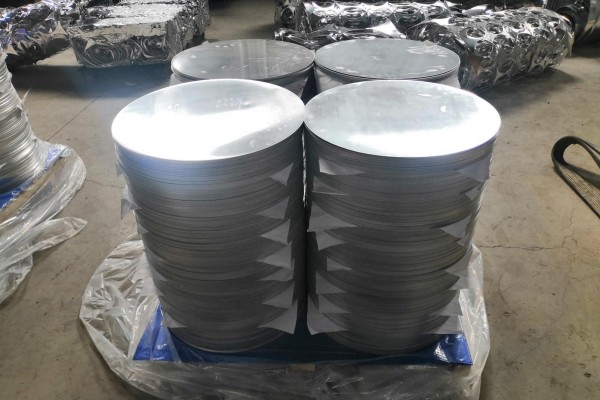
5052 O-Temper 1.0mm Aluminum Circle for Cookware
1. Introduction
1.1 Overview of Aluminum Circles in Cookware Manufacturing
Aluminum circles (also known as aluminum discs or blanks) are the fundamental starting point for manufacturing pots, pans, and lids. In modern cookware production, aluminum has largely replaced traditional metals like cast iron and carbon steel due to its exceptional thermal conductivity and lightweight nature. The shift toward aluminum alloys represents a leap in balancing performance with manufacturability, allowing for complex shapes like deep-drawn stockpots and pressure cookers.
1.2 Why 5052 Aluminum Alloy is Widely Adopted
The 5052 alloy sits prominently within the 5xxx series (Al-Mg alloys). Unlike pure aluminum (1xxx series), the addition of Magnesium (Mg) as the primary alloying element significantly enhances tensile strength and corrosion resistance without sacrificing workability. It strikes the perfect balance between formability and durability, making it a favorite for mid-to-high-end cookware.
1.3 The Importance of O-Temper and 1.0mm Thickness
The O-Temper denotes a fully annealed state, meaning the metal has been softened to its maximum ductility. For cookware, 1.0mm is the “golden thickness”—it is thick enough to provide structural rigidity and even heating, yet thin enough to allow for deep drawing and spinning without excessive springback or wrinkling.
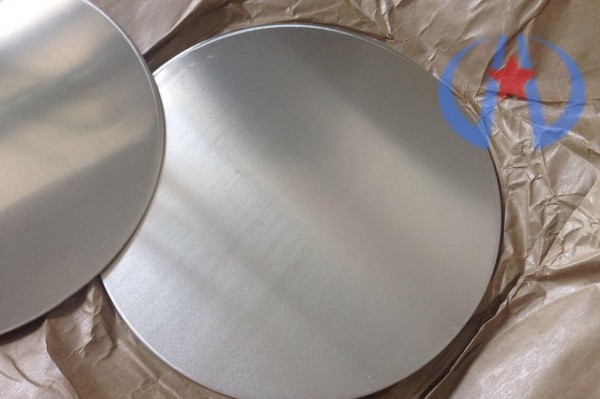
2. What is 5052 O-Temper Aluminum Circle?
2.1 Chemical Composition of 5052 Alloy
5052 contains approximately 2.2% to 2.8% Magnesium. This Mg content creates a solid solution strengthening effect.
- Typical Composition: Mg (2.5%), Cr (0.25%), with the balance being Aluminum (≥97%).
- Comparison: Compared to 1050/1060 (pure Al), 5052 offers double the strength. Compared to 3003 (Al-Mn), 5052 offers superior corrosion resistance, particularly in marine or salty environments (like seawater or salty food).
2.2 Mechanical Properties
- Tensile Strength: 170–230 MPa (Significantly higher than 1060).
- Yield Strength: ≥65 MPa.
- Elongation: ≥15–20% (Crucial for forming).
- Hardness: Approximately 60 HB.
2.3 Physical Properties
- Thermal Conductivity: ~138 W/m·K (Excellent for rapid heating).
- Corrosion Resistance: Exceptional; forms a protective oxide layer that resists rust from acidic foods.
- Density: 2.68 g/cm³ (Lightweight advantage).
2.4 O-Temper Characteristics
In the O-temper state, 5052 undergoes full annealing. This process recrystallizes the grain structure, resulting in:
- Superior Ductility: Allows the disc to be stretched into deep shapes without thinning excessively.
- Reduced Springback: The metal stays in the shape it is formed into.
- Low Internal Stress: Minimizes warping or cracking during subsequent spinning or stamping.
3. Why 1.0mm Thickness is Ideal for Cookware
3.1 Structural Advantages
At 1.0mm, the cookware achieves an optimal balance. It feels substantial in hand (premium feel) but remains light enough for easy handling, especially for larger diameter woks or paella pans.
3.2 Thermal Performance
While thicker materials retain heat better, 1.0mm offers a faster response time. It heats up quickly and distributes heat evenly across the base, preventing “hot spots” that burn food.
3.3 Processing Advantages
For manufacturers using mechanical presses or CNC spinning machines, 1.0mm 5052 O-temper is the sweet spot. It requires less tonnage to press than thicker gauges and is less prone to tearing than thinner foils.
3.4 Economic Efficiency
Using 1.0mm optimizes material usage. It minimizes scrap generation during the blanking process and reduces the amount of raw aluminum required compared to traditional 2-3mm cast cookware, lowering shipping costs.

4. Production Process of 5052 Aluminum Circles
4.1 Raw Material Preparation
We utilize DC Casting (Direct Chill) or high-quality CC (Continuous Casting) coils. DC material is preferred for cookware as it offers finer, more uniform grain structure essential for high-quality surface finishes.
4.2 Blanking (Circle Cutting)
Precision pneumatic or hydraulic presses cut the circles from coils.
- Tolerance: Diameter tolerance is strictly controlled (usually ±0.1mm).
- Edge Quality: Burr-free edges are critical to prevent injuries and ensure smooth die entry during drawing.
4.3 Annealing Treatment
Coils or sheets are passed through continuous annealing furnaces. The precise temperature profile ensures the 5052 reaches the “O” state, maximizing elongation for the next stage of manufacturing.
4.4 Surface Treatment Options
- Mill Finish: A smooth, bright finish ready for polishing.
- Pre-anodized: Increases hardness and creates a beautiful satin look.
- Non-Stick Prep: Chemically cleaned and etched to ensure maximum adhesion of PTFE or ceramic coatings.
- Polishing/Brushing: For aesthetic appeal on the outer body of the cookware.
4.5 Quality Inspection Standards
Every batch is tested for:
- Thickness Variance: Ensuring flatness.
- Earring Control: In deep drawing, “earing” (wavy edges) must be minimized; our circles guarantee low earring rates.
- Surface Defects: No scratches, oil stains, or black spots.
5. Core Advantages of 5052 O-Temper 1.0mm Circles
5.1 Superior Deep Drawing Performance
This is the standout feature. 5052 O-temper can be drawn into complex shapes (like a wok with high sides) in a single stroke without intermediate annealing.
5.2 Exceptional Corrosion Resistance
It outperforms 3003 and 1xxx series in salty or acidic cooking environments, ensuring the cookware lasts for decades without pitting.
5.3 Enhanced Durability
With higher yield strength than pure aluminum, 5052 cookware is more resistant to dents from drops and impacts during daily use.
5.4 Excellent Anodizing Response
5052 takes anodic coatings exceptionally well, producing a hard, non-reactive, and colored surface that is both hygienic and stylish.
5.5 Premium Surface Quality
The fine grain structure allows for mirror polishing, giving the cookware a high-end, luxurious appearance.
5.6 Food Contact Safety
Completely non-toxic and compliant with FDA, LFGB, and other international food safety standards.
6. Comparison with Other Common Cookware Alloys
| Feature | 1050/1060 (Pure Al) | 3003 (Al-Mn) | 5052 (Al-Mg) |
|---|---|---|---|
| Strength | Low | Medium | High |
| Corrosion Resistance | Good | Very Good | Excellent (Best) |
| Deep Drawing | Excellent | Good | Excellent |
| Thermal Conductivity | Highest | High | Moderate-High |
| Cost | Lowest | Medium | Higher (Value for Money) |
| Target Cookware | Basic budget pots | Non-stick pans | Premium Fry Pans, Woks, Stockpots |
6.1 Why High-End Brands Prefer 5052
While the raw material cost is higher than 1060, the total cost of ownership is lower. Less breakage during stamping, fewer rejects due to corrosion, and a premium brand image justify the investment.
7. Main Applications in the Cookware Industry
7.1 Frying Pans & Skillets
Requires excellent flatness and thermal response. 1.0mm 5052 provides the perfect base for non-stick coatings.
7.2 Woks & Stockpots
These require deep drawing. 5052’s high elongation allows for high, vertical walls without tearing.
7.3 Rice Cooker & Electric Pot Inner Pots
The circle must fit precisely and conduct heat evenly for electronic controls. Surface smoothness is vital here.
7.4 Pressure Cooker Components
Requires high mechanical strength to withstand internal pressure. 5052 offers the necessary safety margin.
7.5 Lids, Steamers, and Mixing Bowls
Its rigidity keeps lids flat (preventing steam leaks) and bowls sturdy.

8. Technical Specifications & Customization
8.1 Standard Specs
- Thickness: 0.8mm – 6.0mm (Focus on 1.0mm).
- Diameter: 100mm – 1200mm.
- Tolerance: Thickness ±0.02mm; Diameter ±0.1mm.
8.2 Customization
- Protective Film: PVC/PE film coating to prevent scratches during transport and stamping.
- Special Tempers: H32, H34, or H112 available upon request.
8.3 Packaging
Seaworthy export packaging: Interleaved with paper, wrapped in plastic, and secured on non-fumigation wooden pallets.
9. Key Factors Affecting Cookware Performance
9.1 Grain Size Control
Fine grains (<50 microns) are essential. Coarse grains lead to the “orange peel” effect after stretching, ruining the aesthetic.
9.2 Surface Quality
Even microscopic scratches can show through a mirror polish or cause non-stick coating failure. Our circles are handled with care to maintain a pristine surface.
9.3 Annealing Uniformity
Inconsistent softness across the circle leads to uneven stretching, causing the pot to warp or become oval-shaped.
10. Industry Standards & Certifications
- Material Standards: ASTM B209 (USA), EN 485 (Europe), GB/T 3880 (China).
- Food Safety: FDA 21 CFR 175.300, LFGB, RoHS, REACH.
- Quality Management: ISO 9001:2015 Certified production facilities.
11. Market Trends & Future Outlook
11.1 Lightweighting Trend
Consumers demand lighter cookware that is easier to handle. 5052 allows for thinner walls without losing strength.
11.2 Shift to High-Performance Alloys
The market is moving away from cheap, pure aluminum towards 5xxx and 6xxx series for better performance and longevity.
11.3 Sustainability
Aluminum is infinitely recyclable. Using 5052 supports the circular economy, as scrap retains high value.
12. Common Issues & Solutions
| Issue | Cause | Solution (Using our 5052 Circles) |
|---|---|---|
| Deep Drawing Cracks | Low elongation / High impurities | Our O-temper ensures >20% elongation. |
| Orange Peel Texture | Coarse grain structure | We control grain size via DC casting. |
| Warping after Heating | Internal stress | Full annealing eliminates stress. |
| Poor Coating Adhesion | Dirty surface / Oil residue | Precision degreasing and chemical conversion. |

13. FAQ (Frequently Asked Questions)
Q1: Why is 5052 better than 1060 for high-end cookware?
A1: 5052 is stronger and more corrosion-resistant. While 1060 is cheaper, it dents easily and can corrode over time. 5052 offers a premium feel and longer lifespan.
Q2: Is 1.0mm thick enough for a frying pan?
A2: Absolutely. For stamped aluminum cookware, 1.0mm is the industry standard for residential and light commercial use, offering the best balance of weight and heat distribution.
Q3: What is the advantage of O-temper in stamping?
A3: O-temper is “dead soft.” It allows the metal to flow into the die easily without springing back, resulting in sharper details and fewer cracks.
Q4: Can 5052 aluminum circles be anodized?
A4: Yes, 5052 is one of the best alloys for anodizing, producing a thick, hard, and decorative oxide layer.
Q5: Is 5052 safe for cooking?
A5: Yes. It is a standard material for food contact. When anodized or coated, it becomes completely non-reactive.
Q6: Which cookware types are best suited for 5052?
A6: High-end fry pans, woks, saucepans, and pressure cooker bodies.
Q7: What surface quality is required for non-stick pans?
A7: The surface must be free of scratches, pits, and roller marks. Our circles are mill-finished to perfection for immediate coating application.
Q8: What is the advantage of 5052 in non-stick production?
A8: Its thermal stability ensures the substrate doesn’t warp during the high-temperature curing of non-stick coatings.
14. Conclusion
14.1 Summary of Technical Advantages
5052 O-Temper 1.0mm Aluminum Circles represent the pinnacle of cookware substrates. They offer an unbeatable combination of high formability, exceptional corrosion resistance, and structural integrity.
14.2 Value in Modern Manufacturing
By choosing 5052, manufacturers reduce rejection rates, improve product aesthetics, and deliver a durable, lightweight product that meets the demands of modern kitchens.
14.3 Future Potential
As the industry moves toward greener, more efficient, and higher-performing materials, 5052 aluminum circles will continue to be the material of choice for innovative cookware designs.