

1060 Aluminum Circle 1mm for Cookware: Lightweight and High Thermal Conductivity Material for Kitchenware Manufacturing
I. Introduction: The Strategic Choice for Modern Cookware
In the ever-evolving landscape of modern cookware manufacturing, material selection has transcended beyond mere cost considerations into a strategic decision impacting thermal efficiency, product durability, and market competitiveness. 1060 Aluminum Circle 1mm has emerged as a pivotal material, striking an optimal balance between lightweight construction and structural integrity.
With an aluminum purity of ≥99.6%, 1060 aluminum circles offer exceptional heat transfer efficiency, superior corrosion resistance, and outstanding deep drawing capability. The specific 1mm thickness is a strategic specification, providing the ideal equilibrium between material savings and the mechanical stability required for various kitchen utensils.
Today, 1060 aluminum circles are extensively utilized in manufacturing:
- Frying pans and Woks
- Shallow cooking pots and Saucepans
- Rice cooker liners
- Kitchen utensils and lids
- Pressure cooker accessories
- Non-stick cookware bases
As the global industry pivots towards energy-efficient and lightweight designs, the 1060 aluminum circle 1mm has become an increasingly popular solution for mass production and high-end kitchenware alike.

II. What Is 1060 Aluminum Circle 1mm for Cookware?
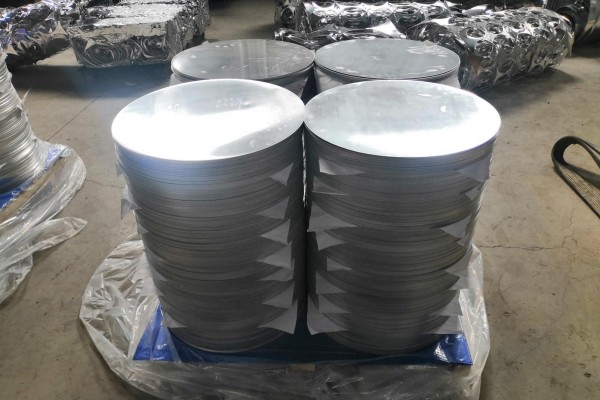
1060 Aluminum Circle 1mm for Cookware refers to circular aluminum discs manufactured from 1060 aluminum alloy with a precise thickness of 1.0 mm. This product is specifically engineered for the downstream processes involved in cookware and kitchen utensil production.
The 1060 alloy belongs to the 1000-series pure aluminum family. Unlike alloyed aluminum (e.g., 3000 or 5000 series), 1060 relies on its high aluminum content for performance:
- Minimum 99.6% Aluminum Content: Ensures maximum thermal and electrical conductivity.
- Superior Formability: The high purity results in a soft, ductile material ideal for spinning and drawing.
- Excellent Anodizing Response: Produces clear, hard, and uniform oxide layers.
- Outstanding Corrosion Resistance: Naturally forms a protective oxide film.
The 1mm thickness profile is particularly versatile, offering:
- Lightweight Structure: Reduces the final weight of the cookware.
- Mechanical Stability: Sufficient thickness to maintain shape without warping under normal cooking heat.
- Forming Flexibility: Easy to spin or stamp into shallow to medium-depth profiles.
- Cost Efficiency: Minimizes material usage while maximizing output.
This combination makes it highly suitable for both high-volume household cookware and specialized commercial kitchenware applications.
III. Chemical Composition of 1060 Aluminum Circle
The exceptional performance of 1060 aluminum is intrinsically linked to its high purity. The严格控制 (strict control) of impurities ensures consistent physical properties.
| Element | Typical Content (%) | Functional Analysis |
|---|---|---|
| Aluminum (Al) | ≥99.6 | Matrix Metal. The high percentage ensures maximum thermal conductivity (~234 W/m·K) and electrical conductivity. |
| Silicon (Si) | ≤0.25 | Controlled impurity. Excess Si can reduce ductility and cause issues during anodizing (darkening). |
| Iron (Fe) | ≤0.35 | Primary impurity. FeAl₃ phases can slightly increase strength but must be controlled to maintain ductility. |
| Copper (Cu) | ≤0.05 | Strictly limited. Cu reduces corrosion resistance and is undesirable for food contact surfaces. |
| Manganese (Mn) | ≤0.03 | Trace element for structural stability. |
| Magnesium (Mg) | ≤0.03 | Minor strengthening element. |
| Zinc (Zn) | ≤0.05 | Controlled impurity to prevent galvanic corrosion. |
| Titanium (Ti) | ≤0.03 | Grain refiner. Helps produce a finer, more uniform microstructure during casting. |
| Others | ≤0.03 each | Purity control to ensure food-grade safety. |
The extremely high aluminum content is the cornerstone of its excellent thermal conductivity and processing performance.
IV. Manufacturing Process of 1060 Aluminum Circle 1mm
Producing high-quality cookware aluminum circles requires a synergy of metallurgical expertise and precision engineering.
Aluminum Melting and Casting
The journey begins with high-purity primary aluminum ingots (A00).
- Melting: Ingots are melted in a reverberatory furnace.
- Alloy Adjustment: Precise addition of trace elements to meet 1060 specs.
- Degassing & Filtration: Argon gas is bubbled through the melt to remove hydrogen, and ceramic foam filters trap non-metallic inclusions. This ensures a pore-free, clean structure.
- Casting: The molten aluminum is cast into billets via continuous casting or DC casting.
Hot Rolling
The cast billet is preheated and passed through a series of rollers.
- Purpose: Breaks down the cast structure, refines grains, and improves the material’s internal density.
- Benefit: Hot-rolled circles exhibit better deep drawing performance and isotropy, making them the preferred choice for high-end cookware.
Cold Rolling
The hot-rolled coil is further reduced to the target 1.0 mm thickness.
- Precision Control: Advanced rolling mills ensure a tight thickness tolerance (±0.02mm).
- Surface Quality: Produces a smooth, uniform surface ready for coating or polishing.
Circle Cutting
Large coils or sheets are cut into precise circles.
- Methods: High-speed pneumatic punching or CNC blanking.
- Precision: Guarantees smooth edges and accurate diameters (100mm – 1200mm), minimizing “earing” during subsequent deep drawing.
Annealing
The final heat treatment restores the material’s softness.
- Process: Heating to 340°C-400°C followed by controlled cooling.
- Result: Achieves the O-temper (Annealed), providing the maximum elongation required for complex forming operations.

V. Key Characteristics of 1060 Aluminum Circle 1mm
Excellent Thermal Conductivity
1060 aluminum boasts a thermal conductivity of approximately 234 W/(m·K).
- Rapid Heating: Transfers heat almost instantly from the source to the food.
- Uniform Distribution: Eliminates hot spots, preventing food from burning.
- Energy Efficiency: Reduces cooking time and saves fuel/electricity.
Lightweight Structure
At 1mm thickness, the resulting cookware is significantly lighter than stainless steel or cast iron equivalents.
- Ergonomics: Easier to handle, lift, and pour, reducing user fatigue.
- Logistics: Lower transportation costs due to reduced weight.
Superior Deep Drawing Performance
With an elongation rate often exceeding 35%, 1060 aluminum is highly malleable.
- Complex Shapes: Allows manufacturers to form intricate designs, such as fluted pans or deep saucepans, without cracking.
- High Yield: The material’s softness reduces tool wear and rejection rates.
Excellent Corrosion Resistance
- Passive Layer: Instantly forms a dense Al₂O₃ layer when exposed to air, protecting against oxidation.
- Food Safe: Highly resistant to corrosion from acidic or alkaline foods (e.g., tomatoes, vinegar).
Good Surface Finish
The 1mm circles provide a smooth, clean surface ideal for value-added treatments:
- Non-stick coating application
- Mirror polishing
- Brushed finishing
- Anodizing
VI. Technical Specifications
| Item | Typical Specification |
|---|---|
| Alloy | 1060 |
| Thickness | 1.0 mm (Customizable: 0.9mm – 1.2mm) |
| Diameter | 100 mm – 1200 mm |
| Temper | O (Soft) / H12 / H14 |
| Surface | Mill Finish / Pre-polished |
| Processing | Hot Rolled (Recommended) / Cold Rolled |
| Tensile Str. | 60–95 MPa |
| Elongation | ≥35% |
| Packaging | Export seaworthy: Wooden pallets, moisture-proof paper |
VII. Applications of 1060 Aluminum Circle 1mm
Frying Pans & Crepe Makers
The 1mm thickness is ideal for pans requiring quick heat response and flexibility, such as omelet pans and griddles.
Cooking Pots & Saucepans
Perfect for shallow pots and milk pans where lightweight handling is prioritized alongside efficient heat distribution.
Rice Cooker Inner Pots
The smooth surface of 1060 aluminum is an excellent base for non-stick coatings used in electric rice cookers and multicookers.
Pressure Cooker Components
Used for inner liners or lightweight accessory parts where thermal conductivity is critical.
Kitchen Utensils
Ideal for manufacturing:
- Steamers
- Baking trays
- Pot lids
- Aluminum kettles
VIII. Hot Rolled vs Cold Rolled 1060 Aluminum Circle
| Feature | Hot Rolled | Cold Rolled |
|---|---|---|
| Deep Drawing | Excellent (Better grain structure) | Good |
| Surface Finish | Moderate (may require surface prep) | Excellent (Smooth, ready for coating) |
| Internal Stress | Minimal | Higher (requires stress relief) |
| Mechanical Stability | Higher (Resists warping) | Good |
| Best For | High-end, deep-drawn cookware | Shallow dishes, lids, or polished goods |
Recommendation: For cookware requiring significant forming, Hot Rolled circles are preferred.
IX. Advantages of 1060 Aluminum Circle 1mm
Cost-Effective Material
- Lower Raw Material Cost: Pure aluminum is generally more affordable than alloyed alternatives.
- High Yield Rate: Excellent formability reduces scrap during manufacturing.
Excellent Processing Performance
Performs exceptionally well in:
- Spinning: Creates seamless, round shapes.
- Stamping: High-speed production capability.
- Surface Treatment: Superior anodizing and coating adhesion.
Energy Saving
The inherent high thermal conductivity reduces energy consumption during cooking, appealing to eco-conscious consumers.
Environmentally Friendly
- 100% Recyclable: Aluminum can be recycled indefinitely without loss of properties.
- Low Carbon Footprint: Recycling requires only 5% of the energy used to produce primary aluminum.
X. Surface Treatment Options
Anodizing
- Hard Anodizing: Increases surface hardness to HV300+, making it scratch and wear-resistant.
- Color Anodizing: Allows for aesthetic customization (black, gold, red).
Non-Stick Coating
- PTFE (Teflon): Classic non-stick performance.
- Ceramic Coating: Eco-friendly alternative with high heat resistance.
Polishing
- Mirror Polish: Achieves a high-gloss, reflective surface.
- Brushed Finish: Creates a modern, linear texture.
XI. Market Trends and Industry Development
The cookware industry is currently shaped by several key trends:
- Health-Conscious Materials: Demand for PFOA-free coatings and high-purity aluminum.
- Induction Compatibility: Development of 1060 circles bonded with induction-compatible bases (e.g., 430SS).
- Lightweighting: Continued push to reduce the weight of cookware without compromising performance.
Growth Markets:
- Southeast Asia: Rapid urbanization driving demand for affordable cookware.
- Africa: Growing middle class and infrastructure development.
- Europe & North America: Replacement market focusing on premium, lightweight designs.
XII. Conclusion
1060 Aluminum Circle 1mm for Cookware represents a perfect synthesis of material science and manufacturing practicality. Its combination of high aluminum purity, excellent thermal conductivity, superior deep drawing performance, and lightweight structure makes it an irreplaceable material for modern kitchenware production.
From frying pans to rice cooker liners, 1060 aluminum circles provide manufacturers with a reliable, cost-effective, and sustainable solution. As the global demand for energy-efficient and user-friendly cookware continues to rise, 1060 aluminum circles will undoubtedly maintain their status as a cornerstone material in the industry.
FAQs
Q: Why is 1060 aluminum specifically suitable for cookware?
A: 1060 offers the highest thermal conductivity among common cookware alloys due to its >99.6% purity. It is lightweight, easy to form into complex shapes, and naturally corrosion-resistant, making it ideal for food preparation.
Q: Is 1mm thickness enough for durable cookware?
A: Yes. 1mm is a standard and proven thickness for a wide range of cookware, including frying pans, saucepans, and lids. It provides sufficient structural integrity for daily use while keeping the cookware lightweight and responsive to heat.
Q: Can 1060 aluminum circles be anodized?
A: Absolutely. 1060 is considered one of the best alloys for anodizing. Its high purity ensures a clear, uniform, and hard oxide layer that significantly improves durability and aesthetics.
Q: What is the difference between 1060 and 1050 aluminum circles?
A: The primary difference is purity. 1060 contains ≥99.6% aluminum, while 1050 contains ≥99.5%. This slight increase in 1060 results in slightly better thermal conductivity and formability compared to 1050.
Q: Should I choose Hot Rolled or Cold Rolled for my production?
A: If you are performing deep drawing or spinning to make pots, Hot Rolled is strongly recommended due to its superior ductility and resistance to cracking. If you are making flat items like lids or pizza pans where surface finish is critical, Cold Rolled is a good option.